



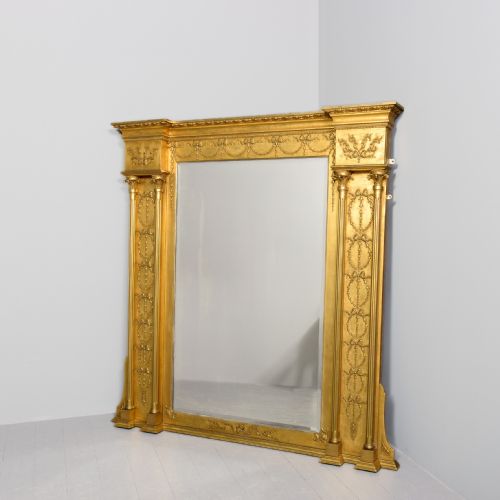
Architectural Carved Wall Mirror
An architectural carved wall mirror brings structure and classical proportion to a room, offering grand scale and intricate surface detail.
Architectural Carved Wall Mirror
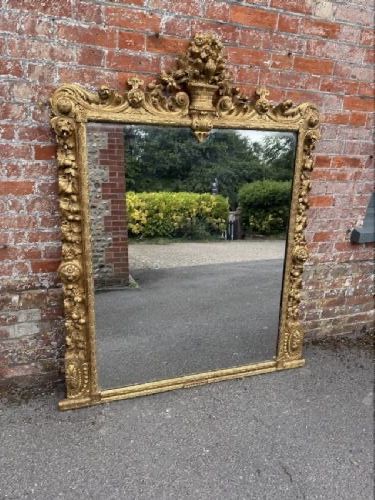
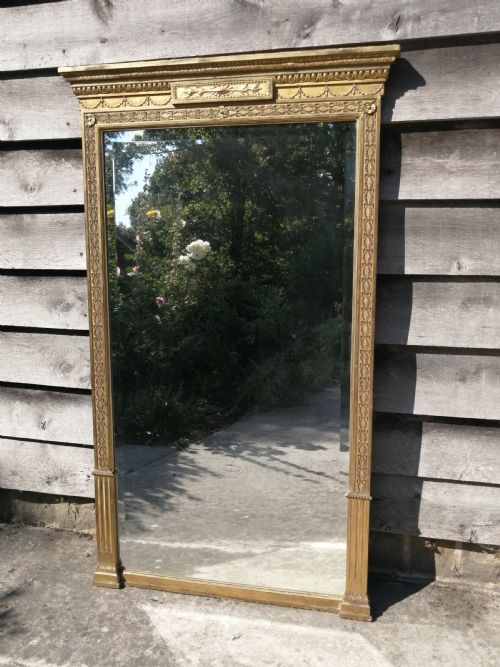
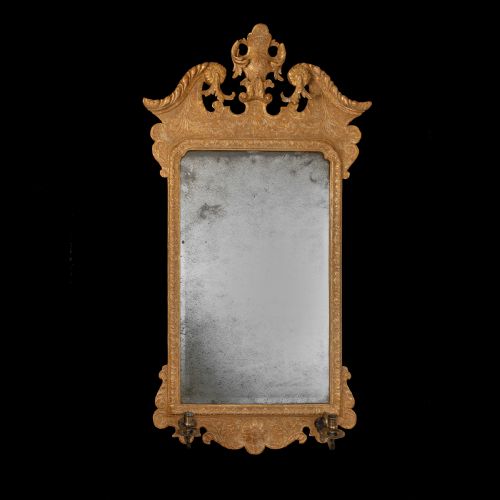
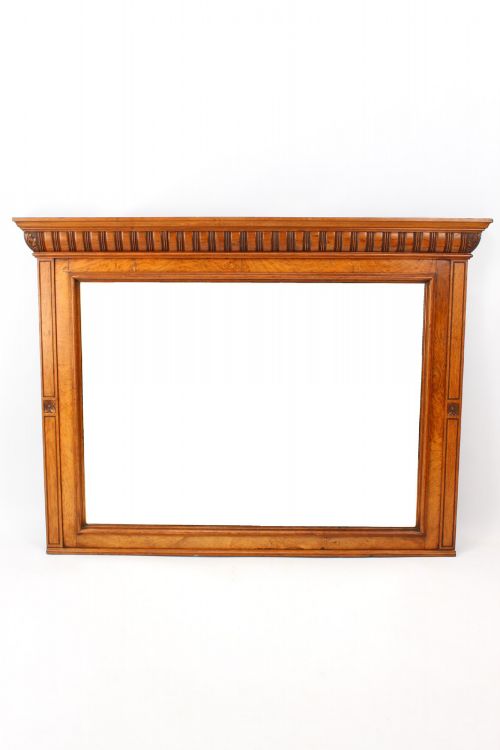
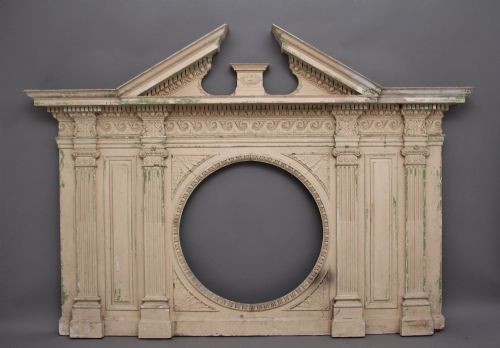
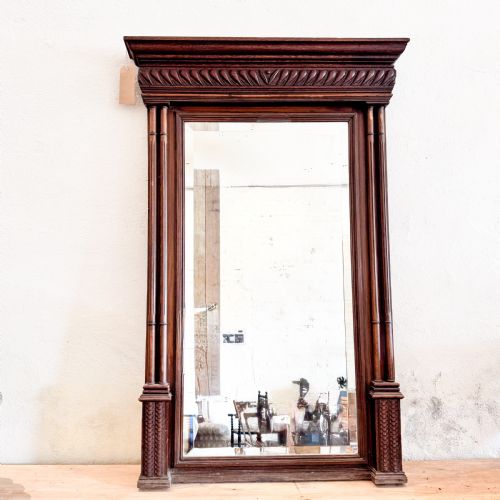
An architectural carved wall mirror draws on classical building designs, translating pediments, columns and scrollwork into framed glass. When searching for an architectural carved wall mirror, buyers encounter numerous large overmantel and pier formats originating from the eighteenth and nineteenth centuries.
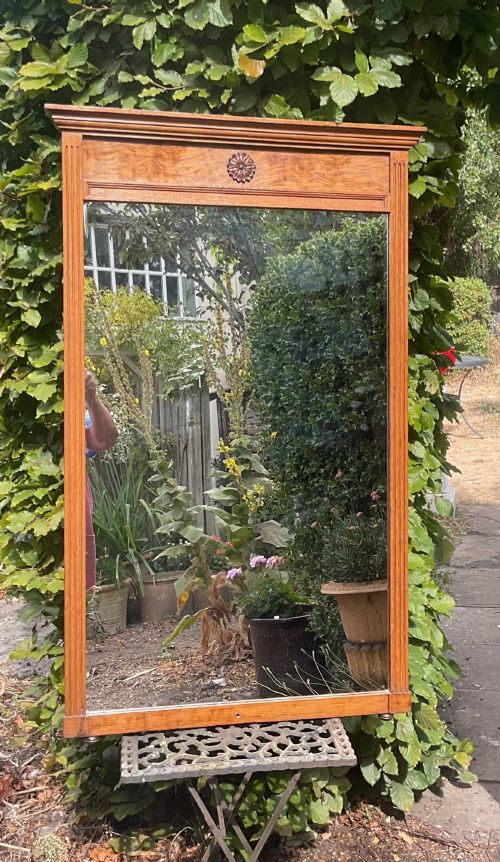
Makers and designers from earlier centuries influenced these later styles, leading to recurring neoclassical motifs, painted pine constructions and substantial oak frames. These mirrors function as both optical devices for expanding light and focal points that anchor a room's interior scheme.
How they were made
Carvers shaped solid timbers such as oak, walnut, mahogany and pine before applying layers of gesso to receive fine surface detail and gold leaf. Giltwood and parcel gilt finishes required meticulous application of leaf onto prepared grounds, creating the characteristic reflective warmth seen on nineteenth-century frames.
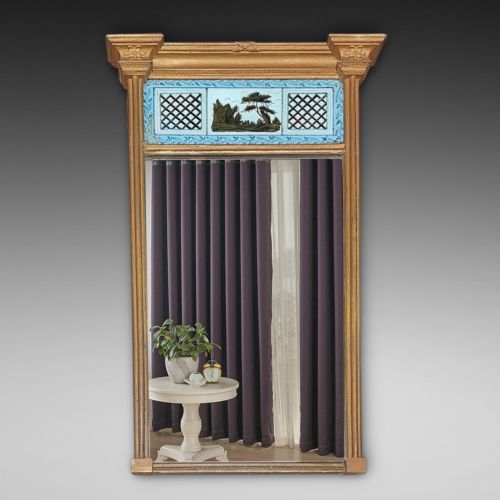
Makers incorporated specialised techniques like verre eglomise for decorated glass panels and faux marble finishes to emulate costly stone materials. Structural integrity relied on traditional joinery, securing heavy glass plates behind robust wooden battens and carved crestings.
Some nineteenth-century hall mirrors included concealed ledges designed specifically for dropping pocket watches upon entry.
What varies in quality
Depth and sharpness of the hand-carved ornament distinguish finer examples from simpler production pieces, particularly where gesso is crisp rather than rounded off. The quality of the original glass plate and the execution of the gilding dictate the overall visual impact of the frame.
Proportion and scale play significant roles, with harmonious architectural surrounds commanding greater presence than mismatched components. The integrity of the underlying timber frame and the retention of original surface treatments separate standard items from superior pieces.
Nosotti
The Architectural Carved Wall Mirror Glossary
- Gesso
- A plaster-like mixture applied to wood frames to create a smooth surface for gilding or painting. It accepts deep relief carving before the application of gold leaf.
- Verre eglomise
- A cold decoration technique where artists apply designs and gilding to the reverse of glass panels. This creates a mirrored or metallic decorative border often found on Regency pieces.
- Pier mirror
- A tall narrow mirror designed specifically to hang on the wall space between windows. These pieces often feature matching console tables beneath them.
- Overmantel mirror
- A wide horizontal mirror built to sit directly above a fireplace mantelpiece. They frequently incorporate architectural elements like columns and pediments.
- Parcel gilt
- A finishing method where only specific raised portions of a carved wooden frame are gilded with gold leaf, leaving the underlying wood or paint visible elsewhere.
Architectural Carved Wall Mirror: Frequently Asked Questions
How do I hang a heavy overmantel mirror?
Large mirrors require secure fixing directly into wall studs or masonry using heavy-duty brackets that match the weight of the timber and glass.
Professional installation is recommended due to the substantial combined weight of the wooden frame and original glass plate.
Are these mirrors suitable for bathrooms?
Antique giltwood and gesso frames react poorly to high humidity and moisture fluctuations found in modern bathrooms.
These pieces perform best in dry living rooms, hallways or above dining room fireplaces where the environment remains stable.
How do I tell George II style from Victorian?
George II pieces from the eighteenth century typically feature bolder architectural carving, Palladian pediments and heavier parcel gilt walnut or gesso.
Victorian interpretations often reproduce these earlier motifs with machine-assisted efficiency or softer gesso application on pine and oak.
Does the glass plate affect the value?
Original glass plates showing light foxing and age spots contribute significantly to the authenticity and historical character of the piece.
Replacement modern mirror glass lacks the subtle imperfections and wavy surface quality characteristic of nineteenth-century manufacture.