


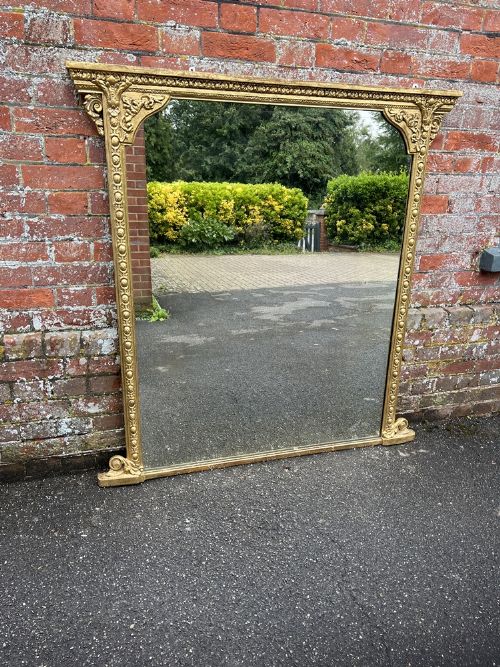


Architectural Arched Mirror
These architectural arched mirror pieces bring nineteenth century scale and light into a room.
Architectural Arched Mirror
An architectural arched mirror is a substantial wall piece designed to draw the eye and reflect daylight across a room. The examples seen on this page span the nineteenth century, including specific dates around eighteen sixty, eighteen eighty, and eighteen ninety.
Most pieces take the form of overmantel mirrors or pier mirrors, alongside architectural salvage window mirrors and gothic revival pairs. These objects originate from English, French, and Swedish workshops, often carrying grand proportions meant for period interiors.
When searching for an architectural arched mirror, a buyer encounters carved wood and gesso frames, parcel gilt surfaces, and cast iron window frames. The structural forms range from simple arched tops to triple arched sectioned configurations.
How they were made
Cabinet makers and gilders constructed these frames using carved wood and gesso foundations, applying gold leaf and paint to achieve a giltwood or parcel gilt finish. The base materials provide the necessary weight to support large sheets of mirror glass.
Industrial and salvage pieces utilise cast iron for structural window mirror frames, showing the intersection of utilitarian casting and domestic interior decoration. Wood carving and gesso moulding dominate the decorative overmantel and pier mirror traditions.
Architectural Arched Mirror Retail Price Guide 2026
Typical asking prices for architectural arched mirror among the pieces listed under this phrase on Sellingantiques today, from the lower quarter to the upper quarter. They describe what is for sale here now, not the wider market.
The listings show nineteenth century pieces in Victorian, Gothic Revival, and Swedish Empire styles, utilising glass, gesso, giltwood, and cast iron.
What varies in quality
The distinction between standard and exceptional pieces rests in the depth and precision of the carved wood and gesso ornamentation. Finer examples display crisp botanical or classical motifs that retain their sharpness beneath the gold leaf or paint.
Proportion and scale dictate the visual impact of an overmantel or pier mirror within a room. Greater balance in the arch geometry and the preservation of the original mirror glass separate the most desirable examples from simpler utilitarian alternatives.
The Architectural Arched Mirror Glossary
- Giltwood
- Wood carved and prepared with layers of gesso before the application of gold leaf. This finish creates a warm metallic lustre characteristic of nineteenth century formal mirrors.
- Gesso
- A plaster mixture applied to carved wood frames to create a smooth surface for gilding and painting. It allows artisans to shape intricate relief decoration.
- Overmantel mirror
- A large horizontal or vertical mirror designed specifically to hang above a fireplace mantelpiece. These pieces often feature arched tops to draw the eye upward.
- Pier mirror
- A tall mirror traditionally hung on the narrow section of wall between two windows. They reflect additional light into darker corners of a period room.
- Gothic Revival
- A nineteenth century design style drawing inspiration from medieval architecture. Pieces in this style often incorporate pointed arches and structural tracery.
Architectural Arched Mirror: Frequently Asked Questions
Where should an architectural arched mirror be hung?
These pieces traditionally sit above a fireplace mantel as an overmantel mirror to anchor the room's proportions. They also function effectively on main walls where their height can amplify natural light.
Placing one opposite a window maximises the reflection of daylight across the interior space. The scale of these nineteenth century objects requires secure wall fixings suited to heavy wood and glass.
How do I identify a nineteenth century mirror?
Nineteenth century pieces often feature hand carved wood frames finished with gesso and gold leaf rather than modern synthetic composites. Examining the construction behind the frame reveals period joinery and ageing materials.
The mirror glass itself frequently displays subtle distortions or foxing consistent with historical manufacturing methods. Dates like eighteen sixty or eighteen eighty appear in specific English and French stylistic details.
What is the difference between an overmantel and a pier mirror?
Overmantel mirrors are typically wide formats built to span the horizontal space above a fireplace opening. They serve as the central decorative focus of a reception room wall.
Pier mirrors are proportioned to fit narrow wall spaces between windows or architectural openings. Their tall and narrow geometry helps balance the natural light in a room.
Are window mirrors genuine architectural salvage?
Many window mirrors originate from period buildings, utilising cast iron or wooden frames salvaged from French and English structures. These industrial pieces are adapted to hold mirror glass while retaining their original glazing bars.
Their construction reflects utilitarian architectural design rather than purely domestic furniture making. This gives them a distinct structural character compared to traditional overmantels.