
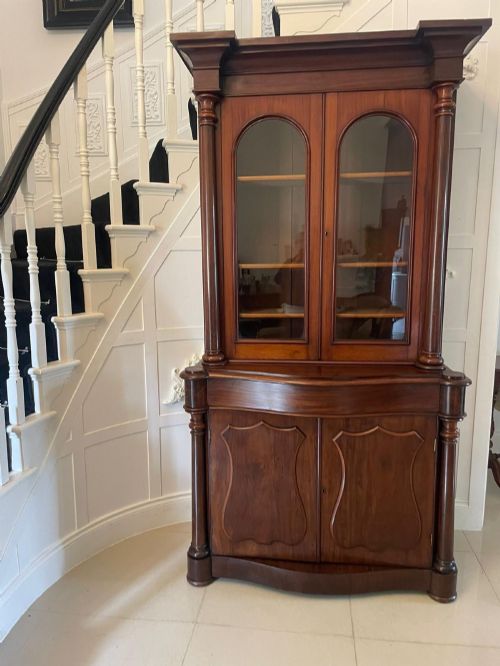
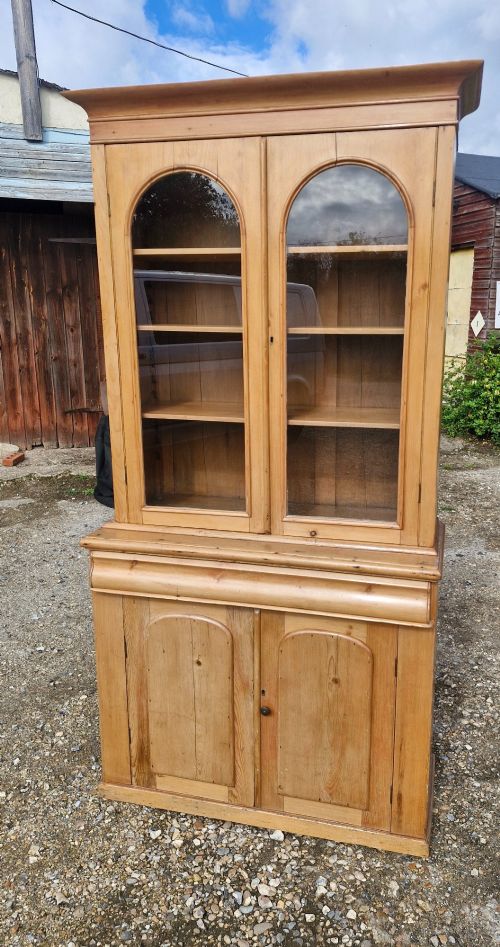
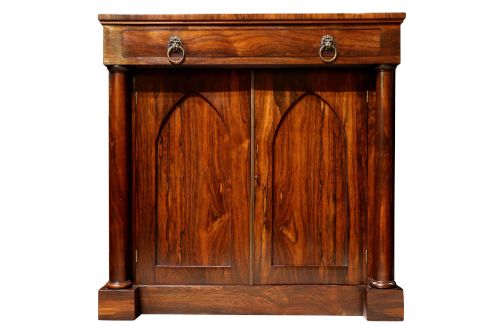
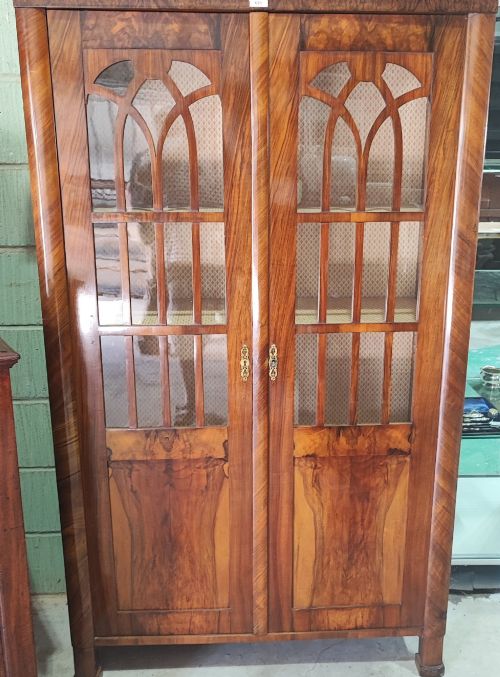


Arched Door Bookcase
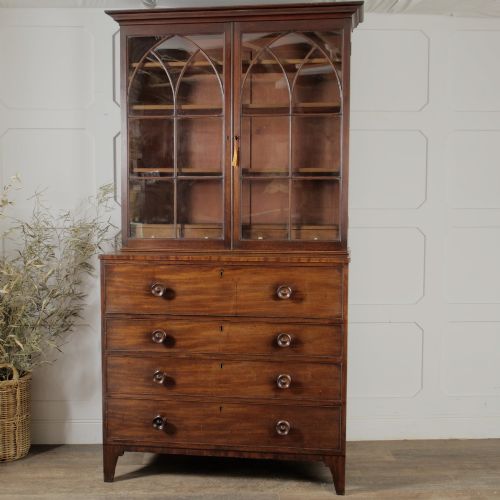
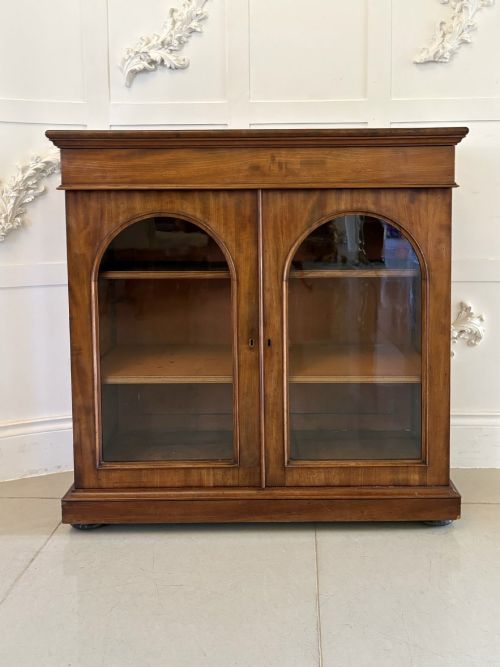
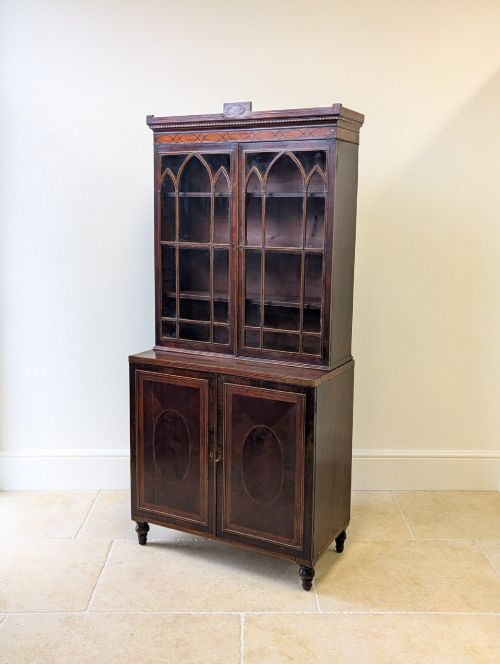
An arched door bookcase brings architectural line and timber depth to a room, offering glazed storage for a library.
Arched Door Bookcase
An arched door bookcase is a cabinet designed for holding books, frequently built with glass-paned doors that feature curved upper framing. When searching for an arched door bookcase, buyers encounter pieces primarily from the Georgian, Regency, and Victorian periods, alongside later revival examples.
The standard form on this page pairs an upper section of glazed shelves with a lower base of solid wood doors or drawers. Mahogany remains the dominant timber across these listings, accompanied by walnut, rosewood, and pine.
Regional variations and stylistic movements alter the presentation significantly. Makers applied Regency, Gothic Revival, Biedermeier, and French Provincial aesthetics to the arched door bookcase, shifting the proportions and decorative details from austere linear designs to heavily carved or inlaid surfaces.
Factors of distinction
Quality rests upon the selection of timber figures, such as figured mahogany or burr walnut, and the precision with which veneers are matched across large surfaces. The articulation of the arches and the subtlety of mouldings define the visual success of the piece.
Internal elements like adjustable shelving mechanisms, original glass, and integrated brass details elevate a piece. The harmony between the upper glazed display space and the lower cupboard base dictates the structural integrity of the arched door bookcase.
Concertina doors hide inside some Victorian bookcases, folding neatly away like an accordion when you want the books completely uncovered.
The Arched Door Bookcase Glossary
- Glazed
- Fitted with glass panels to protect books from dust while keeping them visible. This treatment is standard for the upper sections of these cabinets.
- Secretaire
- A cabinet incorporating a pull-down writing drawer fitted with small drawers and pigeonholes. It combines desk functionality with bookshelf storage.
- Breakfront
- A cabinet design where the central section projects forward from the flanking wings. This configuration adds architectural depth to large bookcases.
- Tunbridgeware
- Small-scale decorative wood mosaic work used for surface inlay. It appears on select nineteenth-century pieces as geometric banding.
- Muntin
- A strip of wood separating panes of glass within a sash. In these pieces, muntins form the distinctive curves of the arch.
Arched Door Bookcase: Frequently Asked Questions
How do I date an arched door bookcase?
Dating relies on timber selection, structural proportions, and hardware. Georgian and Regency pieces tend to feature finer mouldings and simpler internal mechanics compared to Victorian variations.
Secondary woods and construction methods inside the drawers also provide clear clues. Examining the backboards and screw types helps confirm the period of manufacture.
Can shelves be adjusted in older bookcases?
Many nineteenth-century examples incorporate adjustable wooden shelving systems supported by brass ratchets or metal strips. This innovation allowed owners to alter shelf heights for varying book sizes.
Earlier eighteenth-century pieces frequently feature fixed shelving held in place by permanent dados or internal supports. Checking the interior walls reveals which system the cabinet employs.
What is the difference between a bureau bookcase and a standard bookcase?
A bureau bookcase includes a dedicated fold-down writing flap that conceals a fitted interior of small compartments and drawers. This combines a workspace directly into the lower portion of the furniture.
A standard bookcase focuses entirely on open or glazed shelving above a cupboard or drawer base without a writing surface.
How do I clean mahogany finishes safely?
Maintaining nineteenth-century wood surfaces requires gentle dusting with a dry, soft cloth to prevent abrasive particles from scratching the polish. Avoid modern silicone sprays that build up residue over time.
Applying occasional microcrystalline wax feeds the timber and protects the historic finish without altering its natural sheen.