




Arched Dial Hall Clock
An arched dial hall clock brings scale and steady movement to a room, offering the architectural presence of longcase timepieces in oak, mahogany, and walnut.
Arched Dial Hall Clock
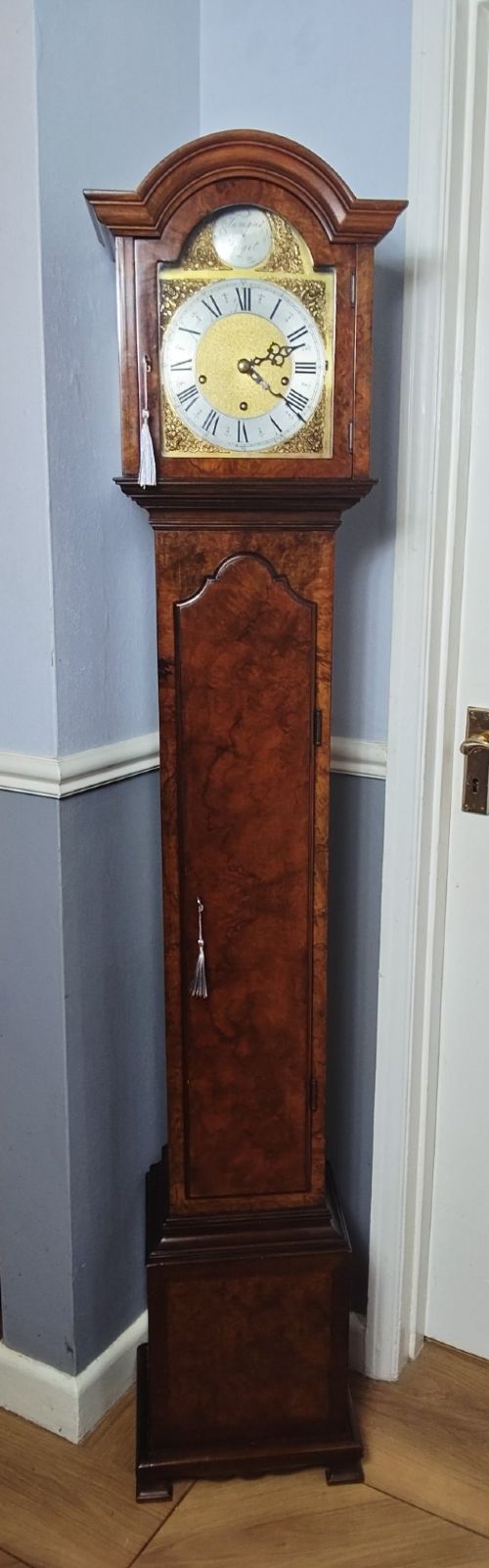
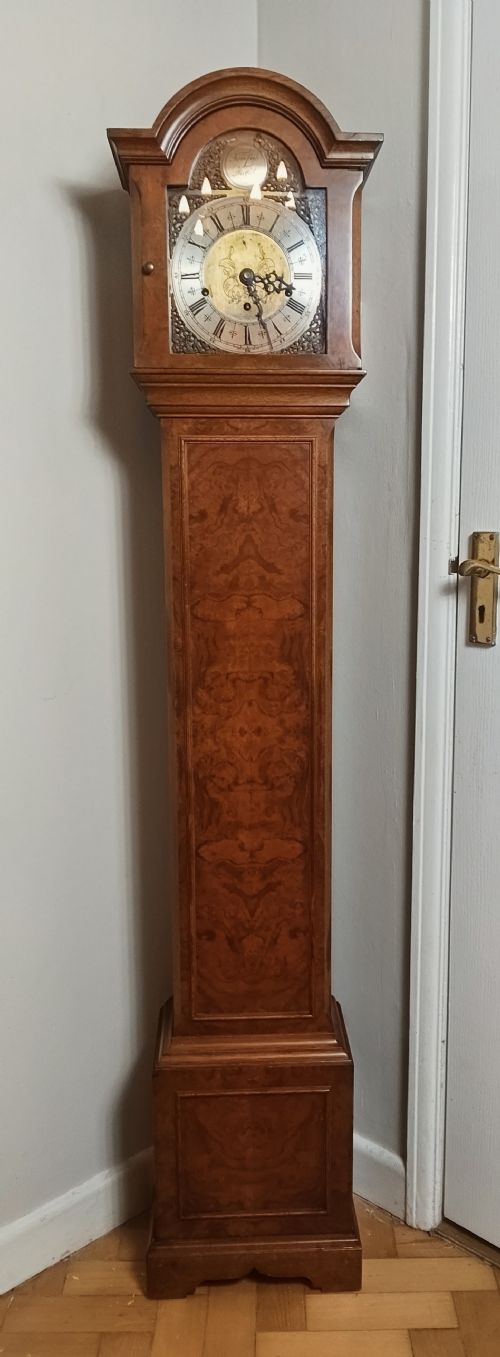
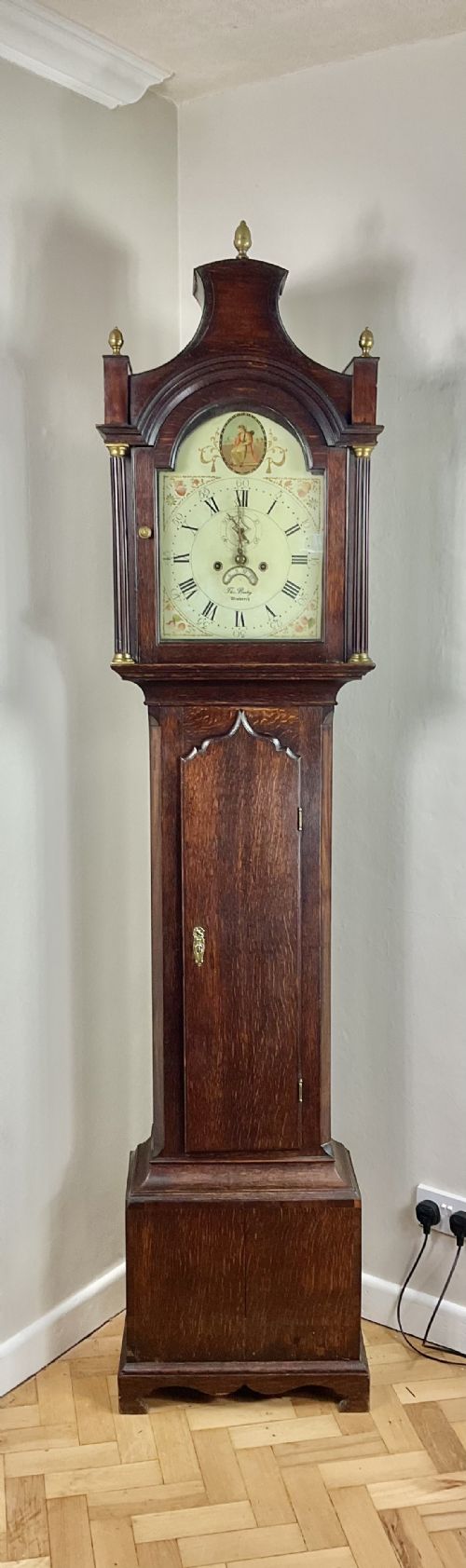
An arched dial hall clock is a tall timekeeper housed in a fitted wooden case, designed to stand upright against a wall. The arched dial distinguishes these pieces from square-faced variants, providing extra space for calendar rings, moon phases, or decorative spandrels above the main chapter ring.
You will encounter pieces ranging from eighteenth-century oak examples to twentieth-century grandmother clocks of smaller proportions. Cases vary from simple country pine or oak constructions to deeply figured mahogany and burr walnut with brass details.
Formations include full-sized grandfather clocks as well as scaled-down grandmother clocks made for more compact interiors. Most retain their traditional longcase format, protecting the hanging weights and pendulum behind a glazed door.
Construction and materials
Cabinetmakers built these tall cases predominantly in timbers such as oak, mahogany, and walnut, often selecting figured veneers or burr walnut for decorative impact. The timber was seasoned, joined, and polished to protect the wood grain and highlight natural figures.
Dials combined brass backplates, silvered chapter rings, and cast brass spandrels, sometimes enhanced by hand-painted scenes or mechanical moon rollers. Glass panels protected the dial face and allowed a view of the swinging pendulum below.
Arched Dial Hall Clock Retail Price Guide 2026
Typical asking prices for arched dial hall clock among the pieces listed under this phrase on Sellingantiques today, from the lower quarter to the upper quarter. They describe what is for sale here now, not the wider market.
Materials recorded across the inventory include oak, mahogany, walnut, burr walnut, brass, glass, and iron.
Assessing quality
Quality rests in the harmony of proportions between the hood, trunk, and base, alongside the crispness of the brass dial work and movement. Finer examples show careful timber selection, such as figured mahogany or burr walnut matched across the door and trunk.
The sophistication of the internal movement dictates the standard, moving from simple time-and-strike mechanisms to quarter chiming and musical variations by makers of note. Original brass components, well-cut gear teeth, and clean engraving elevate a piece far above standard workshop production.
Dwerrihouse & Carter·Thomas Baker of Malling·Thomas Hall Romsey·Elliott
The Arched Dial Hall Clock Glossary
- Arched dial
- A clock face featuring a curved top section above the square chapter ring, often housing a moon roller or subsidiary dial. This shape became popular in the eighteenth century and persisted through later revival periods.
- Grandmother clock
- A smaller version of the traditional longcase clock, typically standing under six feet tall. These pieces appeared in Edwardian and twentieth-century interiors to suit restricted ceiling heights.
- Moon roller
- A rotating mechanical disc behind the dial arch that tracks the phases of the moon through a lunar month. It requires careful setup alongside the calendar and timekeeping functions.
- Chapter ring
- The circular ring on the clock face bearing the numerals for the hours and minutes. On better pieces, these rings are individually silvered and engraved.
- Spandrel
- The decorative metal corner piece fitted outside the chapter ring on a brass dial. Early examples are cast and chased brass, whilst later versions adopt various revival styles.
Arched Dial Hall Clock: Frequently Asked Questions
How do I wind an arched dial hall clock?
Winding involves using a crank key to raise the weights suspended inside the trunk by pulling the catgut or wire lines. Care must be taken not to over-wind the springs or weights.
Most movements require winding once a week, though some quarter-chiming variants need more frequent attention to keep the train running smoothly.
Where should I place a hall clock?
Position your clock against a solid interior wall away from direct sunlight, heating vents, and damp doorways. Stable flooring prevents vibrations from interfering with the pendulum swing.
Allow enough clearance around the case for the hood to open safely when it is time for maintenance or setting the hands.
How do I tell an 18th century clock from a 20th century one?
Eighteenth-century examples usually feature solid timber construction, hand-engraved brass dials, and simpler time-and-strike movements built for country houses. Twentieth-century grandmother clocks often show modern proportions, electric or refined spring-driven movements, and highly figured burr veneers.
Examining the interior woodwork, screw types, and dial fixings reveals the manufacturing era and helps confirm whether the movement matches the case.