

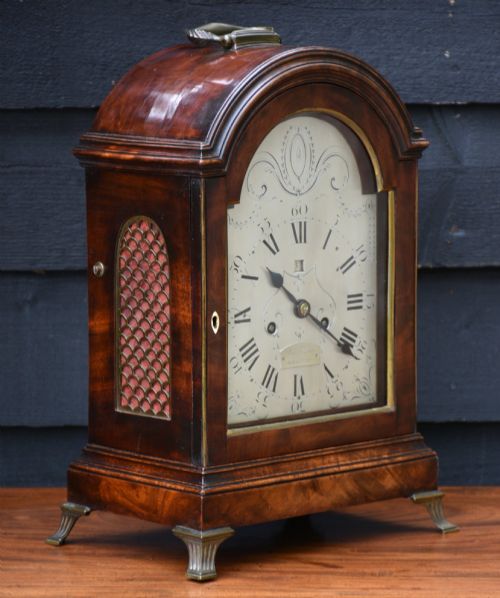
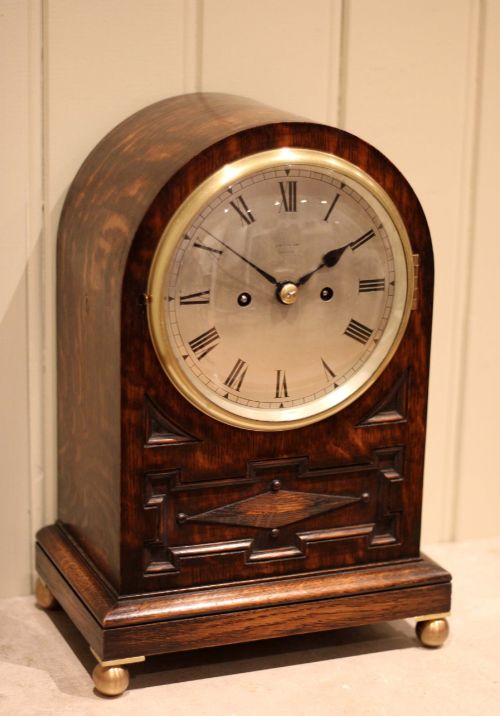
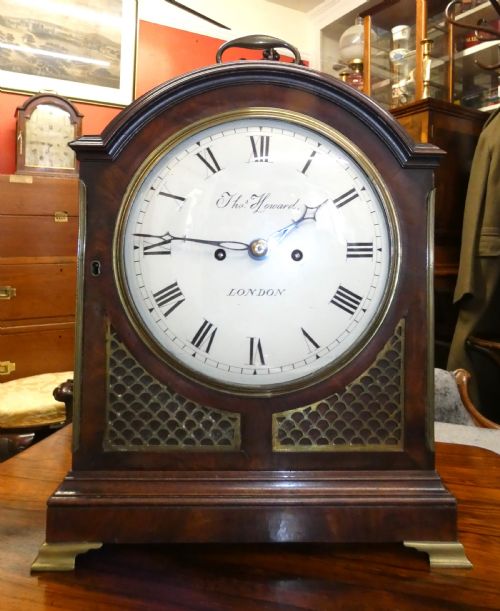
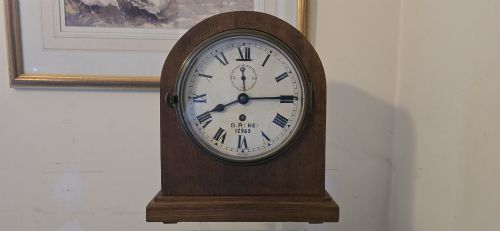
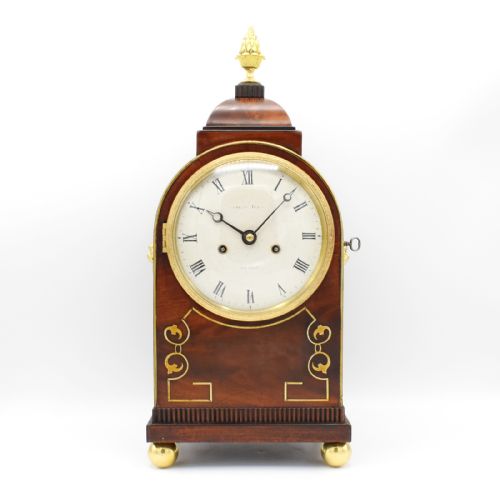
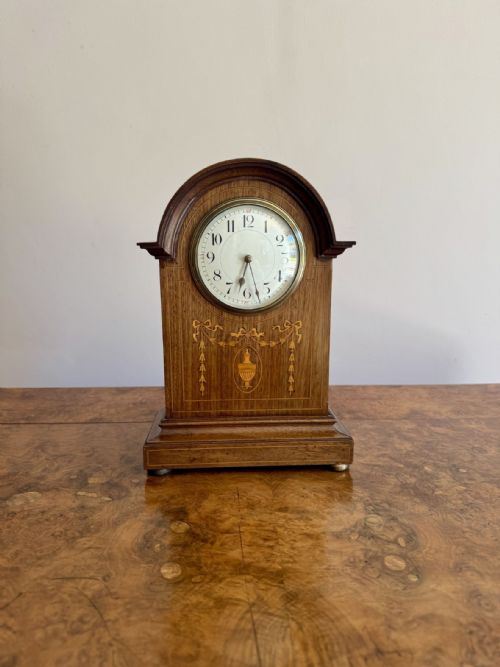
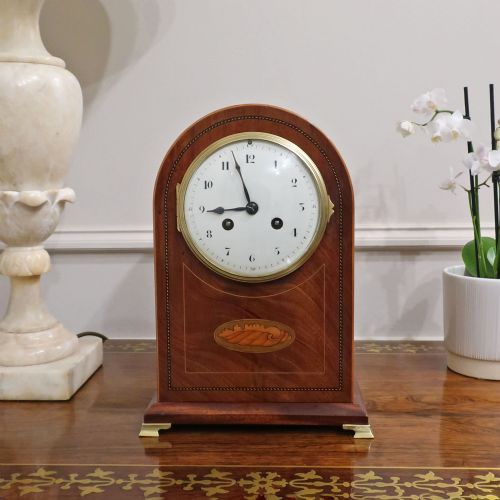


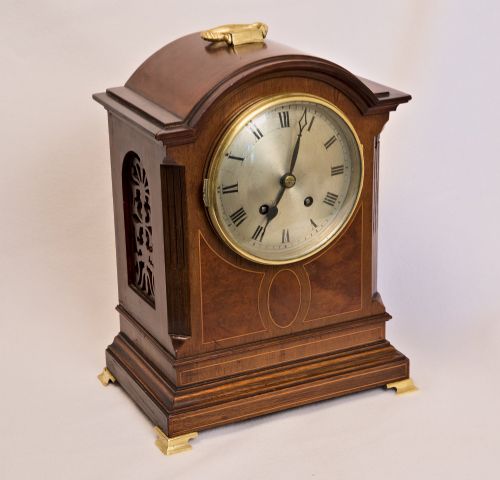
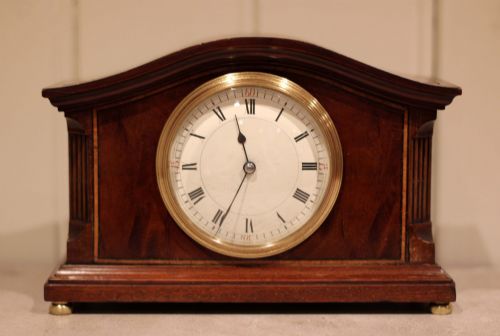

Arch Top Wooden Clock
An arch top wooden clock brings a refined architectural silhouette to a room, driven by traditional mechanics and warm timber cases.
Arch Top Wooden Clock
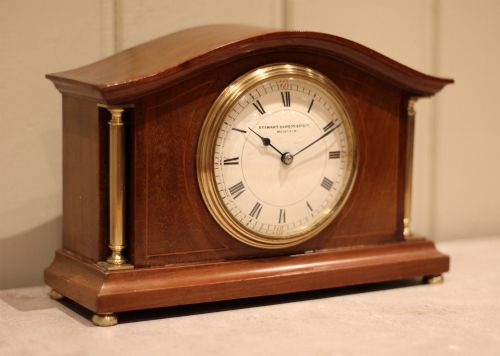
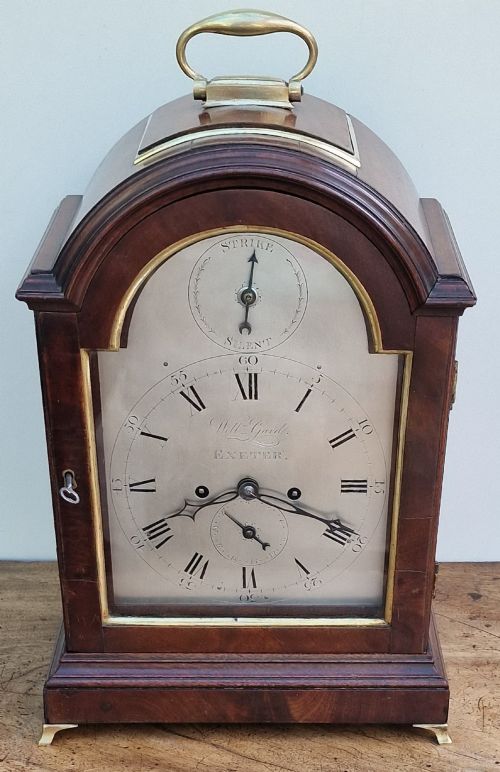
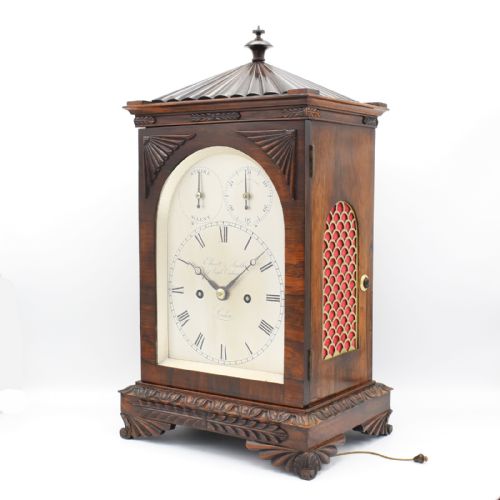
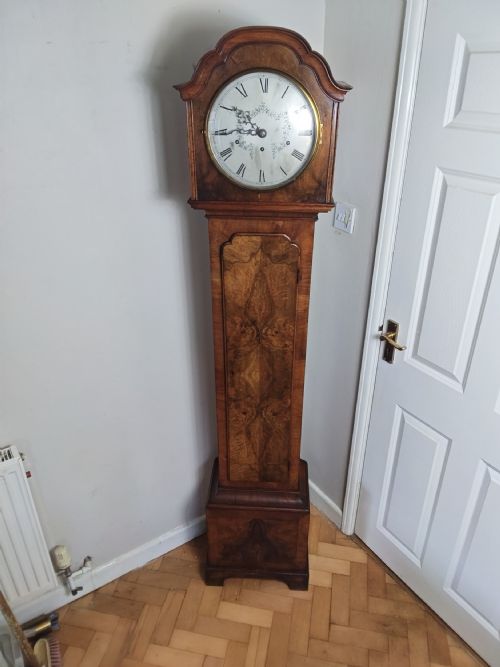
The arch top wooden clock selection focuses primarily on compact table, mantel, and bracket clocks alongside taller floor-standing longcase examples. These pieces span from the Georgian and Regency eras through the Victorian period, Edwardian years, and into the early twentieth century.
Mahogany forms the dominant timber across the selection, often accompanied by oak, walnut, and satinwood detailing. Makers house precise movements within these arched wooden housings, combining functional timekeeping with cabinetry skills.
Buyers encounter regional provincial examples alongside pieces signed by London makers and continental workshops. The selection balances domestic mantel timepieces with more complex musical and chiming bracket formats.
Materials and Construction
Cabinet makers construct the arched housings from solid timbers and veneers, utilising mahogany, oak, walnut, and satinwood. Brass mounts, glass bezels, and inlaid stringing complement the timber surfaces.
Clockmakers fit mechanical movements powered by fusee drives, weights, or springs behind silvered, painted, or enamel dials. Steel components and brass gears regulate the striking, chiming, and timekeeping functions.
Arch Top Wooden Clock Retail Price Guide 2026
Typical asking prices for arch top wooden clock among the pieces listed under this phrase on Sellingantiques today, from the lower quarter to the upper quarter. They describe what is for sale here now, not the wider market.
Listings feature mahogany, oak, walnut, and satinwood cases enclosing brass and enamel dials across the nineteenth and twentieth centuries.
Assessing Quality
Quality rests in the crispness of the timber cabinetry and the sophistication of the internal movement. Finer pieces display careful wood selection, such as figured mahogany or burr walnut, matched with restrained inlay and brass fittings.
The reputation of the maker inscribed on the dial or movement plate indicates the standard of workshop execution. Superior examples retain original components, clean dial engraving, and complex striking or musical trains.
Thomas Howard·Charles Pratt·Ellicott and Smith·Cording of London·S Simpson Southampton·Perigal of London·James Coster of Henley·Lenzkirch·Ganthony of London·Barraud and Lunds·Leith of London
The Arch Top Wooden Clock Glossary
- Bracket clock
- A portable table or mantel clock originally designed to sit on a wall bracket. These pieces often feature carrying handles and glazed side panels.
- Fusee
- A conical pulley connected to a cord or chain that equalizes the pull of the mainspring as it winds down. This mechanism ensures steady timekeeping.
- Lancet top
- A clock case profile featuring a pointed arched top resembling a lancet window. This style appears frequently on nineteenth-century mantel clocks.
- Grandmother clock
- A slender, scaled-down version of a longcase clock. These tall floor-standing pieces suit smaller rooms while housing weight-driven movements.
- Verge escapement
- An early mechanical regulating device controlling the release of the gear train. It works with a balance spring or pendulum to measure time.
Arch Top Wooden Clock: Frequently Asked Questions
What is a bracket clock?
A bracket clock is a portable timepiece housed in a wooden case, designed historically to sit on a wall bracket or furniture top. They frequently include brass carrying handles and glazed panels to view the movement.
These clocks range from simple spring-driven timepieces to complex models featuring quarter-chiming mechanisms and striking trains.
How do fusee movements work?
A fusee movement uses a conical pulley attached to a chain or cord that moderates the power delivered by the mainspring. As the spring unwinds, the chain moves to a wider part of the cone, maintaining constant torque.
This clever mechanical device ensures the clock maintains steady accuracy throughout its running cycle between windings.
Where should I place a mantel clock?
Mantel clocks suit stable horizontal surfaces such as sideboards, shelves, and fireplace mantels away from direct heat sources. Placing them on a level foundation helps the pendulum swing evenly.
Ensure the room humidity remains moderate to protect the antique wood case and delicate internal brass components from tarnishing.