

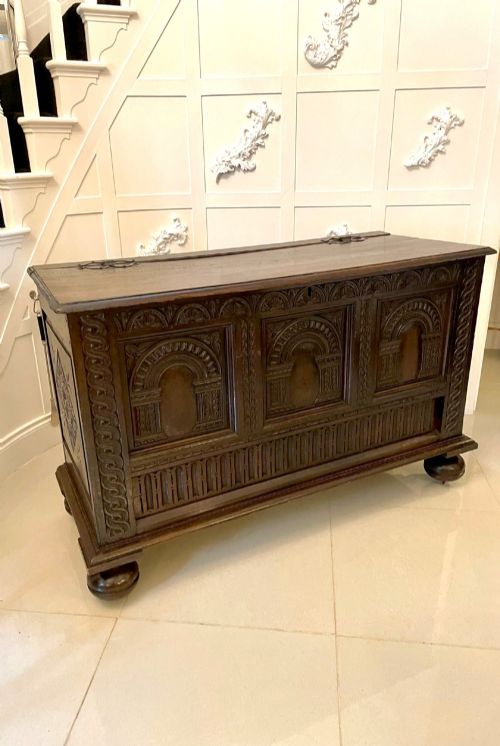

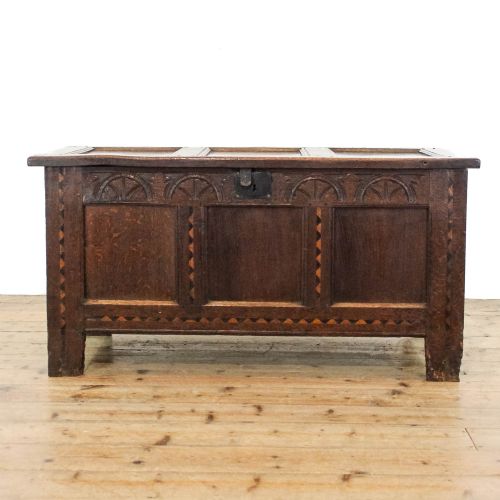
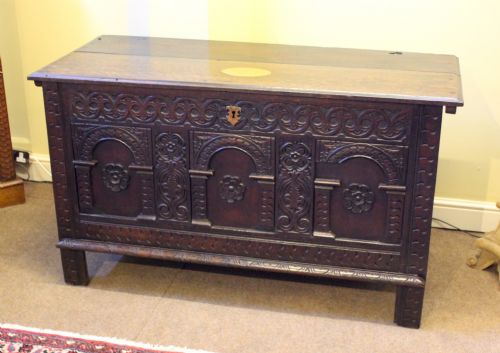


Arcaded Carved Chest
An arcaded carved chest is a sturdy timber storage piece featuring distinctive arched architectural detailing that brings centuries of history into a room.
Arcaded Carved Chest
An arcaded carved chest is fundamentally a secure timber storage trunk, commonly designated in period terms as a coffer, designed to hold household valuables, linens, and documents. These pieces form a distinct group within the wider category of coffers and chests, identifiable by the carved arches that decorate the front panels.
The versions most frequently encountered on this page date from the seventeenth century, constructed in solid timber with panelled construction. Alongside these seventeenth-century pieces, later revivals from the nineteenth and twentieth centuries appear, including Elizabethan Revival and Jacobean Revival side tables and storage chests that adopt the earlier vocabulary of arcaded carving.
Forms vary from standard rectangular coffers to side tables incorporating storage, reflecting how these robust items adapted to domestic needs over time. Oak remains the predominant timber across the selection, often enriched with fruitwood inlay or fitted with iron and brass hardware.
How they were made
Construction relies primarily on heavy oak, fashioned into robust panels using traditional joinery techniques suited to sturdy furniture. Carpenters shaped the timber to form the structural framework of the trunk, ensuring durability for domestic use.
Carving defines the aesthetic, with artisan woodworkers chiselling decorative arches directly into the wood to create the signature arcaded front panels. In certain examples, wood inlay and fruitwood inlay introduce contrasting tones and geometric patterns to the primary oak surface.
Arcaded Carved Chest Retail Price Guide 2026
Typical asking prices for arcaded carved chest among the pieces listed under this phrase on Sellingantiques today, from the lower quarter to the upper quarter. They describe what is for sale here now, not the wider market.
Materials documented across the inventory include solid oak, brass, iron, and contrasting fruitwood inlay.
What varies in quality
The standard of execution in the carved arches and panel work sets individual pieces apart, distinguishing confident, crisp hand-carving from simpler or later interpretations. The handling of the timber, particularly the selection of well-figured oak and the integration of any fruitwood inlay, dictates visual richness.
Depth of period character also influences the standing of a piece, separating authentic seventeenth-century construction from later revival interpretations such as those produced around nineteen hundred or nineteen twenty. The integrity of the structure and the preservation of original timber surfaces complete the distinction between ordinary and superior examples.
The Arcaded Carved Chest Glossary
- Arcaded
- Decorated with a series of connected arches, mimicking architectural colonnades on the wooden panels. This motif is the defining visual characteristic of the group.
- Coffer
- A traditional heavy storage chest, usually fitted with a hinged lid and used for securing valuables and textiles. It represents the primary object type associated with this search.
- Jacobean Revival
- A nineteenth or twentieth century artistic movement that copied the dark oak, geometric moulding, and carved styles of the early seventeenth century. Pieces from this era emulate original Charles I designs.
- Panelled construction
- A method of joining wooden frames around a thinner central board to allow timber to expand and contract safely with humidity changes. This technique prevents major splitting in heavy oak furniture.
Arcaded Carved Chest: Frequently Asked Questions
What is an arcaded carved chest used for?
These pieces were historically utilised for securely storing valuable household items, documents, and textiles away from damp floors and pests. In modern settings, they serve primarily as robust storage trunks or decorative statement furniture.
Their sturdy flat lids also allow them to function effectively as window seats or occasional surface tables within a hallway or living space.
How can I tell a seventeenth-century piece from a revival?
Seventeenth-century examples display authentic period tool marks, timber shrinkage patterns, and construction methods consistent with early joinery. The patination on the oak develops a deep, unforced warmth over centuries of handling.
Revival pieces, such as those from the early twentieth century, often exhibit machine-assisted cuts, lighter finishes, and a uniformity in the carved arches that differs from older hand-chiselled work.
Are these chests always made of oak?
Oak is the predominant timber found across the available listings, chosen for its strength and abundance in early English cabinet making. It forms the solid structural core of both the seventeenth-century coffers and the later revival pieces.
Secondary decorative elements on these surfaces frequently incorporate fruitwood inlay to create contrasting geometric or floral patterns against the darker oak background.
How do I care for an antique oak coffer?
Maintaining these heavy timber items requires placing them away from direct heat sources and drastic humidity shifts to prevent the oak from splitting. Regular dusting with a dry or very slightly damp cloth preserves the surface without damaging the wood.
Applying traditional beeswax occasionally helps nourish the antique oak and maintains the natural lustre of the panelled surfaces.