
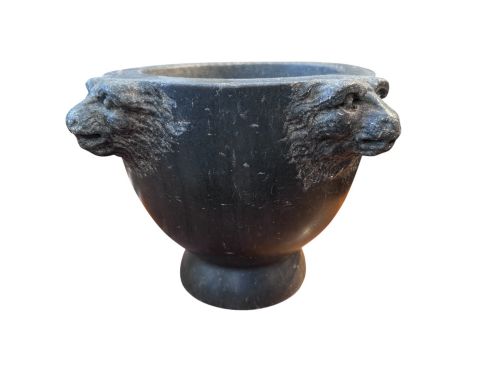
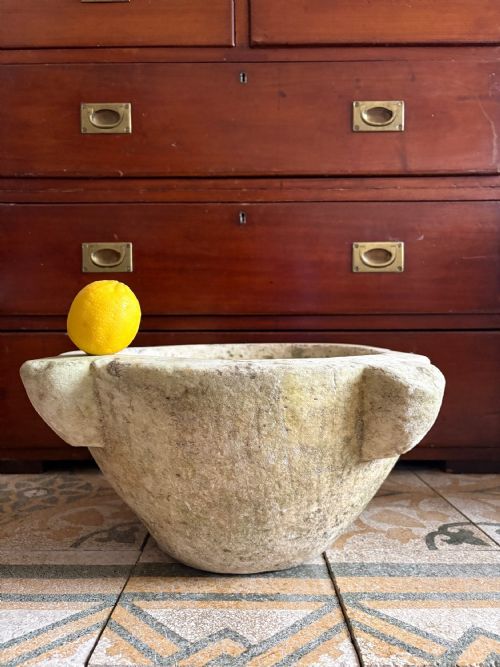


Apothecary Grinding Mortar
An apothecary grinding mortar is a heavy vessel used for crushing dry materials, offering tactile connection to centuries of compounding.
Apothecary Grinding Mortar
When you search for an apothecary grinding mortar, you encounter robust vessels designed for heavy physical reduction in pharmacies, kitchens, and dye workshops. The selection on this page spans simple kitchenware to monumental dye maker's vessels.
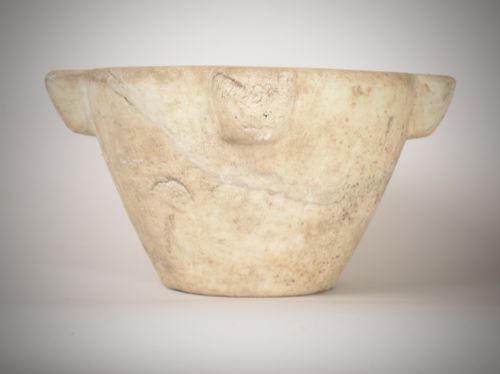
Most examples you meet here emerge from the seventeenth, eighteenth, and nineteenth centuries, taking the form of mortars, mortars with matching pestles, and apothecary pots. Forms range from compact domestic implements to massive stone troughs.
Origins stretch across English, French, and Italian traditions, encompassing styles from the Renaissance Revival to rustic country aesthetics. You frequently find pieces associated with the Georgian era and the seventeenth century.
Materials and construction
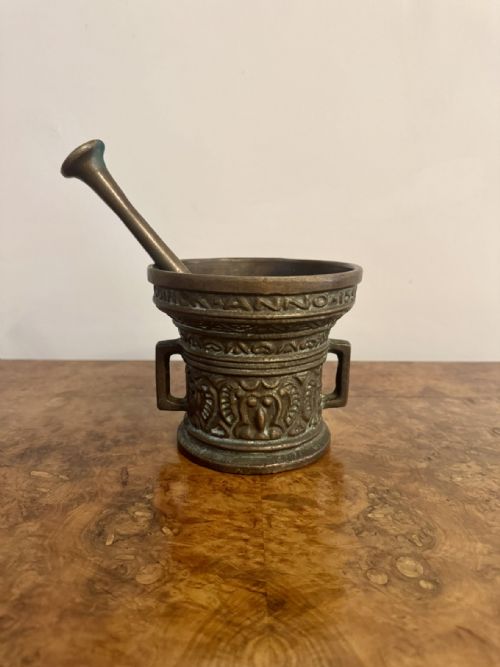
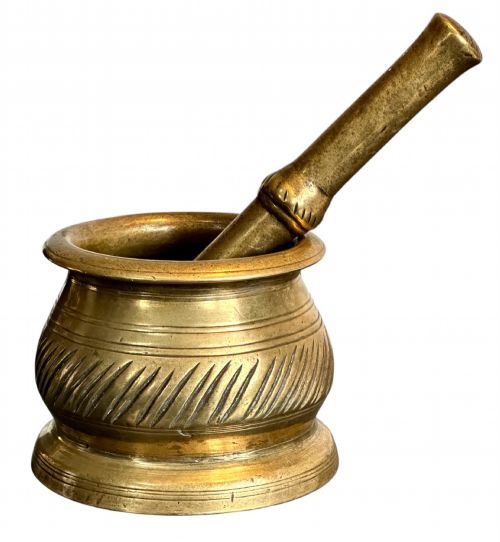
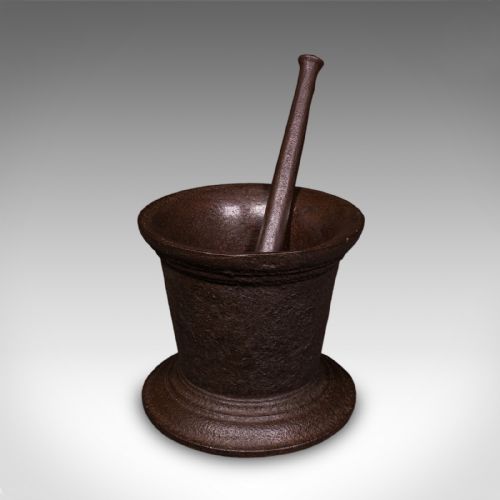
Makers shaped these vessels from dense, durable materials including cast bronze, brass, stone, white marble, basalt, cast iron, and turned wood like lignum-vitae and walnut. Each material provided the necessary mass and abrasion resistance to pulverise tough substances without cracking.
Foundry workers cast metal mortars in moulds, sometimes incorporating decorative Tudor rose motifs or Gothic revival surface details. Stonemasons and turners carved or shaped marble, basalt, and timber pieces from solid blocks.
Pestles were fashioned from matching metals or dense woods to pair with the main vessel, ensuring effective grinding friction during use.
Some heavy metal mortars double happily as robust planters, giving apothecary vessels a second career in domestic greenery.
Assessing quality and presence
Quality rests primarily on the integrity of the material, the substance's density, and the weight of the vessel. Massive specimens, such as heavy dye maker's mortars or large marble bowls, demonstrate superior manufacturing ambition.
Surface character defines the upper tier, where natural age patination, tool marks from turning, and clear casting definition remain undisturbed. Decorative elements like Tudor rose motifs add distinction to standard forms.
The presence of a matching original pestle elevates an individual mortar into a complete pairing, enhancing both historical completeness and visual balance.
The Apothecary Grinding Mortar Glossary
- Mortar
- A heavy bowl or vessel used with a pestle for pounding and grinding substances. It forms the primary body of the compounding set.
- Pestle
- A heavy, club-shaped tool used for crushing and grinding materials against the interior of a mortar. Matching pestles complete the operational set.
- Lignum-vitae
- A dense, hard timber derived from trees of the genus Guaiacum, often turned into durable wooden mortars. Its natural oils resist splitting during heavy impact.
- Basalt
- A dense, dark volcanic rock utilised for forming hard-wearing mortar bowls. Its fine texture resists chemical erosion during grinding tasks.
- Jardiniere
- A decorative container for holding plants and flowers, a secondary decorative role that some sturdy antique mortars adopt in modern settings.
Apothecary Grinding Mortar: Frequently Asked Questions
What is an apothecary grinding mortar?
An apothecary grinding mortar is a thick-walled vessel designed to crush, grind, and mix dry substances with a pestle. These implements were essential tools for pharmacists, apothecaries, and alchemists.
Today, surviving examples serve as sculptural decorative objects or heavy plant holders in homes.
How were these mortars used?
Apothecaries and merchants placed crude ingredients into the heavy bowl and used the matching pestle to grind them down by hand. This mechanical reduction prepared powders for medicines, dyes, and culinary recipes.
The sheer weight of the bronze, stone, or iron vessel kept it stable during vigorous rotational grinding.
How do I style a heavy mortar at home?
Their substantial weight and sculptural forms make antique mortars ideal for display on kitchen worktops, sideboards, or open shelving. Large stone or marble bowls also function effectively as striking planters.
Keeping the vessel empty highlights its patinated metal or carved stone surface without clutter.
How can I tell the period of a mortar?
Dating relies on material choices, manufacturing techniques, and decorative motifs like Tudor roses or Gothic revival details. Seventeenth-century pieces often display simpler turned wood or heavier cast bronze forms.
Later nineteenth-century pieces show different foundry standards and occasionally cleaner interior tooling marks.