

Antique Writing Vanity
An antique writing vanity brings dual-purpose craftsmanship to a room, combining the practicality of a desk with the intimacy of a dressing table.
Antique Writing Vanity
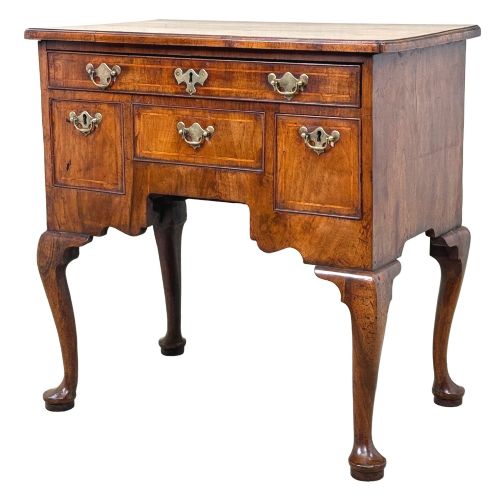
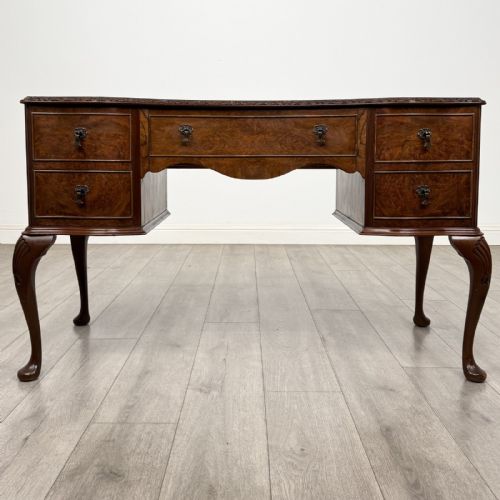
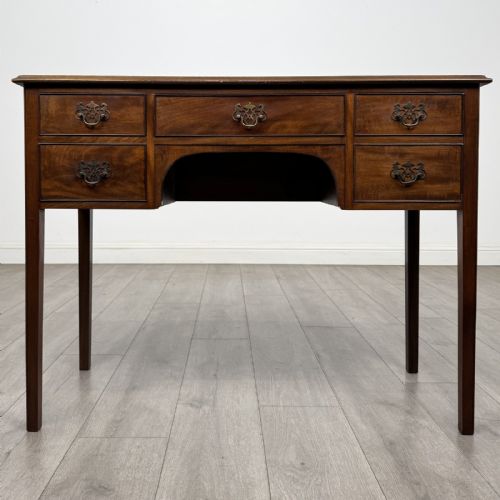
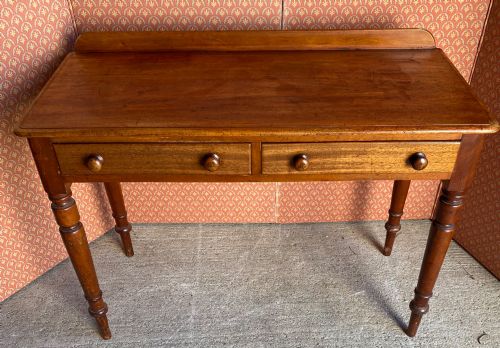
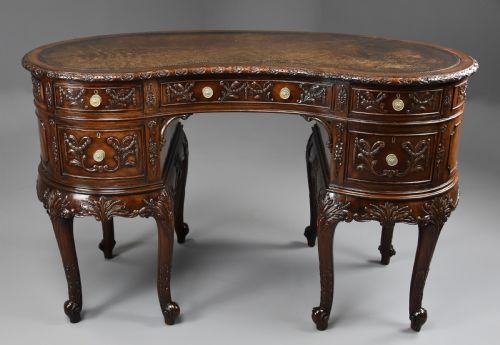
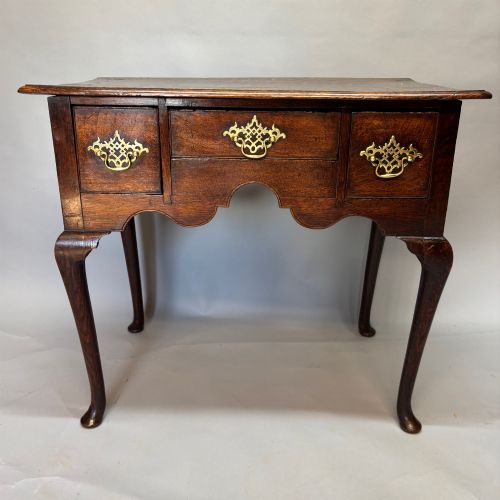
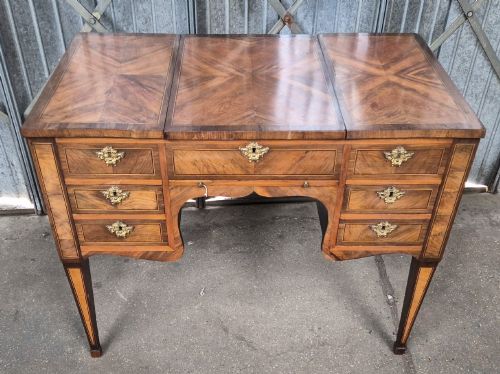
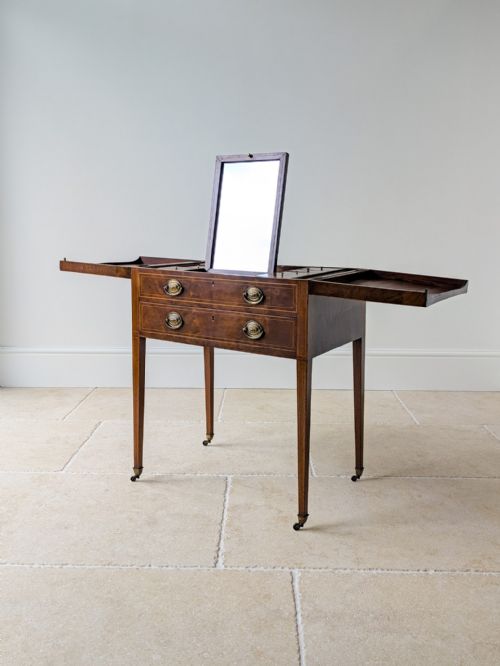
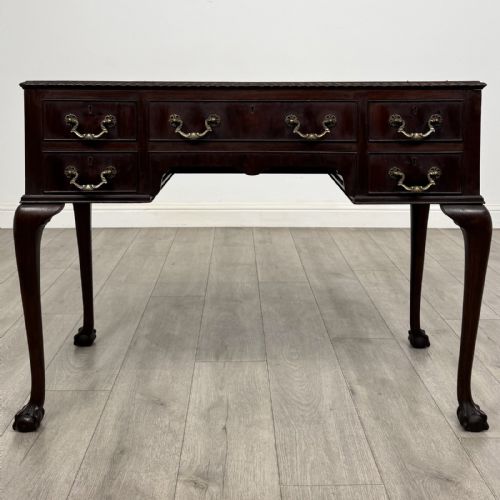
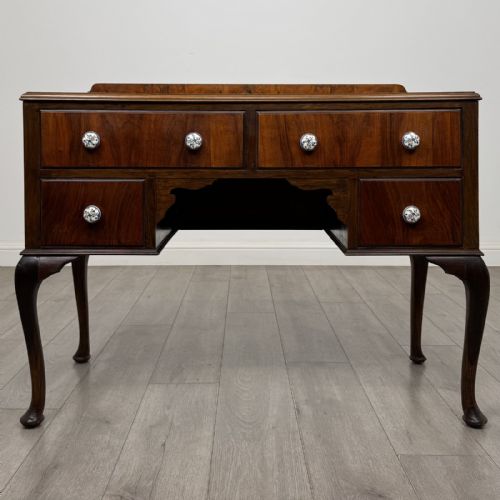
An antique writing vanity serves multiple domestic functions, appearing in forms such as dressing tables, lowboys, kneehole desks, and poudreuses. These pieces bridge the gap between personal grooming and correspondence, offering dedicated surfaces for daily preparation and letter writing.
The selections span distinct historical eras, with pieces originating from the Georgian, Regency, and Victorian periods, alongside Edwardian and early twentieth-century examples. Mahogany, walnut, and oak dominate the construction, often supplemented by specialised forms like satinwood table-top bureaux and Chinoiserie lacquered dressing tables.
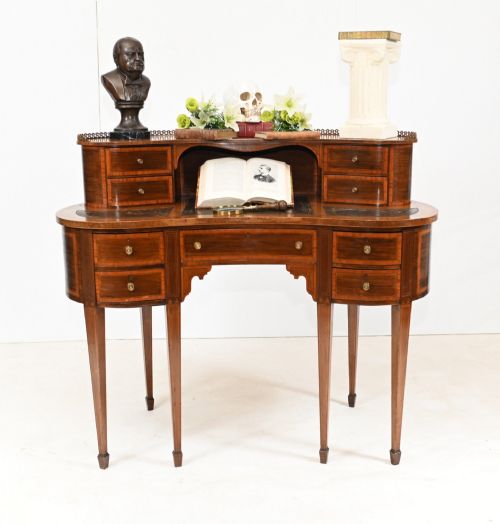
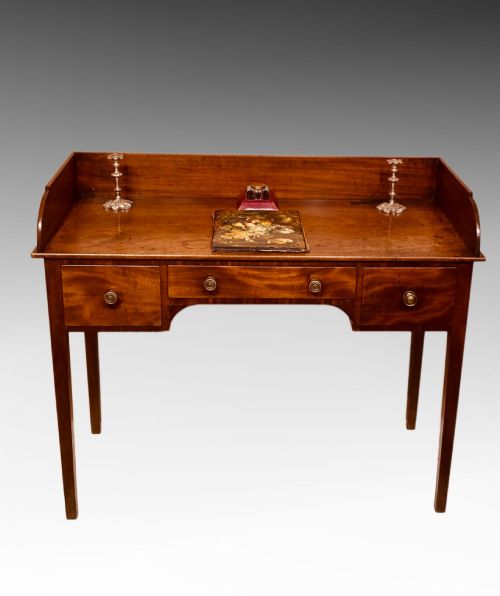
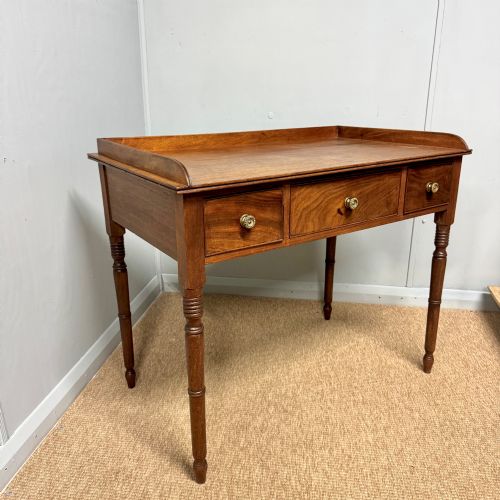
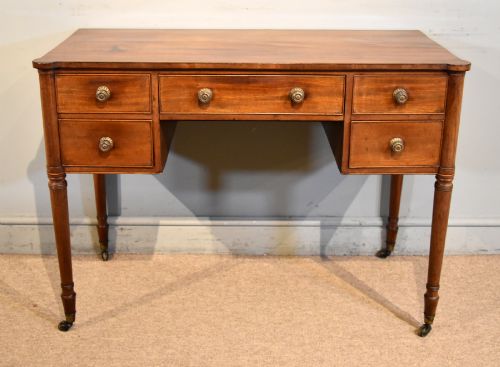
Buyers encountering this category most frequently meet mahogany and walnut pieces featuring multiple drawers, occasional gallery tops, and fitted compartments. The domestic utility of these items has persisted, leading to their contemporary adaptation as home office desks and bedroom dressing stations.
Materials and construction methods
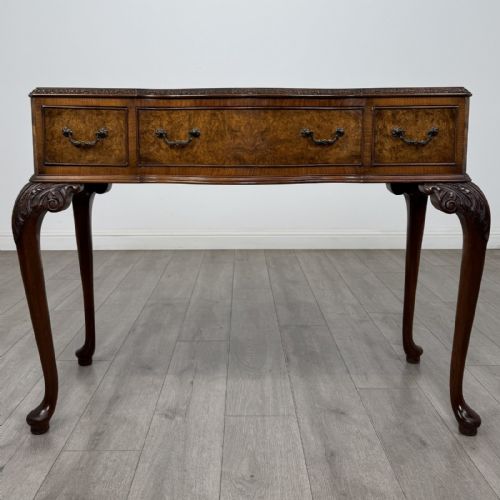
Cabinetmakers utilised robust hardwoods such as mahogany, oak, and walnut to build the primary carcass and framing of each vanity, sometimes selecting burr walnut or figured mahogany for decorative impact. Inlays in satinwood and herringbone patterns provided contrast, while secondary timbers like pine formed internal drawer components.
Surface treatments incorporated inset tooled leather writing surfaces, glass panels, and lacquered finishes, alongside brass handles and drawer pulls. Joinery relied on traditional techniques to house multiple drawers, folding tops, and intricate pigeonholes designed for stationery and grooming implements.
Antique Writing Vanity Retail Price Guide 2026
Typical asking prices for writing vanity among the pieces listed under this phrase on Sellingantiques today, from the lower quarter to the upper quarter. They describe what is for sale here now, not the wider market.
Some dressing tables hide secrets behind miniature doors, turning morning preparation into a game of hide-and-seek with your hairpins.
Distinctions in manufacture and design
The standard of timber selection largely dictates the quality of a piece, with figured grains, book-matched veneers, and careful herringbone inlay distinguishing superior examples from plain utility furniture. Cabinetmakers who invested time in secondary woods and precise drawer linings elevated the overall integrity of the construction.
Heal and Son·Wylie and Lochhead Glasgow
The Antique Writing Vanity Glossary
- Lowboy
- A small oak or walnut table with drawers, typically standing on four legs, used variously for writing or dressing.
- Poudreuse
- A French dressing table featuring folding lids that reveal a mirror and compartments for cosmetics and writing equipment.
- Kneehole desk
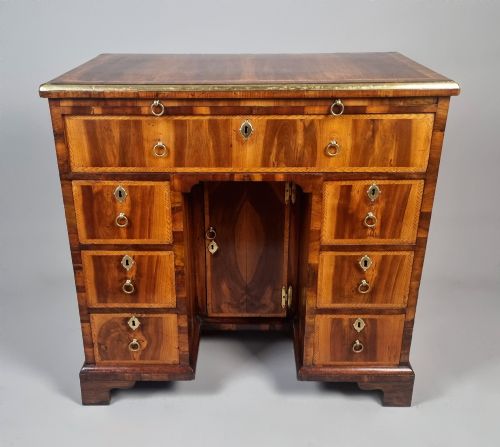
- A writing table or vanity featuring a central recess for the user's legs, flanked by pedestals of small drawers.
- Gallery
- A raised decorative border running along the edge of a tabletop to prevent items from rolling off.
- Secretaire
- A cabinet or chest incorporating a pull-down writing flap that conceals fitted interior pigeonholes and small drawers.
- Herringbone inlay
- A decorative wood-banding pattern arranged in alternating V-shapes to frame drawer fronts and tabletops.
Antique Writing Vanity: Frequently Asked Questions
How were these vanities used originally?
Owners utilised these tables for morning routines, writing letters, and managing personal accounts. The surface accommodated inkwells and writing paper, while drawers held cosmetics and documents.
In some designs, folding tops or clever compartments concealed grooming mirrors and receptacles for small personal items. This allowed a single piece of furniture to serve both bedroom and study functions.
Can I use one as a desk today?
Many buyers adapt these pieces for use as home office desks or bedroom writing tables. Their compact proportions suit modern rooms where space is at a premium.
Drawers provide convenient storage for modern stationery and small electronics. However, the kneehole height should be checked to ensure comfortable seating with a contemporary chair.
How do I identify the period of a vanity?
Dating relies on observing structural characteristics, hardware, and timber choices across different eras. Georgian pieces often display clean mahogany lines or oak lowboy forms, while Edwardian examples frequently use lighter satinwood and simpler framing.
Details such as brass drawer pulls, tooled leather inserts, and inlay styles help anchor a piece to a specific century or stylistic revival. Construction methods inside the drawers also offer clues to the date of manufacture.