

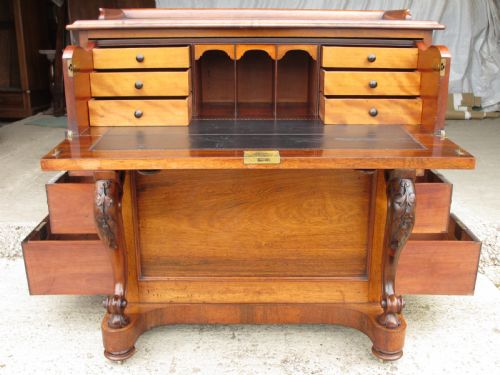


Antique Writing Slope Companion
These antique writing slope companion pieces organise a desk with traditional craftsmanship, offering practical compartments for correspondence and ink.
Antique Writing Slope Companion
An antique writing slope companion brings together portable desks, stationery boxes, and desk sets designed to keep correspondence materials orderly. When searching for this phrase, buyers encounter items ranging from compact writing boxes to larger stationery cabinets and inkstands. These forms originate from periods such as the Georgian, Regency, and Victorian eras, alongside later pieces from the 1880s, 1900s, and 1910s.
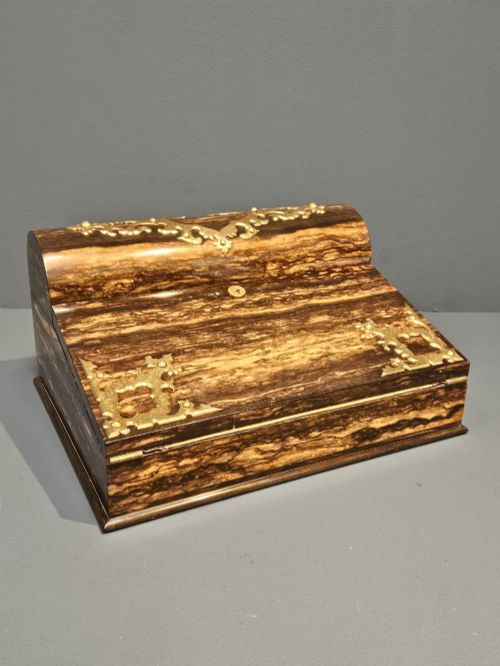
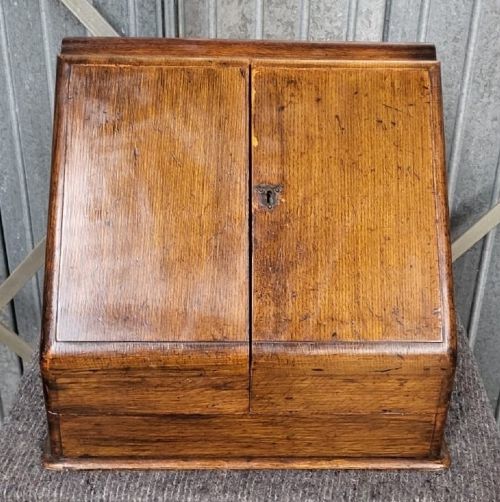
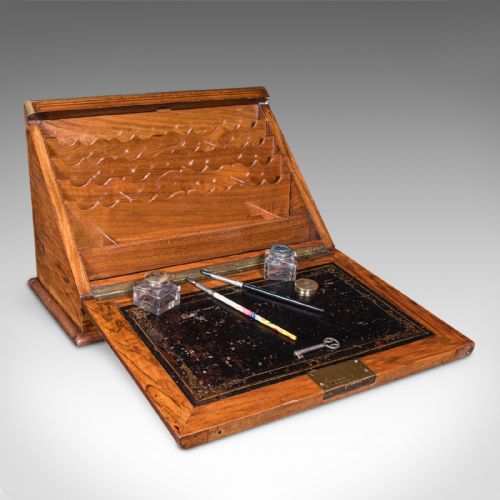
The most common versions met on this page are Victorian and Georgian items, frequently constructed as portable desks or tabletop letter racks with integrated ink bottles. Pieces span various specific forms including davenport style secretaire writing desks, double opening portable desks, and dedicated stationery cases. Walnut, oak, and rosewood form the backbone of these selections, often enhanced by brass and leather detailing.
How they were made
Cabinetmakers utilised dense timbers such as oak, walnut, burr walnut, rosewood, and mahogany to build the structural shells of these boxes and desks. Surfaces frequently incorporate decorative veneers, while interiors rely on fitted partitions for paper and pens.
Fittings include polished brass hinges, lock plates, and handles, alongside leather writing surfaces and fitted glass ink bottles. Papier-mâché and mother-of-pearl also appear on specific desk sets, adding ornamental contrast to the dark timber frames.
Antique Writing Slope Companion Retail Price Guide 2026
Typical asking prices for writing slope companion among the pieces listed under this phrase on Sellingantiques today, from the lower quarter to the upper quarter. They describe what is for sale here now, not the wider market.
One exceptional desk companion bears the stamp of Lund of London, the maker famous for inventing clever locking mechanisms.
What varies in quality
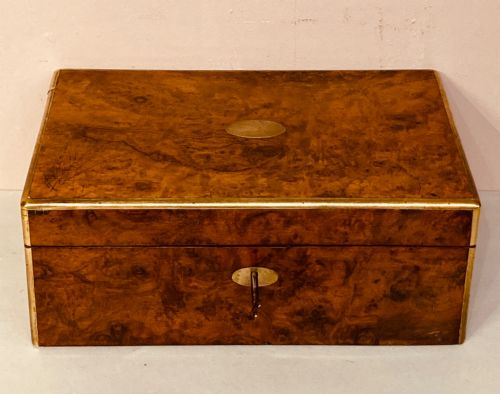
The standard of timber selection largely defines the grade of a piece, with figured burr walnut and richly grained rosewood sitting at the upper end of the scale. Superior examples demonstrate precise joinery in their internal stationery dividers and secret compartments.
Quality also shows in the retention of original desk accessories, such as matching glass ink bottles with proper collars and well-fitted leather writing slopes. Heavier brass hardware and intact mother-of-pearl inlay distinguish finer items from simpler utilitarian boxes.
Lund of London
The Antique Writing Slope Companion Glossary
- Writing slope
- A portable desk featuring an angled writing surface that often lifts to reveal storage compartments underneath. These boxes were designed for travel and home correspondence.
- Stationery box
- A tabletop cabinet with vertical dividers and compartments specifically intended to hold envelopes, writing paper, and cards. They often feature double opening lids or fall fronts.
- Inkstand
- A tray or stand holding one or more ink bottles, often accompanied by pen troughs and a sander. They sit permanently on a desk surface.
- Davenport
- A small compact writing desk with a sloped writing lid and drawers opening to the side. The style gained popularity during the Regency and Victorian periods.
- Burr walnut
- A highly prized timber veneer showing swirling growth patterns and knots. It was frequently selected for high-end Victorian and Georgian desk accessories.
Antique Writing Slope Companion: Frequently Asked Questions
What is a writing slope companion?
A writing slope companion refers to desk accessories and portable boxes designed to hold writing materials, ink, and stationery in one organised place.
These pieces range from standalone letter racks and inkstands to complete writing boxes and portable desks used in the nineteenth century.
How were antique stationery boxes used?
Stationery boxes sat on desks to keep paper, envelopes, and cards clean, dry, and neatly sorted within dedicated vertical and horizontal compartments.
They allowed writers to access correspondence supplies quickly without disturbing the main writing surface.
What woods are common in these pieces?
Cabinetmakers commonly utilised durable timbers such as oak, walnut, rosewood, and mahogany for the main bodies of these boxes and desks.
More decorative items frequently feature burr walnut veneers, coromandel, or papier-mâché finishes.
How do I identify a Victorian piece?
Victorian items often display heavier proportions, darker woods like rosewood and walnut, and elaborate brass or mother-of-pearl detailing.
Many pieces from this era incorporate multiple functions, combining letter racks, ink bottles, and slope compartments into a single desktop accessory.