


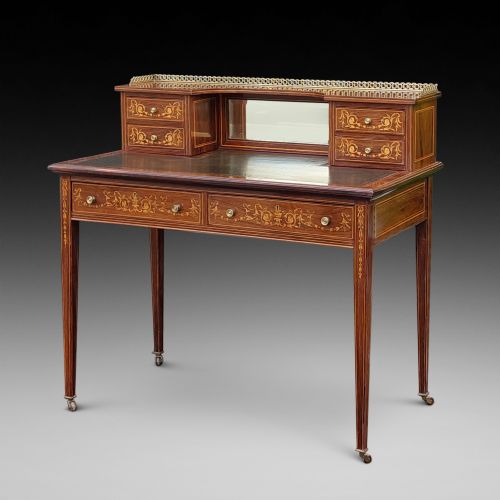


Antique Writing Desk Mirror
An antique writing desk mirror is a fitted looking glass designed for a writing surface, bringing practicality and refined reflection to a room.
Antique Writing Desk Mirror
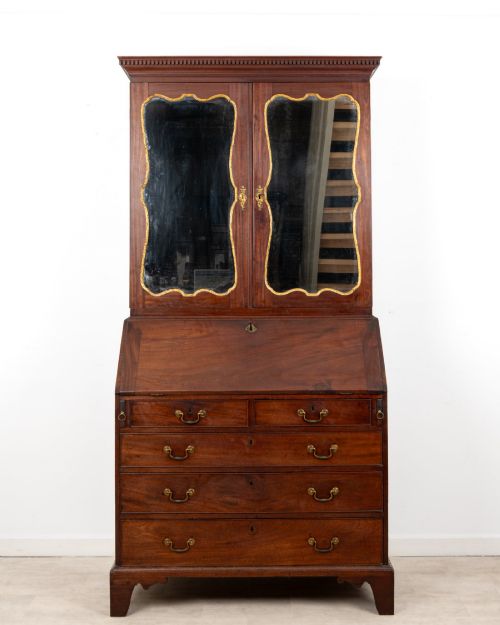
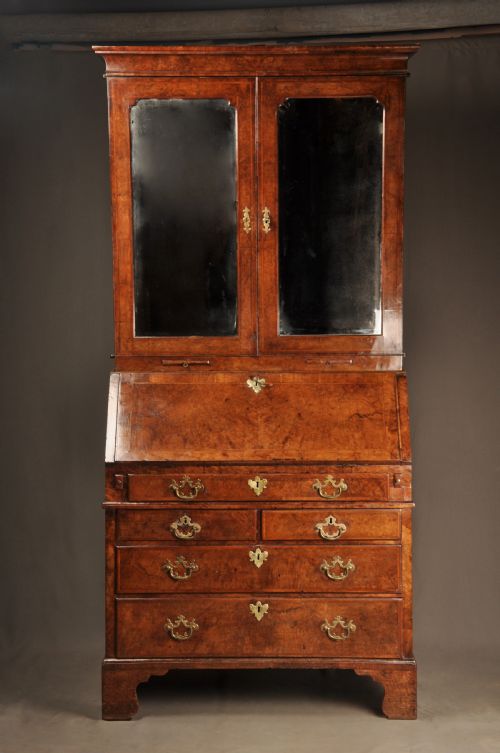
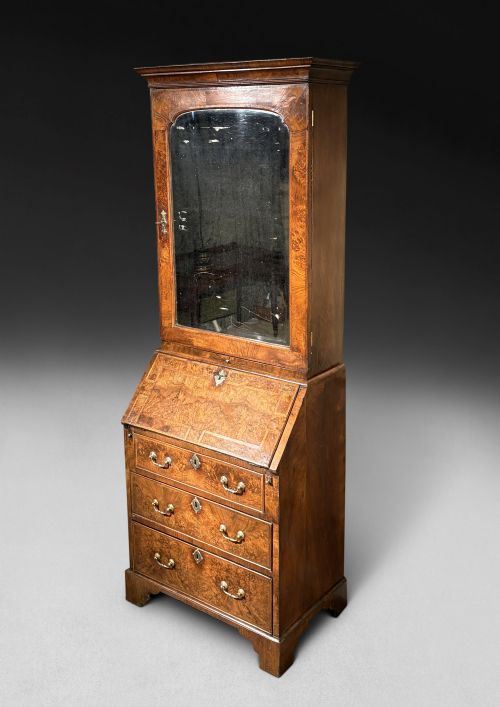
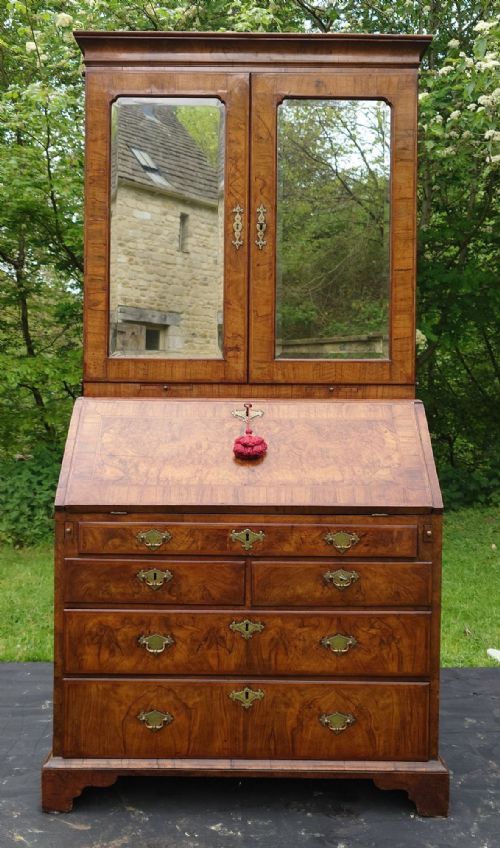
When you search for an antique writing desk mirror, you encounter pieces that combine a functional writing surface or storage with an integrated looking glass. These items emerge from periods spanning the seventeenth century through to the Edwardian era, incorporating styles from Queen Anne to George III and Victorian designs.
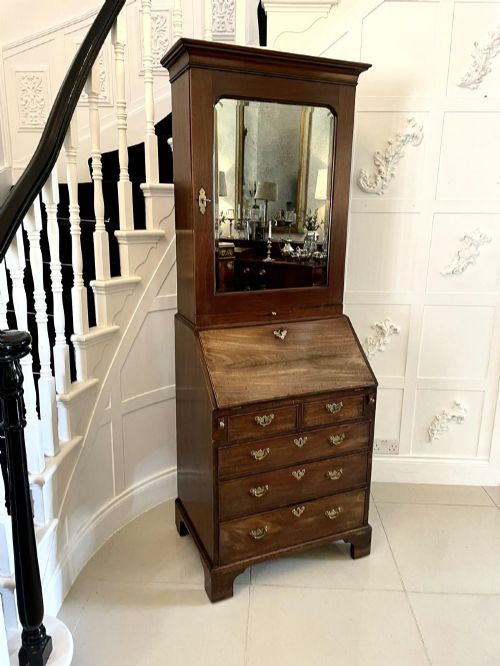
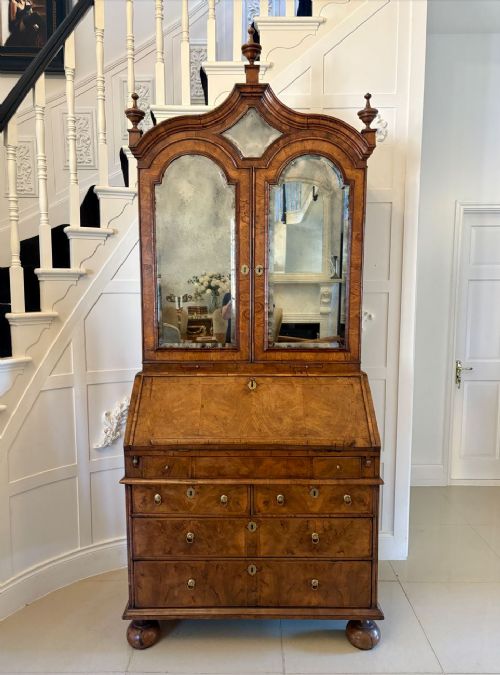
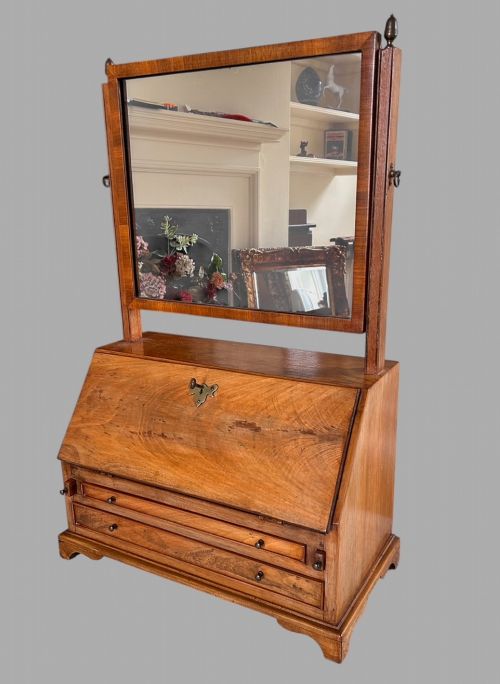
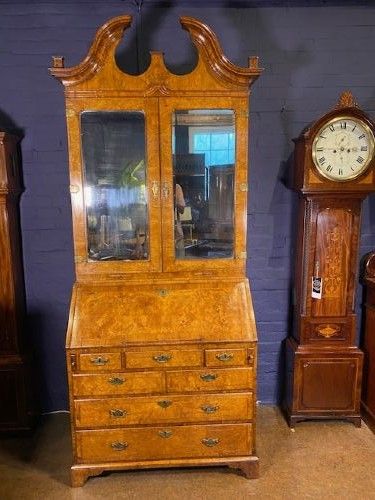
The most common forms on this page include bureau bookcases, satinwood table-top bureaus with dressing mirrors, and inlaid bonheurs du jour. These pieces range from substantial walnut and mahogany cabinets down to compact ladies writing tables featuring mirrored superstructures.
How They Were Made
Cabinet makers utilised dense hardwoods such as mahogany, walnut, burr walnut, and satinwood, often embellishing surfaces with intricate featherbanding and marquetry inlay. Brass fittings secure the hardware and support the adjustable glass frames.
The construction involves drop-front fall-front desks, secretaire drawers, and glazed or mirrored upper doors, supported by specialised joinery that accommodates both heavy book storage and delicate writing compartments.
Listings feature walnut, mahogany, satinwood, and rosewood across Georgian, Victorian, and Edwardian periods.
What Varies in Quality
The distinction between tiers rests upon the choice of timber figurations, such as highly figured burr walnut against plain grain, and the crispness of hand-cut inlay and featherbanding. Master cabinet makers achieved superior harmony in the proportion of the mirrored superstructure to the desk base.
Internal organisation also dictates distinction, with top-tier examples offering complex secret compartments, well-fitted pigeonholes, and original mercury glass plates within the mirrors rather than later replacements.
Maple & Co·Jas Shoolbred·Gillows
The Antique Writing Desk Mirror Glossary
- Bureau bookcase
- A writing cabinet with a sloping fall-front desk below a set of upper shelves enclosed by doors.
- Bonheur du jour
- A light lady writing desk featuring a small cabinet or mirrored superstructure on the upper surface.
- Featherbanding
- A decorative border made from small veneer strips arranged in a herringbone pattern around panel edges.
- Secretaire
- A piece of furniture containing a drawer or compartment that pulls down to form a writing surface.
Antique Writing Desk Mirror: Frequently Asked Questions
What is a bureau bookcase?
A bureau bookcase combines a lower desk section with a sloped fall-front writing flap and an upper shelving unit enclosed by doors. These pieces provide both enclosed storage for books and a dedicated workspace.
They appear frequently in walnut and mahogany timbers across eighteenth-century and Georgian periods, serving as substantial room furnishings.
How do I identify a Victorian writing desk?
Victorian writing desks often feature inlaid mahogany, rosewood, or satinwood, alongside integrated mirrors in forms like the bonheur du jour. These pieces reflect late nineteenth-century preferences for compact, decorative writing furniture.
Makers such as Maple and Company and James Shoolbred produced notable examples during this era, incorporating detailed marquetry and functional compartments.
What distinguishes burr walnut furniture?
Burr walnut displays swirling, knotty grain patterns harvested from the growth excrescences of walnut trees. Cabinet makers prized this timber for high-status pieces, often framing the figured panels with decorative banding.
Such treatment appears prominently on Queen Anne and George I bureau bookcases, marking them as objects of considerable refinement.
Where were table-top bureaus used?
Table-top bureaus sat upon existing tables or chests, offering a portable writing desk surface combined with a dressing mirror. These compact items suited boudoirs and private dressing rooms.
They emerged in forms incorporating satinwood and mirrored superstructures, bridging the gap between correspondence desks and dressing tables.