
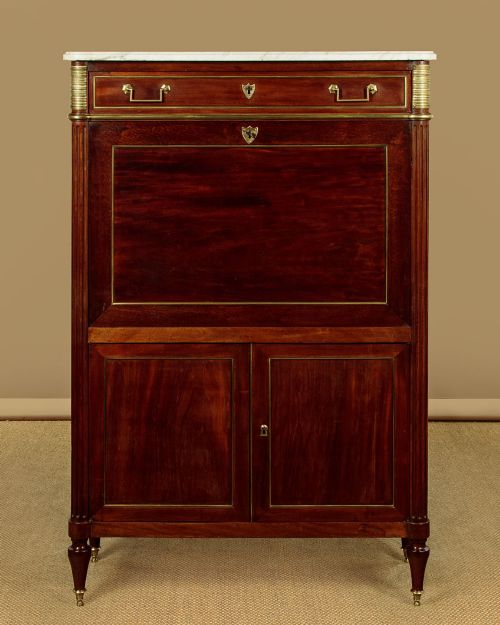
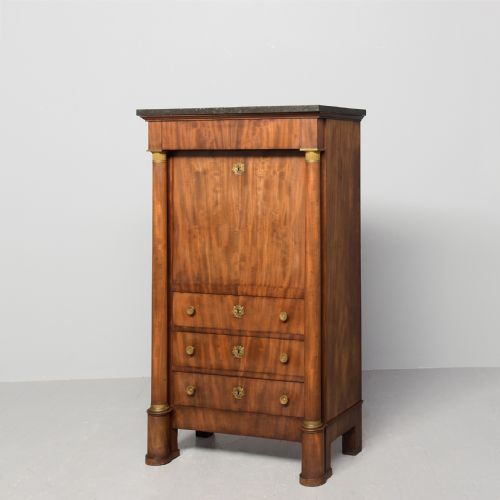
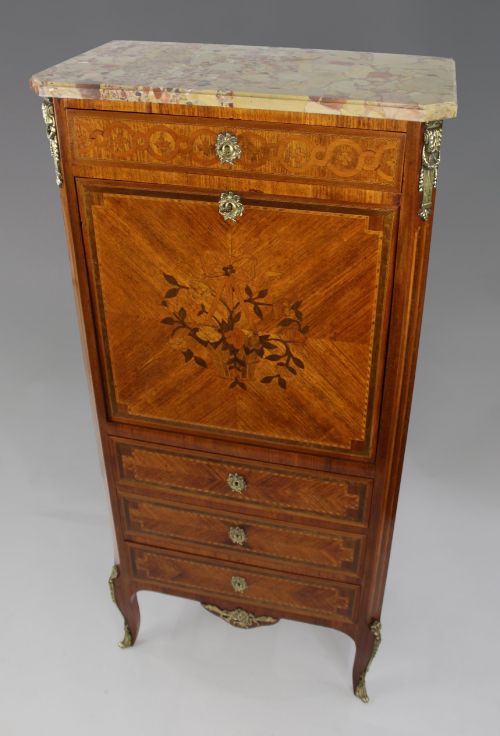
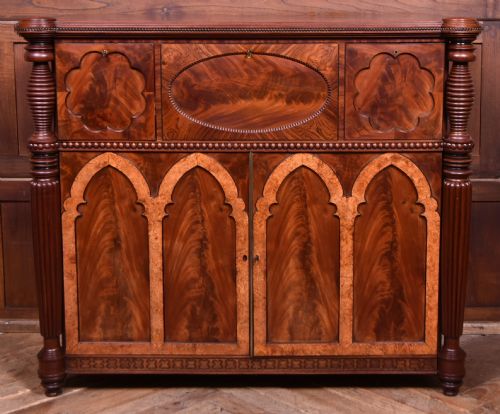

Antique Writing Abattant
An antique writing abattant combines a compact cabinet with a vertical drop-front desk, offering concealed fitted drawers for correspondence and papers.
Antique Writing Abattant
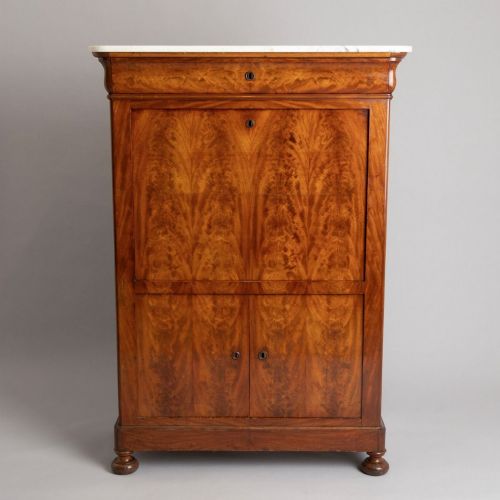
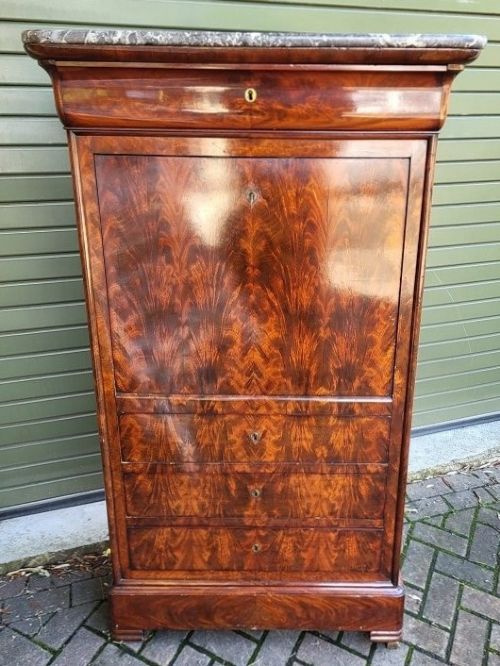
When you search for antique writing abattant, you encounter vertical fall-front cabinets designed for correspondence, manuscript storage and private writing. These pieces combine a neat footprint with internal fitted compartments, small drawers and a writing surface that conceals itself when closed.
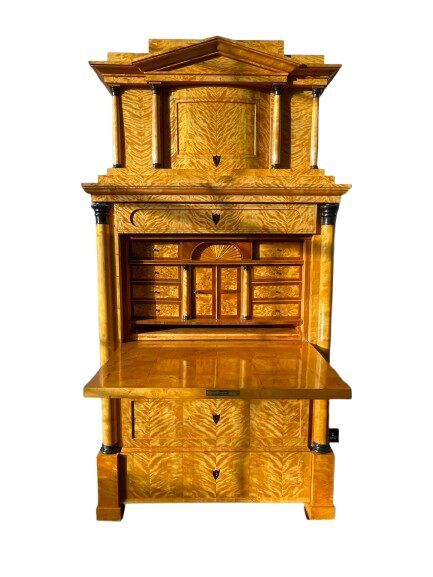
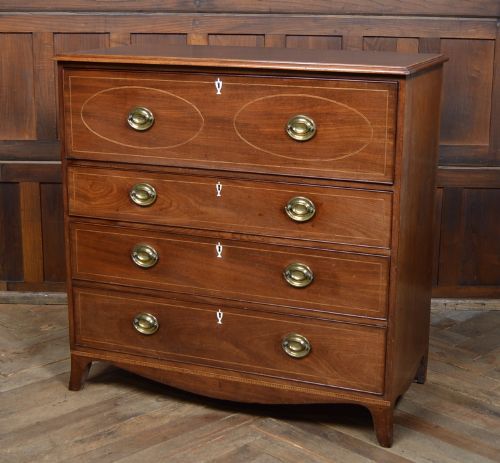
The versions most common on this page originate from nineteenth-century France, Britain, and Northern Europe, taking forms such as the traditional French secretaire abattant or the broader category of escritoires. Makers utilised various timbers and cabinet formats to create secure, elegant desks suitable for domestic studies and reception rooms.
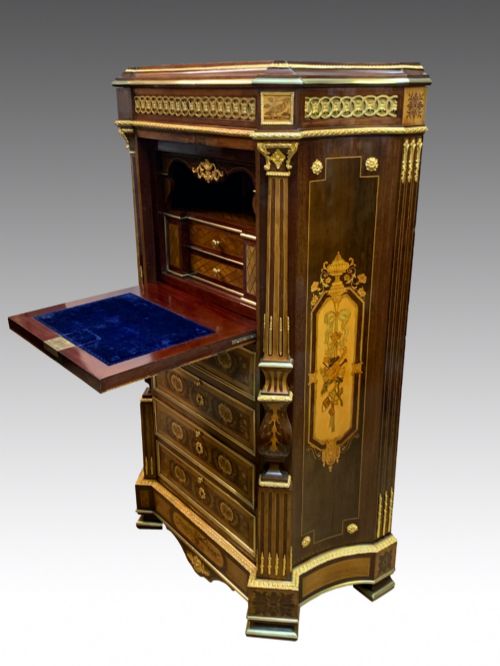
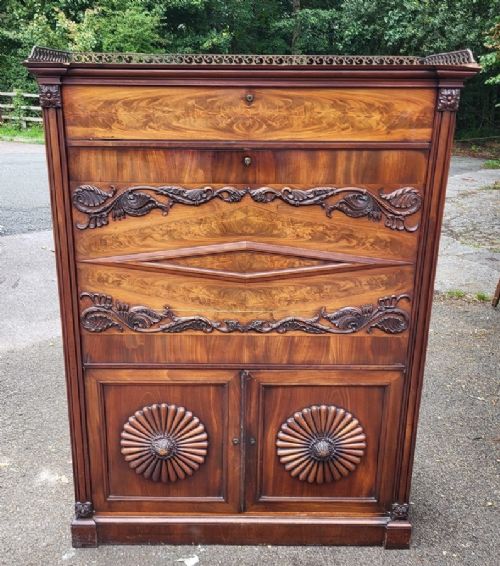
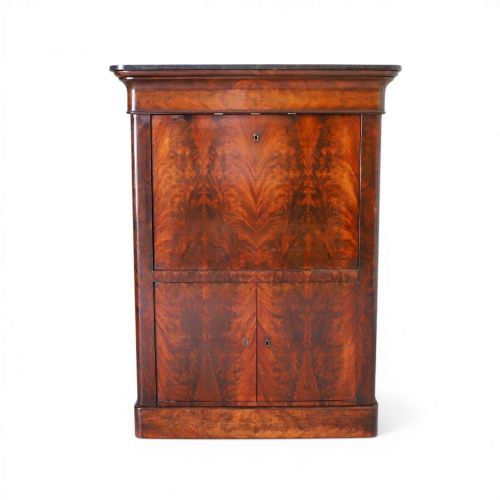
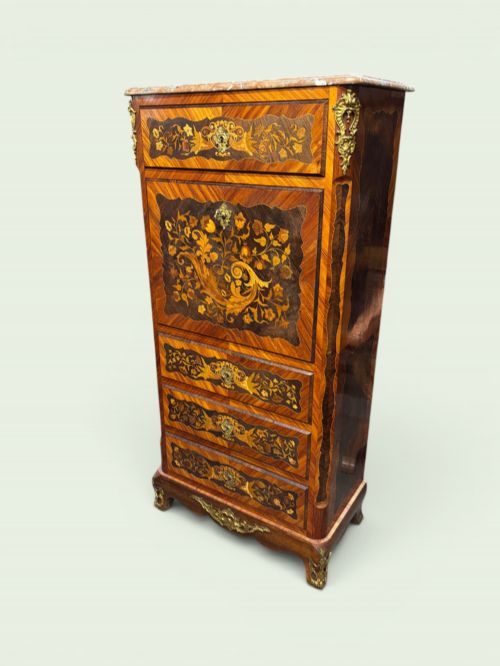
Examples span several stylistic revivals and regional interpretations, ranging from austere Biedermeier mahogany bodies to ornate French pieces adorned with marquetry, ormolu mounts and marble tops. These variations reflect the changing demands of domestic interiors across the eighteenth, nineteenth, and early twentieth centuries.
How they were made
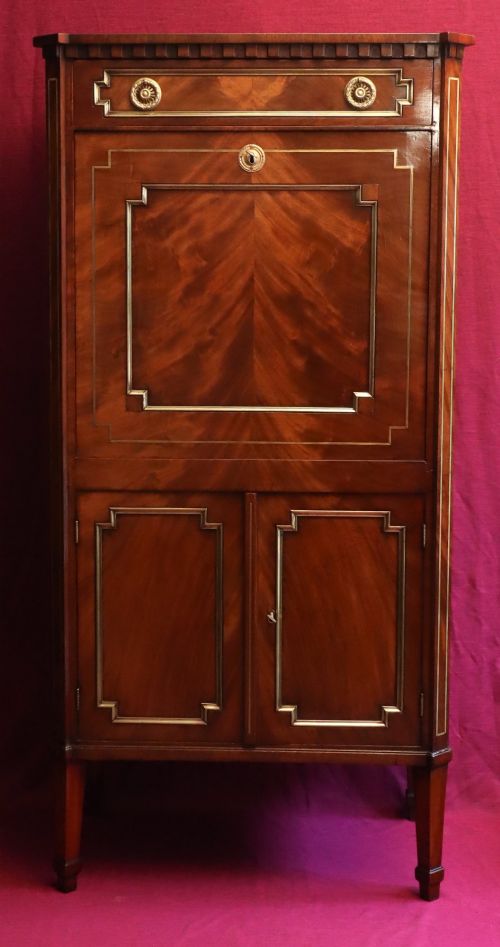
Cabinetmakers constructed these writing cabinets using solid pine or oak carcases covered in fine timber veneers, including mahogany, flame mahogany, kingwood, rosewood, walnut, and satinwood. These veneers allowed craftsmen to arrange grain patterns symmetrically across the drop front and drawers, creating decorative surface designs.
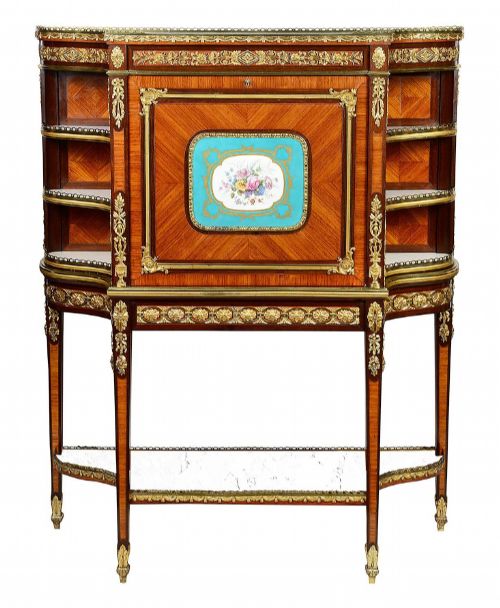
Many French and Continental examples integrate cast brass or gilt bronze ormolu mounts, parquetry, floral marquetry, and imported marble slabs fitted to the upper surface. Interior compartments frequently incorporate secret drawers, hidden releases, and small pigeonholes constructed with precise dovetail joints.
Structural integrity relied upon robust carcase construction to support the heavy hinged fall front, which required sturdy internal linkages or support stays to bear the weight of the writing surface during daily use.
Listings feature pieces from the eighteenth to the twentieth century, with nineteenth-century French and British examples predominating.
What varies in quality
Quality rests upon the selection and matching of timber veneers, the crispness of marquetry work, and the weight and chasing of ormolu mounts. Finer pieces display continuous grain alignment across the drop front and superior hand-cut dovetails within the internal letter drawers.
The integration of secondary materials also dictates standing, with thick original marble tops and high-grade gilt bronze mounts separating standard production from exceptional cabinetmaking. The complexity of internal mechanisms, such as concealed spring-loaded secret drawers, distinguishes more ambitious workshops from basic regional furniture.
Gillows·Maison Krieger·Blake·Adriano Brambilla
The Antique Writing Abattant Glossary
- Abattant
- The drop-down writing flap or fall front characteristic of vertical secretaire cabinets.
- Escritoire
- A small writing desk or cabinet designed for correspondence and paper storage.
- Ormolu
- Gilded bronze mounts used as decorative ornamentation on furniture.
- Marquetry
- Inlaid wood veneers arranged in decorative pictorial or geometric patterns.
- Parquetry
- Geometric wood inlay forming parquet designs across a furniture surface.
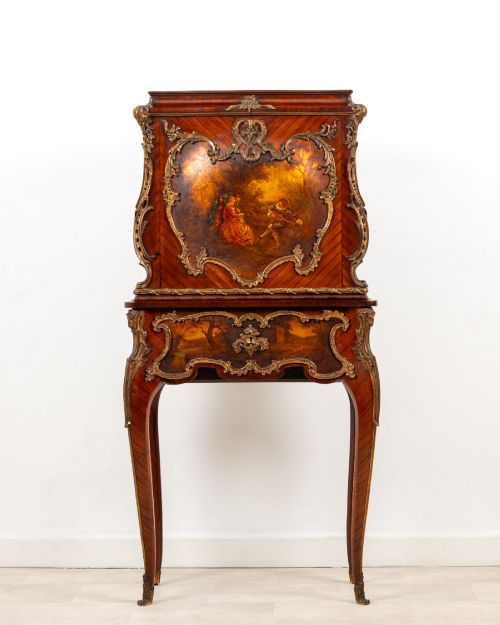
- Vernis Martin
- European lacquer work imitating Asian styles, found on select decorative cabinets.
Antique Writing Abattant: Frequently Asked Questions
What is an antique writing abattant?
An antique writing abattant is a tall, vertical cabinet featuring a hinged drop-front panel that opens to reveal a writing surface and internal pigeonholes.
These pieces were designed to save floor space while offering secure storage for stationery, letters, and private documents.
How do you use a secretaire abattant?
You unlock and lower the vertical front panel to create a horizontal writing ledge supported by hinges or internal brackets.
Inside, users utilise the built-in small drawers and pigeonholes to organise correspondence before closing and locking the panel.
Where were these writing cabinets made?
These cabinets were produced across Europe during the eighteenth and nineteenth centuries, with significant output from workshops in France, Britain, and the Netherlands.
Continental makers often favoured exotic veneers and marble tops, while British cabinetmakers focused on mahogany and rosewood construction.
How do I identify secret drawers?
Secret drawers are concealed compartments built behind pigeonhole partitions or within the structural frieze of the cabinet interior.
Owners access them by pressing hidden spring releases, sliding small dividers, or removing false floor panels inside the desk.