


Antique Woven Carpet Panel
When you seek an antique woven carpet panel, you explore the rich textile traditions of Central Asian and Persian tribal weaving.
Antique Woven Carpet Panel
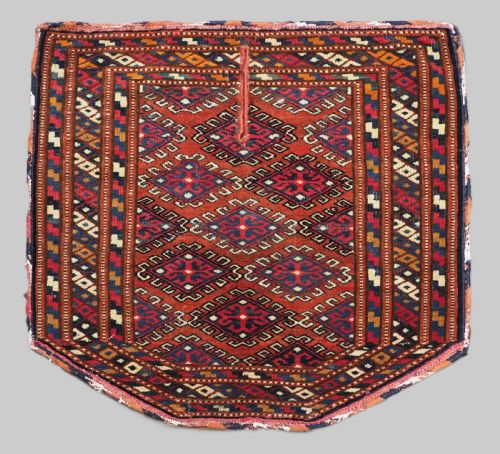
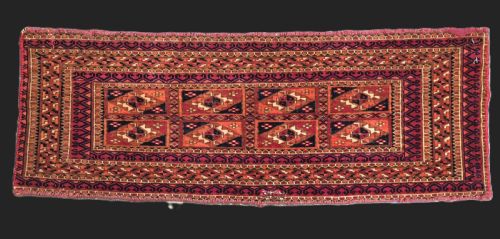
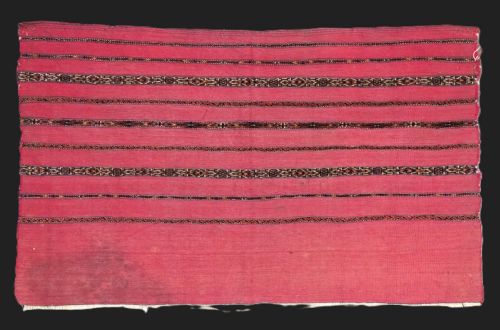
An antique woven carpet panel represents the portable architecture and household artistry of nomadic and semi-nomadic groups, notably Turkmen tribes like the Tekke, Yomut, Ersari, Saryk, and Chodor, alongside Shahsavan and Uzbek weavers. These pieces originate as functional items such as torba faces, chuvals, mafrashes, asmalyks, and saddle covers, created to decorate tents or store belongings.
On this page, buyers most frequently encounter fragments and complete faces of storage bags and tent trappings dating from the nineteenth and early twentieth centuries. These smaller textile components allow collectors to appreciate intricate tribal guls and flatweave designs without acquiring a full-sized floor carpet.
The geographic origins span the Trans-Caspian steppes, the Merv oasis, and the Middle Amu Darya region, reflecting distinct regional motifs and tribal identities. Each panel preserves centuries of traditional pattern-making passed down through generations of weavers.
Materials and construction
The construction relies heavily on hand-spun wool for the pile and foundation, often supplemented by cotton and linen for structural strength and structural contrast. Natural and vegetable dyes provide the deep reds, crimson, and secondary tones characteristic of these regional textiles.
Weavers employ specific techniques such as pile knotting, banded flatweaves, and Soumak wrapping to create durable, tactile surfaces. Silk is occasionally introduced in finer examples to highlight specific design elements like central guls.
Many panels utilise structural stitching where multiple sections are joined together, such as Uzbek kilim panels constructed in distinct strips or complete bag faces featuring original wool and cotton backings.
Some Yomut chuvals double as exceptional wall art for nomads who preferred their storage bags to double as interior decoration.
Factors that define quality
Quality rests upon the fineness of the weave and the precision of the drawing, where tighter knot counts and crisp geometric execution distinguish superior pieces. The complexity and clarity of tribal guls, such as the 'aina gul', 'kepse', or 'salor' motifs, demonstrate the weaver's technical skill.
The vibrancy, depth, and saturation of natural and vegetable dyes dictate the visual success of a panel, with rich crimson and ivory contrasts elevating the textile. Well-preserved wool texture and the retention of original formats, such as complete bag faces with backs intact, further elevate the standing of a textile.
The Antique Woven Carpet Panel Glossary
- Gul
- A primary medallion or repeating octagonal motif used in Turkmen and other Central Asian carpet designs. These emblems often denote specific tribal lineages and visual histories.
- Torba
- A small horizontal wall-pocket or storage bag utilised within nomadic tents. They display intricate geometric patterns across their visible front faces.
- Chuval
- A large tent storage bag traditionally employed for bedding and household possessions. Chuval faces are frequently preserved as independent decorative panels.
- Soumak
- A flatweave technique utilising a wrapping method that produces a durable textile with a smooth face and floating threads on the reverse. This method creates crisp, raised diagonal patterns.
Antique Woven Carpet Panel: Frequently Asked Questions
What is a torba face?
A torba face is the decorated front portion of a traditional Turkmen storage bag, preserved after the plain back fabric wore away.
These panels were designed to hang inside nomadic tents for storing small personal possessions.
How were these panels used?
Nomadic families utilised these woven pieces as functional storage containers, camel trappings, and decorative tent furnishings.
Today, collectors mount them on walls or display them as textile art to appreciate their graphic tribal patterns.
How do I identify tribal designs?
Tribal designs are identified by recurring geometric motifs known as guls, specific border arrangements, and regional colour palettes.
Different groups, including the Yomut, Tekke, and Ersari, utilised distinct visual vocabularies passed down through generations.
Are these pieces made with natural dyes?
Many nineteenth-century and early twentieth-century examples incorporate traditional natural and vegetable dyes derived from local plants and minerals.
These colourants yield rich, organic tones that age gracefully over decades of light exposure.