



Antique Wool Khorjin
These woven containers served nomadic life before becoming collected as antique wool khorjin.
Antique Wool Khorjin
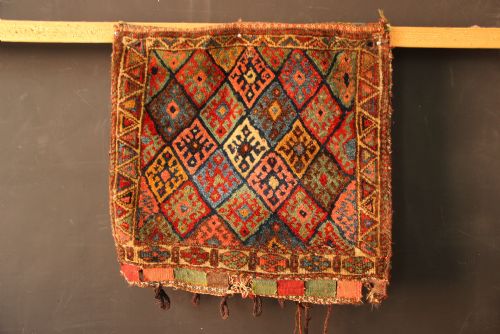
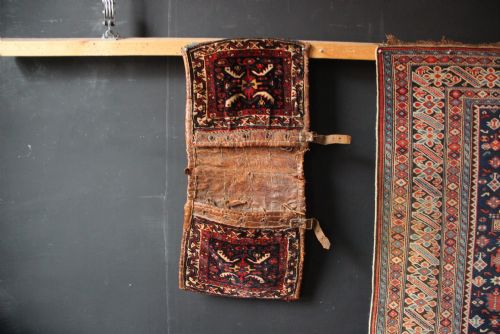
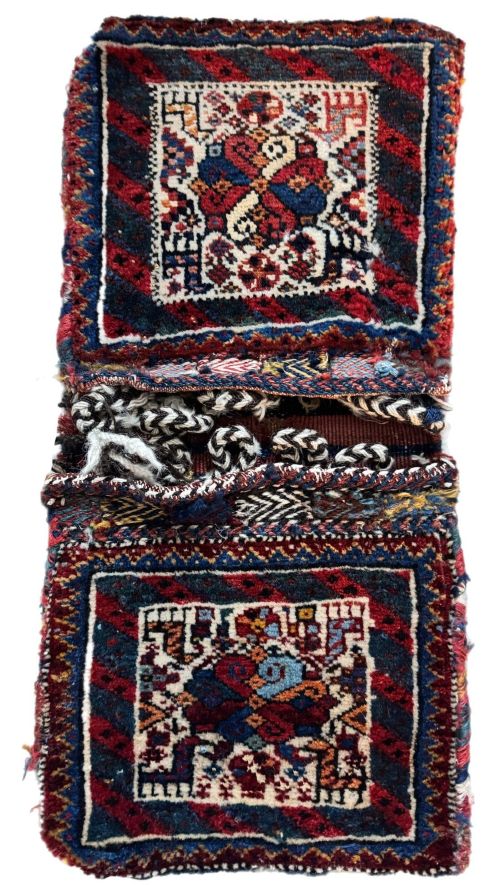
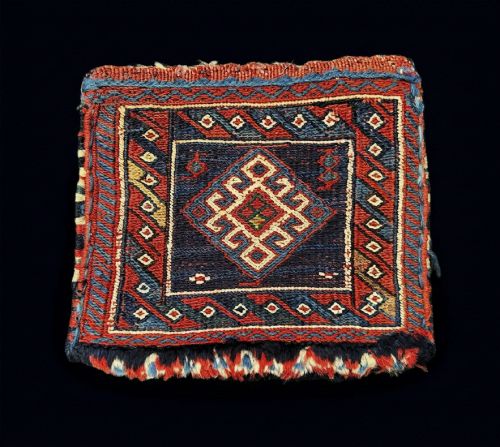
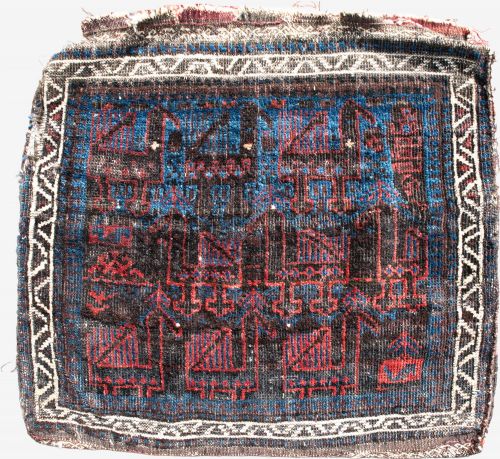
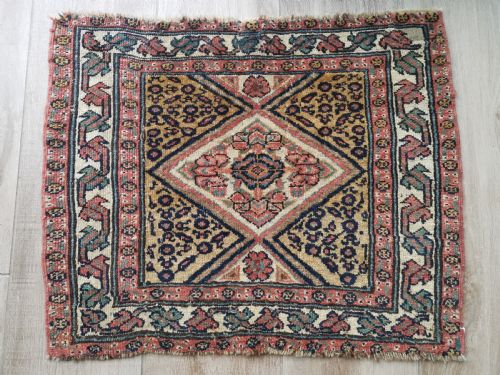
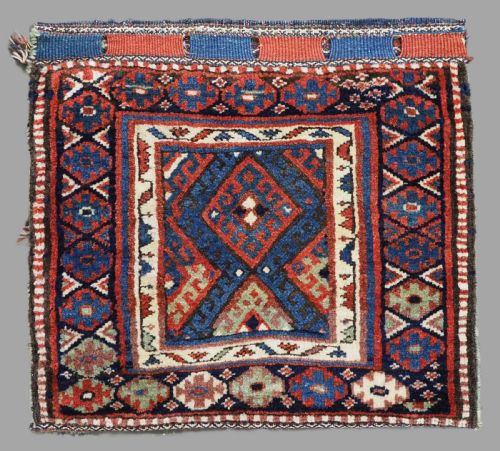
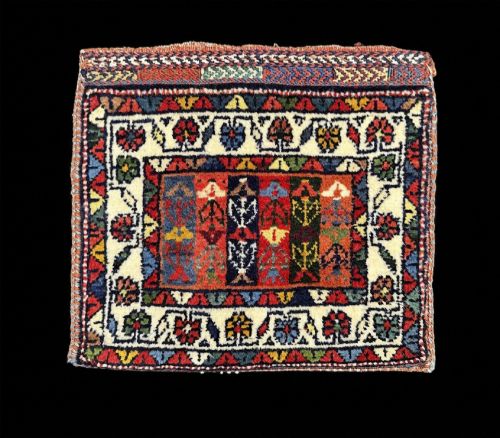
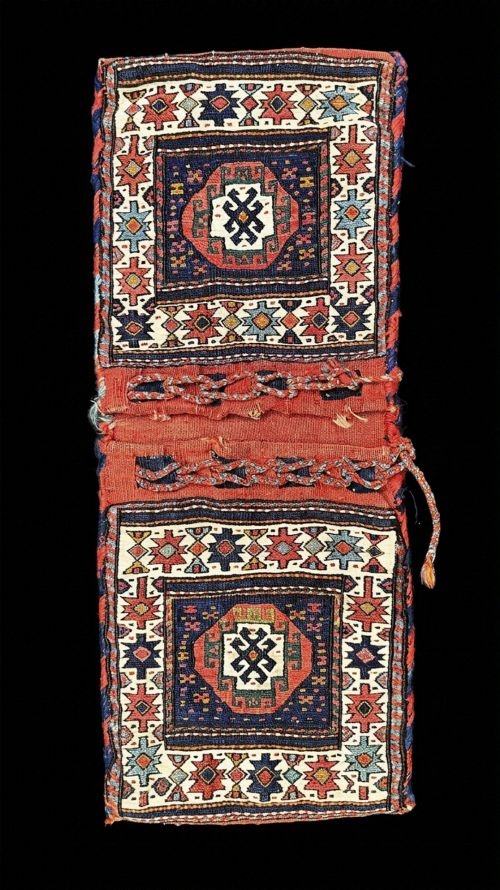
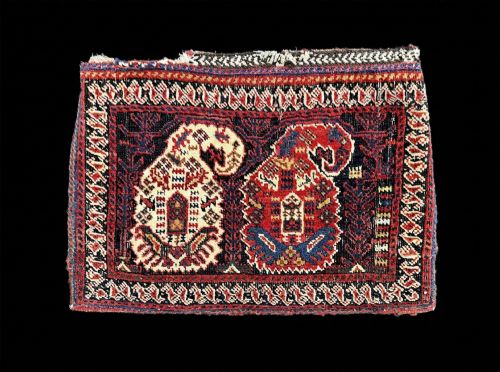
An antique wool khorjin is a traditional double saddlebag woven by tribal and nomadic groups across Persia, the Caucasus, and surrounding regions during the nineteenth and early twentieth centuries. These pieces functioned as practical transport for personal belongings on pack animals, woven in halves joined by a central web or separated into surviving fragments known as bag faces. You will most frequently encounter single bag faces or complete twin pouches made by weavers from tribes such as the Qashqai, Afshar, Shahsavan, Baluch, and Jaf Kurd.
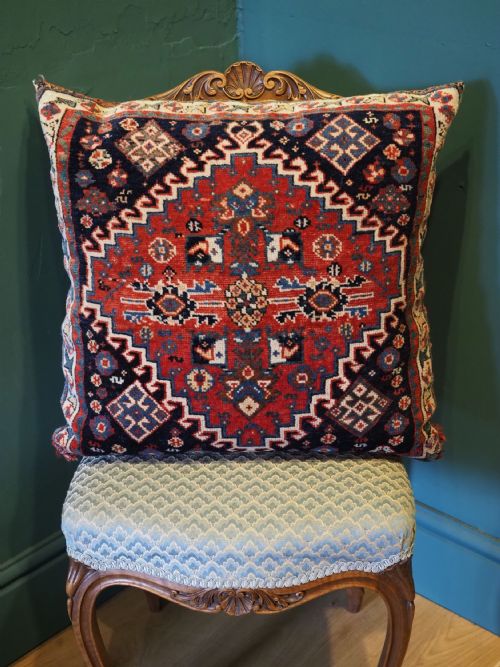
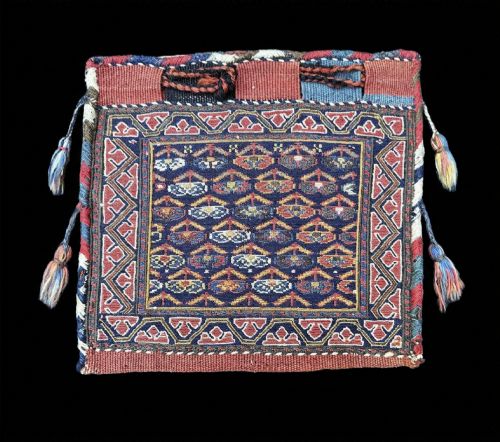
The formats span various sizes and configurations, including full pairs, half-khorjin, personal vanity bags termed chanteh, and larger storage pouches. Designs range from geometric medallion layouts and boteh motifs to stacked tile patterns and stylized bird depictions. These textiles represent the utilitarian output of pastoral groups, produced to withstand hard travel while displaying distinct tribal iconography.
Materials and construction
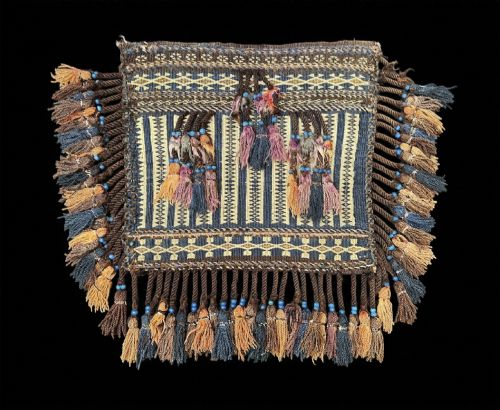
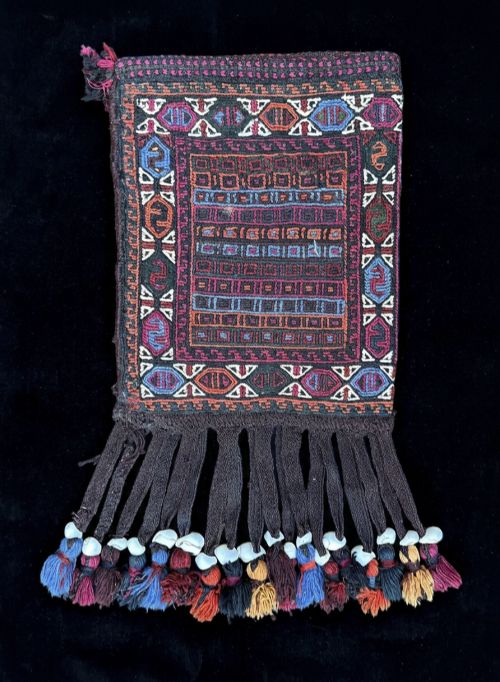
Weavers constructed the foundation using hand-spun wool for warps and wefts, occasionally incorporating cotton for structural stability or goat hair along edges and backs for added durability against friction. Surface designs utilised hand-knotted pile or flat-woven soumac techniques, dyed with natural colorants that produced rich, variable hues over decades of use. Certain examples integrate utilitarian embellishments such as cowrie shells, glass beads, or supplementary weft banding on the reverse.
The structural integrity relies on tight knotting and precise supplementary weft-wrap work, particularly on pieces originating from Shahsavan and Baluch looms. Plain weave backs, where present, display bands of contrasting wool yarns that indicate the practical organisation of the original container. The combination of resilient wool fibres and natural dyes accounts for the survival of these textiles through generations of nomadic migration.
Antique Wool Khorjin Retail Price Guide 2026
Typical asking prices for wool khorjin among the pieces listed under this phrase on Sellingantiques today, from the lower quarter to the upper quarter. They describe what is for sale here now, not the wider market.
Nomadic weavers occasionally tucked cowrie shells into the wool to ward off the evil eye during long desert journeys.
Assessing quality in nomadic bags
Quality in these textiles stems from the density of the weave, the clarity of the tribal drawing, and the condition of the wool pile. Higher-grade examples display finely articulated motifs, such as crisp boteh repeats or balanced central medallions, executed with precise handling of the loom. The depth and saturation of the natural dyes further elevate a piece, especially where colour variation remains lively and harmonious.
The survival of original components also dictates standing among collectors, with complete pairs or specimens retaining their original plain weave backs commanding distinct interest. Pieces showing exceptionally fine hand-spun wool and minimal structural restoration represent the upper tier of the available range. Conversely, heavy pile wear that obscures the primary design or unsympathetic re-weaving alters the visual coherence of the textile.
Qashqai Tribes·Afshar Nomads·Shahsavan Nomads·Baluch Tribes·Jaf Kurd
The Antique Wool Khorjin Glossary
- Khorjin
- A traditional tribal double saddlebag used by nomadic groups for transport and storage. These pieces were designed to be slung over pack animals during migration.
- Bagface
- The decorative front panel of a khorjin saddlebag. Many surviving examples exist as individual panels separated from their original reverse sides.
- Soumac
- A flat-weave technique where coloured weft threads wrap around warp threads in a continuous sequence. This method creates a textured, durable surface without a cut pile.
- Chanteh
- A small personal vanity bag or pocket woven by nomadic artisans. These miniature pouches typically served to carry personal items or documents.
- Boteh
- A stylized almond or paisley motif representing a floral spray or cypress tree. This pattern appears frequently across Persian and Caucasian tribal weaving.
Antique Wool Khorjin: Frequently Asked Questions
What is a khorjin?
A khorjin is a traditional double saddlebag woven by nomadic and tribal groups for practical transport during seasonal migrations.
These containers held personal belongings, household goods, or provisions, and were typically designed to be draped across the backs of horses, donkeys, or camels.
How are bag faces different from complete bags?
A bag face is the decorative front panel of a khorjin, which often became separated from the plain weave back over years of use.
Many surviving examples exist solely as these single decorated panels because they were removed and utilised as cushions or wall hangings.
What materials were used to weave them?
Weavers relied primarily on hand-spun wool for both the structural foundation and the decorative pile, often using goat hair along the edges for reinforcement.
Colour was derived from natural dyes, while functional additions like cowrie shells or glass beads occasionally embellished specific tribal types.