
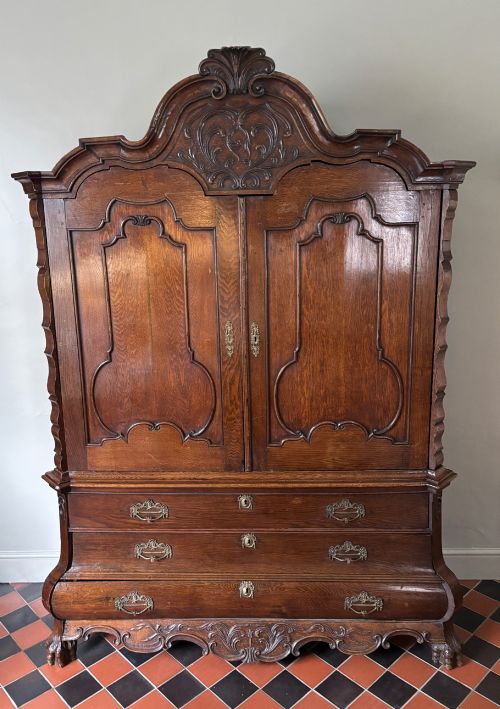
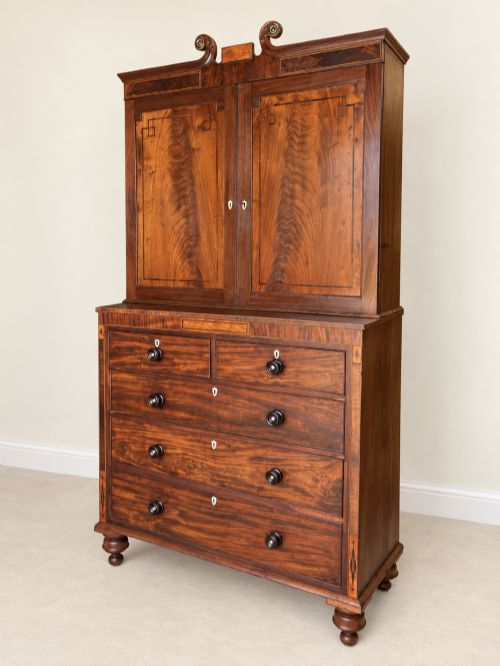
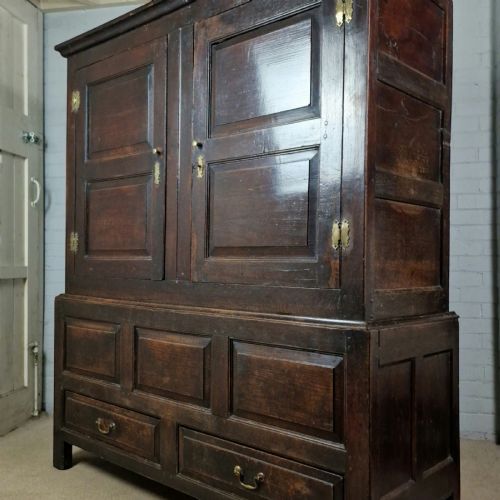
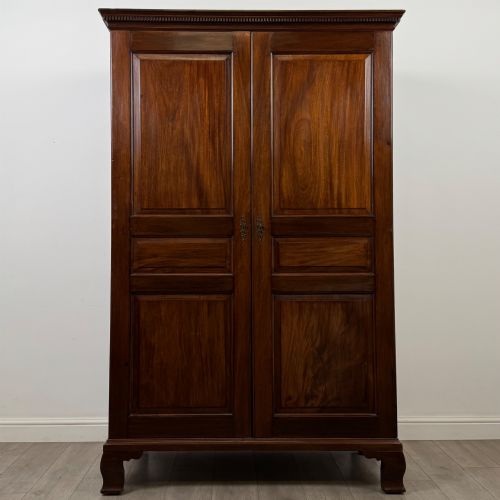
Antique Wooden Wardrobe Press
An antique wooden wardrobe press provides substantial bedroom storage through classic architectural proportions and fitted internal drawer banks.
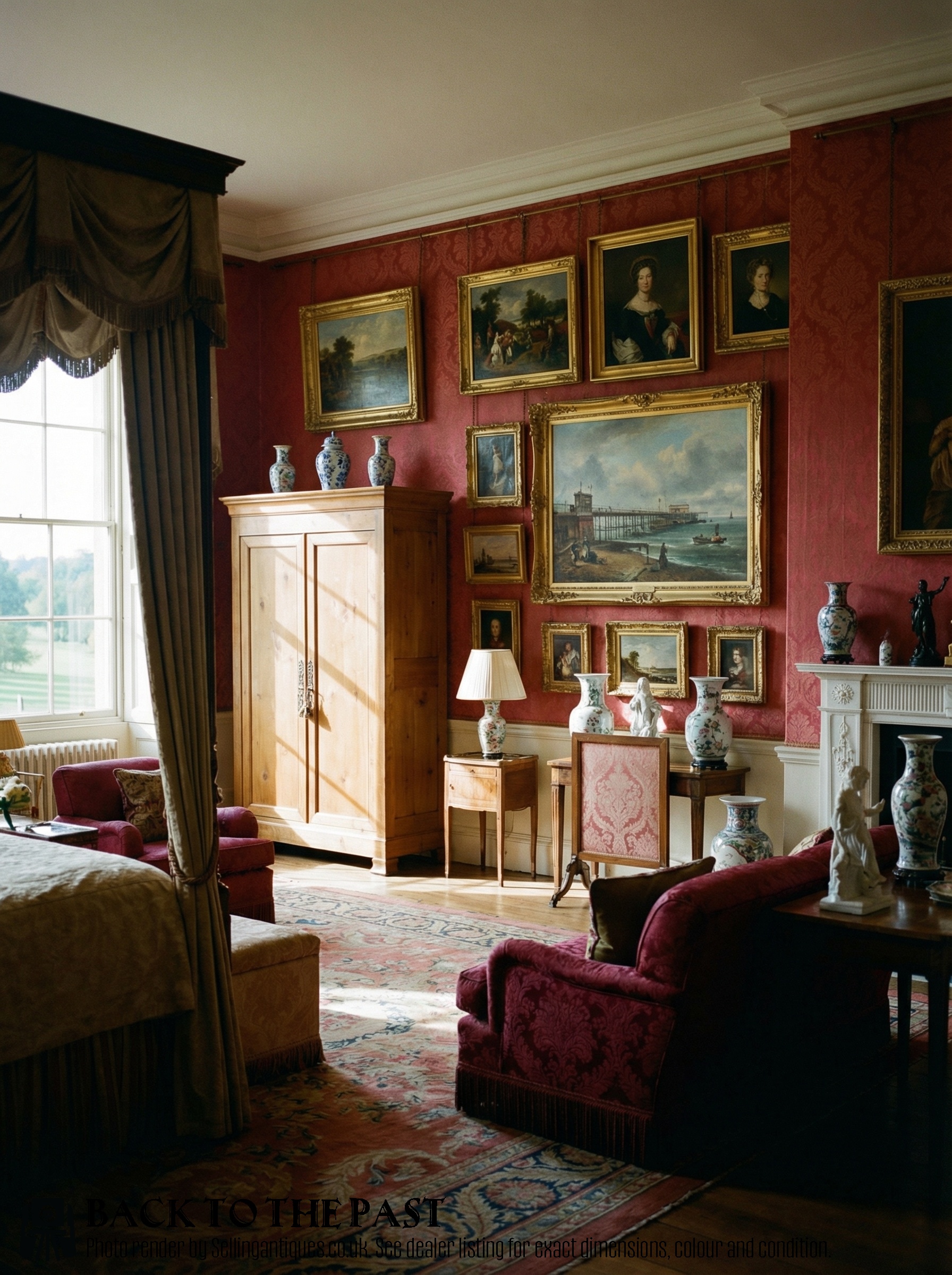
Antique Wooden Wardrobe Press
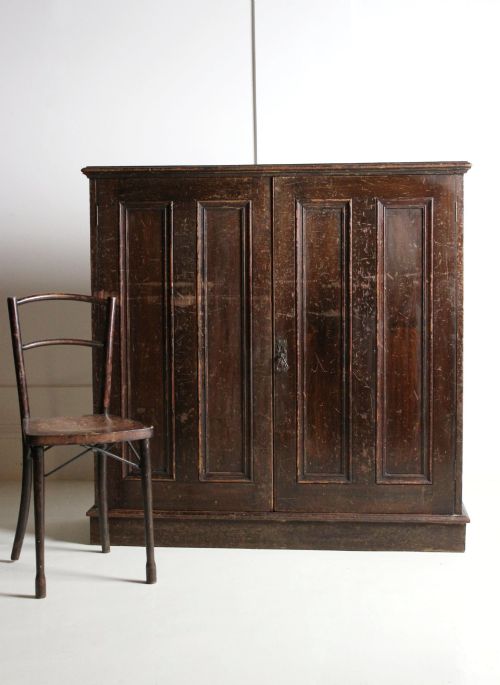
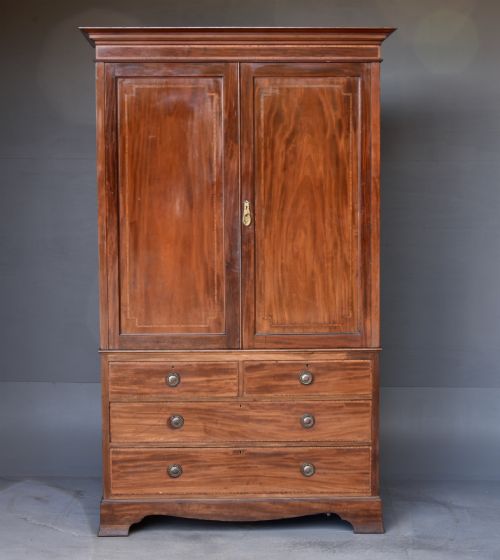
When you search for an antique wooden wardrobe press, you examine large storage furniture designed to house folded textiles and hanging garments. These pieces combine the upper linen press section with lower drawer configurations, spanning Georgian, Victorian, and Edwardian periods.
The versions most common on this page are mahogany and pine constructions from the nineteenth century, including compactum wardrobes and tallboy chests. Regional variations range from French provincial oak armoires to Scottish Arts and Crafts pine wardrobes.
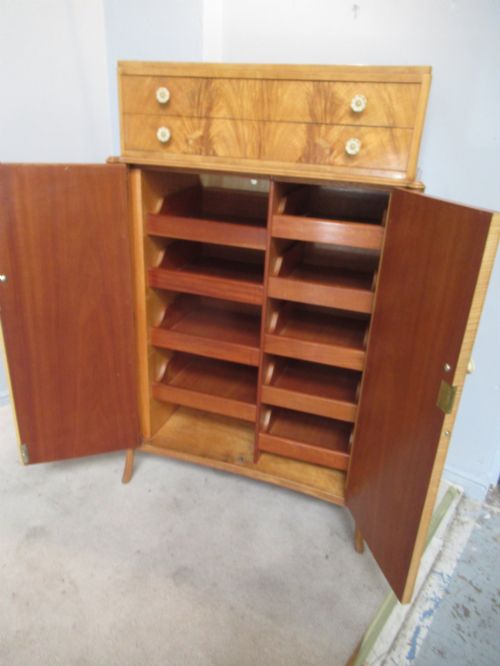
Makers utilised various native and imported timbers, shaping monumental furniture that served as the primary bedroom storage before fitted closets existed. The internal layouts frequently include sliding linen trays above banks of graduated drawers.
Materials and Construction
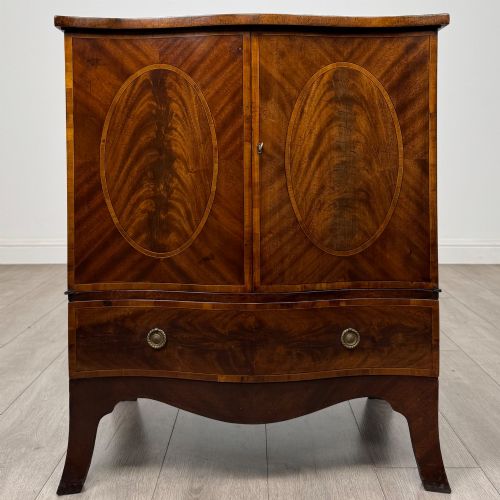
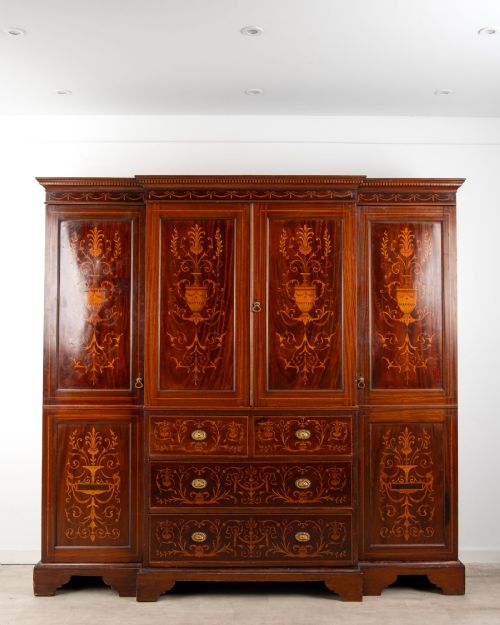
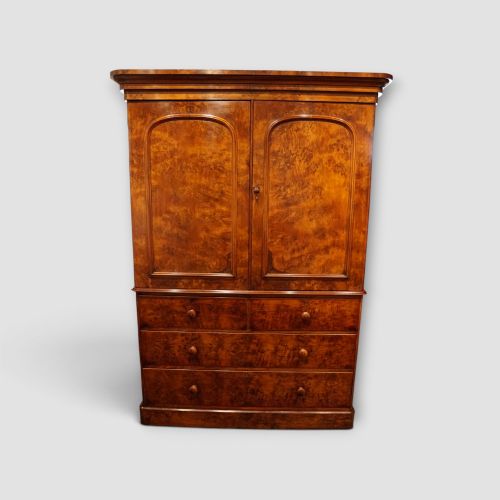
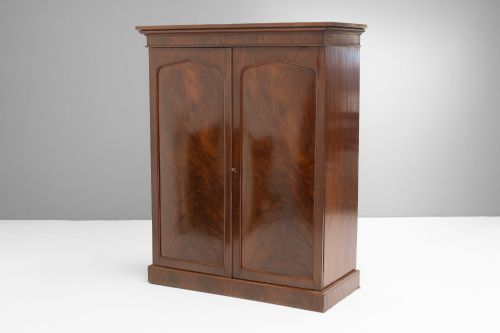
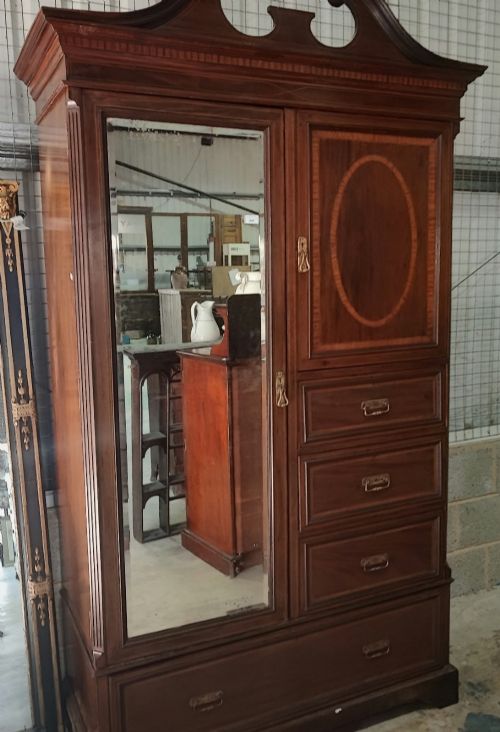
Cabinet makers constructed these presses using solid mahogany, walnut, oak, and pine, often applying figured veneers such as flame mahogany or burr walnut to primary surfaces. Inlaid decoration utilised satinwood and lighter stringing to accentuate panel borders.
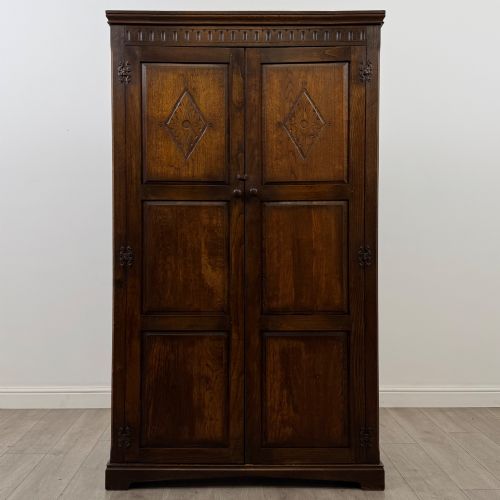
Joinery techniques relied on traditional hand-cut dovetails for drawer construction and pegged mortise and tenon joints for structural frames. Surface finishes involved applied wax, polish, or historic paint layers like scumble glaze over pine.
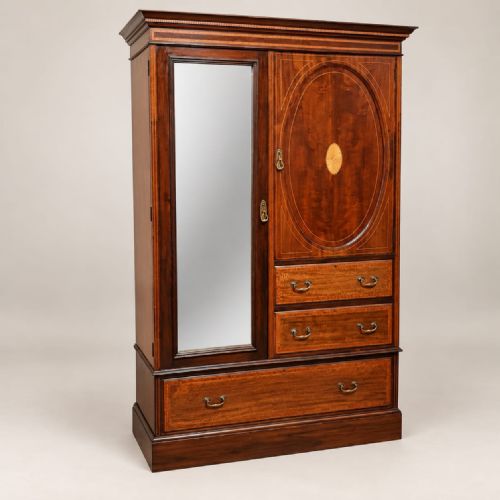
Hardware such as brass handles, escutcheons, and iron hinges were fitted by hand, while mirrored doors appeared on later Edwardian examples.
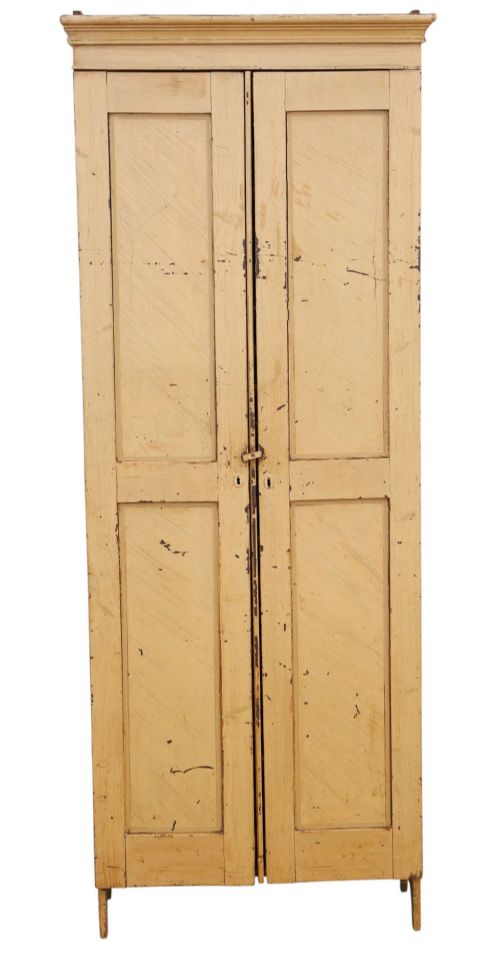
Some nineteenth-century pine wardrobes retain original blue paintwork or scumble finishes designed to mimic costly oak grain.
Assessing Quality
The distinction between tiers rests upon timber selection and the crispness of cabinet work. Superior examples exhibit matched grain patterns across large surfaces and finely executed mouldings rather than simple applied decoration.
Internal arrangements dictate utility and craftsmanship, where well-fitted sliding linen trays move smoothly within solid oak housings. The survival of original brass hardware and backboards indicates a higher standard of preservation.
Proportion and scale determine architectural balance, separating standard utilitarian cupboards from finely proportioned gentleman's wardrobes with complex breakfront cornices.
maples & co·Edwards and Roberts
The Antique Wooden Wardrobe Press Glossary
- Compactum wardrobe
- A multi-compartment wardrobe combining hanging space, drawers, and sliding shelves within a single unified piece of furniture.
- Linen press
- A tall cupboard featuring upper sliding trays designed for storing folded bedding and household linens above base drawers.
- Scumble paint
- A decorative surface treatment applied over a base coat to imitate the grain pattern of more expensive hardwoods like oak.
- Breakfront
- A cabinet design where the central section projects forward from the flanking flanking wings, adding architectural depth.
- Escutcheon
- A protective brass or metal plate surrounding a keyhole, often shaped and engraved to match period hardware.
Antique Wooden Wardrobe Press: Frequently Asked Questions
What is a wardrobe press?
A wardrobe press combines upper shelving or sliding trays for folded linens with lower drawer storage, offering a hybrid of a linen press and a clothes wardrobe.
These large pieces provide deep internal capacity, making them practical for modern bedroom storage without fitted closets.
How do I date an antique wardrobe?
Dating relies on timber choices, construction methods, and hardware styles across periods like the Georgian, Victorian, and Edwardian eras. Mahogany and oak dominate earlier pieces, while pine and satinwood become prevalent later.
Hand-cut dovetails and original backboards indicate older construction, whereas machine-sawn components and mirrored doors suggest twentieth-century manufacture.
Will a wardrobe press fit my room?
These pieces are exceptionally heavy and tall, requiring careful measurement of ceiling height and doorway clearance before purchase. Many designs feature modular construction where the cornice and base separate from the main body.
Assessing internal depth is equally important, as older hanging sections may require specialised shallow hangers.
What is a compactum wardrobe?
A compactum is a multi-functional wardrobe that integrates hanging space, sliding trays, and a chest of drawers into one single carcass. This design maximises storage efficiency for varied garments.
Edwardian and Victorian cabinet makers produced these in large numbers using mahogany, oak, and ash.