
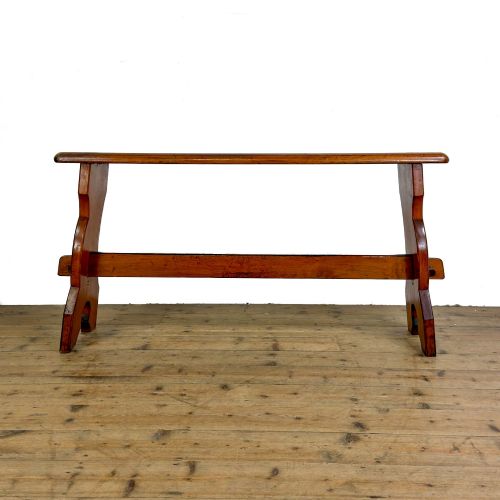
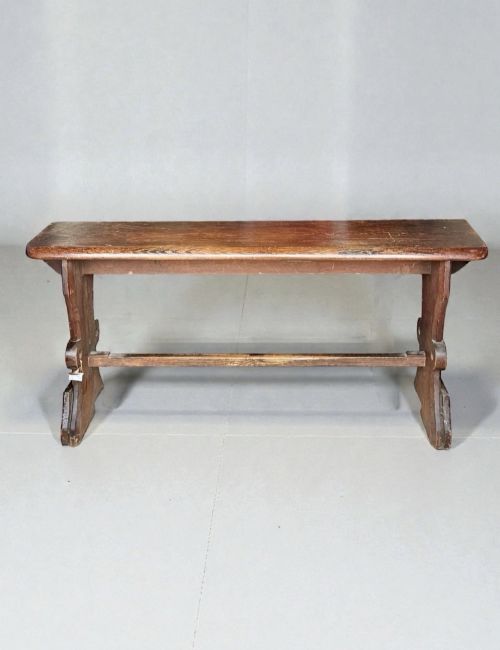
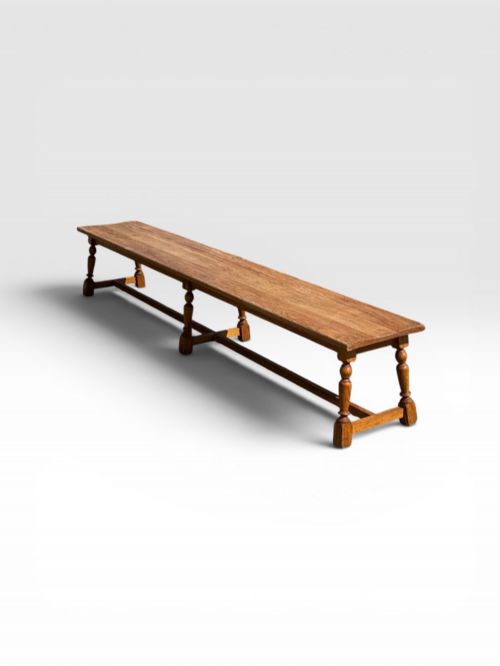
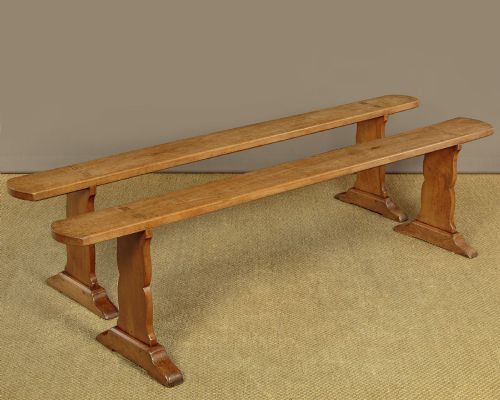
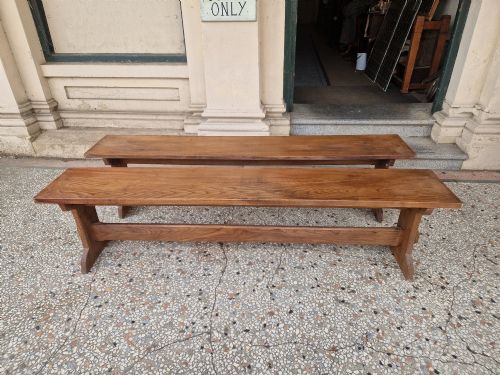


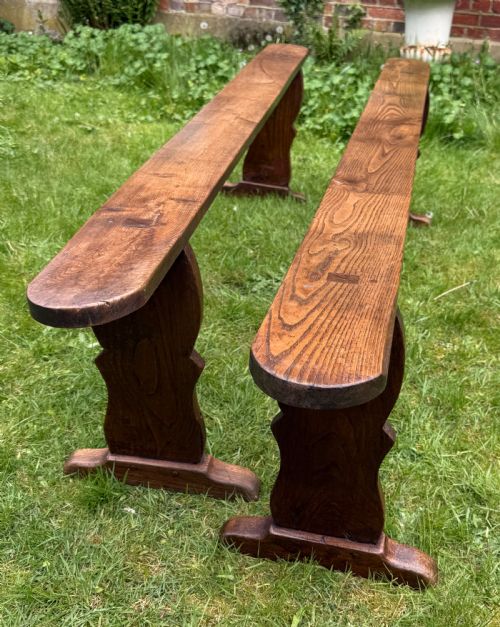
Antique Wooden Trestle Bench
An antique wooden trestle bench brings sturdy utility and honest grain to a hallway or dining room, built to last generations.
Antique Wooden Trestle Bench
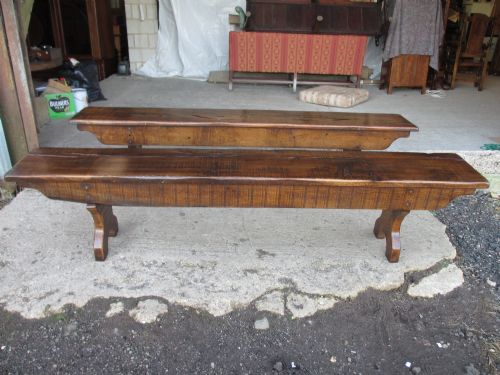
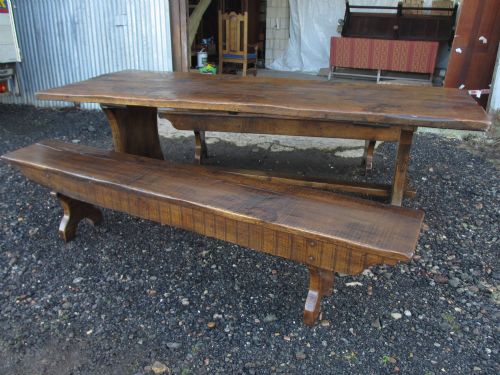
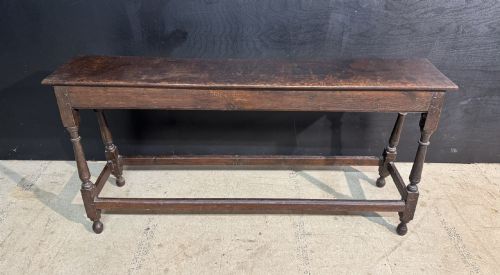
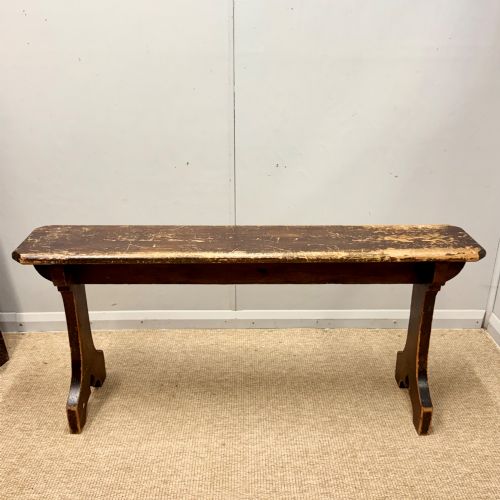
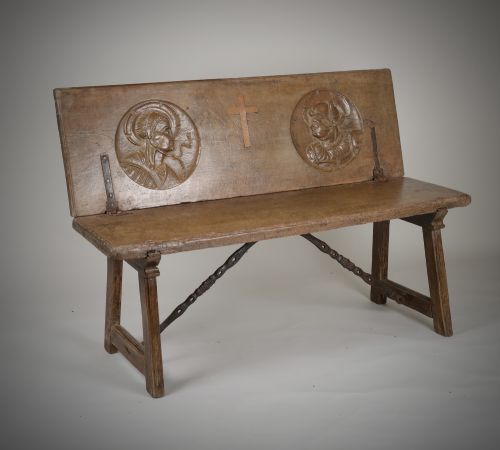
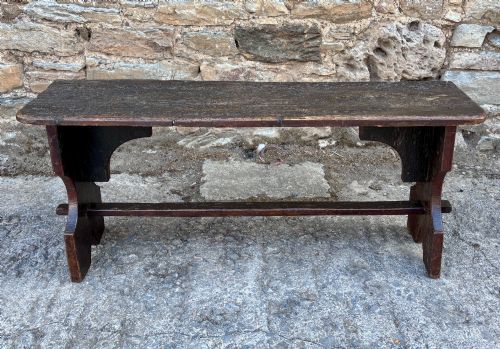
When you search for an antique wooden trestle bench, you find long seating designed for communal dining, domestic work, or church and school use. The pieces appearing here span from the 18th century through the Edwardian period, taking forms such as refectory seating, church organist pews, and school benches.
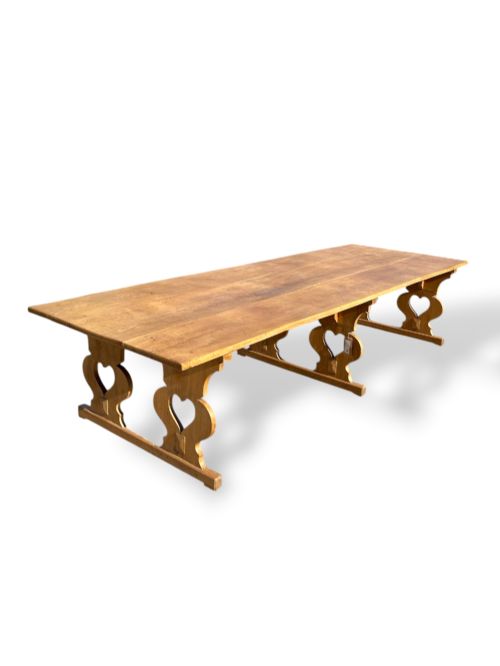
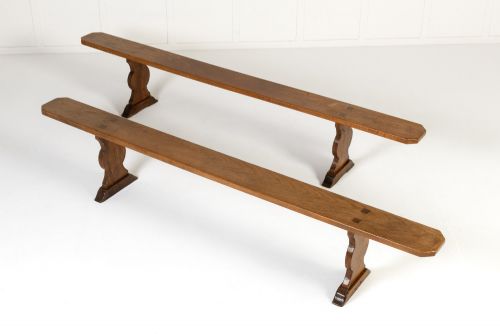
You will regularly encounter timber seating originating from English workshops, Welsh farms, and French provincial settings. Many examples survive as matched pairs intended to flank long dining tables, while others exist as singular hall seats with shaped trestle ends.
How they were made
Constructed from solid native hardwoods and softwoods, these benches rely on durable timbers including oak, pine, elm, cherrywood, and sycamore. Carpenters utilised traditional joinery methods to lock planks into robust trestle supports, ensuring the long spans could bear heavy daily weight without sagging.
Surfaces frequently show the marks of hand tools, scrubbed finishes, and deep patination developed through decades of hard use. Structural bracing often incorporates wrought iron elements or heavy cross-stretchers for added stability.
Listings feature timbers including oak, pine, elm, sycamore, cherrywood, and walnut across 18th, 19th, and early 20th century periods.
What varies in quality
Quality rests upon the selection of timber and the integrity of the original construction, with dense hardwoods like oak and elm commanding greater presence than standard pine. The depth of the natural patina and the preservation of the original surface finish dictate the visual appeal of each board.
Proportion and scale also separate standard utility seating from finer examples, particularly where trestle ends feature deliberate shaping or joinery details like pegged joints. Benches retaining their full, unaltered length show superior integrity compared to pieces shortened over time.
The Antique Wooden Trestle Bench Glossary
- Trestle ends
- Upright supports fitted beneath a top board, often braced with a central stretcher rather than four corner legs.
- Refectory bench
- A long, narrow form designed to sit alongside a communal dining table in large halls or monastic spaces.
- Patina
- The surface sheen and colour built up on wood through decades of handling, polishing, and exposure to light.
- Scrubbed finish
- A pale, clean timber surface resulting from repeated vigorous washing with soap and water over generations.
- Joint stool
- A low, sturdy wooden seat constructed with mortise and tenon joints before the widespread adoption of upholstered chairs.
Antique Wooden Trestle Bench: Frequently Asked Questions
How do I style an antique wooden trestle bench?
These benches fit naturally alongside long dining tables or positioned against plain walls in hallways and kitchens. Their linear form adds weight and simplicity to both modern and traditional interiors.
Keep dressings minimal to let the timber grain and patination remain the focal point. A simple runner or small cushion softens the seat without hiding the structure.
Were these benches used outdoors originally?
Most antique wooden trestle benches served inside domestic, ecclesiastical, or institutional settings such as schools and churches. They were built for heavy daily use under shelter rather than exposure to weather.
Using them outdoors today risks moisture damage and warping of the historic timber. Keep them in dry interior environments to preserve the original wood.
Can I use a trestle bench for everyday dining?
These benches provide practical, space-saving seating that tucks neatly beneath tables when not in use. Their robust construction makes them well-suited for daily family meals.
Check the height relative to your dining table to ensure comfortable legroom. Long examples easily accommodate multiple diners.
What woods are most common?
Pine and oak appear frequently across English and Scandinavian pieces, offering sturdy utility and varied grain patterns. Elm and cherrywood also feature prominently, particularly in provincial French and West Country pieces.
Each timber brings a distinct weight and colour to the piece, ranging from pale scrubbed pine to deep brown oak.