




Antique Wooden Torchiere
An antique wooden torchiere brings dramatic vertical presence and rich historic character to any interior scheme.
Antique Wooden Torchiere
An antique wooden torchiere functions primarily as a decorative stand or elevated lamp base designed to display lighting, busts, or botanical specimens. Buyers searching this phrase encounter substantial floor-standing pieces spanning the seventeenth century through the art deco period, with nineteenth century mahogany and walnut examples appearing frequently.
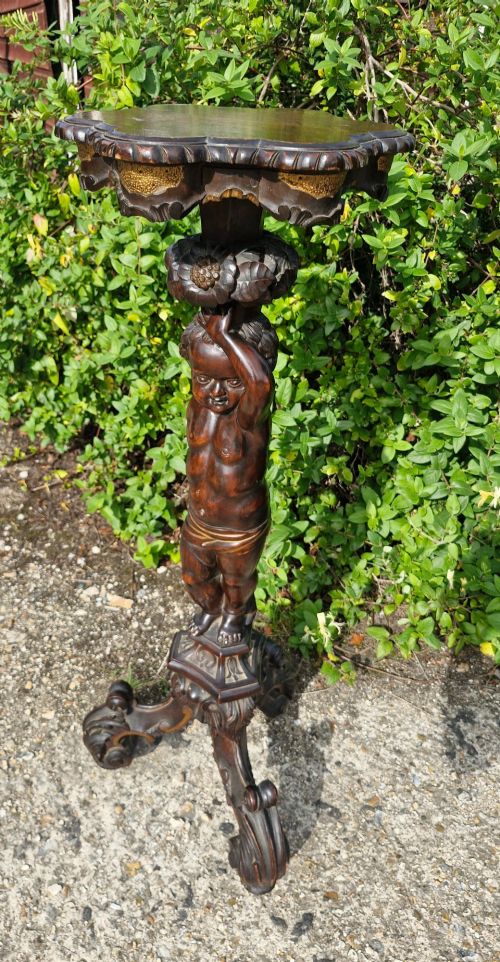
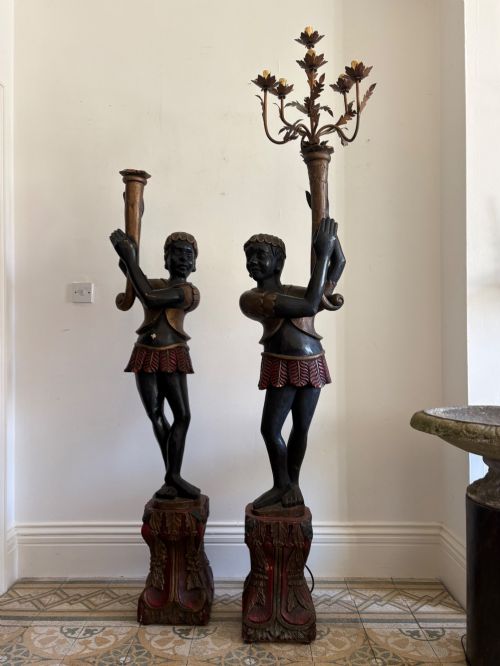
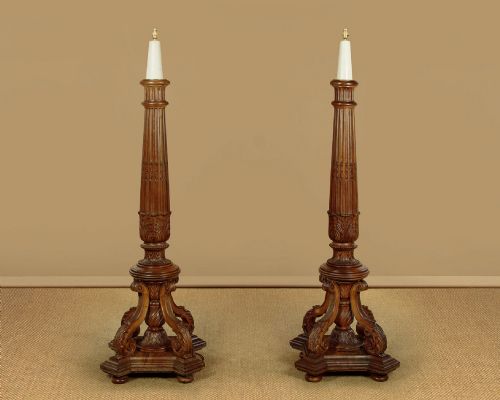
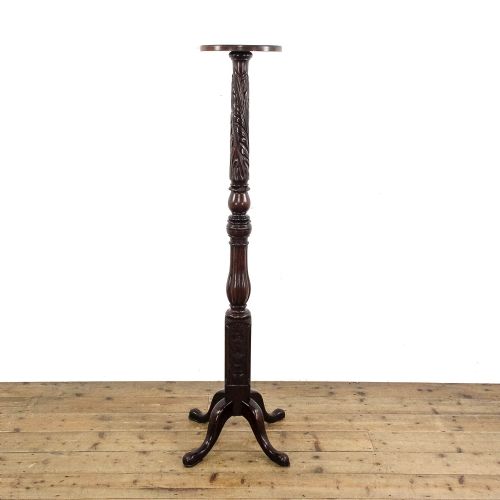
Forms range from slender fluted columns and Georgian style tripod stands to elaborate Italian baroque carved figures and grand country house standard lamps. These tall furnishings occupy corners and empty wall spaces, drawing the eye upward and adding distinct architectural weight to a room.
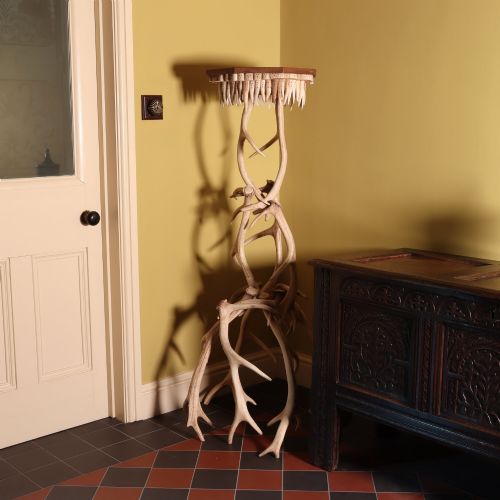
Origins vary widely across English country house aesthetics, Italian workshops, and French revival designs, offering everything from restrained mahogany to striking taxidermy antler constructions. Each piece reflects the decorative priorities of its specific era, balancing structural height with intricate carving.
How they were made
Cabinetmakers and sculptors constructed these tall stands primarily from dense hardwoods like mahogany, walnut, burr walnut, and lime wood, occasionally incorporating brass and gold leaf detailing. Master artisans carved structural elements by hand, shaping intricate motifs such as putti, classical columns, and dragon figures directly into the timber.
Surface preparation involved careful smoothing and polishing to highlight the natural grain patterns of macassar ebony and figured walnut. Structural integrity relied on robust joining techniques to support significant weight at height without compromising the slender profile characteristic of the form.
Antique Wooden Torchiere Retail Price Guide 2026
Typical asking prices for wooden torchiere among the pieces listed under this phrase on Sellingantiques today, from the lower quarter to the upper quarter. They describe what is for sale here now, not the wider market.
Some nineteenth century artisans abandoned traditional timber entirely to construct towering torchieres from natural antlers and taxidermy mounts.
What varies in quality
The degree of sculptural refinement separates exceptional examples from standard production pieces, particularly in the depth and crispness of hand-carved foliage, figures, and architectural detailing. Superior craftsmanship shows in the harmonious proportions of the shaft relative to the base and top platform.
Material selection dictates much of the visual impact, with choice figured timbers like burr walnut or macassar ebony creating deeper contrast than plain secondary woods. The integration of original decorative elements such as gilding or brass mounts preserves the intended aesthetic power of the maker.
The Antique Wooden Torchiere Glossary
- Torchiere
- A tall stand originally designed to hold a torch or candle, later adapted for electricity and standard lamps. These pieces provide elevated display surfaces and vertical emphasis within domestic interiors.
- Putti
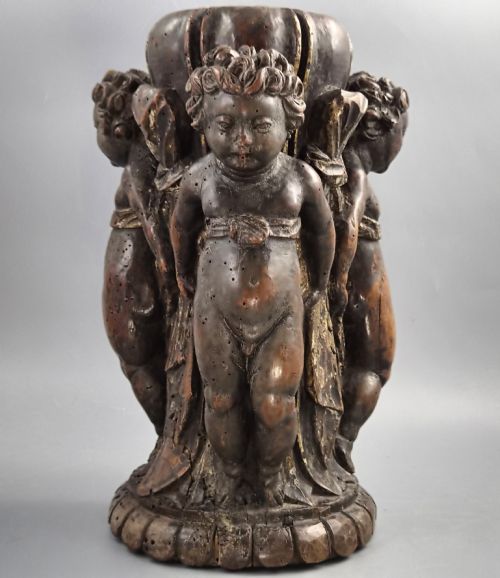
- Depictions of chubby male infants, frequently winged, carved into baroque and renaissance revival bases. These sculptural figures often support the main column or cluster around the shaft.
- Macassar ebony
- A heavily figured exotic hardwood displaying striking dark brown and warm golden streaks. Cabinetmakers utilised this timber during the art deco period to create high-contrast geometric surfaces.
- Lime wood
- A pale, fine-grained timber favoured by carvers for its even texture and lack of prominent grain. This material allows artisans to execute extremely intricate undercut details without splitting.
- Hepplewhite style
- A late eighteenth century design vocabulary characterised by slender proportions, elegant tapering legs, and neoclassical ornamentation. Pieces in this manner display refined restraint compared to heavier baroque models.
Antique Wooden Torchiere: Frequently Asked Questions
What is an antique wooden torchiere?
An antique wooden torchiere is a tall, slender standing fixture or pedestal traditionally used to hold lighting or display decorative objects.
These pieces range from simple fluted columns to heavily carved figural sculptures originating from various European and international workshops.
How were torchieres used historically?
Historically, torchieres provided essential illumination by elevating candles or oil lamps to diffuse light effectively across a grand room.
Over time, many of these tall stands were adapted to hold electric standard lamps or repurposed simply as plant stands and bust pedestals.
How do I style a torchiere at home?
A torchiere fits naturally into unused corners, beside large pieces of upholstery, or flanking doorways where vertical height is needed.
Allow the piece to stand unobstructed so the carved details and timber grain remain fully visible as a sculptural element.
How can I tell different periods apart?
Stylistic markers such as neoclassical columns point toward Georgian origins, while dramatic putti and scrolls suggest seventeenth or eighteenth century Italian baroque influence.
Later Victorian and art deco examples introduce varied materials like macassar ebony or taxidermy elements alongside machine-assisted precision.