
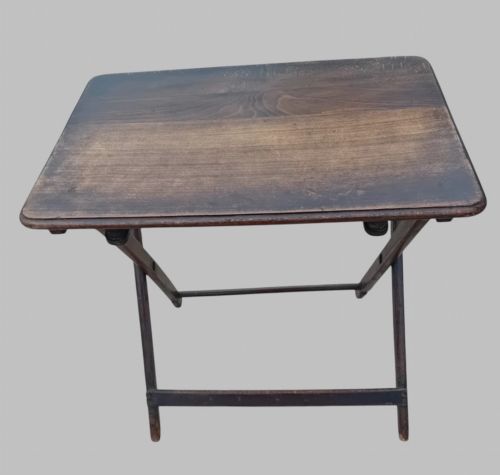
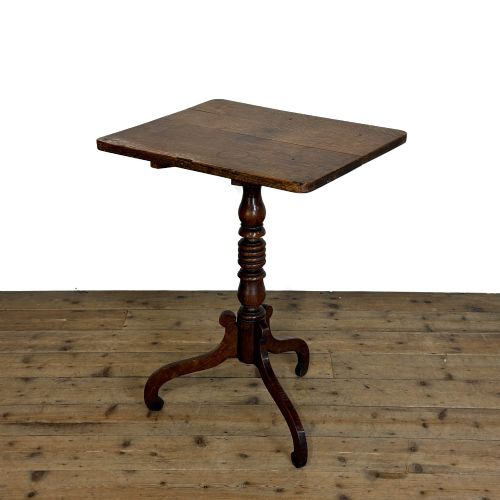
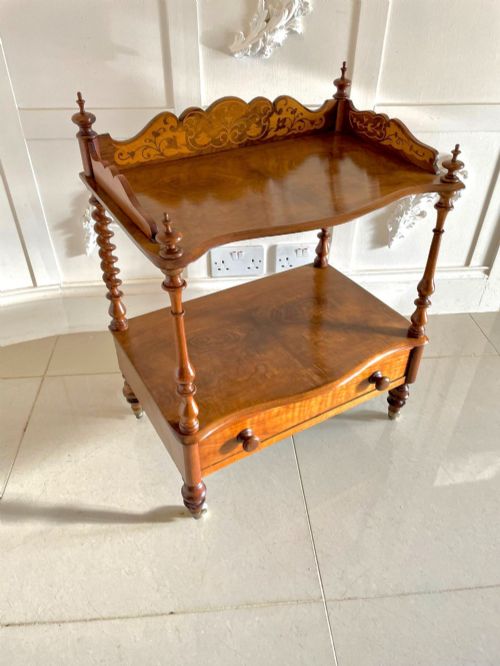
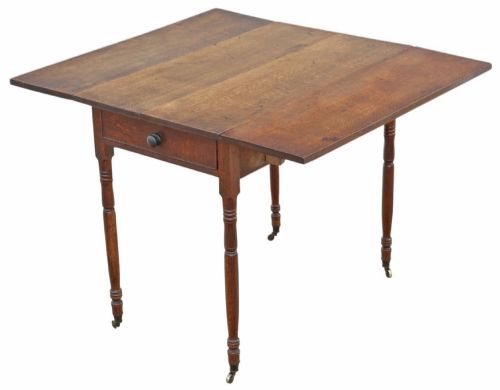
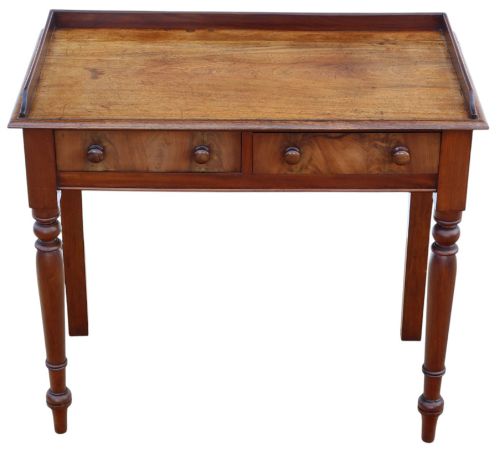
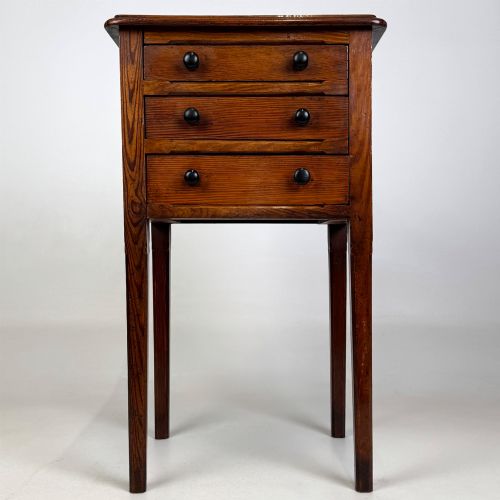
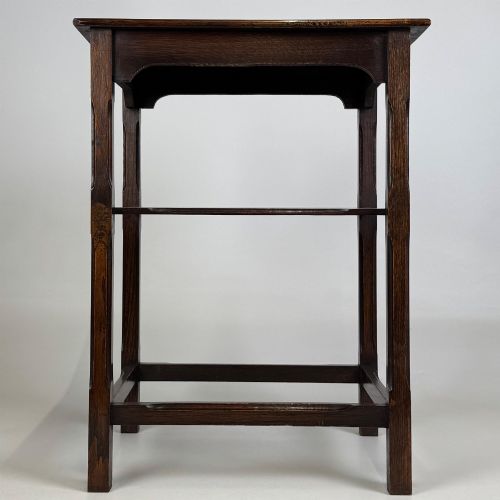
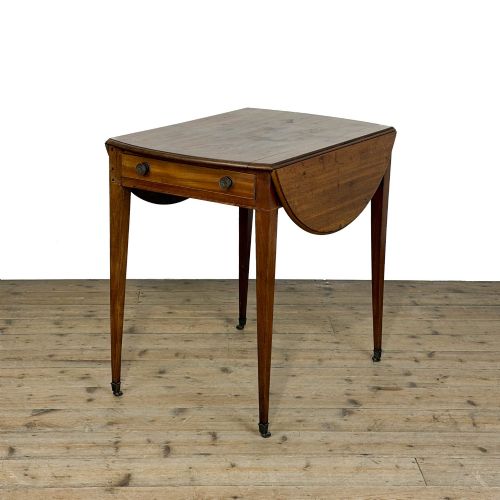
Antique Wooden Side Tables
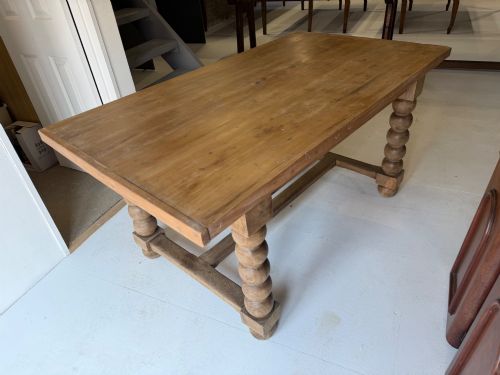
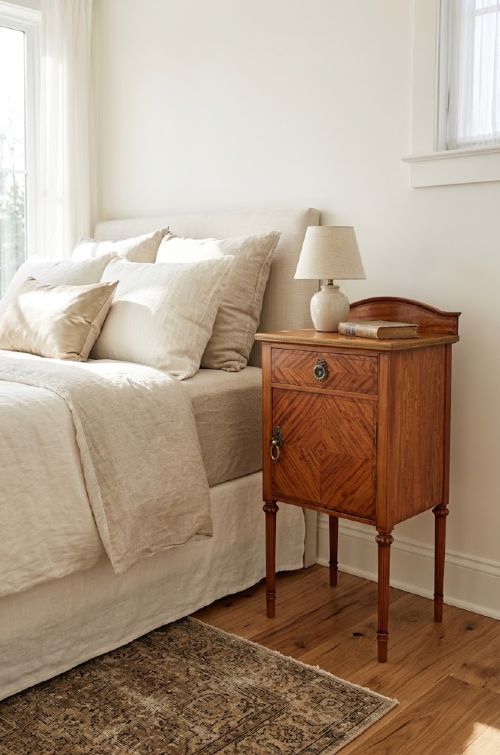
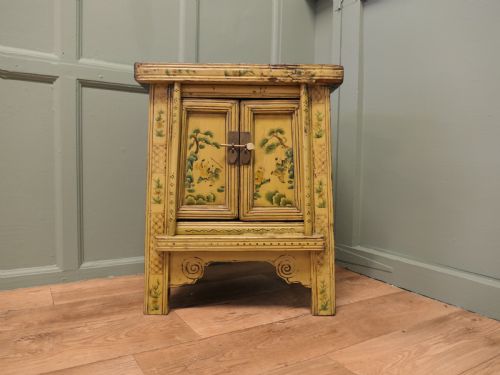
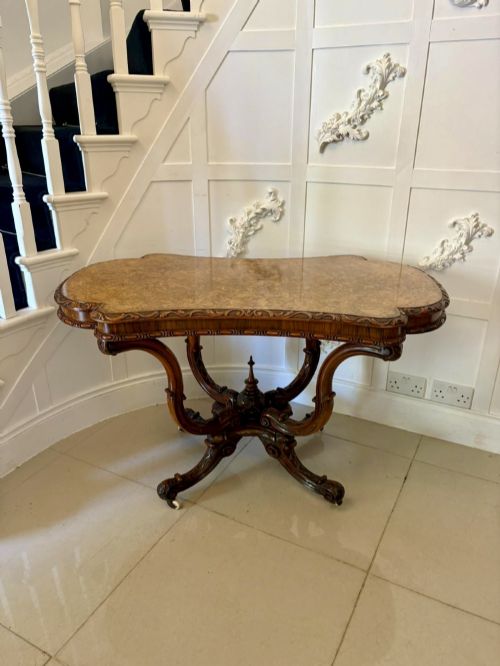
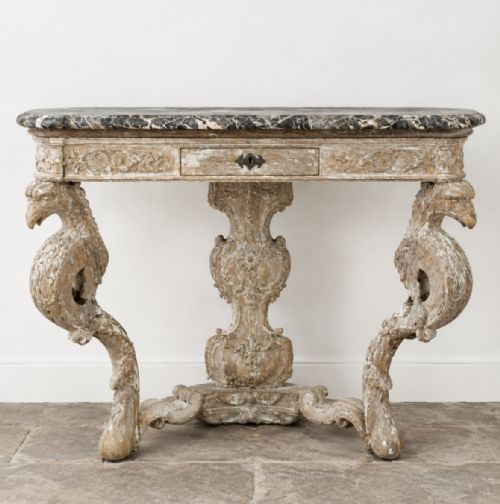
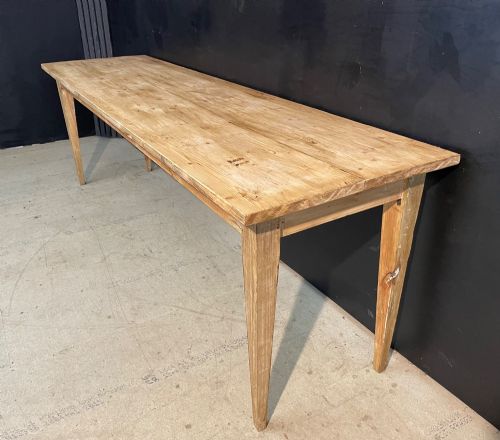
These antique wooden side tables bring practical tiered surfaces and rich timber character into a room without dominating the floor space.
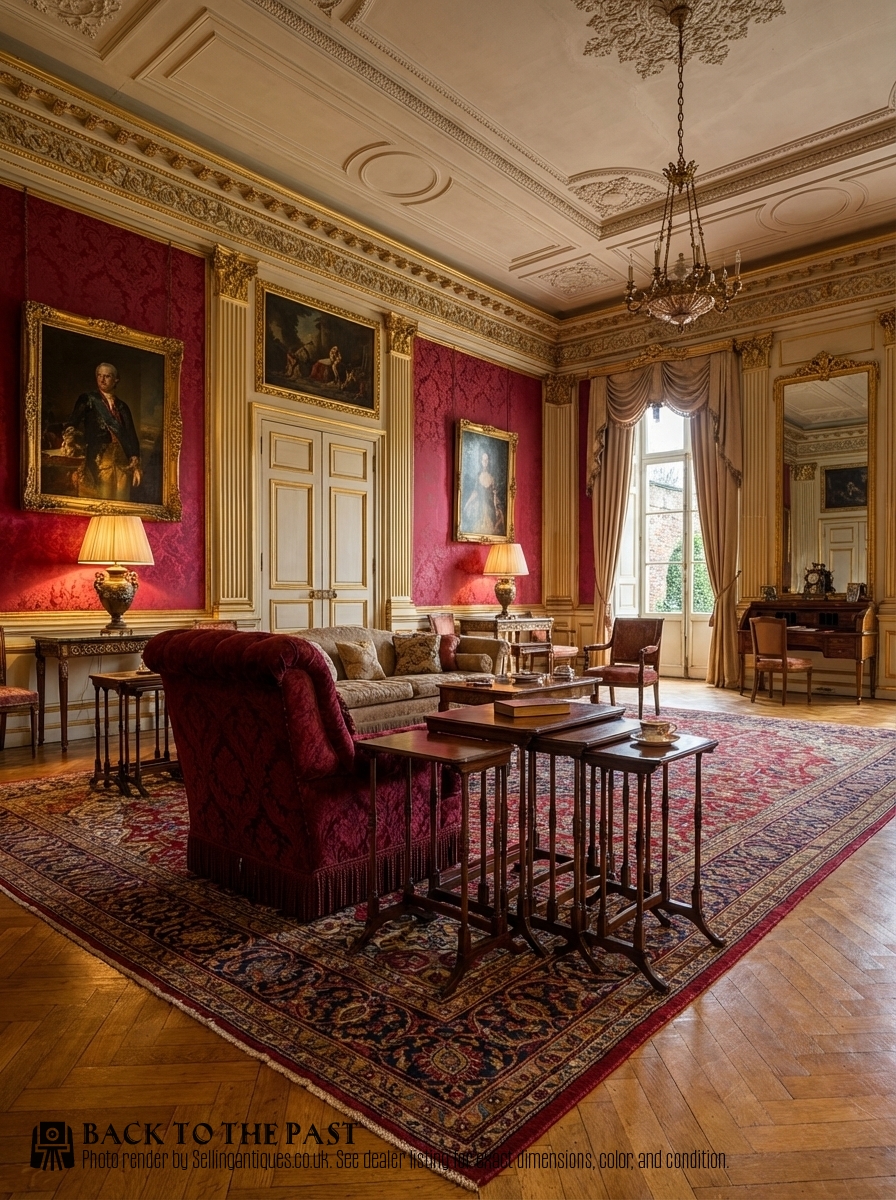
Antique Wooden Side Tables
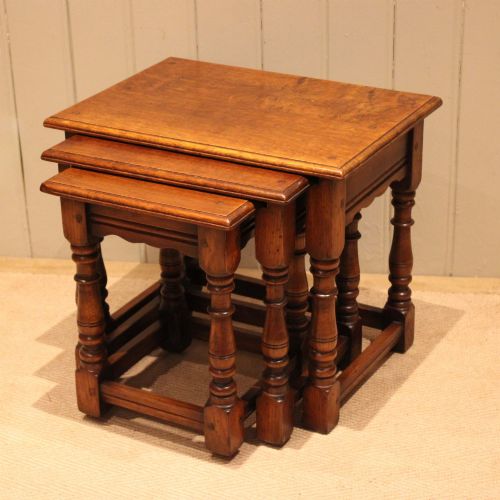
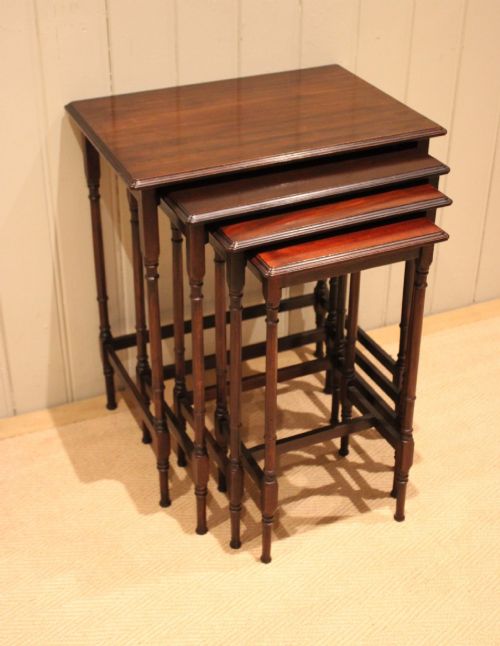
These pieces are sets of multi-tiered furnishings designed to stack together compactly when not in use. Antique wooden side tables most commonly appear here as nests of three or four graduated tables, often referred to as quartetto sets.
The selections span from the Georgian era through to the early twentieth century, taking in Victorian, Edwardian, and Regency revivals. Makers of these periods favoured designs that pull apart easily for serving tea or holding lamps before sliding neatly back into a single footprint.
Mahogany dominates the forms found on this page, accompanied by walnut and satinwood. Buyers encounter rectangular tops supported on slender turned or column legs, occasionally embellished with delicate inlay work.
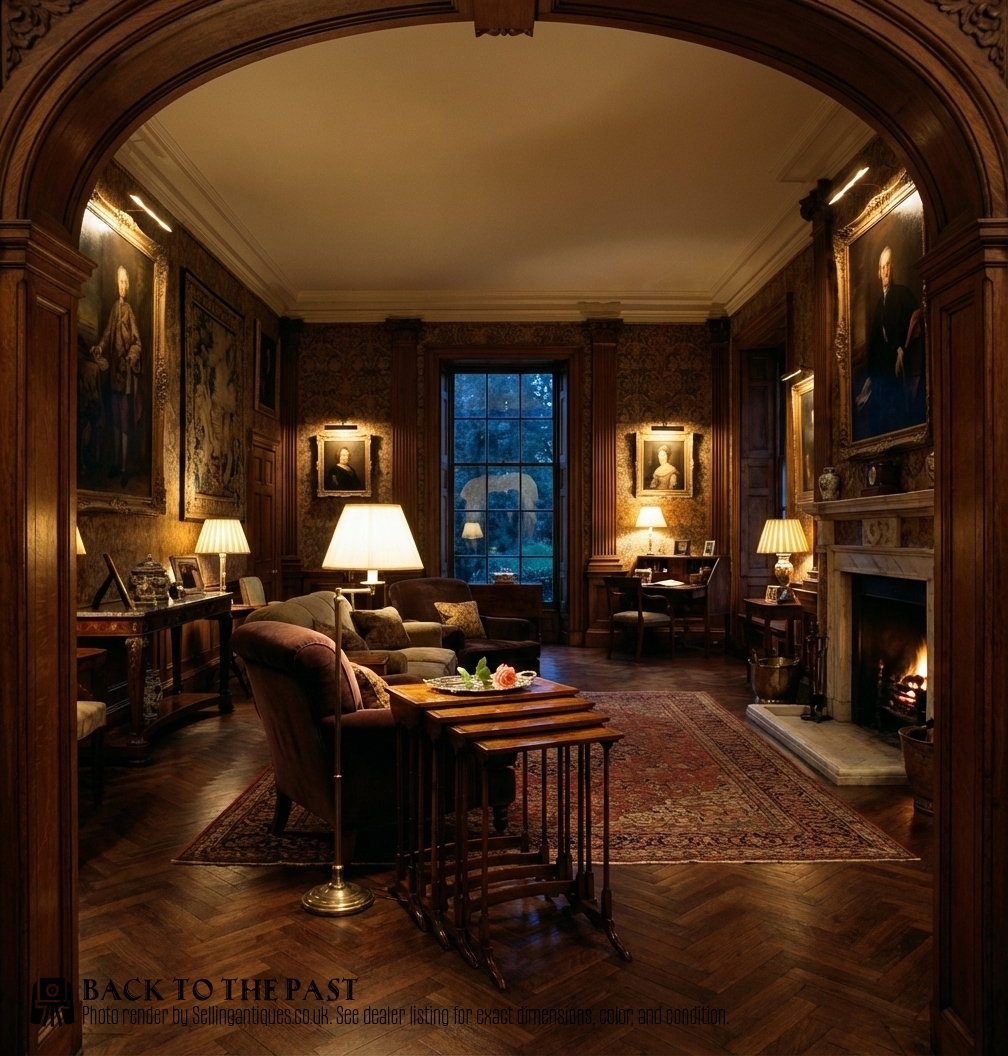
How they were made
Cabinet makers utilised dense hardwoods such as mahogany and walnut to construct sturdy frames that could withstand the friction of continuous stacking and pulling. Timbers were selected for deep grain patterns and finished to highlight natural lustre.
Satinwood inlay added contrasting linear detail to table surfaces during revival periods. Joinery techniques ensured that nested frames maintained stable clearances without binding against one another during daily use.
Antique Wooden Side Tables Retail Price Guide 2026
Typical asking prices for wooden side tables among the pieces listed under this phrase on Sellingantiques today, from the lower quarter to the upper quarter. They describe what is for sale here now, not the wider market.
Some travel tables carry stories of distant deployment across the Raj before finding quiet retirement in British drawing rooms.
What varies in quality
Quality rests in the precision of the graduating dimensions and the smoothness of the sliding action between frames. Superior examples maintain structural rigidity across all tiers without excessive play in the leg joints.
The choice of timber grain and the crispness of turned supports separate standard production from finer cabinet work. Subtle additions like satinwood inlay reveal greater attention to decorative detail.
The Antique Wooden Side Tables Glossary
- Quartetto
- A set of four tables designed to nest inside one another in descending order of height. This term frequently appears in nineteenth-century and Edwardian descriptions.
- Nest of tables
- A group of several small tables that fit neatly beneath the largest one to save space. They became popular in British homes for entertaining and flexible placement.
- Satinwood
- A pale, hard wood with a lustrous sheen, often used for contrasting borders and inlay work on dark timbers. It brings a bright decorative element to table tops.
- Burr walnut
- Timber taken from the wart-like growth on a walnut tree, showing swirling and complex grain patterns. It provides a highly decorative surface on period furniture.
- Campaign tables
- Portable furnishings designed to fold or dismantle for travel during the British Raj. They utilise sturdy joints and durable woods for transport.
Antique Wooden Side Tables: Frequently Asked Questions
How do I use a nest of tables?
These tables stack together to occupy the floor space of a single small surface when not needed. You pull them apart to place drinks, books, or lamps around a room during gatherings.
They offer flexible surfaces that adapt quickly to the seating arrangement of any living space without cluttering the room.
What is a quartetto table set?
A quartetto set consists of four graduating tables designed to slide sequentially beneath the largest main table. Each table decreases slightly in height and width to fit inside the next.
This format became particularly common during the Victorian and Edwardian periods for drawing rooms and parlours.
How do I date an Edwardian nest?
Edwardian tables often feature lighter construction and specific revival styles such as Sheraton influences. They date from the period between nineteen hundred and nineteen ten.
Examine the secondary woods and construction methods underneath the top to confirm the period alongside stylistic clues.
Are these tables sturdy enough for daily use?
Period nests of tables were built from dense hardwoods like mahogany to endure frequent handling. Proper construction ensures they remain stable when resting on flat floors.
Gentle handling of the joints preserves their structural integrity over decades of domestic life.