




Antique Wooden Shaving Table
An antique wooden shaving table brings folding mirrors and compact storage together, serving the daily grooming routines of past centuries with remarkable cleverness.
Antique Wooden Shaving Table
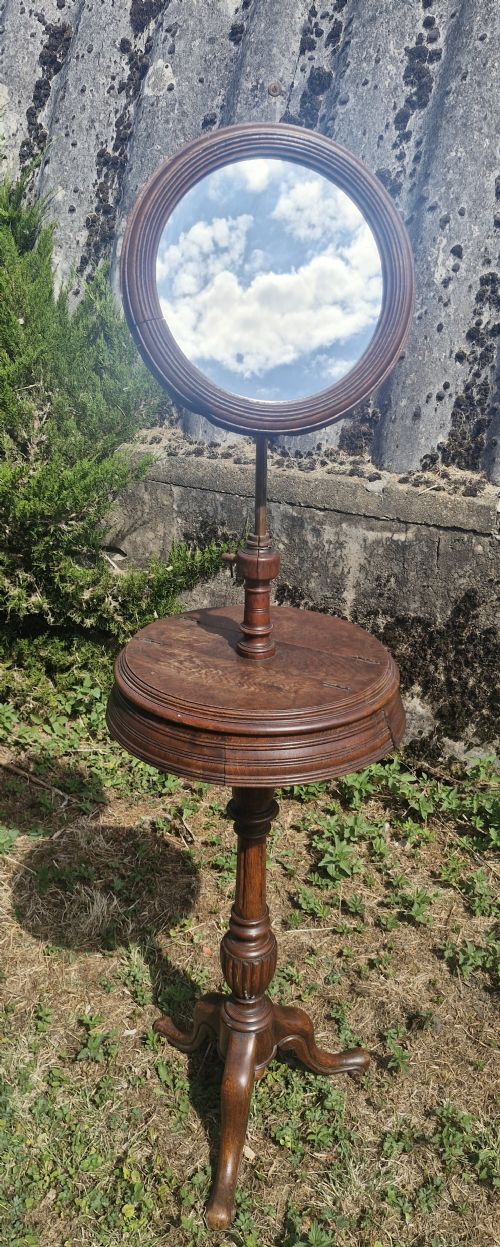
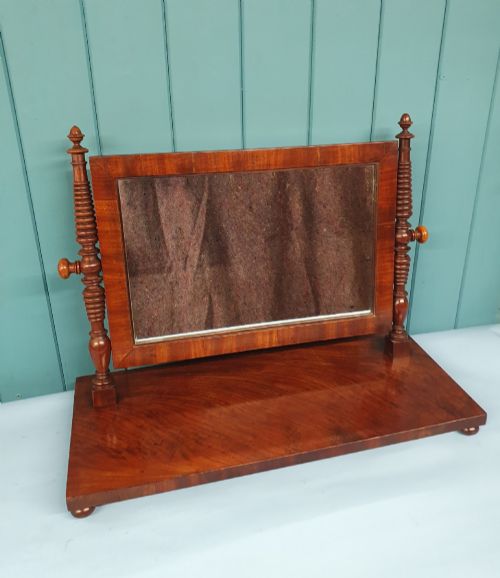
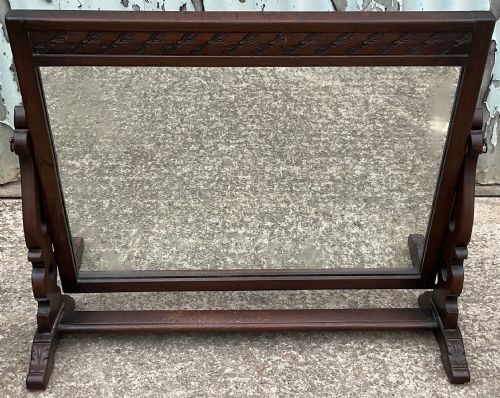
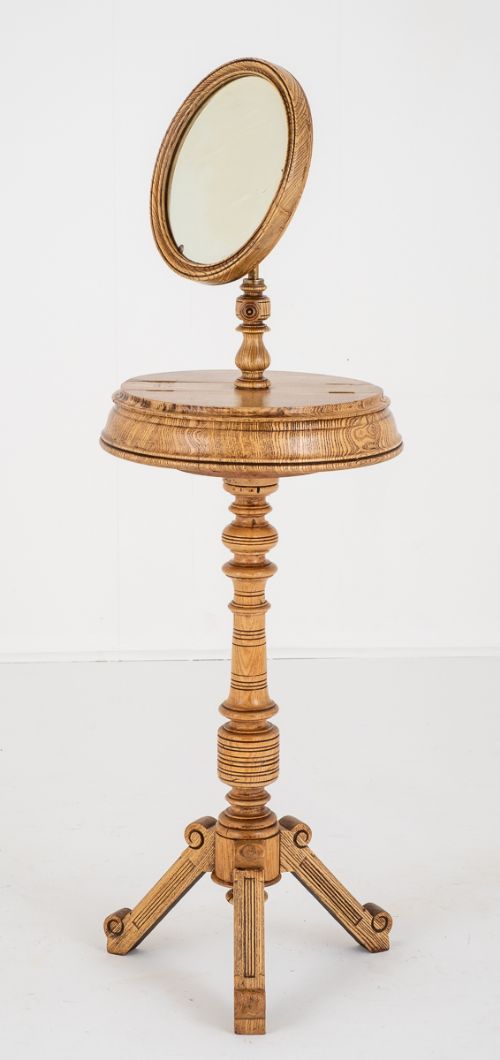
An antique wooden shaving table encompasses freestanding stands and adjustable tabletop mirrors designed for grooming, spanning periods from the eighteenth century through to the Edwardian era. These pieces frequently appear in mahogany, walnut, oak, and ash, often incorporating tilting or adjustable glass plates.
The selection ranges from tall gentleman's shaving stands to compact dressing mirrors and serpentine toilet tables. Buyers frequently encounter Victorian and Georgian examples alongside Arts and Crafts and Dutch marquetry variations.
Materials and construction
Cabinetmakers utilised dense timbers such as mahogany, walnut, and oak to build sturdy frames capable of supporting heavy pivoting glass plates. Decorative fruitwood marquetry and brass fittings frequently accent the primary woods.
Mirrors were set into adjustable frames using brass pivots and screws, allowing the user to alter the angle for personal grooming. Smaller components occasionally incorporated bone details and glass panels.
Gentlemen in the eighteenth century required adjustable mirrors precisely calibrated to catch the early morning light while holding their shaving gear close.
Assessing quality and craftsmanship
The distinction between standard examples and superior pieces rests on the precision of the joinery and the selection of timber grain. Mahogany and walnut items with finely figured veneers demonstrate higher levels of cabinetmaking skill.
Original brass hardware and smoothly functioning adjustable mirror mechanisms elevate a piece above those with replaced or stiff components.
James Shoolbred
The Antique Wooden Shaving Table Glossary
- Cheval mirror
- A freestanding full-length or large dressing mirror that swings within a vertical frame. This form allows the user to view their entire reflection.
- Toilet mirror
- A smaller tabletop mirror designed to sit upon a chest of drawers or a dressing table. These typically feature small drawers in the base plinth.
- Marquetry
- Inlaid woodwork where different coloured veneers form decorative patterns and pictures. Fruitwood is frequently employed for these detailed designs.
- Serpentine
- A curved line of furniture fronting that bends outward in the centre and inward at the sides. This shape requires considerable skill to construct accurately in solid wood.
- Adjustable mirror
- A looking glass mounted on pivots or ratchets to alter the viewing angle. Such mechanisms are essential for shaving stands.
Antique Wooden Shaving Table: Frequently Asked Questions
What is an antique shaving stand?
An antique shaving stand is a specialised piece of furniture created for morning grooming routines, typically incorporating an adjustable mirror and small compartments for razors and soap.
These pieces range from tall freestanding floor stands to compact tabletop mirrors intended for placement on a chest or dressing surface.
How do I date a wooden shaving table?
Dating relies on observing the timber species, construction methods, and hardware styles. Georgian and Victorian examples show distinct shifts in wood preference and decorative carving.
Secondary woods used inside drawers and the style of the brass mirror fixings provide further clues to the period of manufacture.
Were these tables meant for men?
Many shaving stands and gentleman's mirrors were specifically built for male grooming, featuring compartments sized for straight razors and shaving mugs. Other variations, such as toilet mirrors, served broader dressing purposes for both men and women.
Edwardian and Victorian examples often carry designations noting their original use by gentlemen.
How do I care for antique wood and mirror glass?
Maintain the timber by keeping it away from direct sunlight and sudden temperature changes that can dry out the grain. Regular gentle dusting preserves the polish.
Old mirror glass should be cleaned sparingly with dry or slightly damp cloths, avoiding harsh chemical cleaners around the wooden frames and brass pivots.