






Antique Wooden Sample
These antique wooden sample pieces are scale models, miniature furniture, and trade displays that bring domestic craft into miniature scale.
Antique Wooden Sample
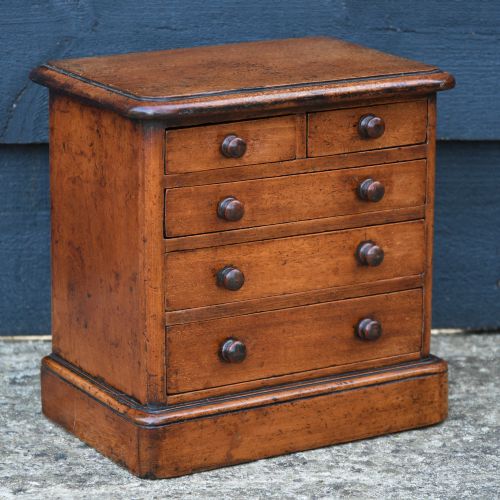
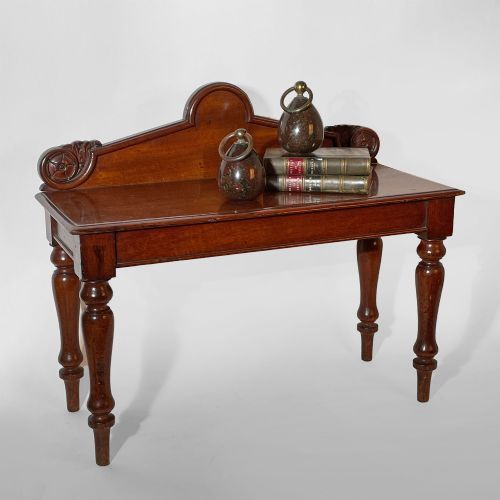
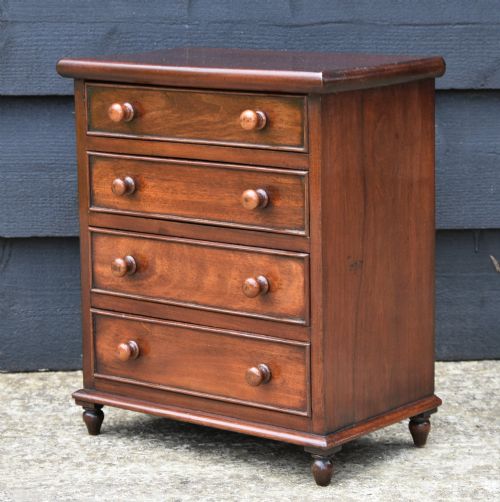
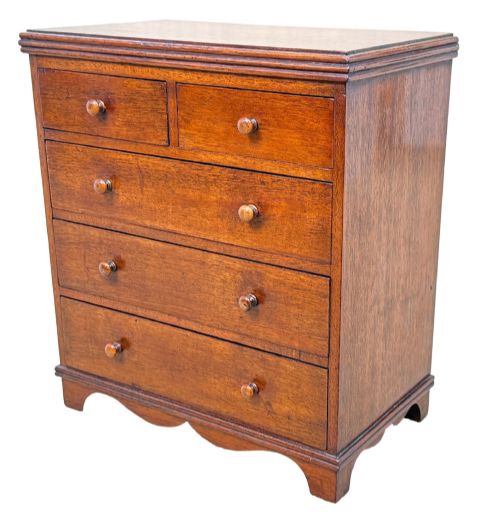
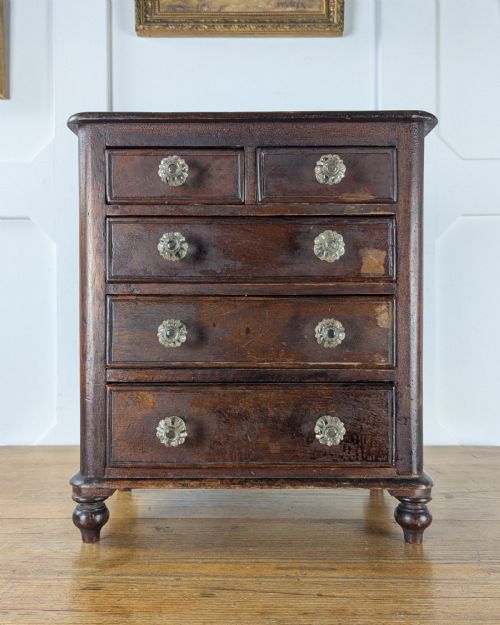
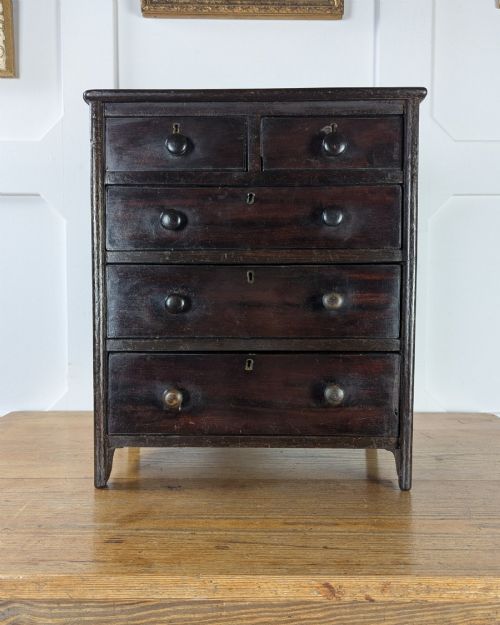
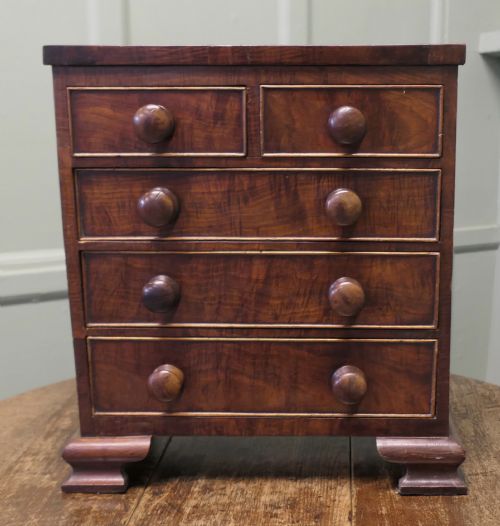
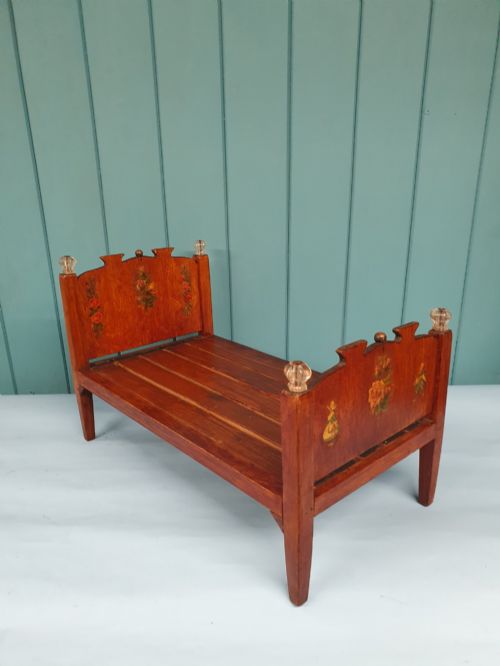
An antique wooden sample encompasses a diverse range of miniature furniture, scale models, and trade displays produced primarily during the 19th century and the Edwardian era. Buyers searching this phrase most frequently encounter miniature chests of drawers, often referred to as apprentice pieces or salesman samples.
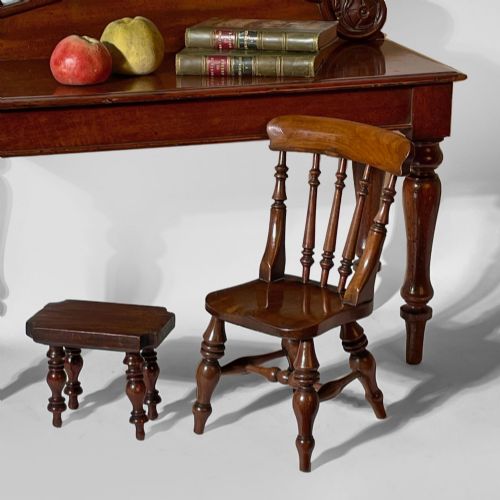
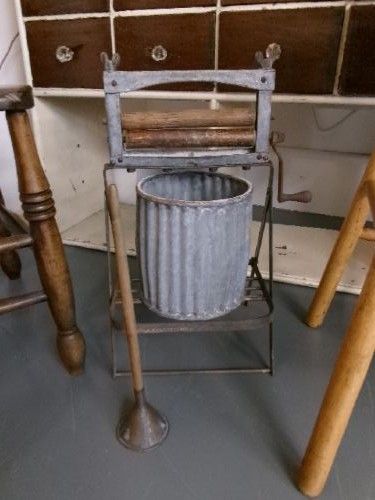
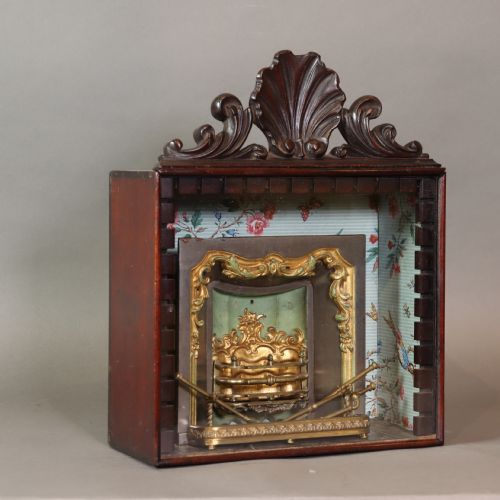
The inventory also includes miniature seating such as Windsor chairs, along with domestic laundry equipment, hardware boards, and architectural scale models. These items originate from various periods including the Georgian, Victorian, and Edwardian eras, reflecting the craftsmanship of their respective times.
How they were made
Cabinetmakers utilised dense timbers such as mahogany, oak, elm, burr walnut, and burr yew to construct these miniature forms with the same joinery techniques used for full-sized furniture. Secondary materials like brass, iron, glass, and paper appear on hardware boards, miniature fireplaces, and advertising display units.
The construction frequently incorporates turned feet, secret drawers, and hand-carved details that mirror the prevailing styles of Georgian Revival, Regency, and Victorian industrial design.
Antique Wooden Sample Retail Price Guide 2026
Typical asking prices for wooden sample among the pieces listed under this phrase on Sellingantiques today, from the lower quarter to the upper quarter. They describe what is for sale here now, not the wider market.
Listings feature mahogany, oak, burr walnut, and burr yew across Victorian and Edwardian miniature furniture forms.
What varies in quality
William Freeman And Sons·Gerwin And Co Birmingham
The Antique Wooden Sample Glossary
- Apprentice piece
- A small-scale item made by a trainee cabinetmaker to demonstrate proficiency in mastering complex joints and furniture design.
- Salesman sample
- A portable miniature version of a larger product, utilised by commercial travellers to demonstrate wares to prospective buyers.
- Windsor chair
- A wooden seating form constructed with a solid saddle-sculpted seat into which the back and legs are raked and wedged.
- Kneehole desk
- A compact writing table featuring a central recessed kneehole space flanked by pedestals of smaller drawers.
- Commode
- A low cabinet or chest of drawers, often standing on short legs and styled after continental furniture traditions.
Antique Wooden Sample: Frequently Asked Questions
What is an antique wooden sample?
These items are small-scale representations of furniture, hardware, or machinery created as trade displays, advertising units, or practice pieces by cabinetmakers.
They encompass miniature chests of drawers, seating, and equipment produced across the 19th and early 20th centuries.
How do I identify the period of a miniature chest?
Dating relies on observing the timber species, secondary woods, turning styles, and handle types characteristic of Georgian, Regency, or Victorian eras.
Cabinetmaking traits on miniature furniture generally mirror the stylistic shifts seen in full-sized domestic pieces.
Where were salesman samples utilised?
Commercial travellers carried portable models of stoves, furniture, and laundry equipment to demonstrate wares directly to shopkeepers and clients.
These compact items allowed merchants to show goods without transporting heavy or large inventories.
How should I display miniature furniture at home?
These small pieces suit placement on tabletops, shelves, or within dedicated cabinets where their detailed construction remains visible.
Their scale allows them to sit comfortably alongside larger antiques or serve as focal points in smaller rooms.