
Antique Wooden Office Cabinet
An antique wooden office cabinet provides sturdy working storage, featuring practical pigeon holes, tambour fronts, and multi-drawer banks for paper organisation.
Antique Wooden Office Cabinet
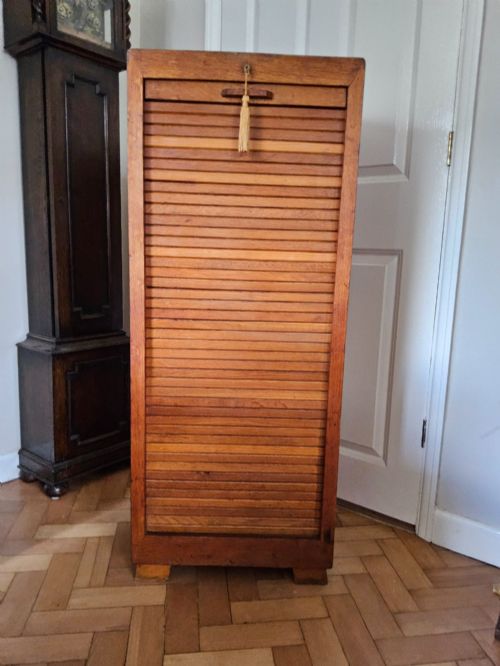
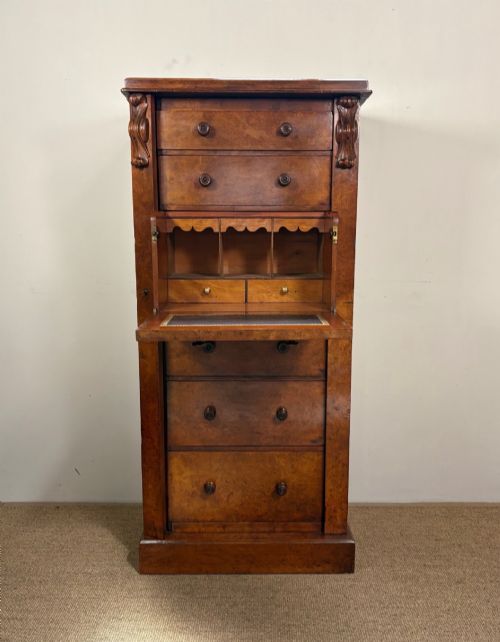
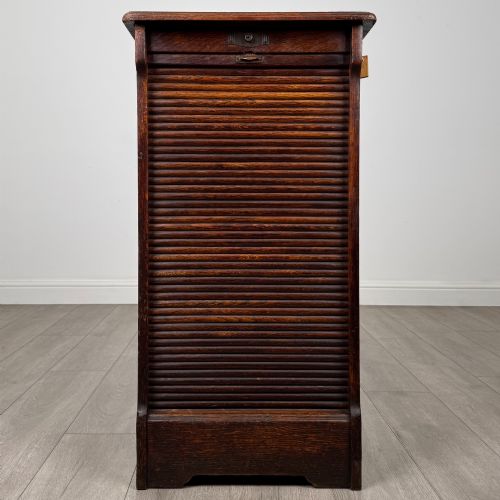
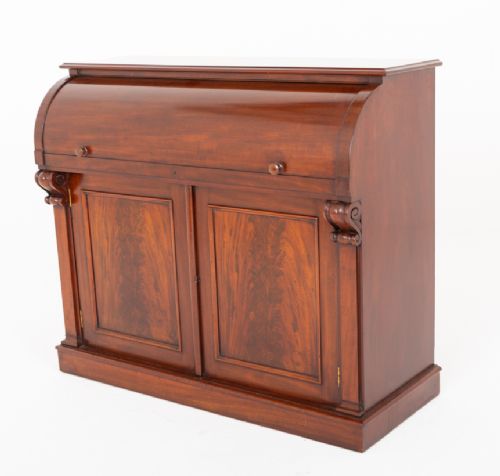
When you search for an antique wooden office cabinet, you encounter functional storage pieces built for working environments from the Victorian era through the early twentieth century. The selection spans utilitarian filing cabinets, banks of drawers, fitted cupboards, and roll-top tambour units designed to manage paperwork.
Oak and mahogany dominate the offerings, frequently appearing alongside walnut, ash, and teak in forms ranging from Edwardian tambour units to nineteenth-century military chests. These pieces originate from British, French, and Anglo-Indian workshops, reflecting the administrative needs of their respective periods.
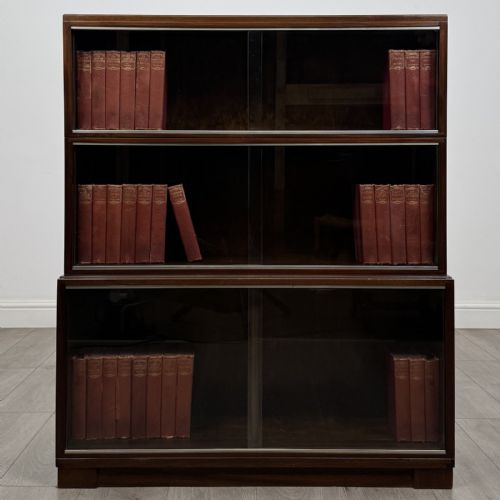
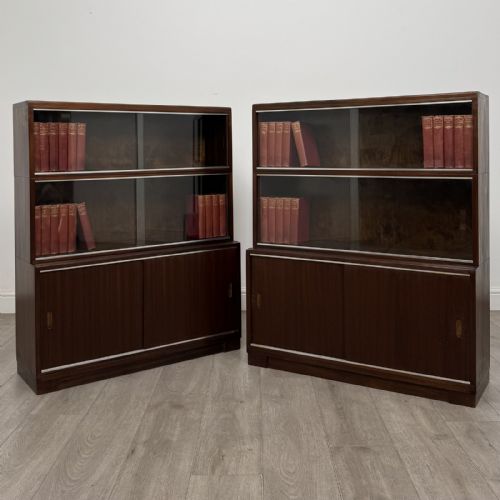
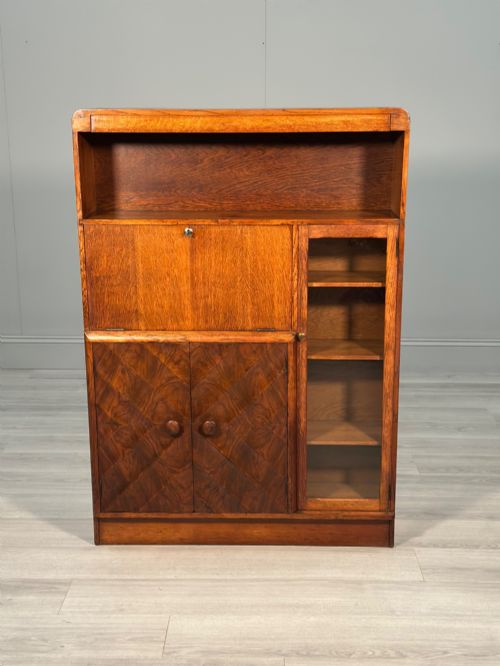
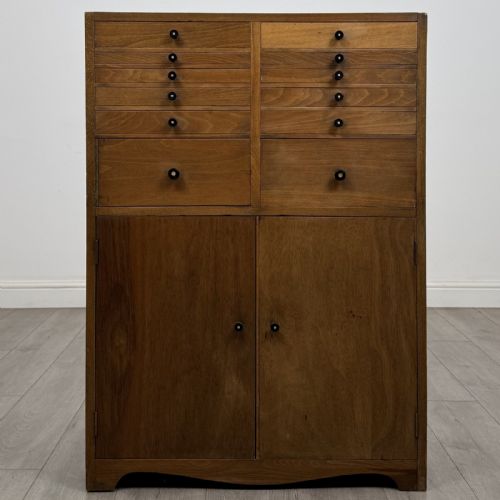
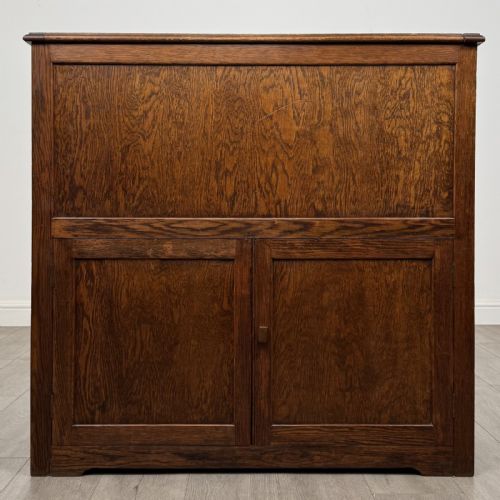
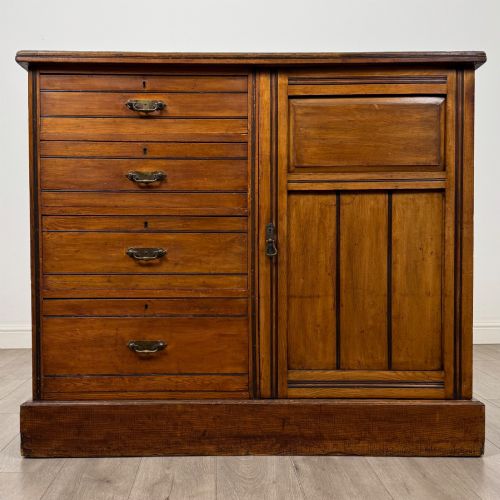
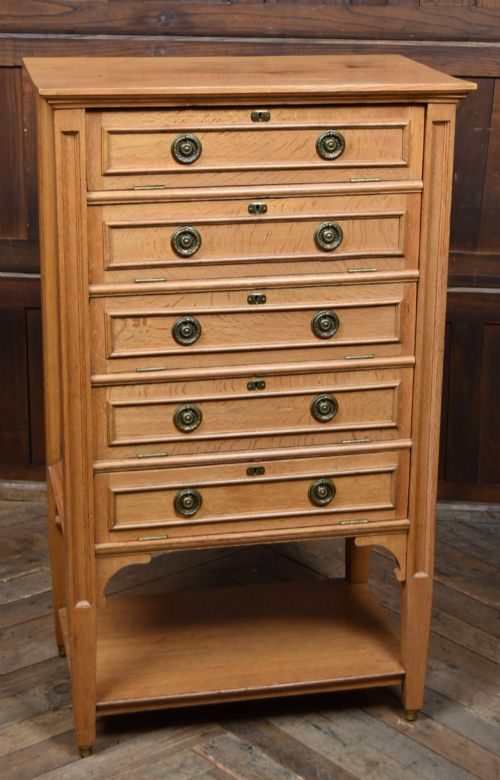
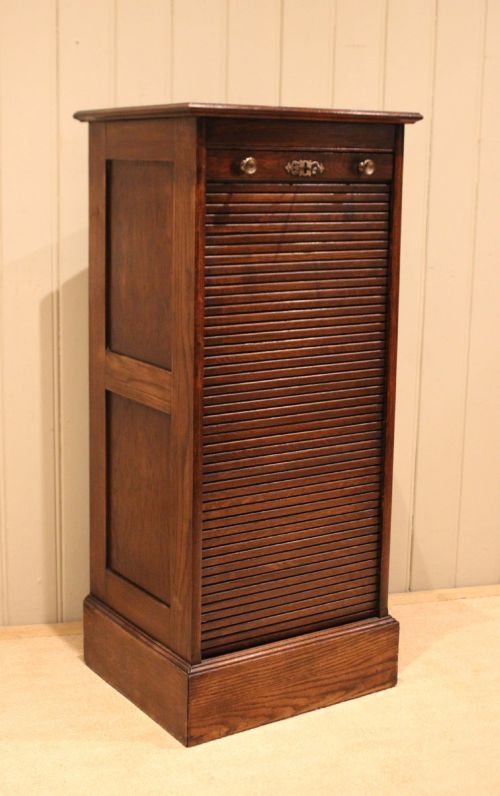
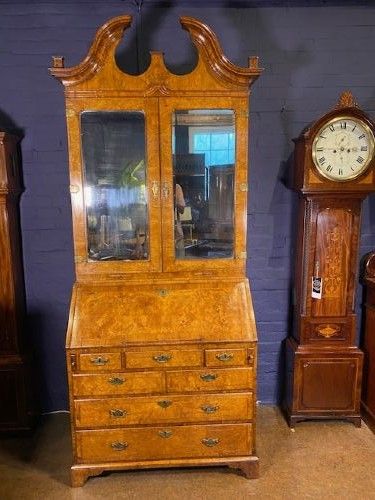
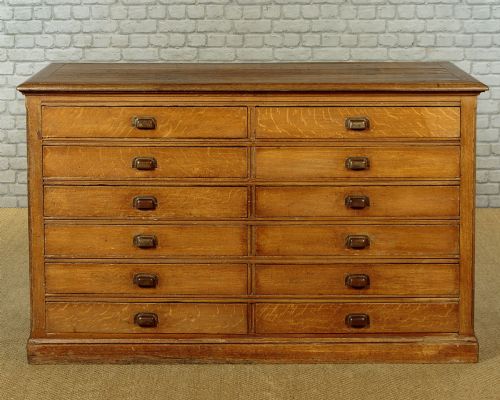
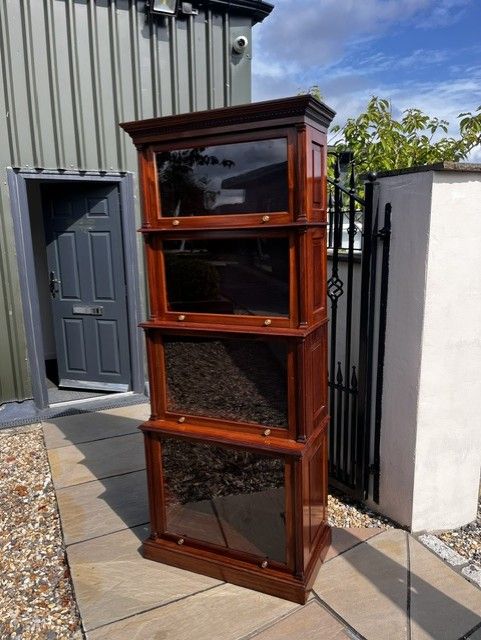
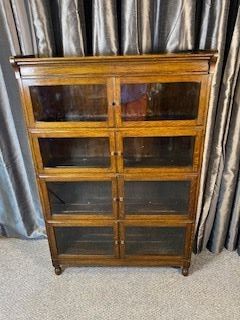
The most common formats on this page are single and double tambour front filing cabinets, banks of small drawers, and fitted office cupboards with internal pigeon holes. Buyers also find specialised items like barrister stacking bookcases, bureau desks, and stationery cabinets.
Materials and construction methods
Makers utilised solid timbers like oak, mahogany, and walnut, often pairing them with brass handles, locks, and card frames for daily commercial durability. Tambour doors required meticulous joinery, consisting of narrow wooden slats glued to a canvas backing to slide smoothly around curved tracks.
Drawer construction relied on traditional hand-cut dovetails, ensuring the robust joints necessary to withstand heavy loads of office stationery and ledgers. Secondary woods provided internal support for pigeon holes, sliding shelves, and multi-drawer carcases.
Distinctions in build and design
Quality reveals itself in the choice of timber figure, such as burr walnut or figured mahogany, and the precision of the mechanics in tambour shutters and locking mechanisms. Superior examples retain original brass hardware, working keys, and uncompromised internal dividers like pigeon holes.
Excellence is also marked by clean, unwarped runners that allow heavy banks of drawers to glide smoothly without binding within the solid wood carcase.
G. Bartholomew and Co
The Antique Wooden Office Cabinet Glossary
- Tambour
- A flexible door or shutter made of narrow slats of wood glued to canvas, allowing it to slide around a curved track to conceal cabinet interiors. This clever mechanism became popular for office desks and filing cabinets.
- Pigeon hole
- A small, open compartment within a cabinet, desk, or cupboard used for sorting letters, papers, and correspondence. These compartments form an essential part of historical administrative furniture.
- Dovetail
- A traditional interlocking woodworking joint formed by alternating wedge-shaped pins and tails. It provides exceptional tensile strength for drawer construction.
- Gallery
- A raised decorative border or railing running along the top edge of a cabinet or desk. It prevents items placed on top from sliding off.
- Bureau bookcase
- A combination furniture piece featuring a sloping writing flap that drops down to form a desk, surmounted by shelving or enclosed bookcase doors. They were produced in styles ranging from Queen Anne to Georgian.
Antique Wooden Office Cabinet: Frequently Asked Questions
How do tambour doors operate?
Tambour doors run on tracks recessed into the cabinet frame, guided by flexible wooden slats attached to a fabric backing. This allows the shutter to roll smoothly out of sight around the sides or back of the unit.
Over time, dust can accumulate in these tracks and cause binding. Regular cleaning and occasional waxing keep the mechanism functioning properly.
What were pigeon holes used for?
Pigeon holes served as sorting compartments for incoming and outgoing mail, bills, and active correspondence before the widespread adoption of vertical filing systems. Clerks used them to keep daily paperwork organised within arm's reach.
Today, these compartments make useful storage spaces for stationery, notebooks, and small desk accessories.
Are these cabinets suitable for modern files?
Many historical filing cabinets and banks of drawers accommodate standard paper sizes, though older drawer depths can vary. Measuring the interior dimensions of specific drawers ensures they fit modern folders or documents.
Some multi-drawer units work well for organising craft supplies, stationery, or small household items.
How do I date an office cabinet?
Dating relies on stylistic clues, construction methods, and materials, such as the transition from solid Victorian mahogany to early twentieth-century oak tambour designs. Brass hardware styles and patent stamps also provide chronological markers.
Examining the drawer joints, interior secondary woods, and backboards helps confirm the period of manufacture.