

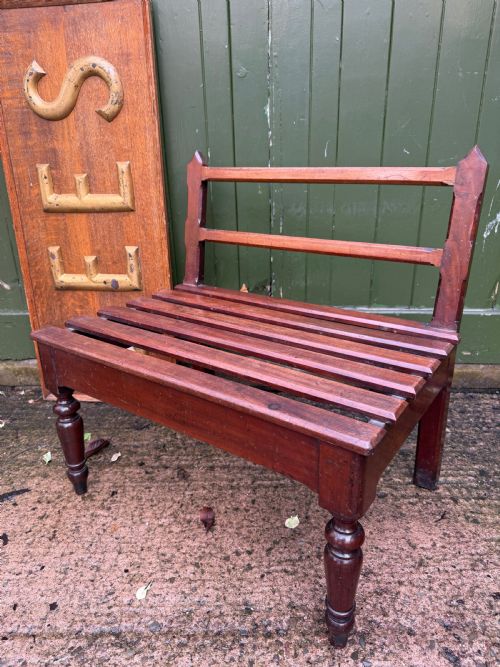


Antique Wooden Luggage Trunk
An antique wooden luggage trunk brings solid construction and travel history into a modern interior.
Antique Wooden Luggage Trunk
When searching for an antique wooden luggage trunk, buyers encounter a mix of travel chests, steamer trunks, and folding luggage stands dating from the nineteenth and early twentieth centuries. The selection includes sturdy oak luggage racks alongside camphorwood chests and heavy travel trunks bound in metal and leather.
Victorian and Edwardian examples dominate the selection, spanning periods from the 1850s through to the 1930s. Pieces range from utilitarian pine blanket boxes and country-house luggage stands to fitted steamer trunks designed for long voyages.
Origins vary from English workshops and Scottish pine kists to Chinese export camphor boxes and notable Parisian luggage makers. Buyers find both compact stands for guest rooms and large storage chests suitable for daily use.
How they were made
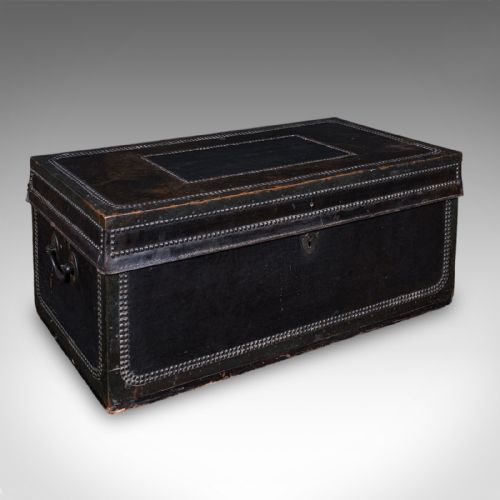
Construction relies on durable timbers such as oak, mahogany, pine, ash, beech, and camphorwood, chosen for strength during transit. Many chests utilise secondary materials like canvas, hide, and black leather to protect the wooden structure from moisture and wear.
Metal components play a structural role, with brass, iron, and zinc applied as corner brackets, binding strips, locks, and handles. Hardware is typically riveted or screwed to withstand the demands of international travel.
Surface finishes range from polished or carved oak to painted pine, black lacquer, and stencilled monograms on canvas-covered steamer trunks. Interior fittings often include wooden slats, fabric linings, and compartments designed for specific garments.
Some nineteenth-century travel trunks still retain the faded shipping labels of long-forgotten grand hotels.
What varies in quality
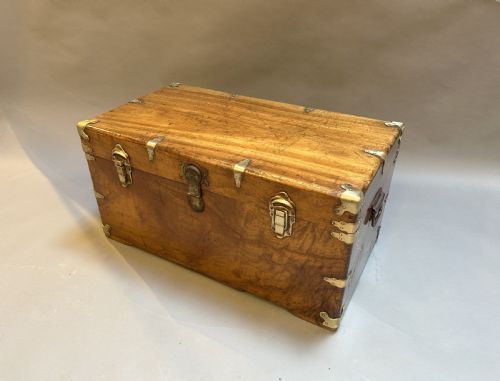
The standard of an antique wooden luggage trunk depends on the integrity of its primary materials and the original hardware. Finer pieces retain robust brass locks, leather handles, and structural joints that withstand regular weight and movement.
Makers' marks and stamps elevate certain trunks, distinguishing standard travel luggage from commissioned pieces produced by prominent French and English luggage houses. Workmanship is visible in the precision of the dovetail joints, hand-carved details, and the quality of the internal lining.
Condition varies according to historical travel use, with fully restored trunks presenting a cleaner exterior while retaining original stencils and hardware. Unrestored items display a weathered patina on the wood and canvas surfaces.
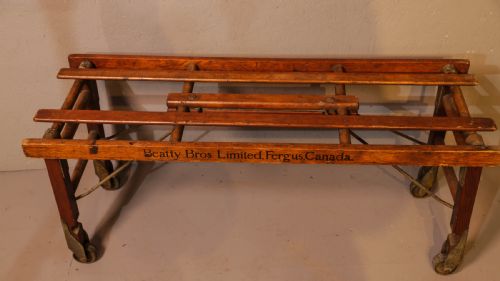
Beatty Bros Fergus Canada·Brown & Lamont·Seabrook of St.Pauls London·Waring & Gillow·Hartman Luggage Co·Louis Vuitton
The Antique Wooden Luggage Trunk Glossary
- Steamer trunk
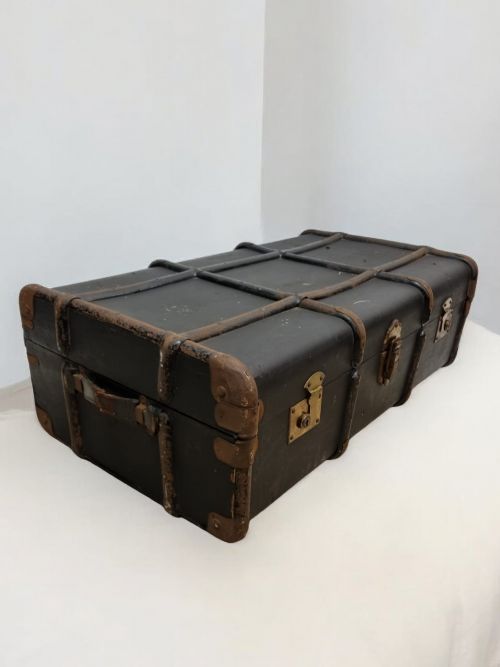
- A low-profile travel trunk designed to fit beneath a passenger ship berth during the late nineteenth and early twentieth centuries. These pieces often feature canvas or leather coverings over a wooden core.
- Campaign trunk
- Portable furniture built in sections with recessed brass handles and corner brackets for military officers on the move. They are typically constructed from dense timbers like camphorwood or mahogany.
- Luggage stand
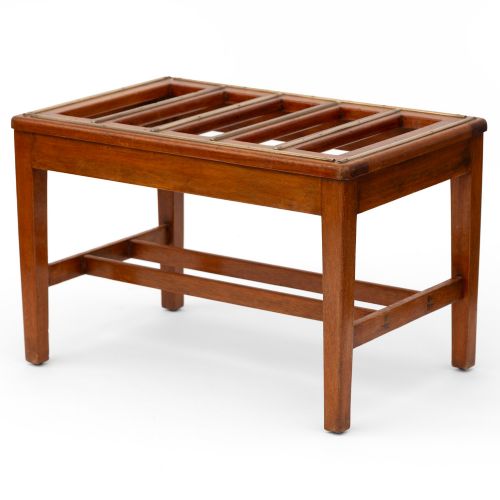
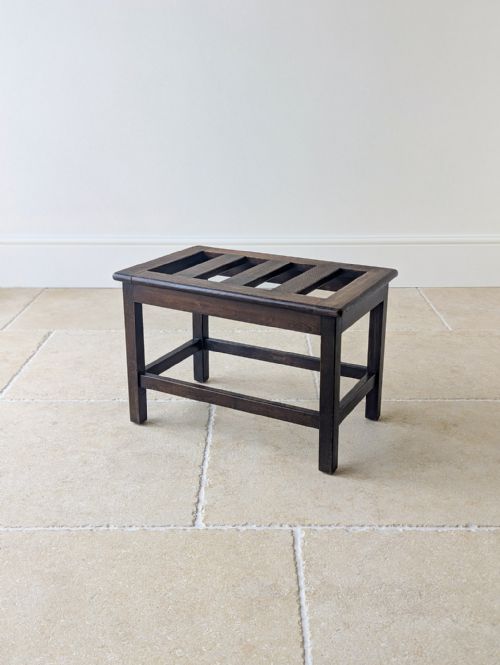
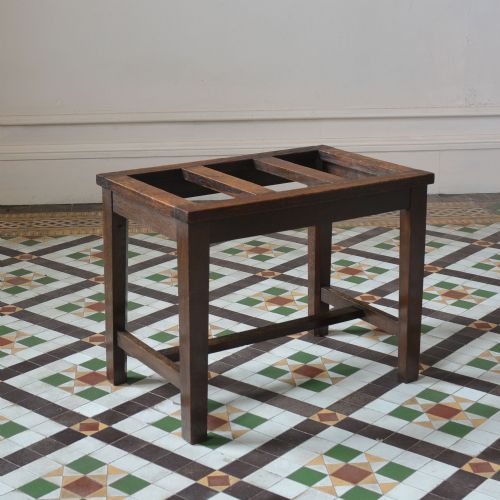
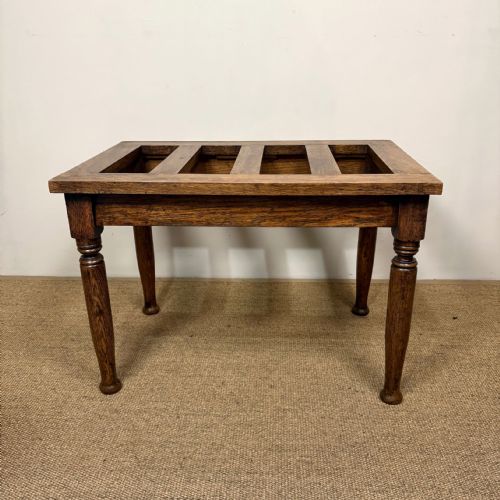
- A folding or fixed wooden rack with legs, placed in bedrooms to hold a suitcase or trunk at a convenient height. Examples often incorporate raised rear upstands and slatted tops.
- Kist
- A traditional Scottish wooden chest used for storing blankets and household goods. These are commonly made from plain pine with simple board construction.
- Malle penderie
- French term for a wardrobe trunk containing internal hangers and drawers. These large travel pieces open vertically to function as portable closets.
Antique Wooden Luggage Trunk: Frequently Asked Questions
What is a steamer trunk?
A steamer trunk is a lower-profile travel chest designed to fit beneath the berths on ocean liners. They gained popularity in the late nineteenth and early twentieth centuries.
These trunks usually feature a flat or gently curved wooden lid covered in canvas, leather, or metal sheeting for water resistance.
How were luggage stands used?
Luggage stands were placed in guest bedrooms and hotel rooms to hold a traveller's trunk or suitcase. They kept luggage off the floor and at a comfortable height for unpacking.
Most examples feature folding wooden frames with webbing or slatted oak tops.
How do I date a wooden trunk?
Dating relies on materials, hardware styles, and construction methods. Nineteenth-century trunks often feature exposed dovetails and heavy iron or brass fittings.
Early twentieth-century pieces introduce specialised internal compartments, stamped maker marks, and materials like vulcanised fibre or stencilled canvas.
Are camphorwood trunks waterproof?
Camphorwood is naturally water-resistant and emits a strong aroma that repels insects. This made it a preferred timber for trunks used in maritime trade and tropical climates.
These chests were built to protect stored garments and documents from humidity and pests during long sea voyages.