




Antique Wooden Escritoire
An antique wooden escritoire offers a private writing surface enclosed within a cabinet, bringing refined cabinetry and practical workspace together.
Antique Wooden Escritoire
An antique wooden escritoire brings together fine cabinet work and dedicated writing space, typically taking the form of a drop-front desk or a compact tabletop cabinet. When you examine the options listed under this phrase, you will encounter diverse configurations ranging from Georgian mahogany writing desks to Edwardian satinwood pieces and Victorian burr walnut examples.
The materials used across these pieces reflect centuries of timber preference, featuring solid mahogany, walnut, burr walnut, satinwood, and fruitwood alongside brass hardware and leather inserts. Cabinet makers employed wood inlay and marquetry to decorate the exterior surfaces, while internal compartments often conceal small drawers and pigeonholes for correspondence.
Construction and materials
Master craftsmen built these desks using sturdy timbers like mahogany and walnut as the primary structural body, frequently applying finely figured burr walnut or satinwood veneers to the exterior surfaces. Wood inlay and marquetry added intricate decorative motifs, while brass handles, hinges, and escutcheons provided functional contrast.
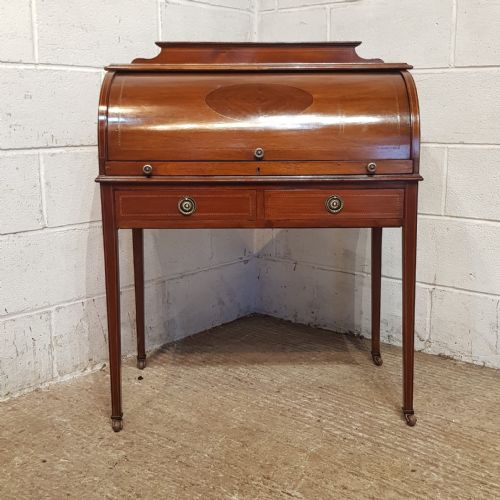
Writing surfaces were routinely lined with supple leather to create a suitable plane for penwork. Specialised forms such as cylinder desks, barrel fronted desks, and folding campaign tables required precise joinery to ensure moving wooden components operated smoothly over decades of use.
Antique Wooden Escritoire Retail Price Guide 2026
Typical asking prices for wooden escritoire among the pieces listed under this phrase on Sellingantiques today, from the lower quarter to the upper quarter. They describe what is for sale here now, not the wider market.
Some clever writing desks hide miniature revolving tabernacles inside, keeping your secret inkwells spinning out of sight.
Distinctions in quality
Quality in an antique wooden escritoire rests on the calibre of the timber selection and the precision of the cabinet work. Pieces featuring richly figured burr walnut or delicate satinwood marquetry generally represent more ambitious workshop production than standard plain-timber carcases.
The complexity of the interior arrangement also sets finer examples apart, particularly those incorporating revolving tabernacles, secret compartments, or bespoke maker signatures. Structural integrity in the folding mechanisms and drawer construction indicates the level of care invested by the original maker.
James Mein of Kelso·George Faulkner Armitage
The Antique Wooden Escritoire Glossary
- Escritoire
- A writing cabinet featuring a sloping or folding writing surface that conceals internal compartments. This form evolved to keep correspondence private and organised.
- Marquetry
- The art of applying decorative pieces of veneer to a structure to form intricate patterns or pictures. Craftsmen used various tinted woods to achieve pictorial depth.
- Burr Walnut
- Timber taken from a walnut tree growth showing swirling, knotty grain patterns. It was highly prized for high-status furniture fronts.
- Bonheur du Jour
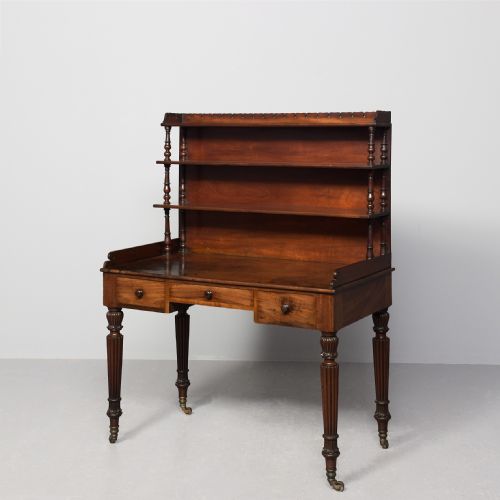
- A light lady's writing desk with a small cabinet or set of shelves on top. This form appeared frequently in late nineteenth and early twentieth-century rooms.
- Carlton House Desk
- A freestanding writing table fitted with a permanent superstructure of small drawers and pigeonholes arranged in a curved tier. It offers numerous compartments for stationery.
Antique Wooden Escritoire: Frequently Asked Questions
How were these desks used originally?
These desks served as private workstations for writing letters, managing household accounts, and keeping personal documents secure. The enclosed compartments allowed owners to hide unfinished correspondence away from view.
Wealthy households placed them in parlours, bedrooms, or private studies where writing was a daily ritual.
How do I care for wooden writing furniture?
Protect the timber and leather surfaces by keeping the desk away from direct sunlight and sudden temperature fluctuations. Regular dusting with a soft cloth maintains the finish without needing harsh polishes.
Treat the leather writing insert with care and apply appropriate leather dressings sparingly if the material begins to dry out.
Can I use an escritoire daily?
Many of these desks remain entirely suitable for modern writing and laptop use, provided the folding mechanism or drop-front is handled gently. The internal compartments are well-suited for organising modern stationery and small items.
Ensure that any support struts or chains for drop-front desks are secure before placing heavy items on the writing surface.