




Antique Wooden Dowry Box
An antique wooden dowry box is a sturdy storage chest designed for a bride's household goods, combining practical utility with regional tradition.
Antique Wooden Dowry Box
When you search for an antique wooden dowry box, you encounter heavy storage chests and marriage coffers originating from diverse regions including India, the Middle East, and various European countries. These pieces span from the seventeenth century through the early twentieth century, reflecting the specific cultural traditions of their makers.
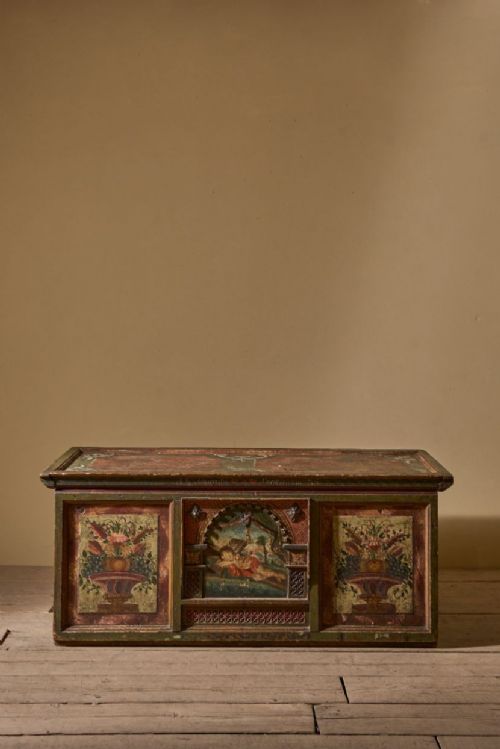
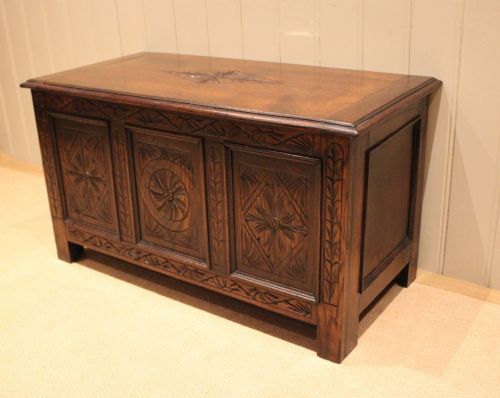
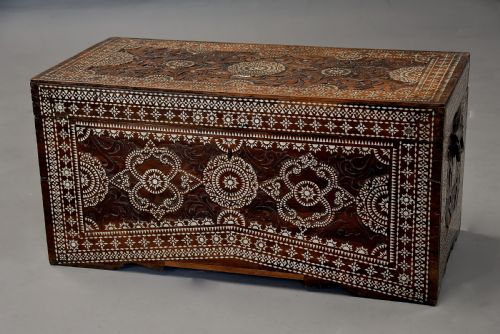
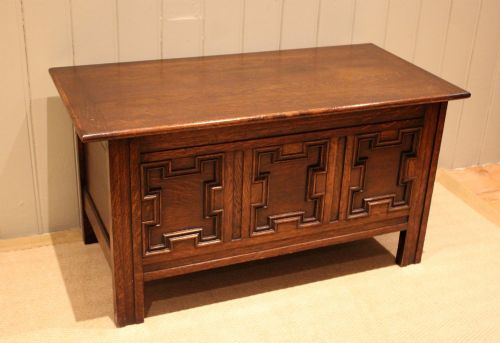
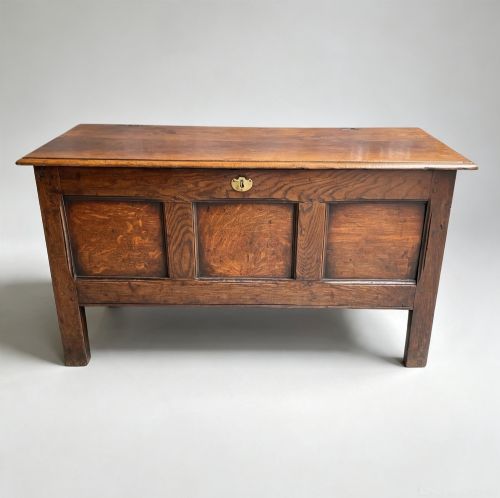
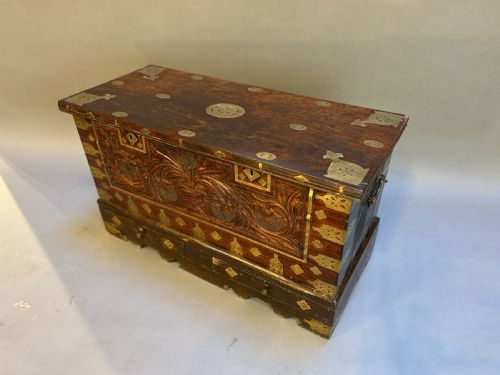
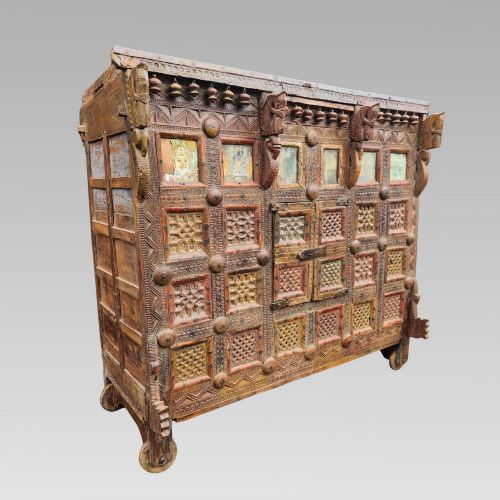
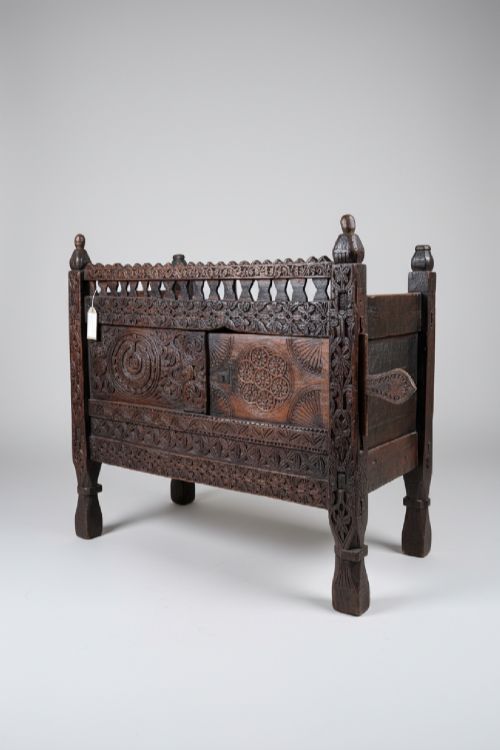
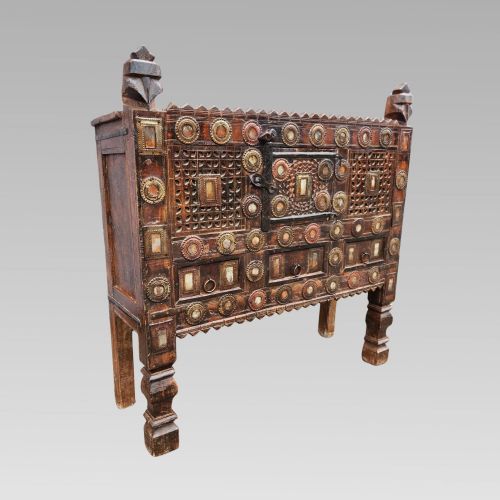
The selections on this page appear in several distinct regional forms, such as carved teak damchiyas from India, painted pine marriage chests from Scandinavia and Hungary, and sturdy oak coffers from seventeenth and eighteenth century Britain. Each form serves the original purpose of holding textiles, valuables, and household goods for a new household.
Buyers find these items functioning as large trunks, storage chests, and occasional seating or tables in modern interiors. Their robust construction allows them to continue fulfilling storage roles centuries after their original creation.
How they were made
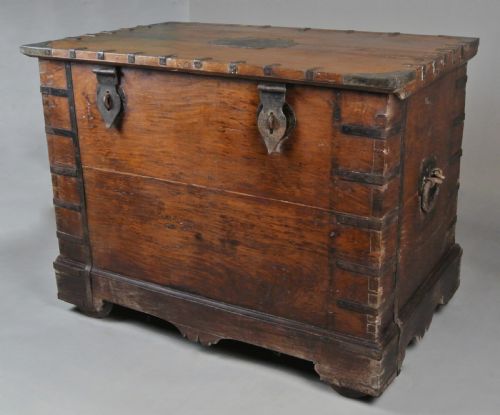
Makers constructed these pieces using dense regional timbers like oak, teak, and pine, joined with traditional framing methods and often reinforced with heavy iron bands, hinges, and brass fittings. These durable materials ensured the contents remained protected during transport and long-term storage.
Surface decoration varied widely by region, ranging from deep scratch-carved or chip-carved detailing on British oak to intricate mother of pearl inlay and vivid hand-painted pigments on European and Asian marriage chests.
Some nineteenth century Indian chests feature hidden compartments specifically designed to guard a bride's secret pin money from curious relatives.
What varies in quality
The standard of a piece depends heavily on the integrity of its original timber and the crispness of its carving or the preservation of its early painted finish. Pieces retaining their original surface patination and authentic hardware stand apart from heavily restored examples.
Structural robustness also defines the range, with superior examples showing careful joinery that has survived centuries of use without excessive timber replacement or improper repairs.
The Antique Wooden Dowry Box Glossary
- Cofer
- A heavy wooden chest traditionally used for storing valuables and personal belongings. These pieces typically feature hinged lids and sturdy boarded or framed construction.
- Damchiya
- A traditional Indian dowry chest or cabinet often characterised by carved teak, recessed panels, and integrated small compartments. These storage units formed an essential part of household furnishings.
- Mule chest
- A storage chest featuring one or more drawers built into the base beneath the main compartment. This form evolved from standard coffers during the eighteenth century.
- Folk art
- Decorative painting and carving executed within regional traditions by local artisans rather than formal workshops. These designs display distinctive local motifs and original pigments.
Antique Wooden Dowry Box: Frequently Asked Questions
What did people store inside a dowry box?
Families used these large chests to store household textiles, linens, garments, and valuables collected for a bride's new home. The deep interior compartments accommodated bulky woven blankets and ceremonial clothing.
Over generations, these boxes transitioned from functional bridal storage into general household receptacles for keepsakes and heavier items.
How can I tell a British coffer from an Indian chest?
British coffers predominantly utilise dark oak with traditional carved panels, stile-and-rail construction, and subdued iron or brass hinges. They reflect local architectural styles of the seventeenth and eighteenth centuries.
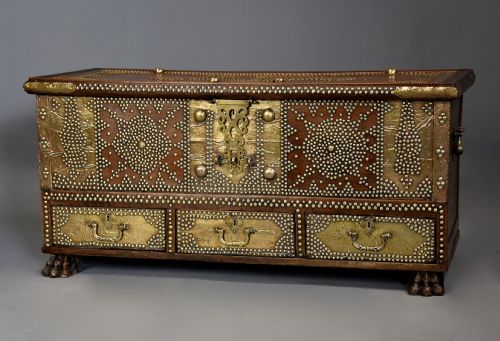
Indian dowry chests usually employ teak or mixed hardwoods, frequently featuring elaborate carved figures, applied brass strapwork, and structural iron banding unique to regions like Rajasthan or the Swat Valley.
Are painted marriage chests fragile?
Painted marriage chests from regions like Sweden and Hungary feature historical pigment layers that require gentle care to preserve. While the underlying pine or hardwood structures remain robust, the decorative surfaces benefit from stable indoor humidity.
Routine maintenance involves dusting with a dry cloth rather than applying modern liquid polishes that might soften historical paint.
How do I use a dowry chest in a modern room?
These low chests function effectively as coffee tables, window seats, or bedroom blanket storage units. Their flat tops provide surface space while the internal cavity conceals clutter.
Placing a chest away from direct heat sources protects the dry timber and historical finishes from splitting or warping over time.