

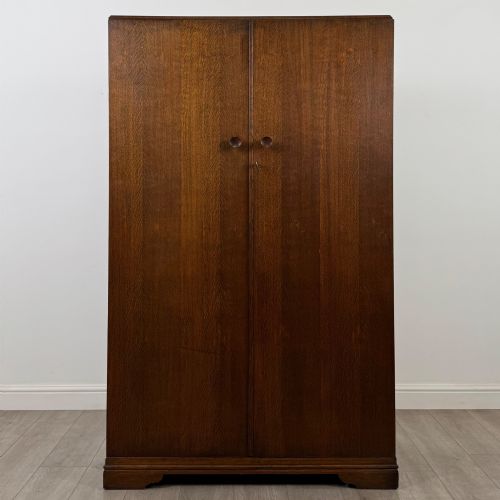
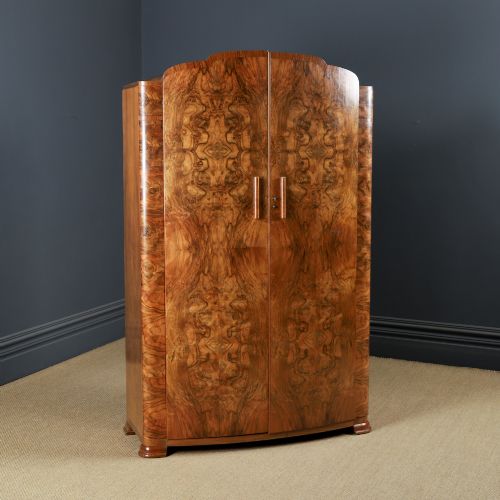
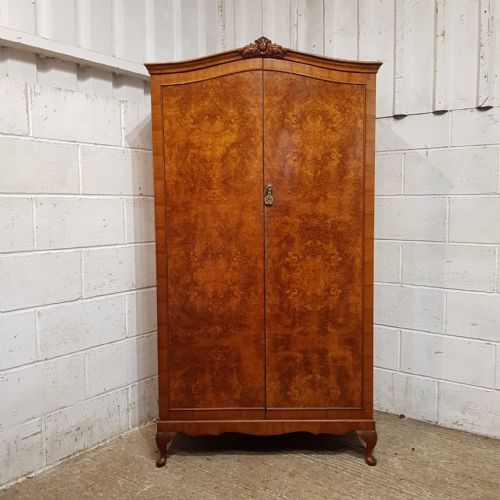
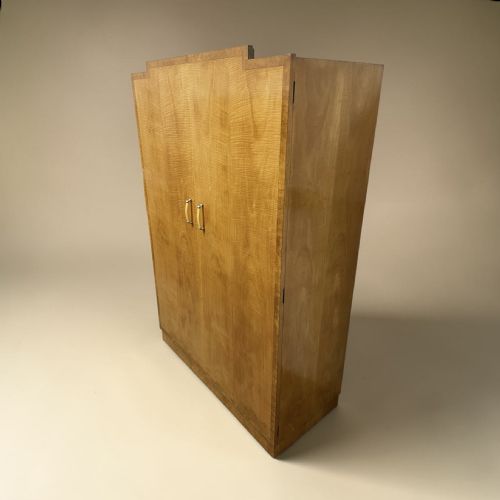




Antique Wooden Closet
An antique wooden closet brings substantial storage and period timber to a bedroom, holding clothes behind panelled doors crafted by earlier generations.
Antique Wooden Closet
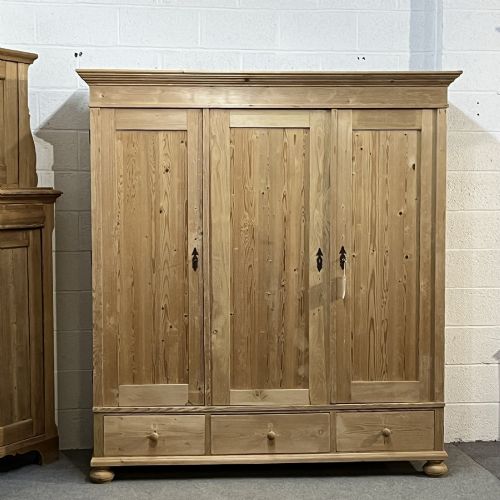
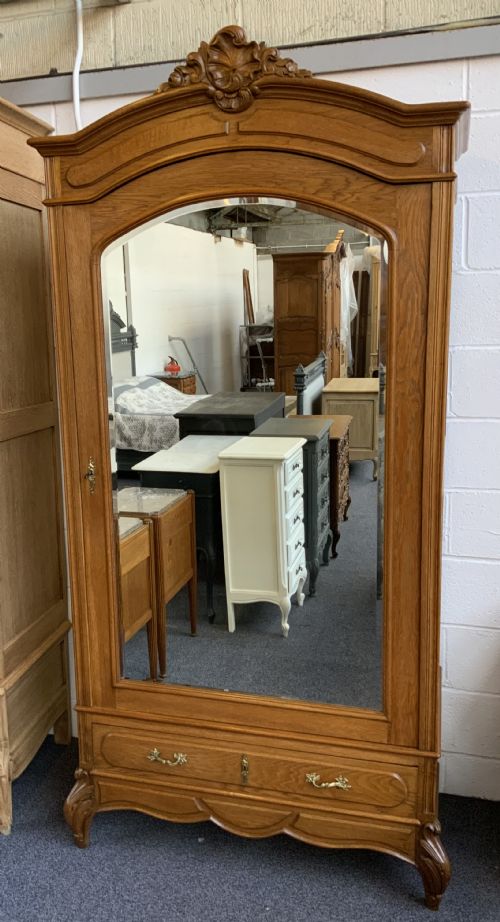
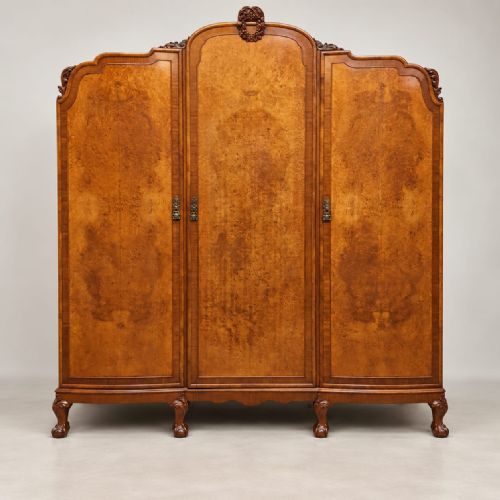
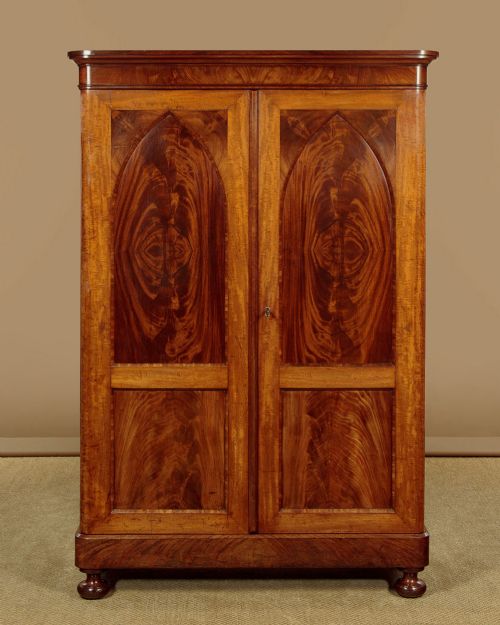
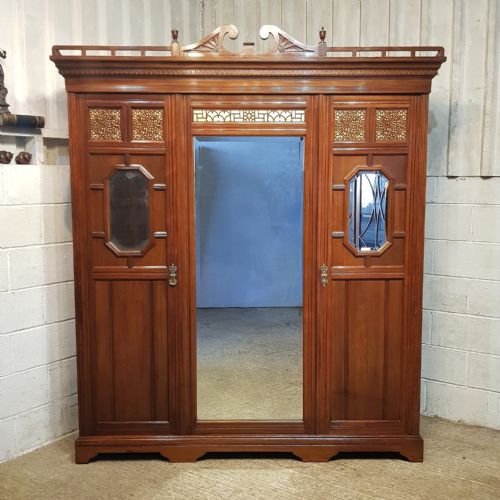
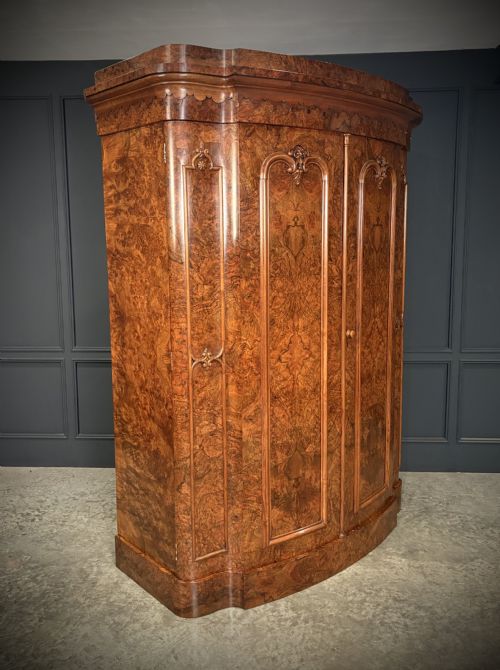
An antique wooden closet encompasses large wardrobes, armoires, and display cabinets shaped from timber across multiple centuries. The selection ranges from compact mid-Victorian mahogany designs to grand burr walnut triple wardrobes and carved oak French armoires.
Buyers will most frequently encounter nineteenth-century and early twentieth-century examples, spanning late Victorian mahogany pieces to Edwardian arts and crafts designs in oak. Tall armoires with mirrored or panelled doors also appear alongside Dutch marquetry robes and occasional display cabinets.
Origins vary between British workshops working in mahogany, walnut, and oak, and continental makers producing French provincial or Louis XVI styles. Interiors often provide hanging space, shelving, or fitted compartments suited to contemporary storage needs.
How they were made
Construction relies upon traditional cabinetmaking timbers, principally mahogany, oak, and walnut, frequently enhanced by burr walnut or flame mahogany veneers. Carpenters employed solid boards for structural frames alongside carefully matched veneers to create decorative grain patterns on large door surfaces.
Details include hand-carved ornamentation on French armoires, marquetry inlay work on Dutch pieces, and inlaid ash or brass detailing. Iron and brass hardware such as hinges, handles, and locks secure the heavy timber doors.
Antique Wooden Closet Retail Price Guide 2026
Typical asking prices for wooden closet among the pieces listed under this phrase on Sellingantiques today, from the lower quarter to the upper quarter. They describe what is for sale here now, not the wider market.
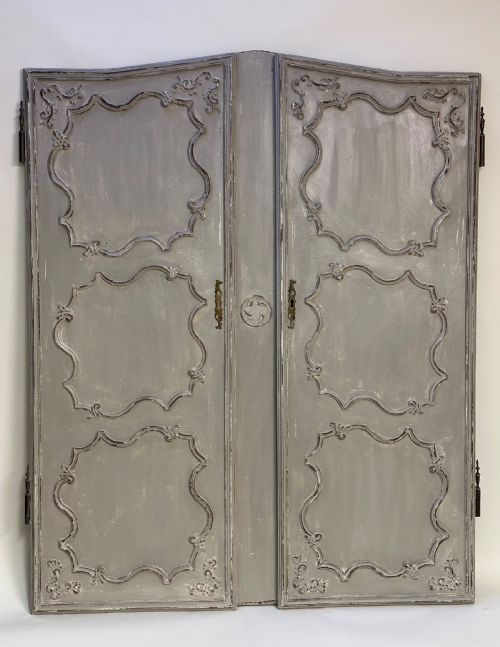
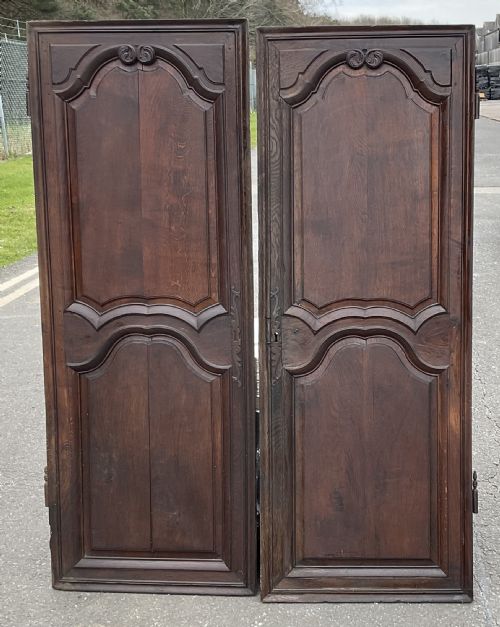
Some French armoire doors survive entirely detached, waiting patiently for a new frame or a fresh creative purpose.
What varies in quality
The standard of a piece depends upon the choice and figuring of the timber, particularly where expensive veneers like burr walnut or flame mahogany cover large door panels. Crispness of hand-carved enrichment and the precision of marquetry inlay distinguish finer examples from plain utilitarian storage.
Construction methods also dictate quality, seen in the thickness of solid timber carcases, the retention of original brass and iron hardware, and the complexity of internal fittings.
The Antique Wooden Closet Glossary
- Armoire
- A large freestanding wardrobe or cupboard, typically of continental European origin with deep proportions and panelled doors. These pieces often feature carved timber or painted finishes.
- Marquetry
- The art of applying small pieces of veneer to a structure to form decorative patterns or pictures. Dutch makers frequently utilised this technique on robes and cabinets.
- Veneer
- A thin layer of choice wood applied to a base timber to provide a decorative exterior surface. Flame mahogany and burr walnut are common examples.
- Vitrine
- A glass-fronted display cabinet used for showing porcelain or ornaments. These share construction traits with large wardrobes of the same periods.
- Carcase
- The main structural body or frame of a piece of furniture, excluding doors and removable cornices. It provides the foundational strength for heavy timber wardrobes.
Antique Wooden Closet: Frequently Asked Questions
How do I fit a large wardrobe in a modern room?
Many antique wooden closets were built to dismantle into modular sections, including cornices, base drawers, and side panels, allowing for transport and assembly within smaller modern spaces.
Check the internal depth and height specifications before purchase, as older pieces often require specific clearance for hanging rails and full-length garments.
Can I adjust the internal storage space?
Original interiors frequently feature fixed timber hanging rails or simple shelving fitted during the nineteenth or early twentieth centuries. Adapting these spaces often involves inserting modern rails or freestanding shelving units that rest inside the original carcase without causing permanent alteration.
Fitted variations from later periods may already include modular compartments or drawers designed for versatile storage.
How do I care for antique timber finishes?
Maintain polished mahogany, walnut, and oak surfaces by applying beeswax periodically to nourish the grain and protect against dry atmospheric conditions. Avoid placing large wooden closets near direct heat sources or in areas subject to rapid humidity changes to prevent timber warping.
Dust regularly with a soft, dry cloth rather than using silicone-based sprays.
What distinguishes French armoires from British wardrobes?
Continental armoires generally rely on pegged construction, carved oak or fruitwood panels, and distinct stylistic influences like Louis XVI or provincial motifs. British equivalents from the Victorian and Edwardian eras tend to utilise mahogany, walnut, or oak with formal architectural cornices and mirrored door options.
Both forms offer substantial internal storage while displaying the distinct craftsmanship of their respective regions.