



Antique Wooden Chess Tables
These antique wooden chess tables combine practical play with fine cabinet-making, offering both a surface for matches and a decorative centrepiece for the room.
Antique Wooden Chess Tables
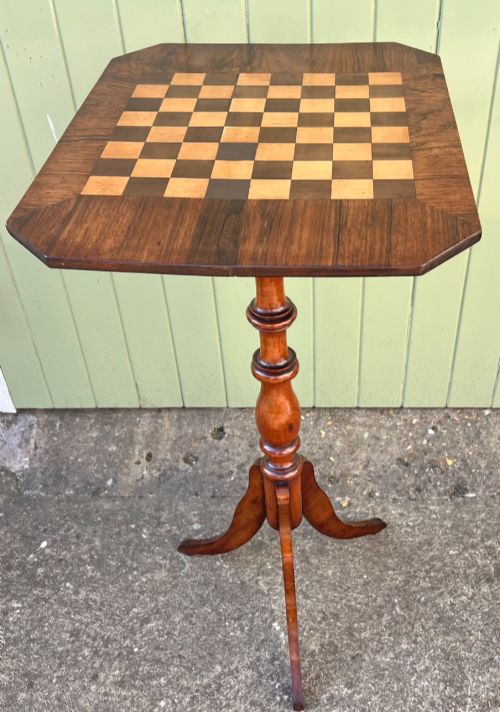
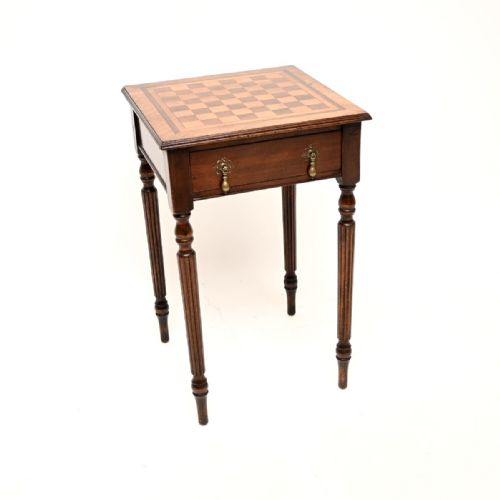
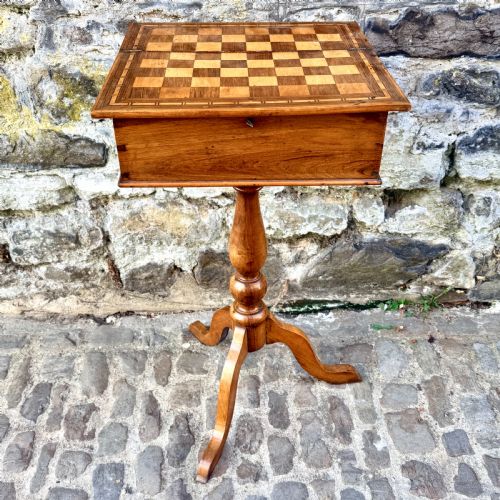
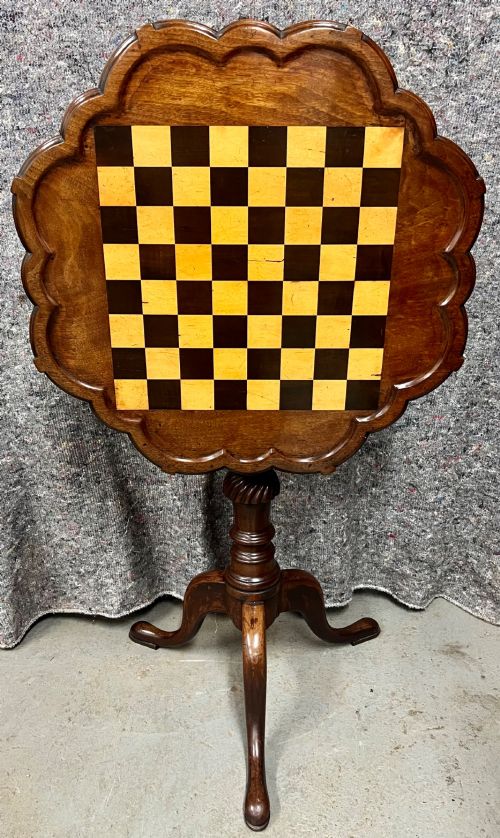
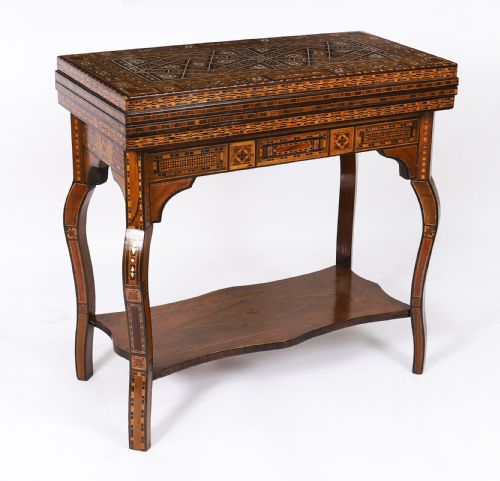
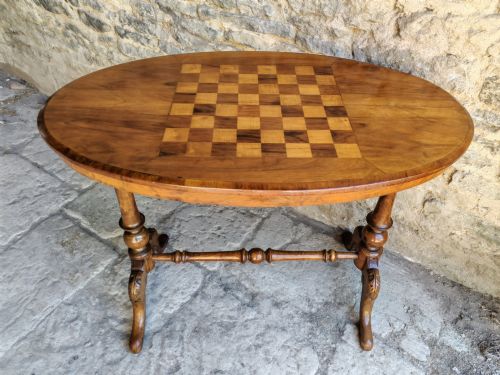
When you search for antique wooden chess tables, you encounter furniture designed specifically for play alongside multi-functional pieces that double as games compendiums, card tables, and occasional tables. The selection ranges from compact tripod supports to larger folding and swivelling designs suitable for parlours and drawing rooms.
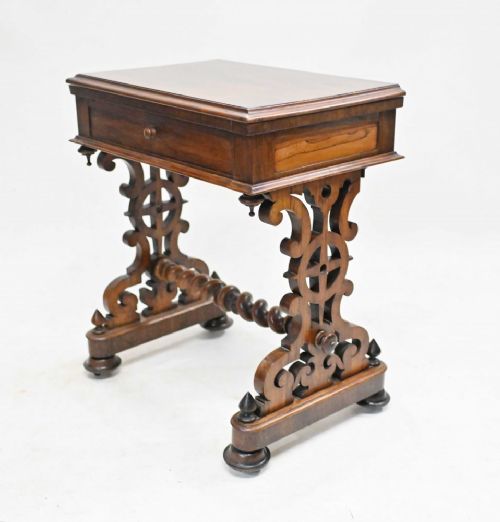
The pieces appearing on this page span several distinct periods, with Victorian and Regency examples sitting alongside Georgian, Edwardian, and French Provincial iterations. Alongside standard occasional tables, you find nesting sets, campaign styles, and elaborate multi-game tables incorporating backgammon boards and sewing compartments.
Geographic origins vary widely across the inventory, reflecting international demand for games furniture. British and French workshops share space with Anglo-Indian, Levantine, Swedish Biedermeier, and Kashmiri pieces, each bringing distinct regional timbers and decorative motifs to the traditional playing surface.
How they were made
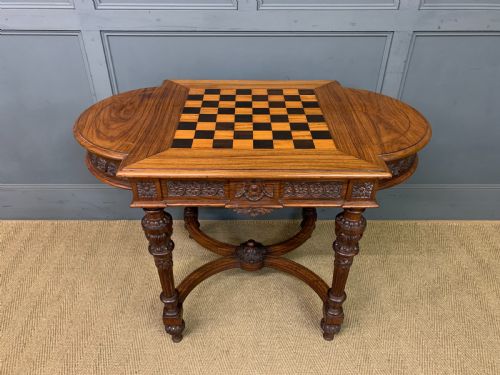
Cabinet-makers relied heavily on dense hardwoods such as rosewood, walnut, and mahogany for the primary structures and tabletops. These timbers provided the durability and rich grain patterns necessary for formal domestic furniture.
Inlay techniques defined the creation of the playing surfaces, utilising contrasting woods like boxwood, ebony, satinwood, and various wood inlays to form the distinct alternating squares of the chess board. Some regional variations incorporated alternative materials such as marble alongside traditional timbers.
Some tables double as sewing stations, proving that nineteenth-century players could lose their knights and hem a skirt simultaneously.
What varies in quality
The sophistication of the timber selection and the precision of the square inlay dictate the upper tiers of the range. Finer examples display seamless integration of contrasting woods and complex secondary functions, such as swivelling tops or internal compartments for pieces.
Structural engineering separates standard production from exceptional cabinet-making, particularly in the stability of tripod bases, folding mechanisms, and leg turnings. Pieces retaining their original hardware and integrated games components command greater appreciation among collectors.
Gillows·A British Chess Company
The Antique Wooden Chess Tables Glossary
- Games Compendium
- A fitted box or table containing equipment for multiple pastimes, including chess, backgammon, and cards. These comprehensive sets often feature elaborate internal trays and folding boards.
- Inlay
- A decorative technique where pieces of contrasting wood, such as boxwood and ebony, are inserted into a recessed surface to form patterns like a chess board. This method requires precise carpentry to ensure flush, durable joints.
- Tripod Table
- A small table supported by a central pillar resting on three feet. This form is common among Victorian and Georgian occasional and chess tables.
- Swivelling Top
- A table top designed to rotate on its base, frequently revealing a hidden compartment or allowing the surface to fold open. This mechanism adds versatility to games and card tables.
- Occasional Table
- A small, light table intended for flexible use around a room. In the context of games furniture, these often double as decorative display pieces when not in active use.
Antique Wooden Chess Tables: Frequently Asked Questions
What is an antique wooden chess table?
These pieces are domestic tables featuring integrated playing surfaces for chess, often constructed from dense hardwoods like rosewood, walnut, and mahogany. They range from simple tripod stands to complex multi-game furniture.
Many examples incorporate folding mechanisms, swivelling tops, or storage for game pieces. Their designs reflect the decorative styles of the nineteenth and early twentieth centuries.
How were these tables used originally?
Owners utilised them primarily for leisure, gathering in parlours and drawing rooms to play chess or backgammon. Dual-purpose designs also served for card games, sewing, or as standard occasional furniture.
Their versatility made them central furnishings in formal domestic spaces, combining social activity with interior decoration.
How do I care for a wooden chess table?
Keep the wood conditioned by avoiding direct sunlight and sudden temperature shifts that can dry out antique veneers. Regular dusting with a soft, dry cloth protects the delicate inlaid squares.
Refrain from using modern chemical polishes, which can damage historic finishes and delicate timber inlays over time.