




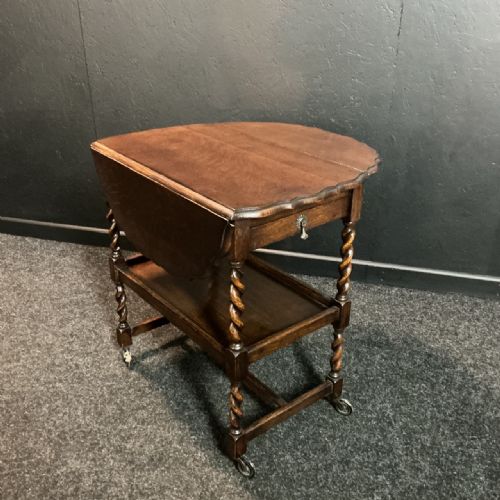
Antique Wooden Cart
These antique wooden cart pieces combine domestic utility with striking form, offering collectors functional tea trolleys, scale models, and serving carts spanning the Victorian to Art Deco eras.
Antique Wooden Cart
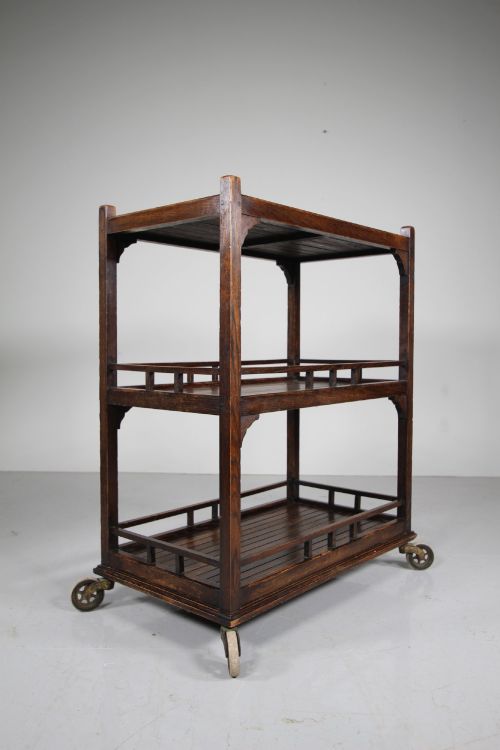
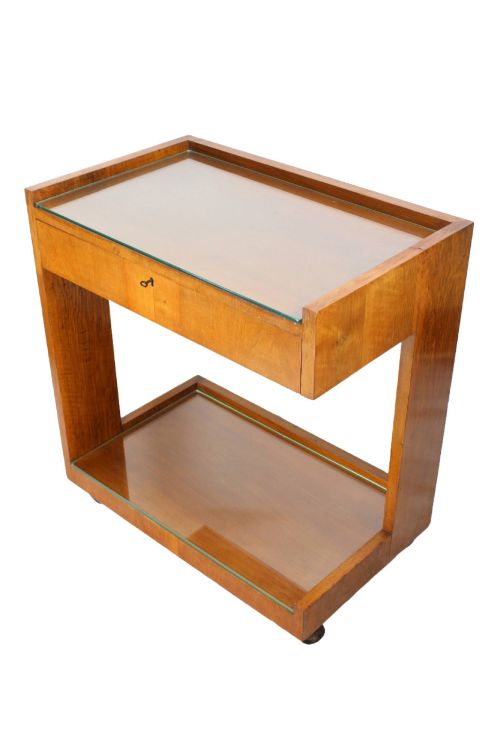
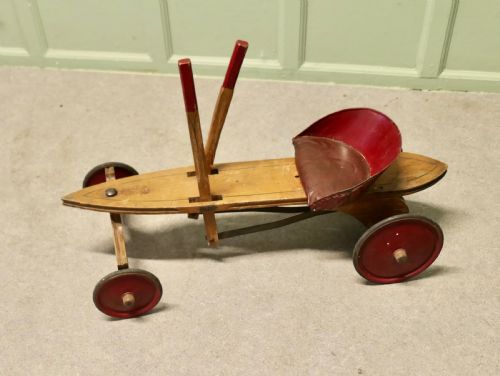
When you search for an antique wooden cart, you encounter a diverse gathering of domestic serving furniture, scale models, and commercial transport pieces. The selection spans utilitarian delivery hand carts and farm models to refined Edwardian and Art Deco tea trolleys.
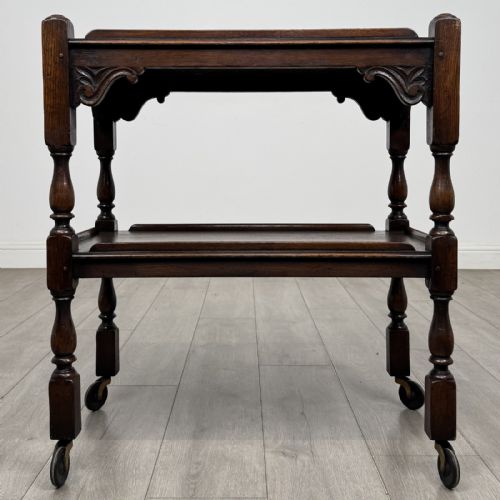
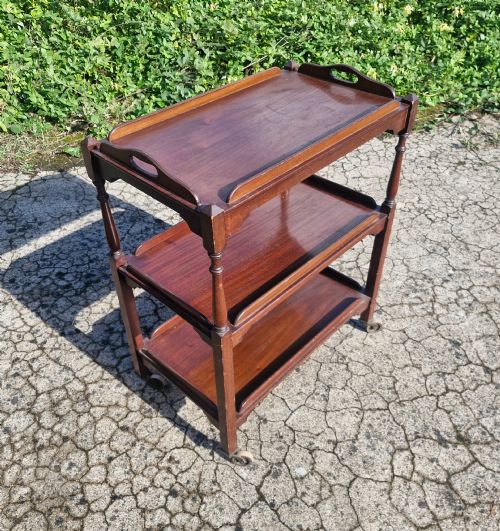
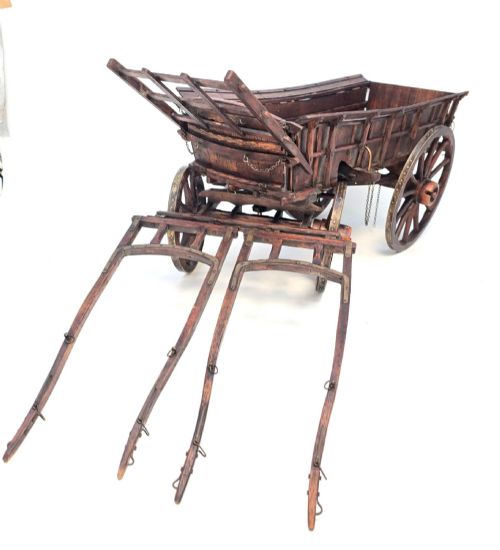
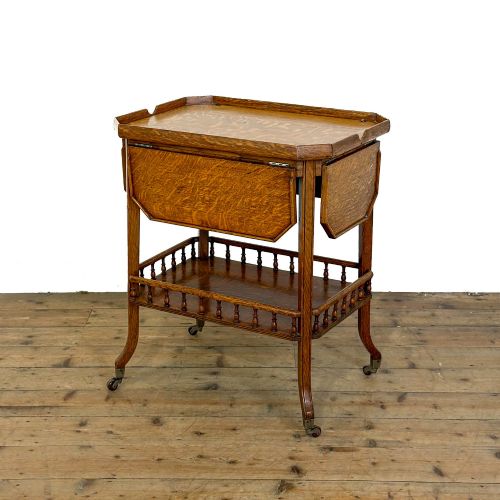
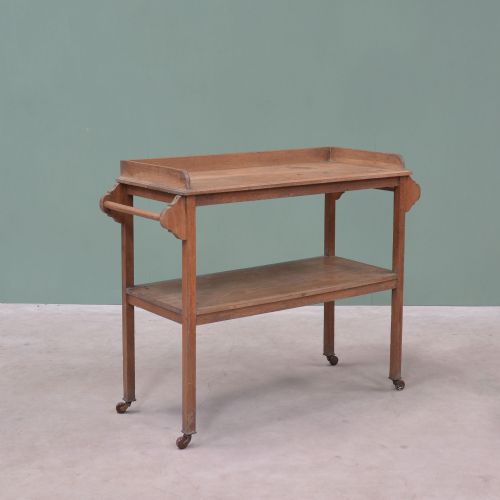
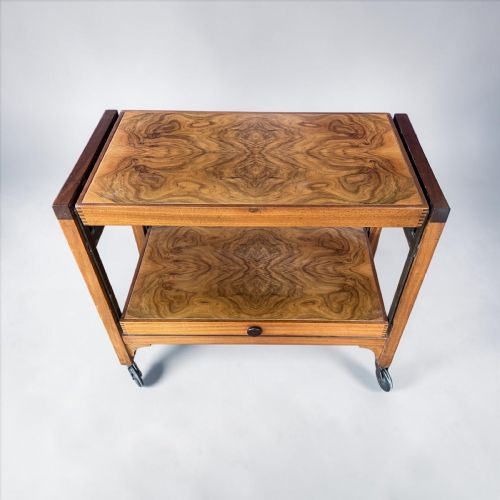
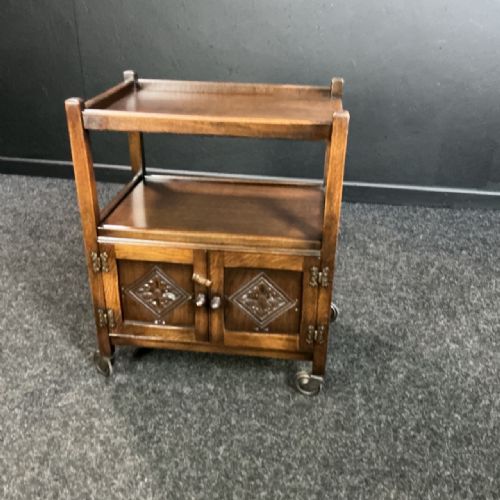
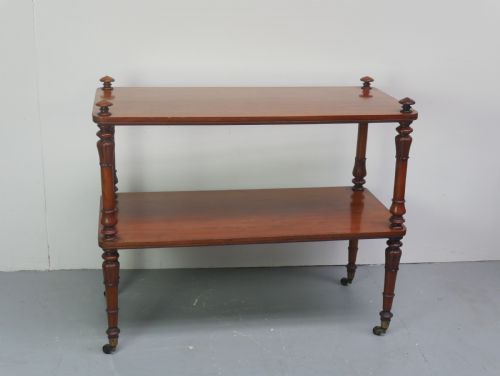
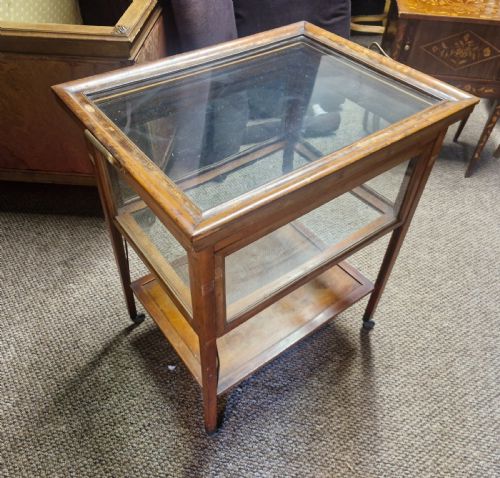
Domestic service pieces dominate the selection, appearing frequently as two-tier trolleys, drop-leaf tea tables, and drinks bars in walnut, mahogany, and oak. Alongside these domestic vessels sit vernacular folk art scale models of nineteenth-century farm carts and delivery wagons.
Origins stretch from English workshops to Anglo-Indian and Chinese carvers, reflecting international trade and colonial influence in the nineteenth and early twentieth centuries. Pieces range from straightforward utilitarian oak to elaborate inlaid mahogany and figured walnut.
Materials and construction methods
Construction relies heavily on durable hardwoods such as mahogany, oak, and walnut, frequently accented with brass, iron, and glass elements. Joinery techniques range from sturdy vernacular framing on delivery carts to refined cabinetmaking on tiered afternoon tea trolleys.
Surface treatments and mobility mechanisms define the physical structure, incorporating carved galleries, drop sides, and folding mechanisms. Metal components like cast iron wheels, silver plate, and brass handles integrate smoothly into wooden frames on mobile serving carts.
Antique Wooden Cart Retail Price Guide 2026
Typical asking prices for wooden cart among the pieces listed under this phrase on Sellingantiques today, from the lower quarter to the upper quarter. They describe what is for sale here now, not the wider market.
Listings feature woods like walnut, mahogany, and oak across Edwardian, Victorian, and Art Deco periods.
Distinctions in quality and execution
Quality reveals itself in the selection of figured timbers and the precision of carved details, such as deep relief work on hardwood panels or barley twist turnings. Superior pieces balance structural integrity with mechanical ingenuity, demonstrated in smooth-running castors, lift-off trays, and metamorphic folding actions.
Provenance and craftsmanship elevate scale models and utility pieces alike, where hand-modelled farm carts or delivery hand carts display meticulous attention to historical scale and joinery. Finer domestic trolleys distinguish themselves through balanced proportions, integrated serving trays, and uncompromised timber selection.
The Antique Wooden Cart Glossary
- Drop side
- A hinged leaf on a tea or cake trolley that extends the surface area when raised. It allows the furniture to occupy a smaller footprint when not in use.
- Gallery
- A raised wooden or metal rim around the edge of a tray or shelf. It prevents items from sliding off during transit.
- Metamorphic
- Describing furniture designed to transform into another form or function, such as a serving trolley converting into a card table.
- Vernacular folk art
- Objects made by self-taught makers or within local traditions, encompassing handmade scale models of farm carts and delivery wagons.
- Whatnot
- An open set of multi-tiered shelves used for displaying books or household objects. Victorian examples often function as movable butler trolleys.
Antique Wooden Cart: Frequently Asked Questions
What is an antique tea trolley?
A tea trolley is a mobile piece of furniture designed for serving afternoon tea, featuring multiple tiers, wheels, and often removable trays or drop sides.
Originating in the late Victorian and Edwardian periods, these pieces became essential for domestic hospitality and evolved through the Art Deco era into stylish drinks bars.
How do I date an oak trolley?
Dating relies on examining construction methods, hardware, and stylistic details such as barley twist turnings or Art Deco geometric lines.
Edwardian and early twentieth-century examples frequently utilise solid oak with simple wheels, whereas later iterations incorporate streamlined veneers and metal accents.
Were scale models used as toys?
Scale models of farm carts and delivery wagons served various purposes, ranging from artisan display pieces to children's playthings.
Handmade wooden models from the nineteenth and early twentieth centuries reflect the vital role of horse-drawn transport in daily commerce and agriculture.
How do I incorporate a bar cart?
Bar carts and drinks trolleys function well in modern interiors as mobile display surfaces for glassware, decanters, and bottles.
Their mobility allows them to transition easily between living rooms and dining areas during gatherings while adding period character to a room.