

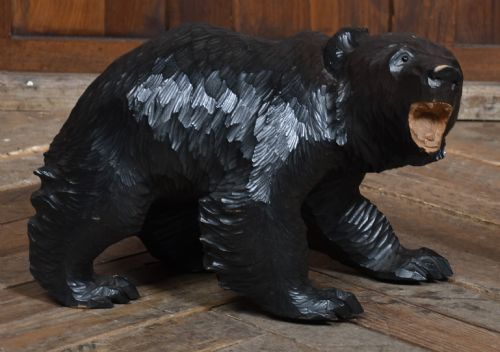


Antique Wooden Bear
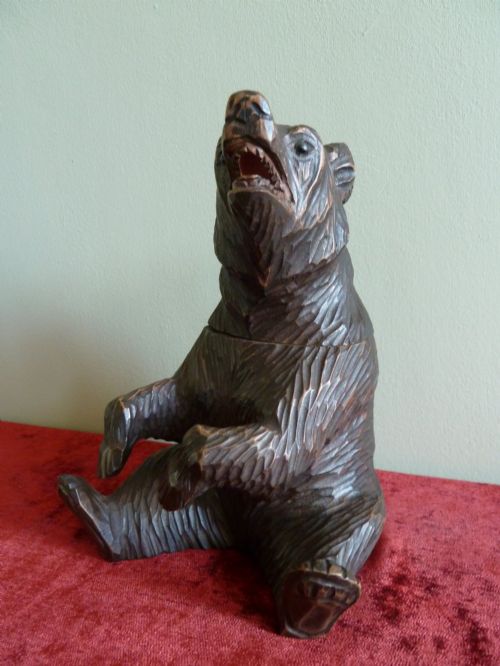
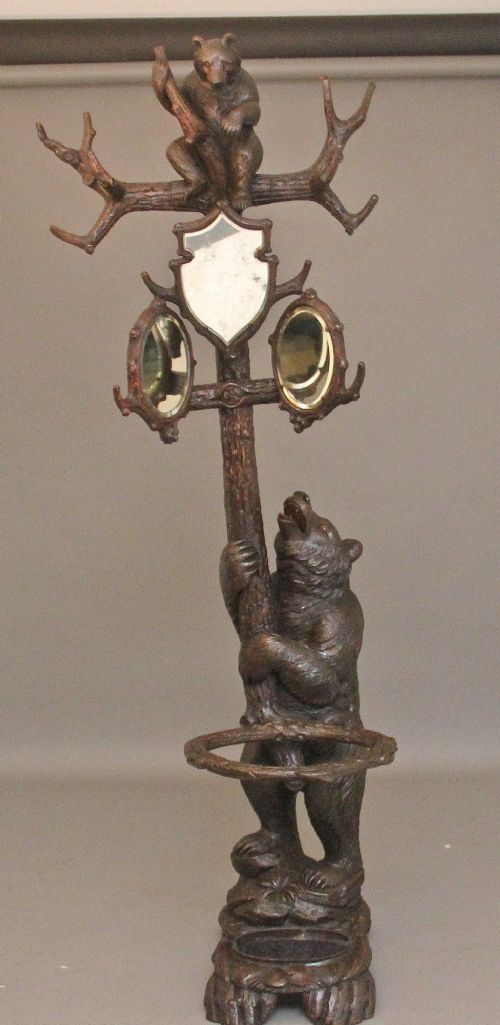
An antique wooden bear brings character to a room, appearing in forms from small desk inkwells to large hall stands.
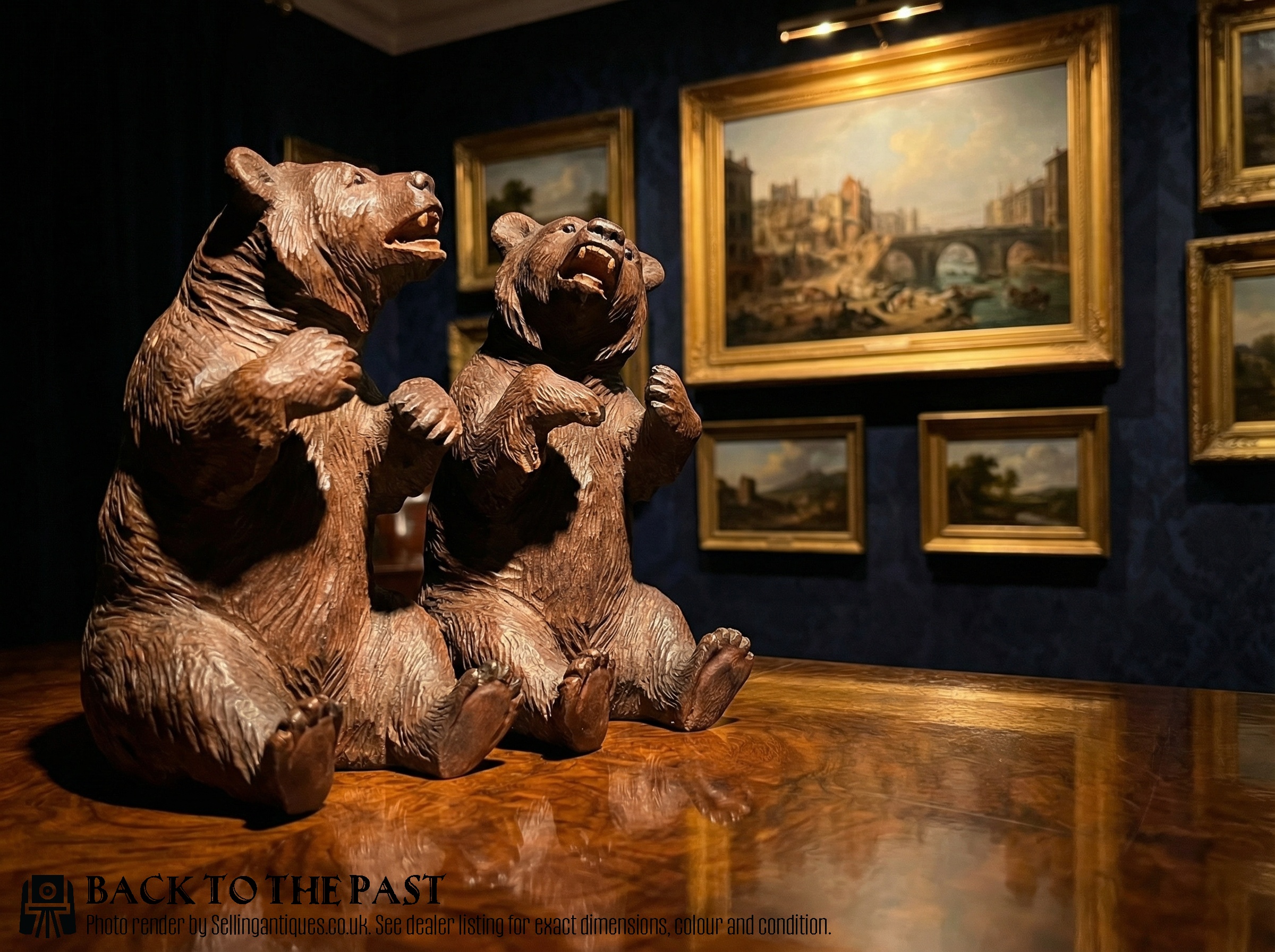
Antique Wooden Bear
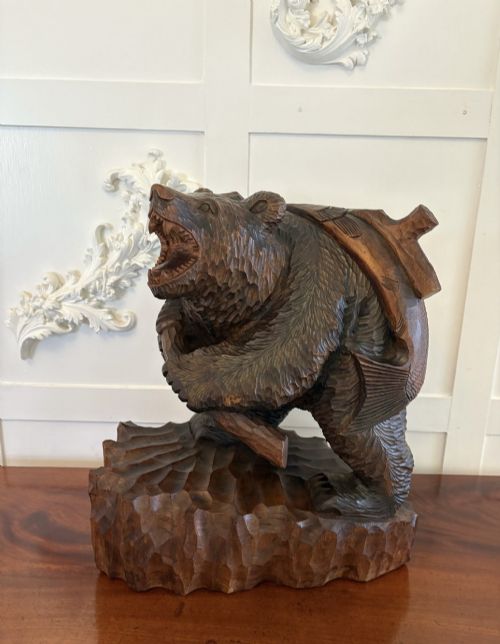
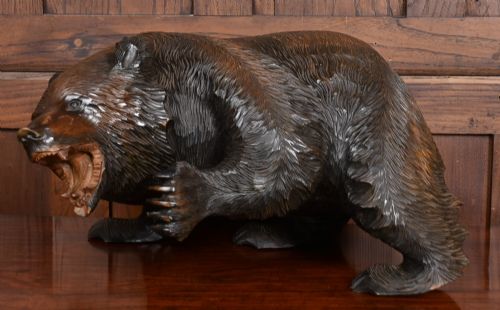
When you search for an antique wooden bear, you encounter carved figural works originating primarily in nineteenth-century European and Japanese folk art traditions. The most common examples stem from the Black Forest style, alongside Japanese Kibori Kuma carvings and domestic Victorian pieces.
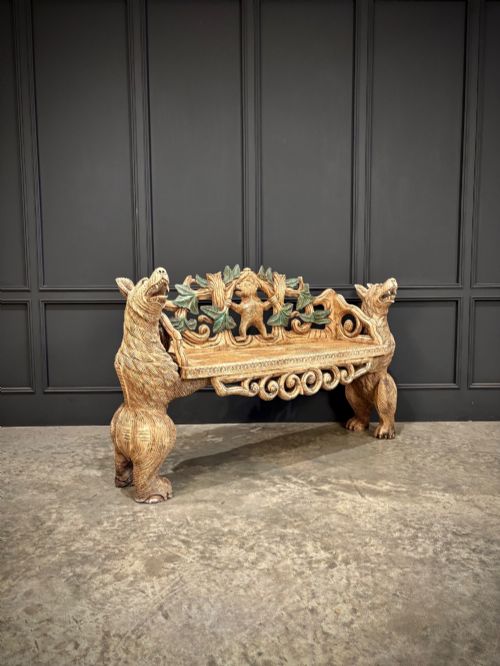
These items range from small decorative desk accessories such as inkwells, condiment figures, and bookends to substantial furniture items like hall stands, benches, and stick stands. Many pieces serve a dual domestic purpose, combining sculptural animal figures with functional compartments, holders, or seating.
Dating spans from the Victorian and Edwardian eras into the early twentieth century, drawing on periods such as 1880, 1900, and 1920. European interpretations sit alongside Japanese wood carvings, demonstrating diverse regional approaches to rendering the animal form in timber.
How they were made
Carvers shaped these objects primarily from linden wood, walnut, and general hardwoods using hand chisels and gouges to build texture in the fur and anatomical details. Linden wood provided a soft, even grain that allowed for intricate carving of facial expressions and lifelike postures.
Makers occasionally incorporated glass eyes and metal elements for hinges, lock mechanisms, or functional parts like umbrella wells and tobacco jars. Surface finishing involved staining, waxing, and occasionally poker work decoration to accentuate details on the wood grain.
What varies in quality
The complexity of the composition also separates standard examples from exceptional ones, particularly in multi-figure groups, large furniture pieces like double stick stands, or objects retaining original operating hardware and glass components.
The Antique Wooden Bear Glossary
- Black Forest style
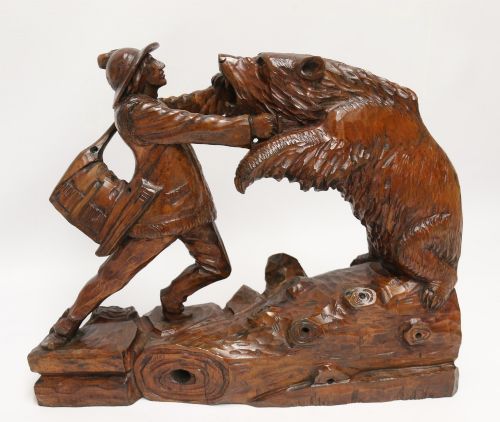
- Carved wooden ornamentation originating from the European mountain region, noted for naturalistic animal subjects. This aesthetic frequently includes bears depicted in upright human postures or interacting with logs and forest elements.
- Kibori Kuma
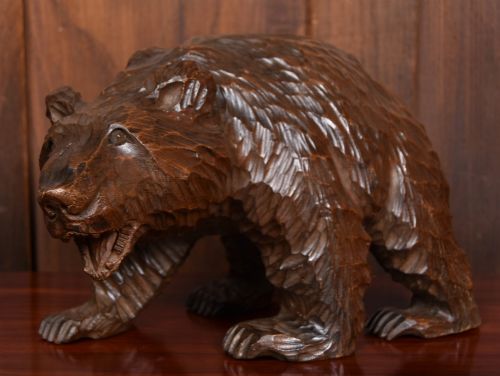
- Traditional Japanese wood-carved bear originating from Hokkaido. These pieces are typically hand-carved from natural timber to depict the animal with distinct textural markings.
- Humidor
- A specialised container designed to keep tobacco moist. In these carvings, the bear's body or an attached log often forms the lidded storage vessel.
- Hall stand
- A piece of hallway furniture combining coat hooks, umbrella storage, and frequently a bench or seat. Bear carvings in this category act as structural supports or decorative terminals.
- Poker work
- A decoration technique using heated metal tools to burn designs into timber. This method adds dark linear contrast to surfaces such as pins or panels.
Antique Wooden Bear: Frequently Asked Questions
What were antique wooden bears used for?
Many of these pieces served practical functions in domestic interiors, holding umbrellas, walking sticks, tobacco, inkwells, or books. Others acted purely as decorative sculptures, table lamps, or structural furniture like hall benches.
Larger items furnished hallways and entrances, while smaller novelty items sat on desks, mantels, and tables as conversation pieces.
Where did Black Forest bear carvings originate?
These carvings originated in the wooded mountain regions of Central Europe, particularly Switzerland and Germany, during the nineteenth century. Local woodcarvers developed the trade to supply tourists with decorative items inspired by local wildlife.
Production later spread and influenced workshops across Europe, creating a distinct aesthetic that combined rustic timber with domestic utility.
How do I identify Japanese wooden bear carvings?
Japanese carvings, known as Kibori Kuma, typically feature distinct stylistic traits compared to their European counterparts. They often show different chisel techniques in rendering the fur and distinct regional timber choices from Hokkaido.
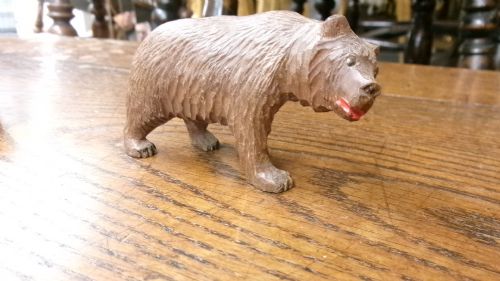
These pieces focus purely on the animal figure, ranging from small shelf sculptures to items carrying fish in their mouths.
How should I care for antique wooden bears?
Keep carved wooden pieces away from direct sunlight, heat sources, and rapid humidity changes to prevent the timber from drying out or splitting. Dust the carved surfaces gently with a soft, dry brush to preserve the texture of the fur.
Avoid applying modern liquid polishes, relying instead on occasional applications of appropriate furniture wax if the wood appears dry.