
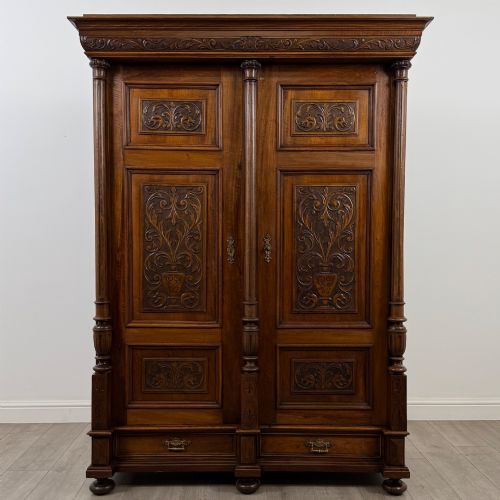
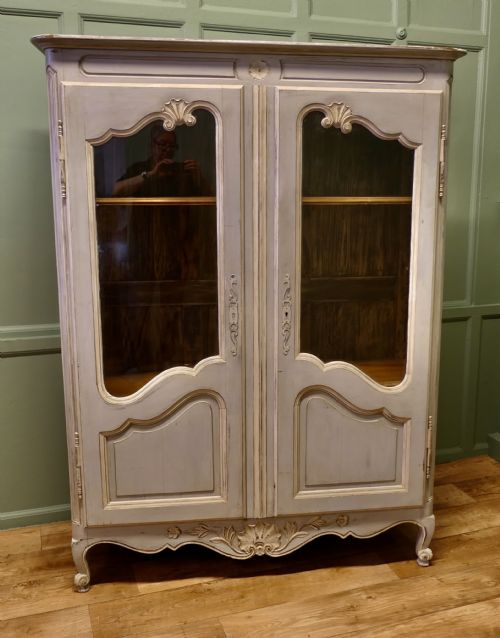
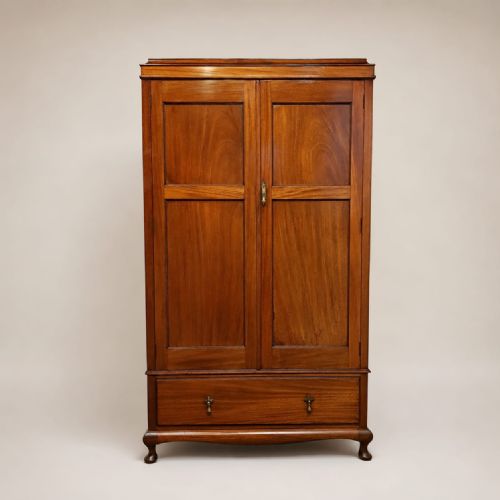
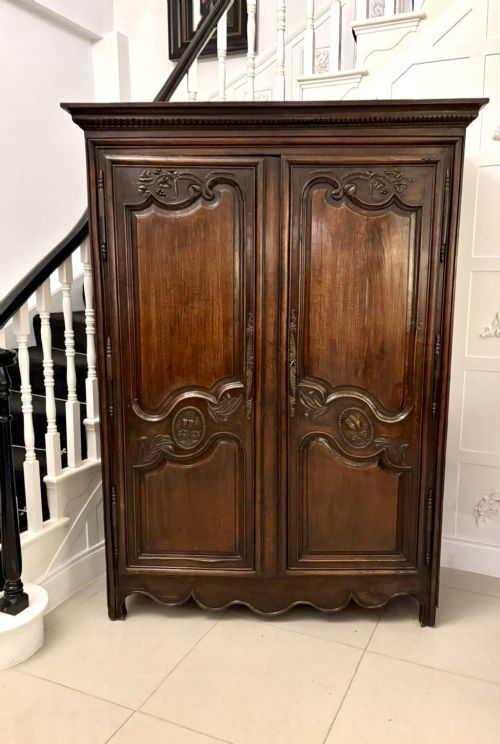
Antique Wooden Armoire Cabinet
An antique wooden armoire cabinet offers substantial timber storage and period character, bringing traditional craftsmanship directly into a bedroom or hallway.
Antique Wooden Armoire Cabinet
An antique wooden armoire cabinet serves as a grand storage solution, encompassing large wardrobes, linen presses, and traditional cupboards. Buyers searching this phrase typically encounter pieces originating from the 18th, 19th, and early 20th centuries, reflecting diverse European and global cabinet-making traditions.
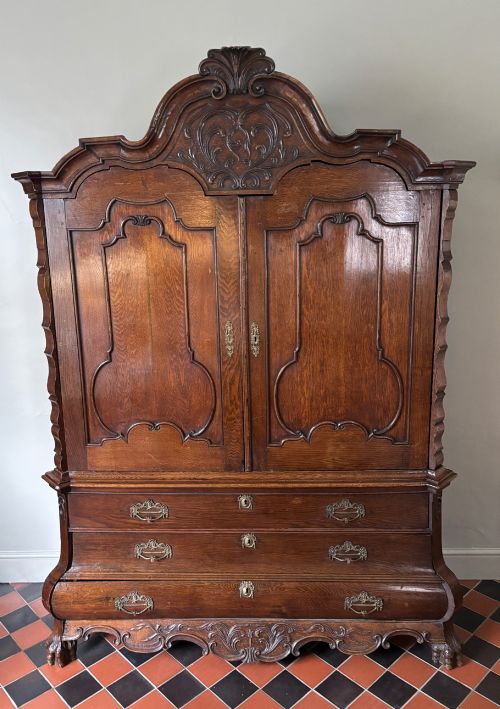
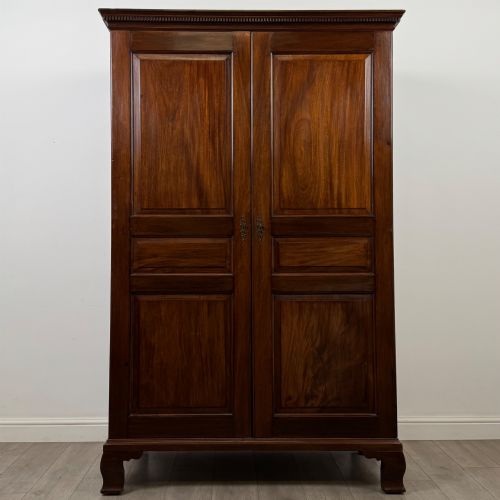
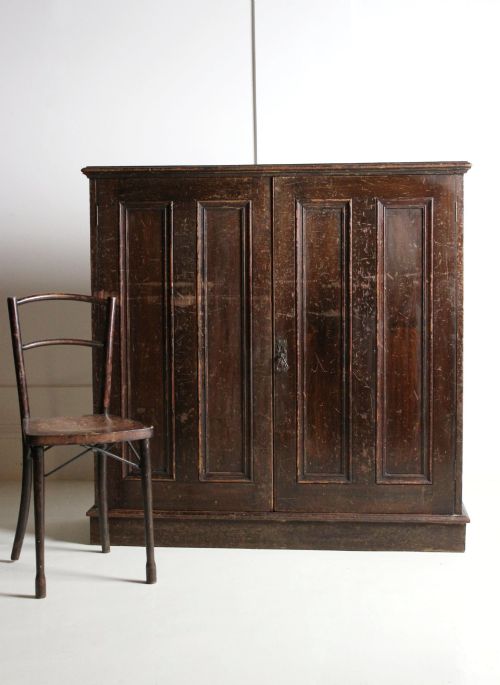
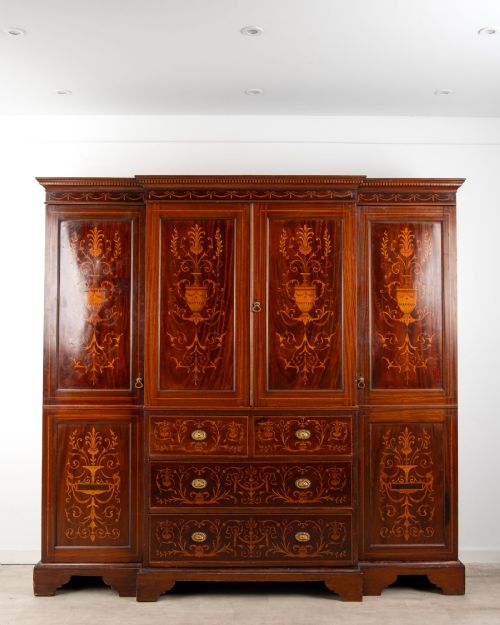
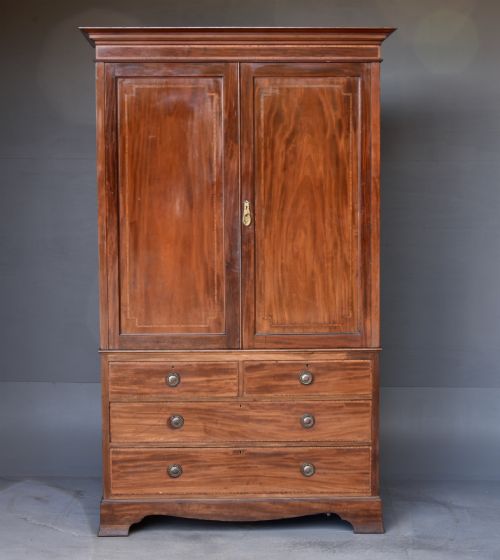
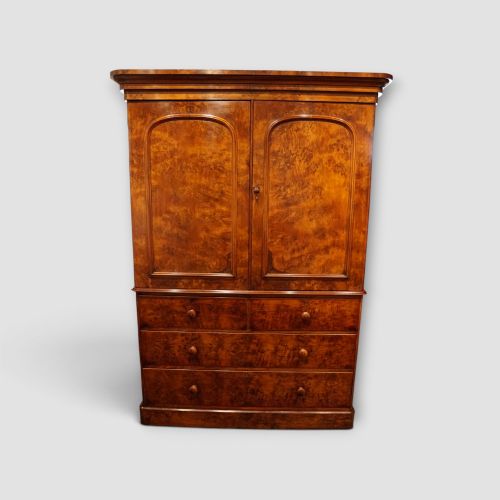
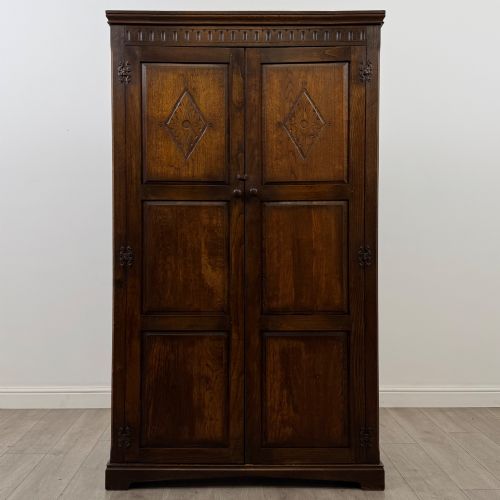
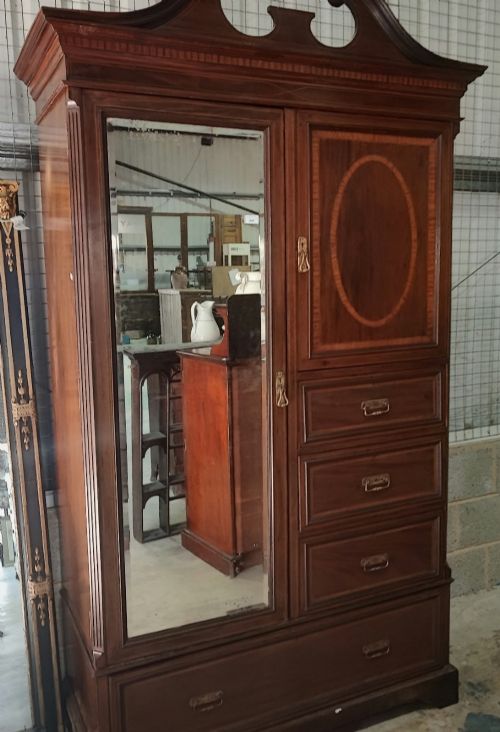
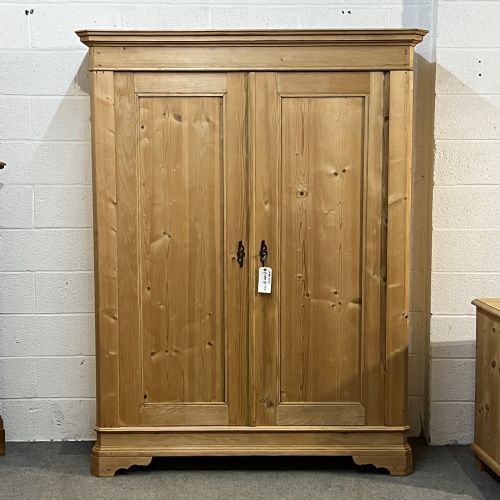
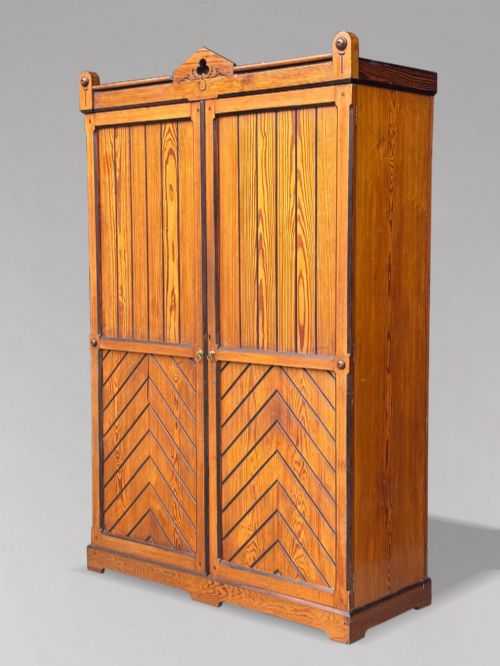
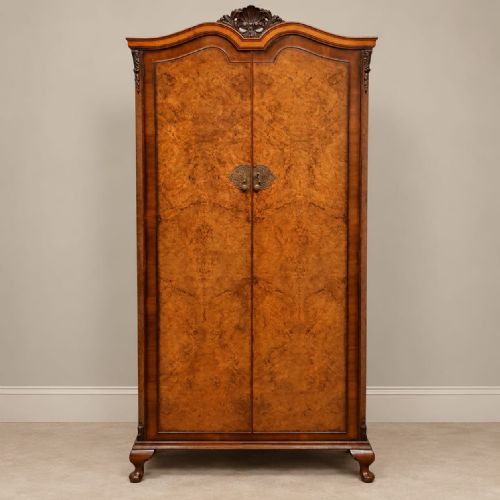
The selection ranges from Georgian mahogany press wardrobes and Victorian burr walnut cabinets to French provincial oak armoires and Edwardian inlaid compactums. Stained or painted pine pieces also appear frequently, alongside regional variants such as Indian teak storage cupboards and Chinese lacquered marriage cabinets.
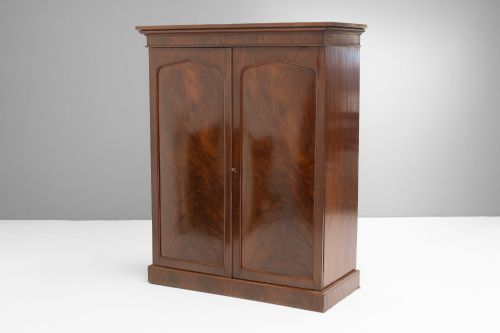
Forms vary from towering breakfront linen presses with internal drawers to two-door cupboards resting on bun feet. These items satisfy modern storage demands while retaining the distinct proportions and patination of their original periods.
Materials and construction methods
Cabinet-makers relied predominantly on solid timbers such as mahogany, oak, walnut, pine, cherry, and teak to build these large storage pieces. Selection of wood dictated the structural integrity, allowing for substantial doors, heavy cornices, and internal shelving or hanging space.
Decorative techniques define the visual appeal of these cabinets, utilising brass hardware, marquetry inlay, ebonisation, and polychrome or shabby painted finishes. Skilled joinery joined panels and frames to accommodate natural timber movement over centuries of use.
Listings span several centuries of cabinet-making, featuring formal Georgian mahogany press wardrobes alongside rustic 18th-century French cherry wood cupboards and Edwardian inlaid compactums.
Judging quality and craftsmanship
Quality rests upon the selection of timber figures, such as flame mahogany or burr walnut veneers, matched with precise cabinet joinery. Superior examples demonstrate thoughtful proportions, integrated original hardware, and refined decorative inlays rather than purely utilitarian construction.
The sophistication of the internal configuration also distinguishes finer pieces, such as fitted linen press sliding trays or segmented compactum compartments. Original surfaces, whether polished timber or historic paint, hold significantly more authority than later restorations.
maples & co·Edwards and Roberts
The Antique Wooden Armoire Cabinet Glossary
- Armoire
- A large wardrobe or cupboard, traditionally used for storing garments and linens. French examples often display pronounced cornices and panelled doors.
- Linen Press
- A tall piece of furniture featuring upper cupboard doors enclosing sliding trays, placed above a base section fitted with drawers. They evolved specifically for storing household textiles flat.
- Compactum
- A fitted wardrobe designed to maximise internal storage by combining hanging space, shelves, and multiple drawers within a single carcass. Edwardian makers produced these in substantial numbers using mahogany or oak.
- Burr Walnut
- Timber taken from a walnut tree growth showing swirling, knotty grain patterns. Cabinet-makers sliced this wood into veneers to create highly decorative furniture fronts.
- Breakfront
- A piece of furniture where the central section projects forward from the flanking outer sections. This architectural arrangement creates depth and visual rhythm on large wardrobes.
Antique Wooden Armoire Cabinet: Frequently Asked Questions
How do I fit a large antique wardrobe in a modern room?
Many of these large cabinets dismantle into sections, particularly French armoires and two-part housekeeper's cupboards, which helps with moving them upstairs or through narrow doorways.
Measure your ceiling height carefully before purchase, as traditional cornices add significant vertical clearance above the main body of the wardrobe.
What is the difference between a linen press and a wardrobe?
A traditional wardrobe focuses primarily on vertical hanging space for full-length garments inside double or single doors. A linen press traditionally houses shallow sliding trays or shelves in the upper section for folded textiles, combined with drawer storage below.
Many antique pieces labelled as presses have since been adapted internally for modern clothes hanging.
How do I care for antique timber cabinets?
Keep wooden furniture away from direct heat sources and dramatic humidity swings to prevent timber splitting or veneer lifting. Regular dusting with a dry, soft cloth preserves the wax or polish finish.
Applying a traditional beeswax feed occasionally helps nourish older hardwoods like oak, mahogany, and walnut without building up heavy chemical residues.
How can I tell a Georgian piece from a Victorian one?
Georgian cabinets, particularly from the 18th century, often showcase rich mahogany solids, restrained classical proportions, and fine marquetry inlay. Victorian pieces frequently utilise darker ebonised details, burr walnut veneers, or heavier structural elements like bun feet.
Examining internal drawer construction, such as hand-cut dovetails, provides further clues to the manufacturing era.