
Antique Wood Wine Table
When you search for an antique wood wine table, you find small, portable occasional stands designed for holding drinks, often featuring pedestal bases.
Antique Wood Wine Table
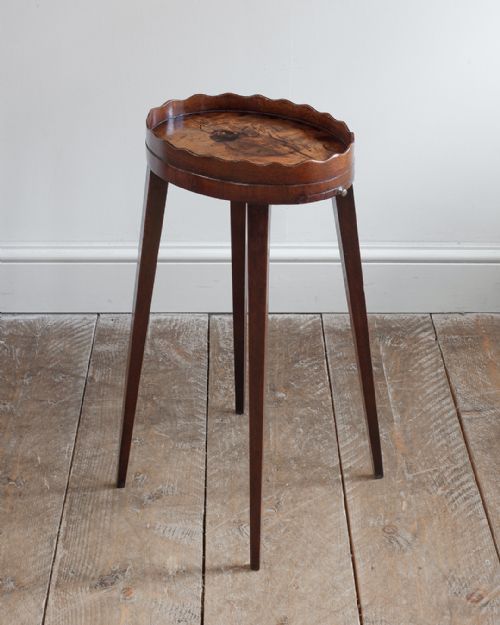
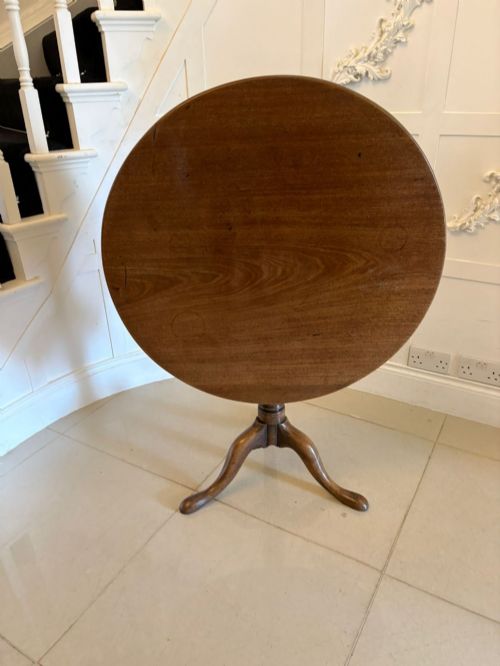
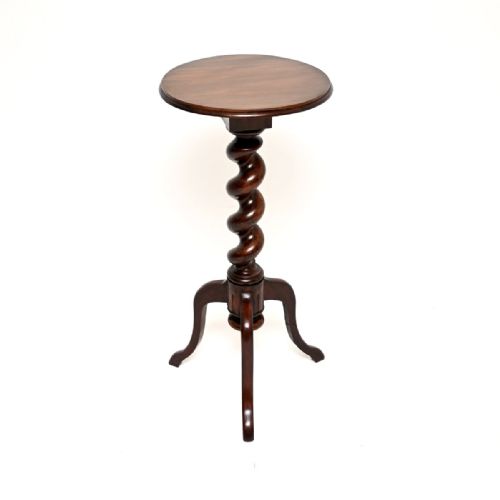
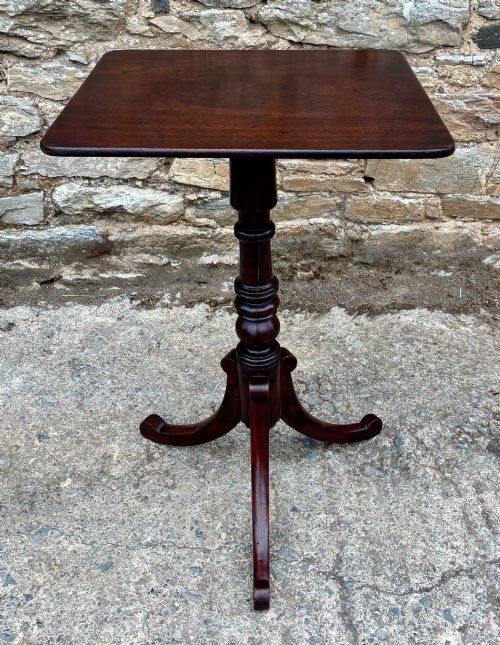
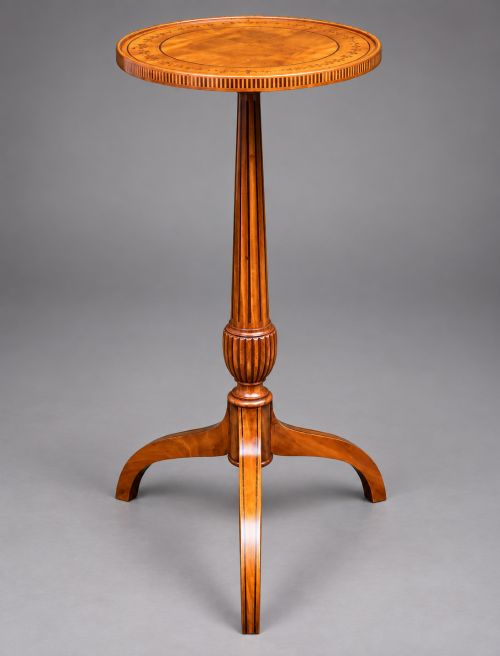
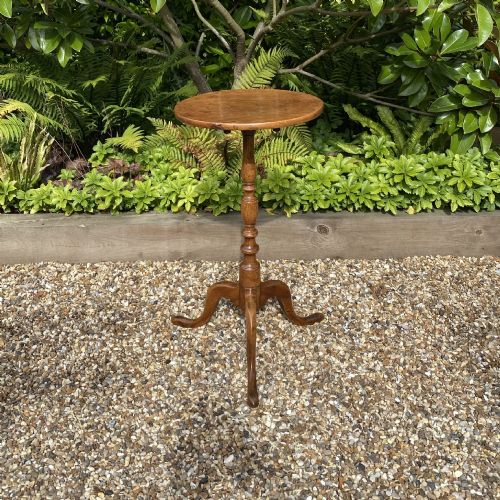
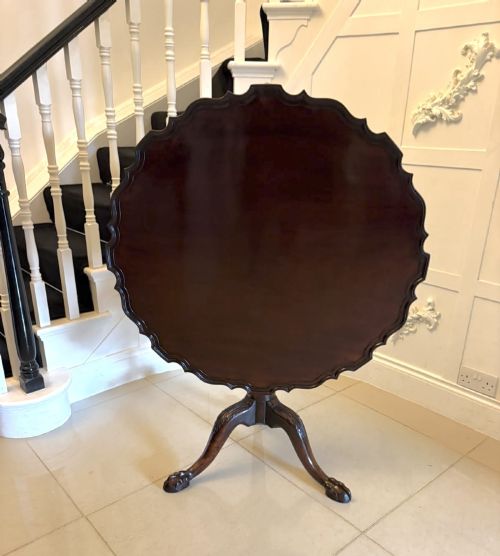
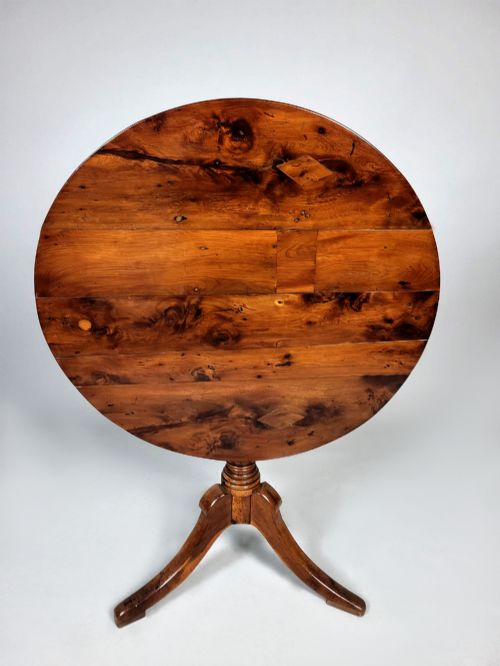
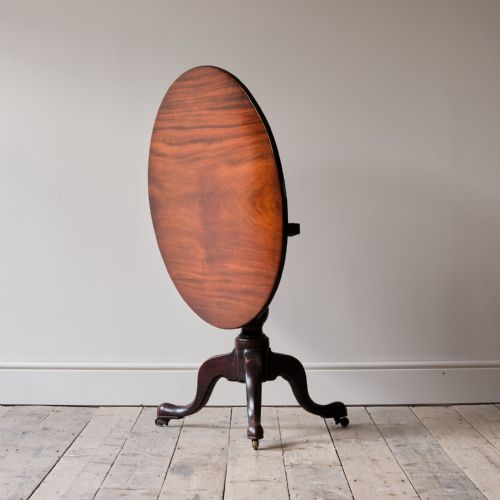
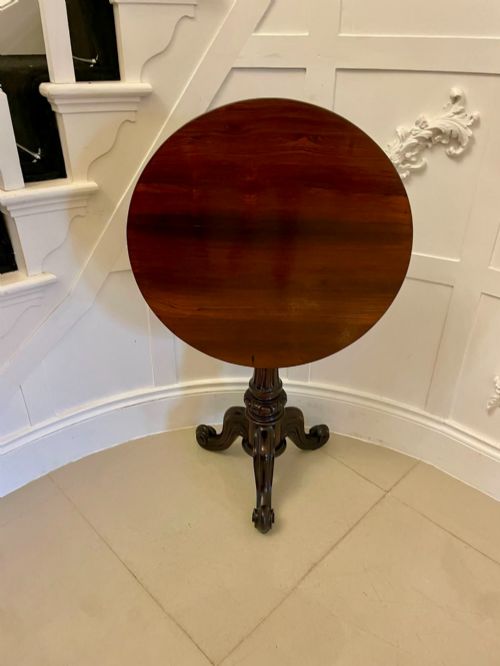
An antique wood wine table is a compact pedestal stand designed historically for serving drinks and holding glasses in domestic rooms. These pieces appear frequently as circular or occasional tables supported by tripod legs, often incorporating a tilt-top mechanism that allowed the surface to stand vertically against a wall when not in use.
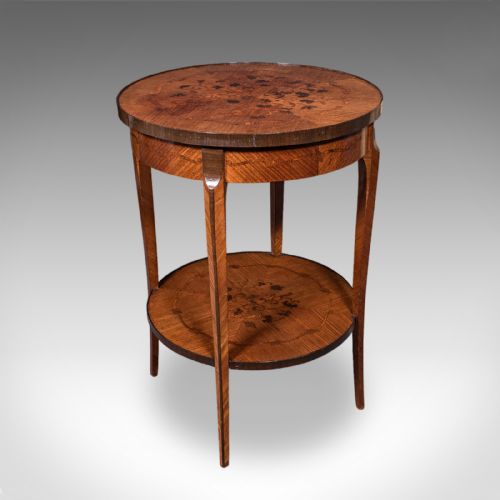
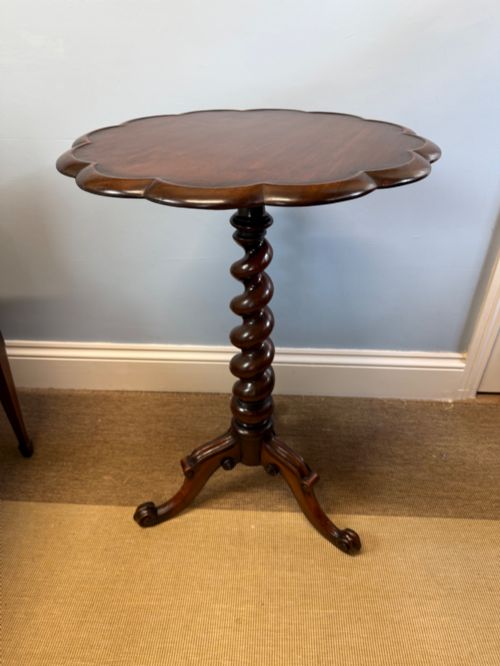
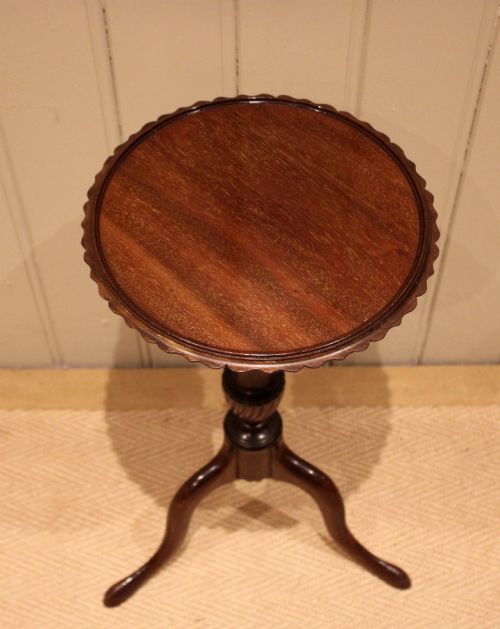
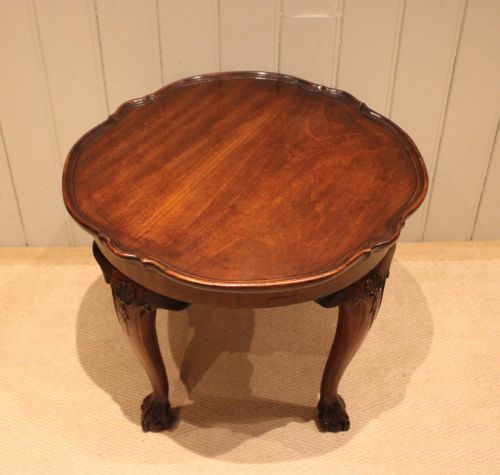
The versions most commonly met on this page date from the Georgian, Victorian, and Edwardian periods, constructed in forms ranging from plain circular tops to shaped pie crust edges. Alongside dedicated wine tables, the selection includes related small occasional pieces such as lamp tables, candle stands, and wine coolers.
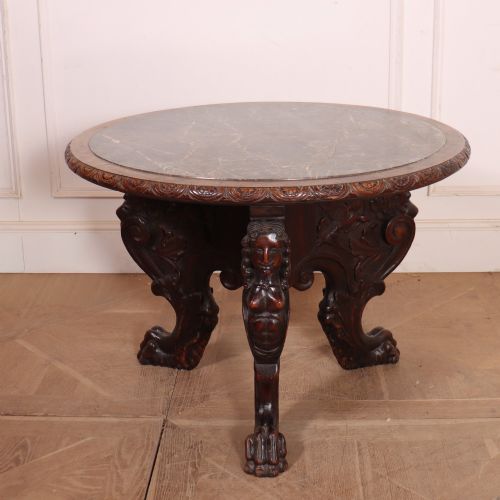
Origins span English workshops alongside examples from France, Sweden, and Ceylon, utilising timbers appropriate to each region. They function today as versatile bedside or corner stands where surface area is limited.
How they were made
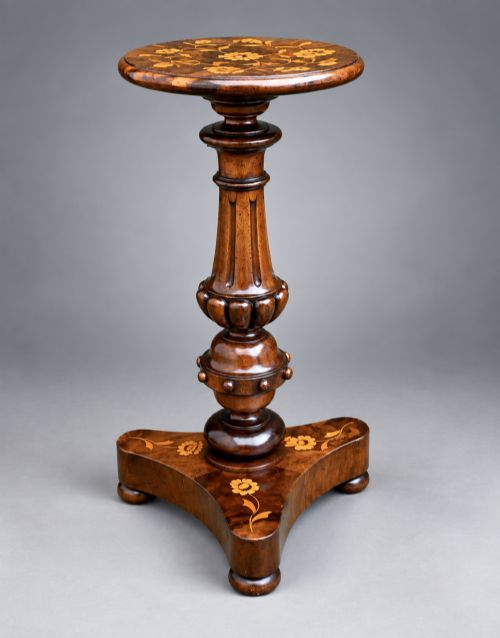
Construction relies heavily on dense hardwoods such as mahogany, rosewood, walnut, and oak, frequently turned on a lathe for the central pedestal and shaped by hand for the tripod legs. Tabletops were often turned from single solid boards or constructed with matched veneers over secondary timbers, sometimes enhanced with inlaid banding or marquetry.
Many examples utilise a birdcage or block mechanism beneath the top, allowing the surface to both tilt and rotate independently of the column. Joinery typically involves pegged tenons, dovetails, and threaded wooden screws securing the pillar to the spider legs below.
Listings feature woods such as mahogany, rosewood, walnut, and oak across 18th-century, 19th-century, and Edwardian periods.
What varies in quality
Quality rests in the crispness of the carving, the selection of figured timber such as burr walnut or flame mahogany, and the stability of the central tripod mechanism. Superior pieces display well-proportioned columns, hand-carved details like acanthus leaves or pie crust edges, and close attention to the structural joints where the legs meet the pillar.
Simpler vernacular examples rely on plain turned posts and straightforward three-legged bases, possessing utilitarian charm rather than cabinet-maker sophistication. The integrity of the tilt mechanism and the presence of original brass hardware or patinated timber surfaces further distinguish finer examples.
Gillows
The Antique Wood Wine Table Glossary
- Tilt-top
- A tabletop mounted on a hinge mechanism that allows the surface to fold into a vertical position. This saved floor space in period drawing rooms.
- Tripod base
- A support structure featuring three outward-curving legs radiating from a central pillar. It provides stability on uneven floorboards.
- Pie crust edge
- A raised, decoratively carved rim shaped in undulating curves resembling pastry work. It helps prevent items from sliding off the surface.
- Birdcage
- A timber framework beneath the tabletop that allows the surface to both rotate and tilt. This assembly represents skilled period joinery.
- Crossbanding
- A border of veneer laid with the grain running perpendicular to the main panel. It creates a contrasting decorative frame around the edge.
Antique Wood Wine Table: Frequently Asked Questions
What were antique wood wine tables used for?
These tables served primarily as portable surfaces for holding wine glasses, decanters, or candles during evening gatherings in period homes. Their compact size allowed servants to move them easily around a drawing room as needed.
Today, buyers use them in similar ways, placing them beside armchairs or sofas to hold drinks, books, or small lamps.
What is a pie crust edge?
A pie crust edge is a decorative, undulating border carved directly into the solid timber rim of a tabletop. The shaped profile mimics the crimped pastry edge of a pie.
This labor-intensive feature appears mostly on higher-quality Georgian and Victorian tripod tables.
How do I care for antique wood furniture?
Care for these timber surfaces involves keeping them away from direct heat sources and strong sunlight, which can dry out rosewood or mahogany. Regular dusting with a dry, soft cloth preserves the historic wax polish.
Applying a traditional beeswax polish occasionally helps nourish the grain without building up heavy chemical residues.