



Antique Wood Tea Caddy
When you handle an antique wood tea caddy, you hold a tangible piece of domestic history designed to protect precious tea leaves under lock and key.
Antique Wood Tea Caddy
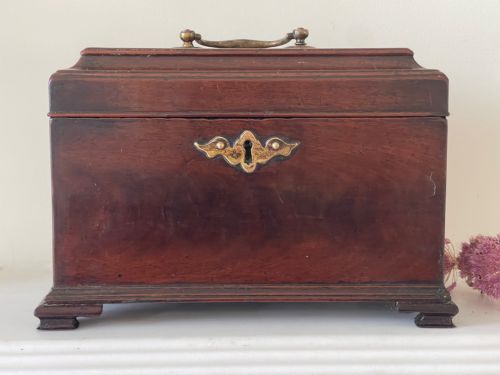
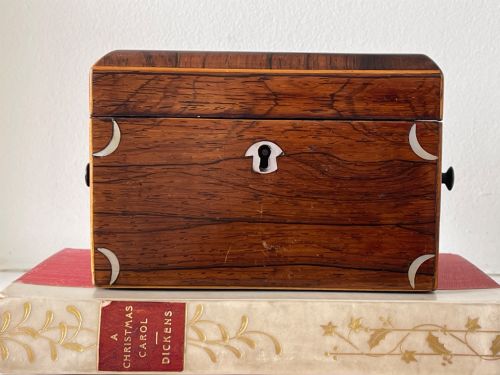
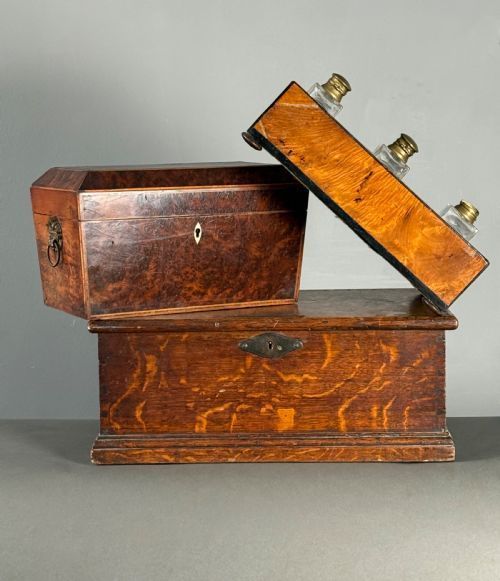
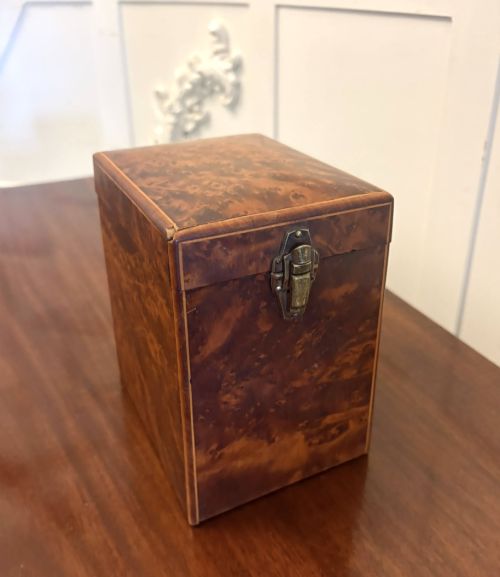
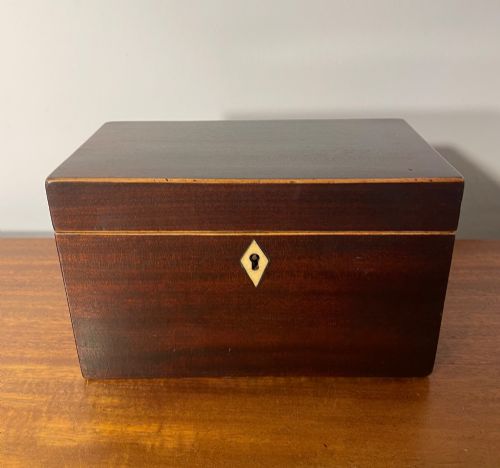
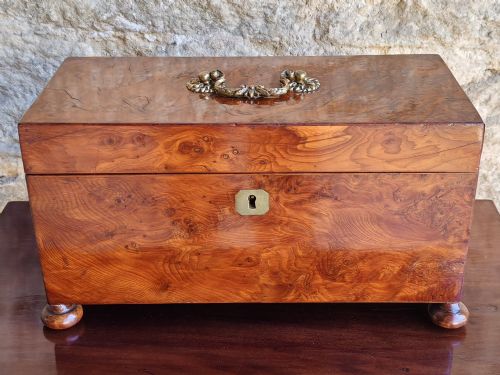
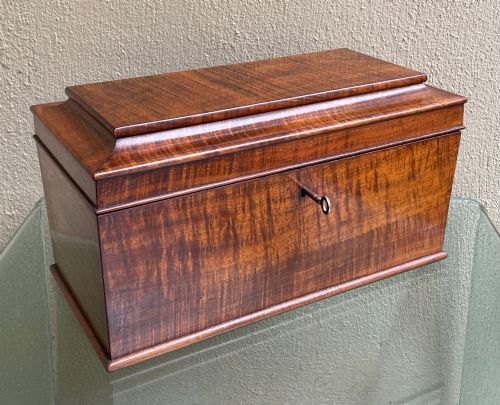
An antique wood tea caddy serves as a portable container built for storing dried tea leaves when tea was an expensive commodity requiring safekeeping in the home. These receptacles range from modest geometric boxes to elaborate architectural forms intended to sit prominently on a sideboard or table.
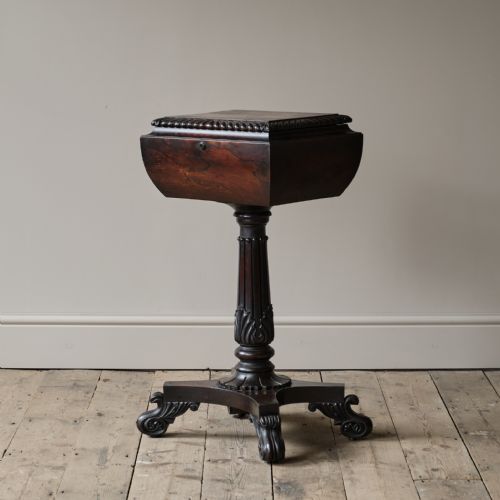
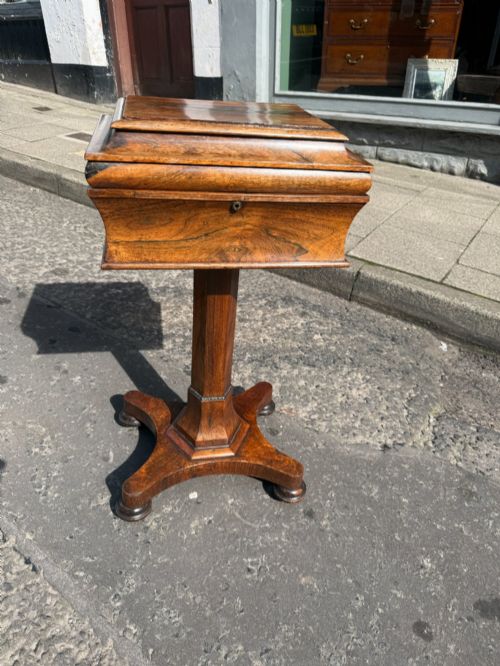
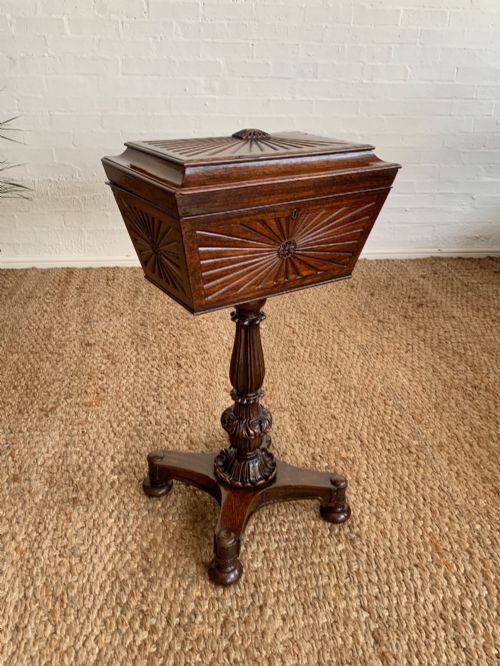
Beyond standard tabletop caddies, the selection extends to larger teapoys mounted on pillars or stands, as well as specialised occasional tables featuring fitted internal compartments. Such pieces demonstrate the evolving domestic rituals surrounding tea consumption across the eighteenth and nineteenth centuries.
Materials and construction methods
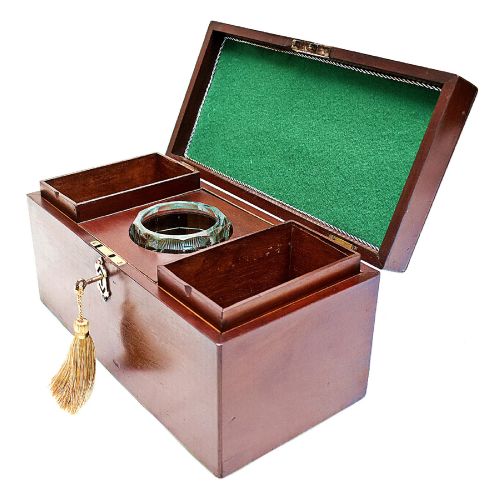
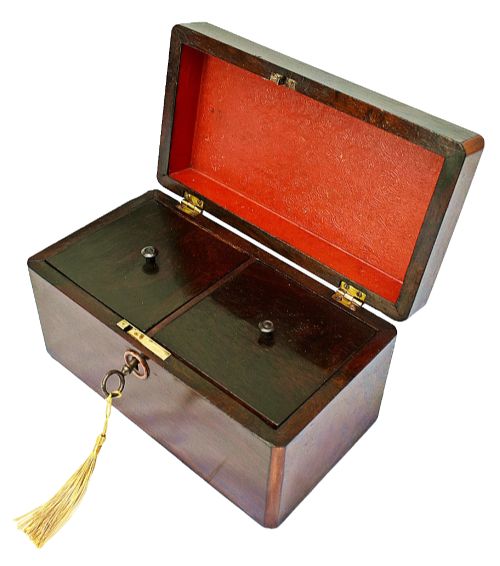
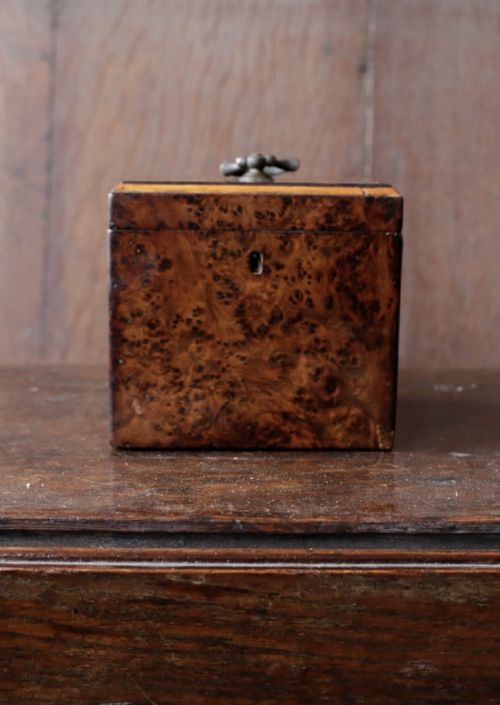
Cabinetmakers constructed these boxes utilising dense imported timbers like rosewood, mahogany, walnut, and satinwood, frequently enhanced by contrasting veneers of burr yew, partridge wood, or fruitwood. Internal arrangements often include concealed wooden lids, glass mixing bowls, and delicate compartments lined with foil or paper.
Decorative surface techniques relied on precision craftsmanship, incorporating brass stringing and inlay, mother-of-pearl accents, bone details, and intricate Tunbridge ware mosaics. Structural integrity was maintained through dovetail joints on the primary carcase and secure brass locks fitted to protect the contents.
Antique Wood Tea Caddy Retail Price Guide 2026
Typical asking prices for wood tea caddy among the pieces listed under this phrase on Sellingantiques today, from the lower quarter to the upper quarter. They describe what is for sale here now, not the wider market.
Some Victorian examples incorporated secret drawers requiring precise hidden springs to release the catch.
Distinctions in construction and design quality
The standard of a piece is determined by the selection of timber figures, such as highly figured burr yew or rich grain rosewood, matched across the visible surfaces. Superior examples display precise, tight-fitting brass inlay and well-executed parquetry rather than printed or superficial ornamentation.
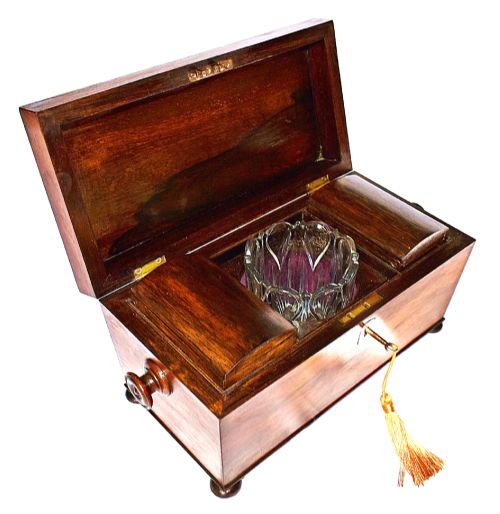
Internal completeness heavily influences the desirability of a piece, with surviving original crystal mixing bowls, functional internal lids, and working locks separating standard utility boxes from high-status examples. The crispness of carved details, such as lion mask handles or sunburst motifs, further indicates the skill of the original workshop.
Henry Hollamby·Asser and Sherwin
The Antique Wood Tea Caddy Glossary
- Sarcophagus form
- A box design featuring a steep sloping lid and a flared rectangular body resembling a miniature stone coffin, popular during the Regency era for tea caddies.
- Teapoy
- A larger tea caddy mounted upon a central pillar and pedestal base or table legs, designed to stand independently in a parlour or drawing room.
- Parquetry
- A geometric mosaic of wood veneers arranged in repeating patterns across the exterior surface of a box.
- Stringing
- Thin lines of contrasting wood or metal inlaid into the primary timber surface to create decorative borders.
- Mixing bowl
- A glass or crystal vessel fitted inside the caddy to blend different varieties of tea leaves before brewing.
Antique Wood Tea Caddy: Frequently Asked Questions
What was the purpose of an interior glass bowl?
The central glass vessel allowed drinkers to blend various tea leaves together before infusion, or occasionally served to hold sugar.
Because tea was exceptionally costly, mixing black and green varieties or adding secondary flavours was common practice among households.
Why do many caddies have two internal compartments?
Two separate lidded canisters inside the main box allowed the owner to store black and green teas side by side securely.
Each compartment was fitted with its own snug wooden lid to preserve the volatile aromas of the leaves.
How can I distinguish a Regency caddy from a Victorian one?
Regency examples frequently employ bold architectural silhouettes like the sarcophagus shape alongside crisp brass inlay and Lion mask handles.
Victorian pieces often lean towards darker coromandel wood, heavier proportions, and elaborate mother-of-pearl or Tunbridge ware ornamentation.
Were these boxes kept locked during daily use?
Tea was a prized luxury commodity in the eighteenth and nineteenth centuries, making security a primary concern for the household.
Servants were typically excluded from direct access, and the lady of the house kept the key to the caddy on her person.