

Antique Wood Serving Tray
An antique wood serving tray brings tactile warmth to hospitality, offering a solid surface shaped by decades of passing round afternoon tea.
Antique Wood Serving Tray
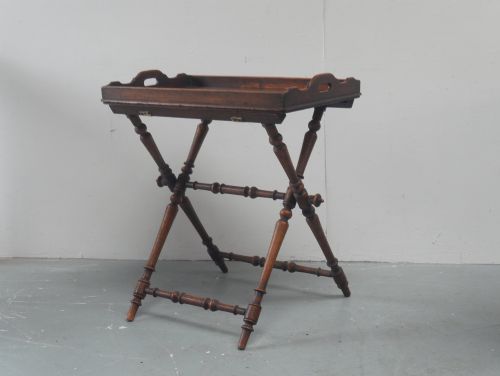
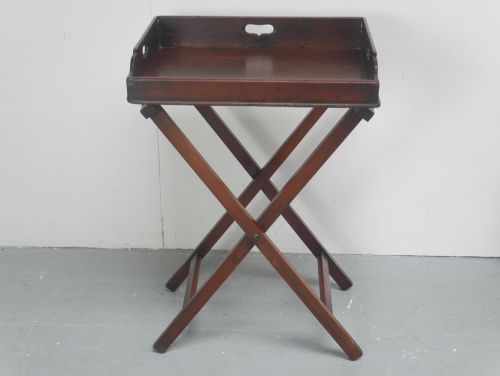
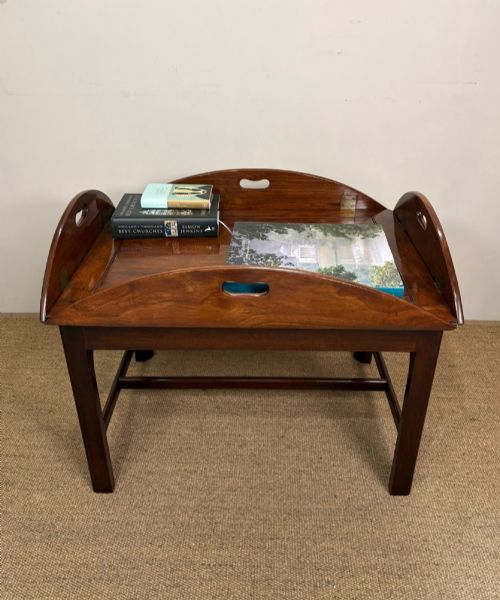
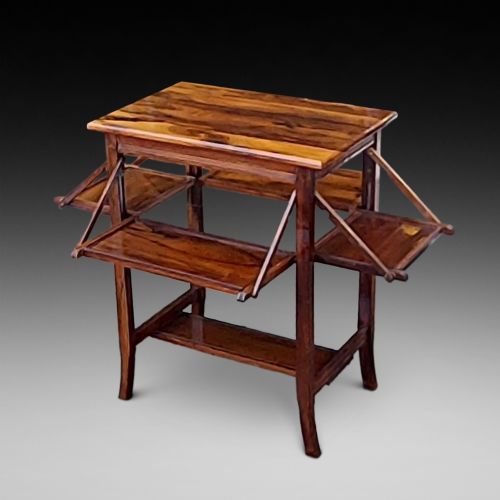
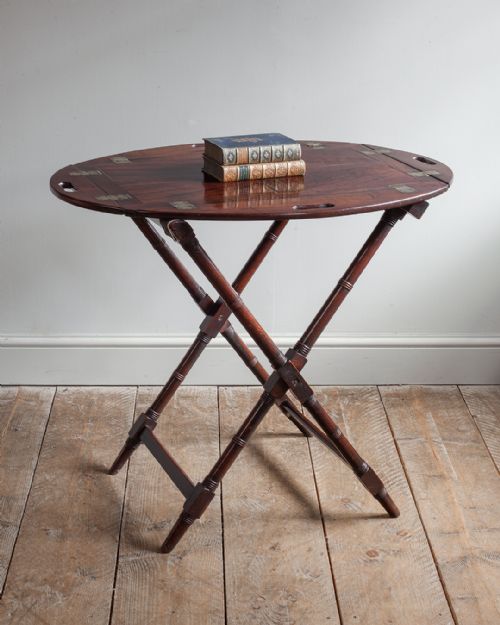
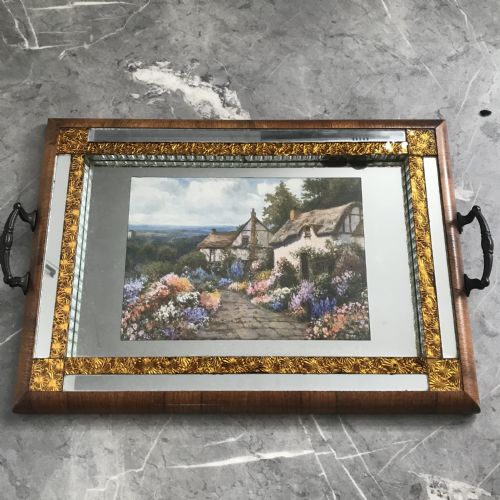
An antique wood serving tray unites practical domestic utility with period cabinet-making, spanning forms from handheld platters to folding butler pieces on stands. When you search for an antique wood serving tray, you meet pieces built to carry afternoon tea, drinks or silver through 18th-century, Georgian, Victorian and Edwardian drawing rooms.
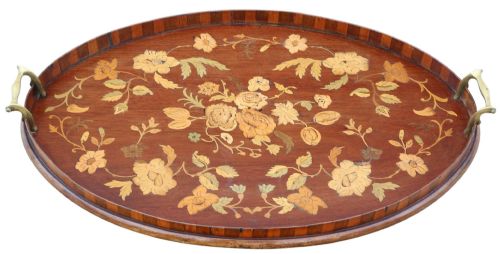
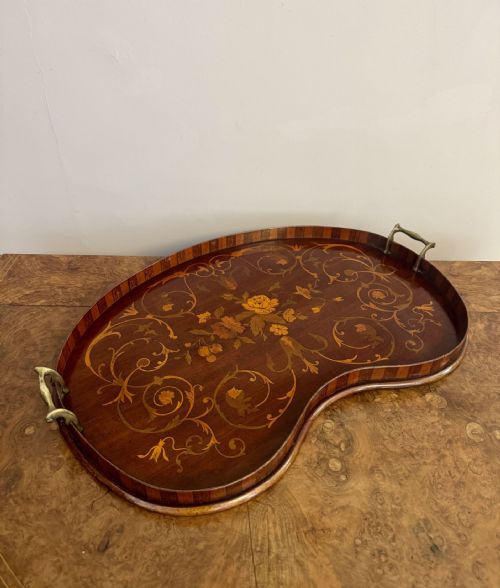
Mahogany forms the backbone of these pieces, alongside oak, walnut, satinwood and golden elm, styled across Georgian, Victorian, Edwardian and Art Deco periods. You are most likely to encounter mahogany tea trays with inlaid details, alongside sturdy oak butler trays paired with folding stands.
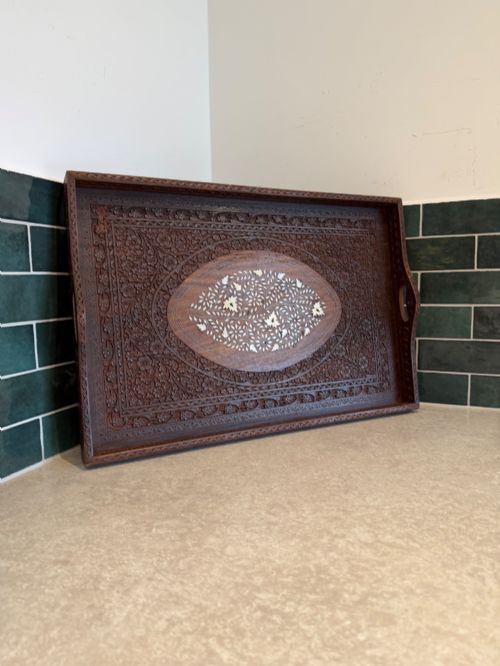
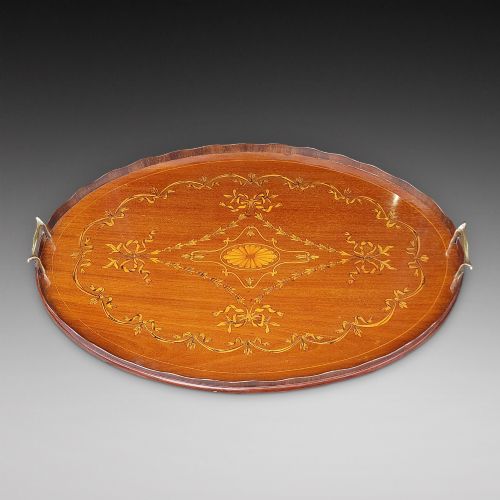
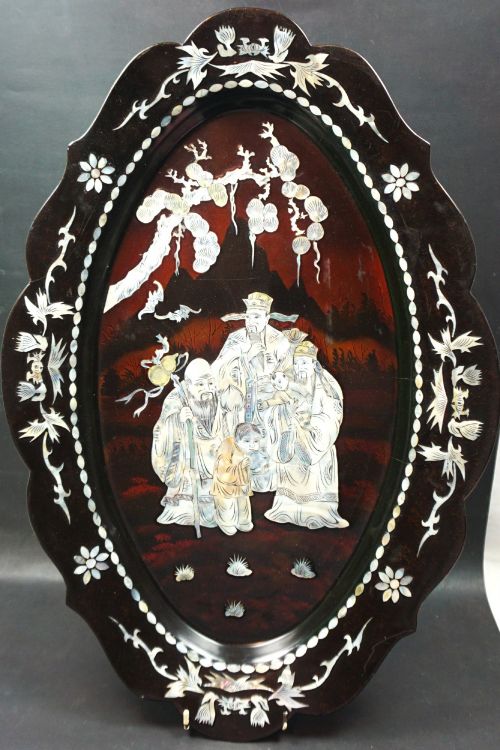
The selection extends from simple scalloped edges and coopered designs to intricate marquetry, brass handles and mother of pearl inlay. Whether configured as a standalone platter or mounted upon a table base, each piece reflects the hospitality habits of its specific decade.
Materials and construction methods
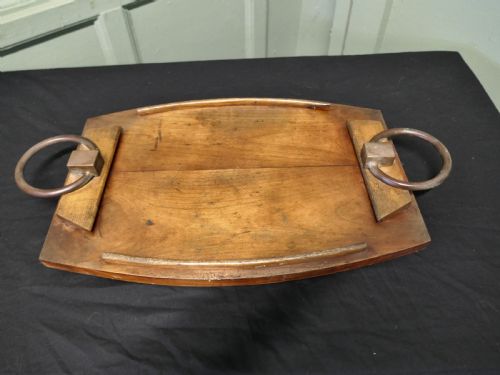
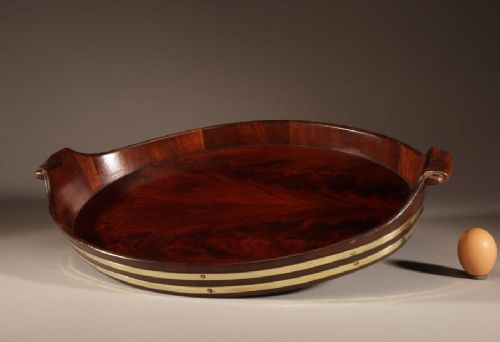
Makers relied primarily on dense hardwoods like mahogany, oak and walnut, chosen for their structural strength and capacity to take a fine polish. Planks were joined using traditional methods, sometimes enhanced with brass handles, gallery rails or coopered stave construction.
Decorative surface work relied heavily on contrasting veneers, boxwood stringing and marquetry in satinwood, alongside mother of pearl and shell inlay. These techniques turned simple service items into decorative highlights of the dining room.
Several trays feature rotating lazy-susan mechanisms, proving that passing the salt without stretching has Victorian roots.
Distinguishing quality across pieces
Quality rests in the crispness of the joinery, the thickness of the timber and the precision of any inlay work. A superior piece shows careful timber selection, such as matched veneer or figured mahogany, rather than plain boards.
The integration of metalwork also marks the difference, where solid brass handles and gallery rails are firmly bedded into the wood. Finer trays retain crisp edges on scalloped rims and precise marquetry without lifting or filler.
The Antique Wood Serving Tray Glossary
- Butler's tray
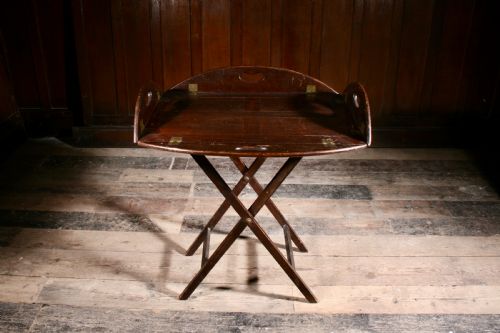
- A removable wooden tray featuring hinged or fixed sides, traditionally designed to rest upon a folding X-frame stand for serving drinks or meals.
- Marquetry
- The art of forming decorative patterns using thin slices of wood veneer and other materials applied to a structural carcase.
- Coopered
- Constructed using vertical wooden staves bound together by hoops, similar to the method used for barrels, creating a curved tray body.
- Gallery tray
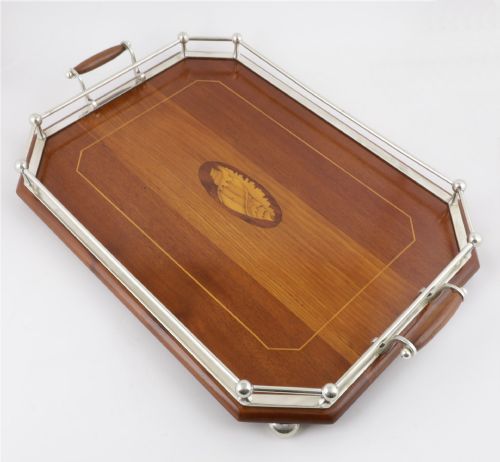
- A tray featuring a raised wooden or metal rim around the perimeter designed to prevent items from sliding off during transit.
- Treen
- Small handmade wooden household objects, encompassing platters and dishes valued for their tactile grain and domestic history.
Antique Wood Serving Tray: Frequently Asked Questions
How were butler trays used?
Butler trays served as portable dining surfaces that staff could lift off their folding stands to clear tables or transport tea service between rooms.
In period homes, the stand remained stationary while the tray travelled to the kitchen and back during entertaining.
Can I use an antique tray daily?
Most wooden serving trays handle regular use if treated gently, though antique finishes require protection from standing moisture and heat.
Applying a suitable wax maintains the timber's moisture barrier without harming the historic polish.
How do I date an antique tray?
Dating relies on timber choices, construction techniques, and decorative styles that align with known periods like Georgian mahogany or Edwardian marquetry.
Tool marks on the underside and the method used to attach handles offer further clues to the decade of manufacture.
What is a gallery rail?
A gallery rail is a low surrounding fence made of wood or pierced metal designed to keep glassware and china secure on the moving surface.
This feature became particularly common on finer serving platters and tea trays from the 19th century onward.