





Antique Wood Dumbwaiter
An antique wood dumbwaiter is a tiered serving stand designed to hold dishes without servants, offering practical multiple levels for modern rooms.
Antique Wood Dumbwaiter
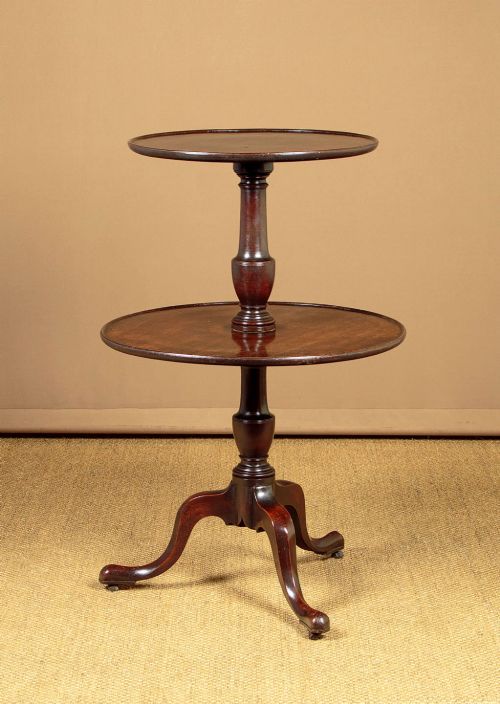
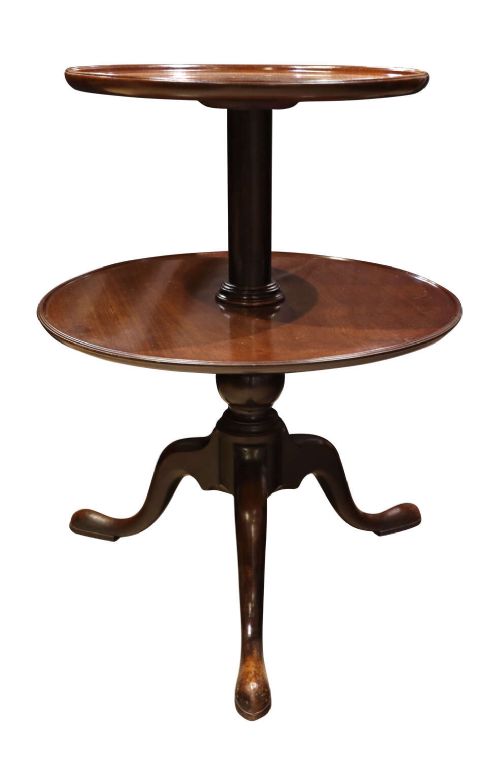
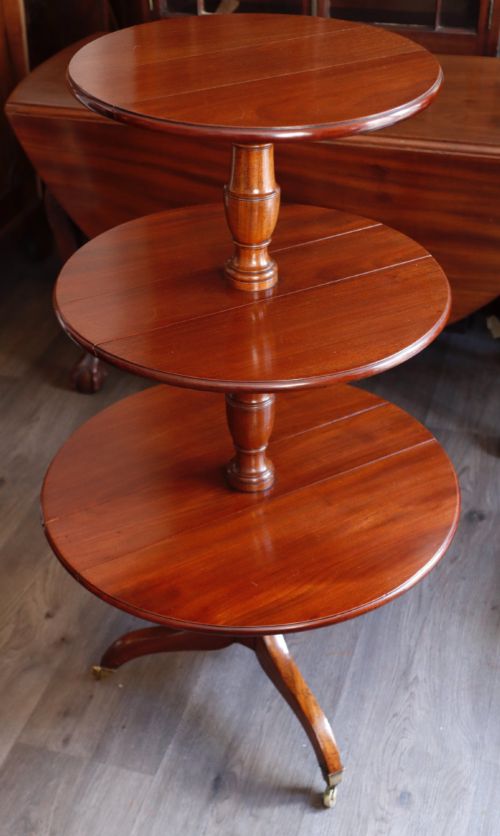
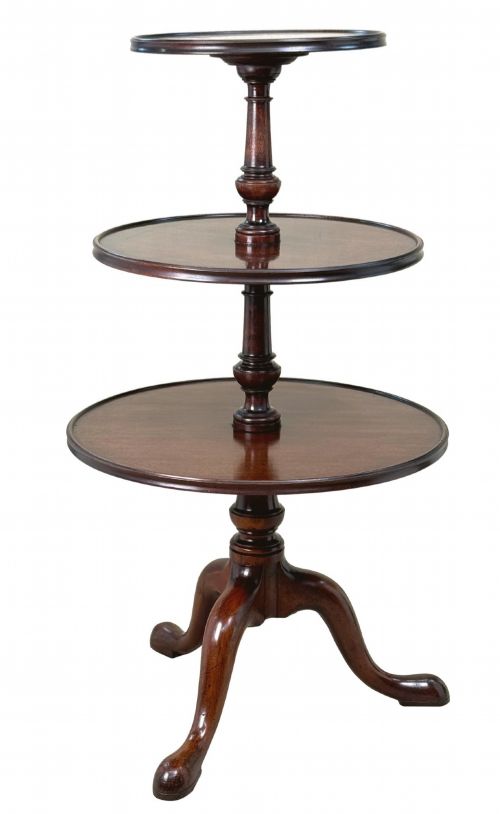
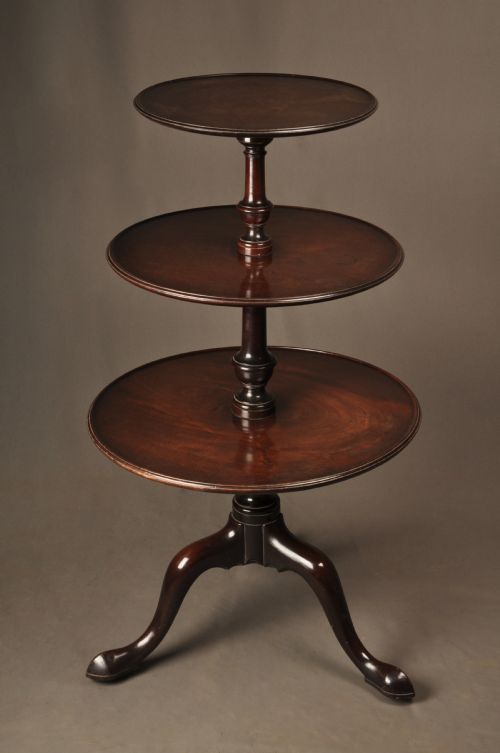
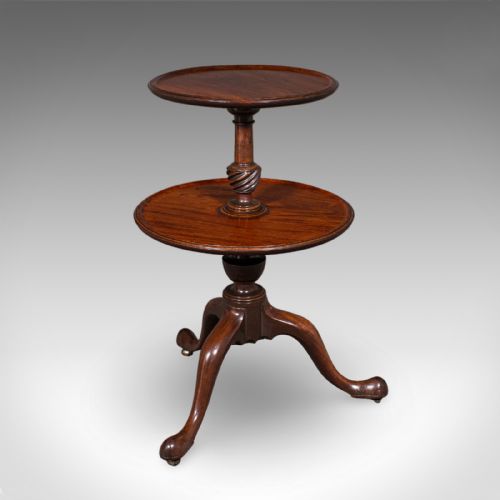
An antique wood dumbwaiter brings tiered surfaces to dining and living spaces, functioning as a movable serving stand with graduated circular trays. You will encounter forms ranging from simple two-tier tables to complex multi-tiered structures.
The selections span the eighteenth century, the Georgian period, the Regency era, and the Victorian epoch. Mahogany dominates the records, supplemented by walnut, rosewood, oak, ebonised wood, and padauk wood.
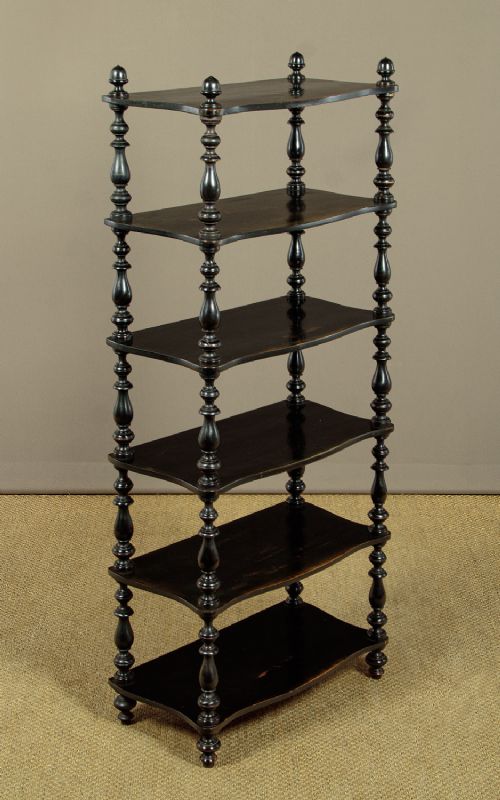
Makers and craftsmen built these objects as revolving dumb waiters, etageres, buffets, and tripod pedestals. They serve today as side tables, display stands, and serving surfaces in domestic settings.
Materials and construction
Cabinetmakers constructed these pieces primarily in solid mahogany and hardwood, utilising brass fittings for revolving tiers and hinges. Turning lathes shaped the central pedestals and tripod legs that support the graduated trays.
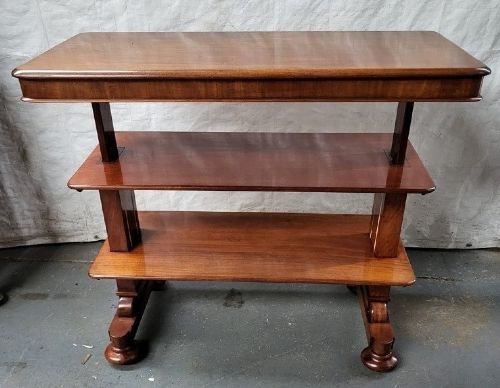
Joinery techniques included tripod pillar bases and folding mechanisms to allow compact storage. Marquetry inlay, ebonised finishes, and carved detailing appear on specific examples from later nineteenth-century periods.
Listings feature pieces spanning the 18th century, Georgian era, Regency period, and Victorian epoch, constructed from mahogany, walnut, rosewood, oak, and padauk.
What varies in quality
The distinction between tiers rests on timber selection and proportion. Dense grain figuring in the mahogany trays and solid turning on the central column define superior execution.
Revolving mechanisms operate smoothly on high-grade examples, allowing independent rotation of each tier without friction or tilt. Original brass castors and uncompromised tripod joints elevate the stature of a piece.
The Antique Wood Dumbwaiter Glossary
- Etagere
- A set of open shelves for displaying small objects or serving food. This form appears across Georgian and Regency periods.
- Tripod base
- A three-legged support structure commonly found beneath the central pillar of round tables and dumbwaiters. It provides stable floor contact on uneven surfaces.
- Revolving
- Able to turn on an axis. This movement allows diners to access food without passing dishes across the table.
- Buffet
- A side table or serving surface used for food and drink. Examples in the record include multi-tiered serving formats from the William IV era.
Antique Wood Dumbwaiter: Frequently Asked Questions
What is an antique wood dumbwaiter used for?
These tiered stands served historically to hold dishes and silverware beside a dining table without requiring domestic staff in the room.
Today, they function effectively as side tables, plant stands, or display surfaces in living areas and hallways.
How do I identify a Georgian dumbwaiter?
Georgian examples typically feature solid mahogany timber, graduated circular tiers, and a central turned pedestal supported by three cabriole or sabre legs.
Construction details like hand-cut dovetails and period brass fittings help confirm the eighteenth or early nineteenth-century origin.
Do all antique dumbwaiters revolve?
Many tier boards rotate on a central spindle or pivot mechanism, though fixed multi-tier etageres and folding variants also exist in the record.
Revolving formats allow diners to spin individual trays to reach items easily during a meal.
Where should I place a tiered stand at home?
The compact footprint of a tripod dumbwaiter makes it suitable for corners, beside armchairs, or as an end table in a sitting room.
Multiple tiers provide vertical display space for books or decorative objects without occupying excessive floor area.
How do I care for a mahogany finish?
Maintain the timber surface by dusting regularly with a soft cloth and applying a traditional beeswax polish periodically to nourish the wood grain.
Keep the piece away from direct sunlight and heat sources to prevent the wood from drying or splitting.