
Antique Wood Dining Server
An antique wood dining server brings stately presence to a room, offering surface space and concealed storage shaped by centuries of cabinet-making.
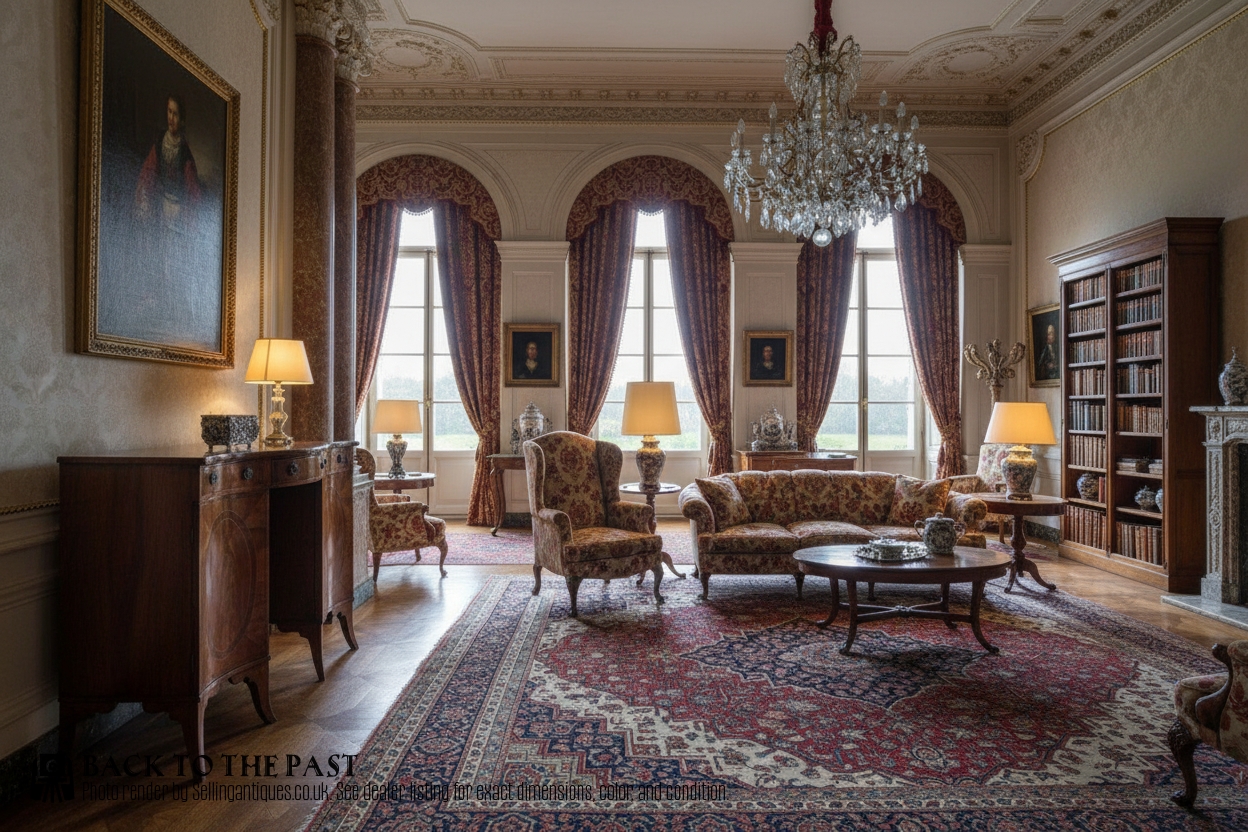
Antique Wood Dining Server
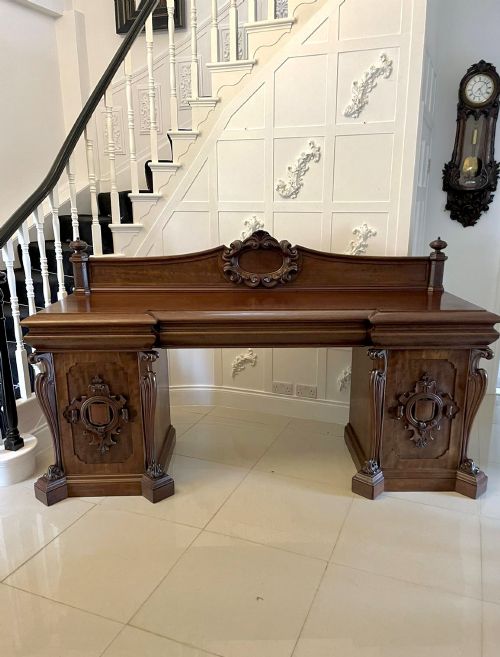
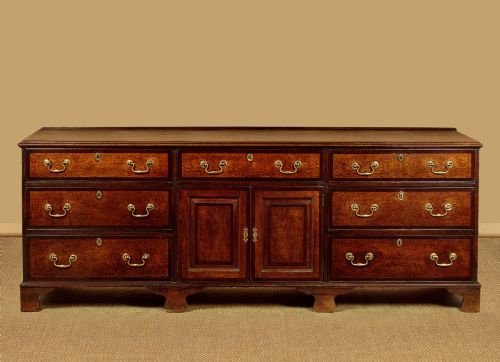
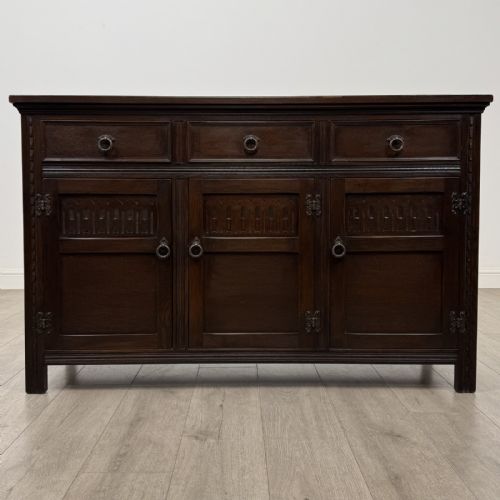
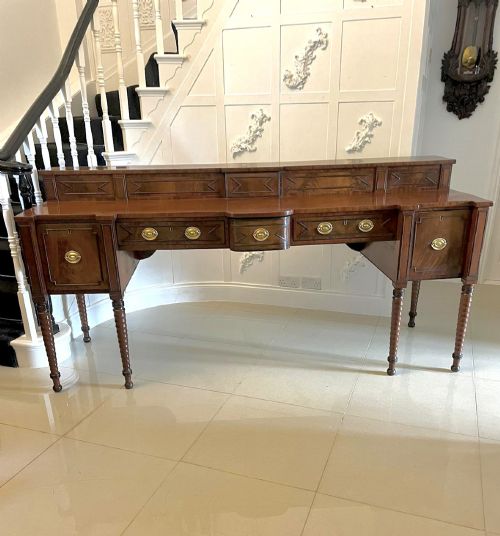
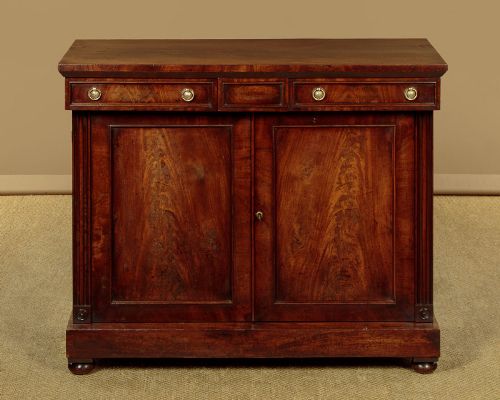
When you search for an antique wood dining server, you encounter forms that evolved from straightforward serving tables into large sideboards, buffets, and chiffoniers. These pieces served a practical role in domestic dining, holding dishes, linen, and wine during large meals.
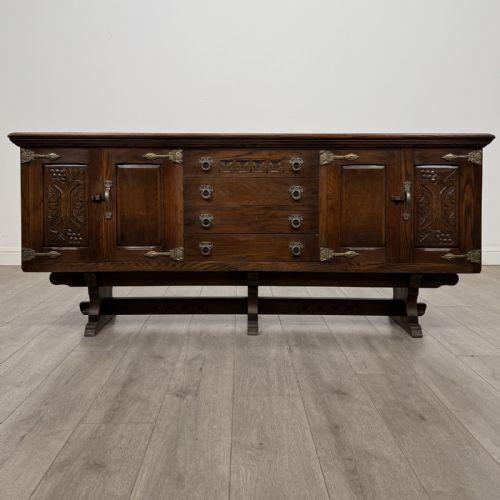
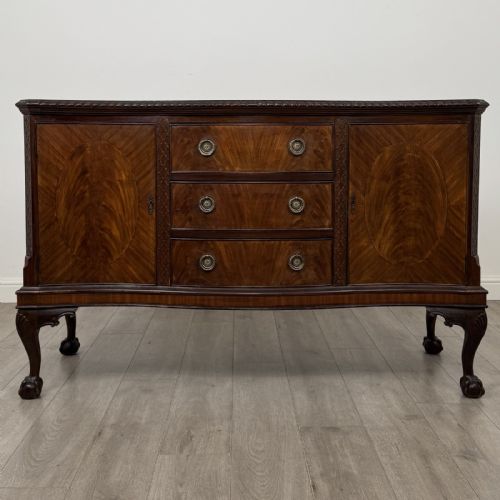
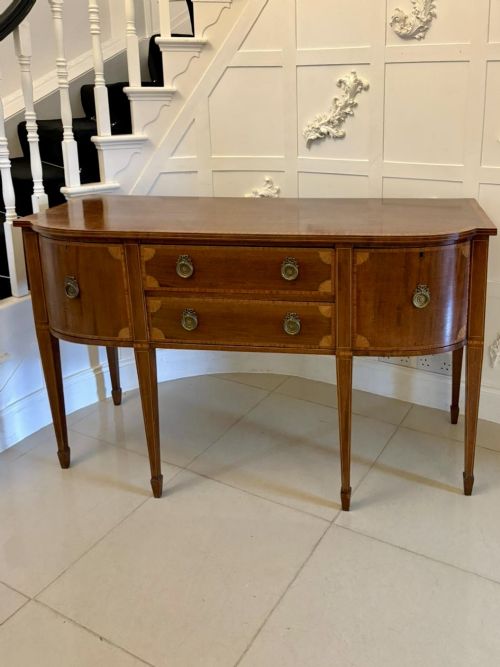
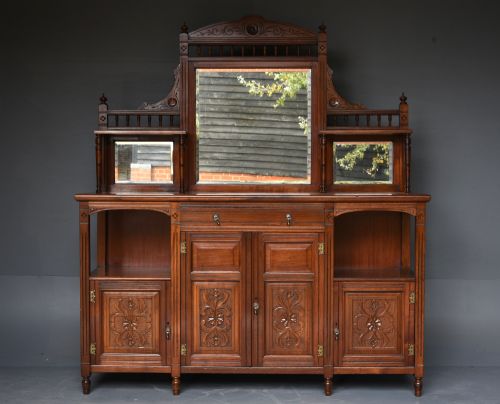
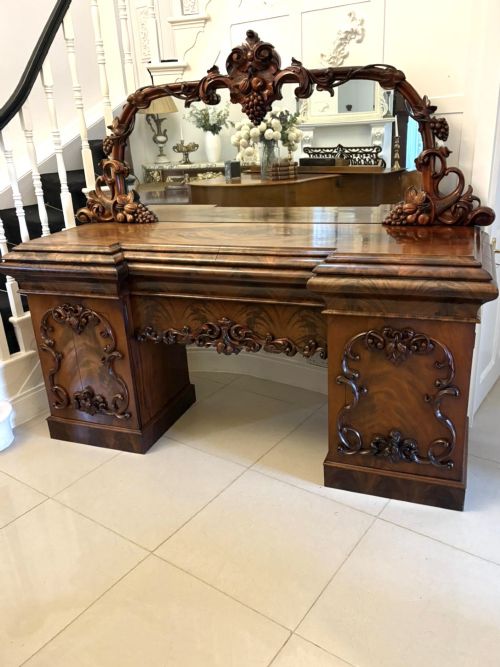
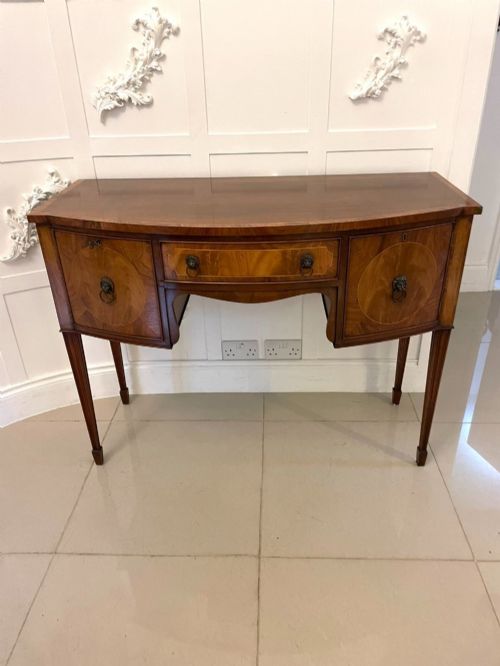
The versions most common on this page stem from the Georgian, Victorian, and Edwardian periods, constructed in varied regional shapes from straight-fronted models to bow-fronts and serpentine designs. Makers adapted proportions to suit contemporary dining rooms, producing pieces ranging from compact serving tables to massive mirror-back sideboards.
Distinctions in Execution
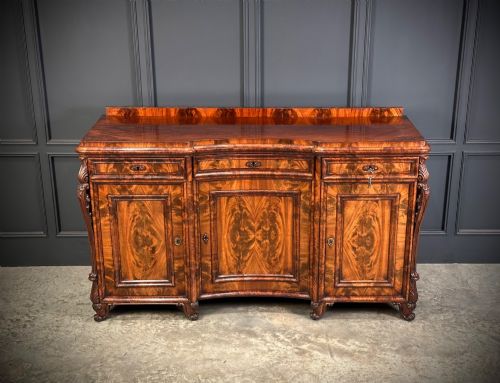
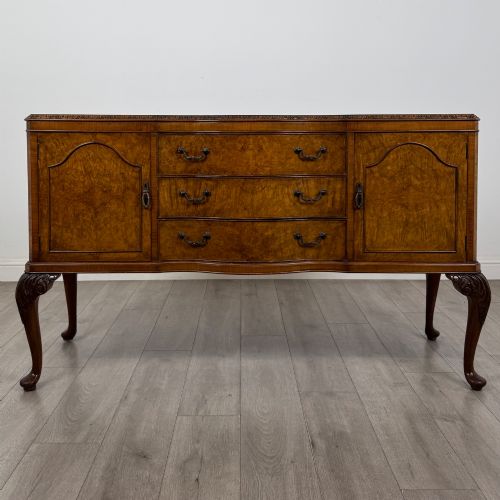
Quality rests in the selection of timber and the precision of the cabinet work, particularly in how veneers are matched across drawer fronts and doors. Finer examples display subtle inlay work, such as delicate boxwood stringing, and timber selected for rich grain figures like flame mahogany or burr walnut.
Structural integrity and proportion also separate standard items from superior pieces, evident in smooth drawer action, solid secondary woods inside, and crisp carving that remains sharp and well-defined rather than soft or heavy-handed.
Listings feature woods including mahogany, oak, walnut, rosewood, and satinwood, spanning the Georgian, Victorian, and Edwardian eras.
Hewetsons London
The Antique Wood Dining Server Glossary
- Bow front
- A cabinet front that curves outward in a convex arc. This shape gained popularity during the Georgian and Regency periods to soften the room's geometry.
- Chiffonier
- A low cabinet featuring shelving or a small superstructure on top. These pieces functioned as side tables in dining rooms and drawing rooms alike.
- Serpentine front
- A furniture front characterised by a central convex curve flanked by two concave curves. It requires advanced woodworking skill to execute properly.
- Flame mahogany
- A veneer cut from the fork of the mahogany tree where branches meet the trunk. This method yields a vivid, flamy grain pattern prized for decorative surfaces.
- Inlay
- A technique where pieces of contrasting wood or other materials are inserted into depressions flush with the surface. It serves to outline panels and drawers.
Antique Wood Dining Server: Frequently Asked Questions
What is an antique wood dining server used for?
These pieces functioned historically as auxiliary tables for serving food and storing dining accessories during large meals. In modern homes, they provide surface display space and deep internal storage for tableware.
Their substantial tops accommodate serving platters while cupboards and drawers house linens, cutlery, and glassware out of sight.
How do I tell a Georgian server from a Victorian one?
Georgian servers generally display restrained classical proportions, architectural stringing, and lighter wood figures with straight or bow fronts. They rely on proportion and subtle veneer work rather than heavy ornamentation.
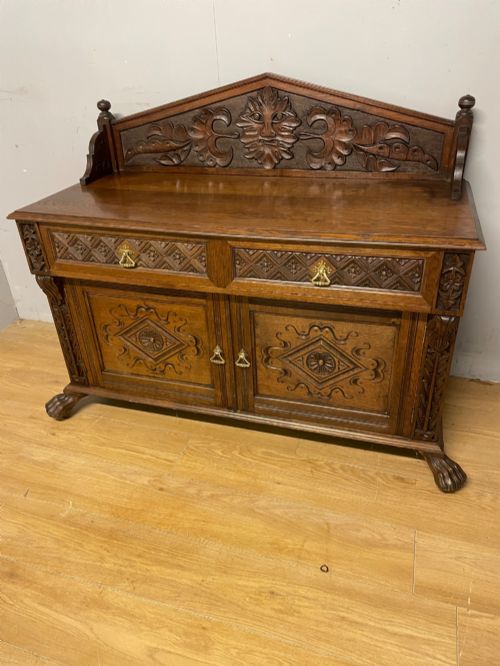
Victorian pieces tend to be heavier, incorporating elaborate carved details, mirror backs, and darker finishes such as heavily carved oak or deep mahogany. The scale is often larger and incorporates revival styles like Jacobean or Gothic.
Are these servers suitable for modern dining rooms?
Their enduring storage capacity and varied footprints make them practical additions to contemporary living spaces. Compact models fit smaller rooms, while larger breakfront and mirror-back pieces anchor spacious dining areas.
They coordinate well with existing wooden furniture due to their traditional tones and classic construction.
What woods were commonly used?
Mahogany served as the primary timber for formal dining furniture across the Georgian and Victorian eras, often enhanced with flame veneer or satinwood. Oak also appears frequently, particularly in Victorian and Edwardian pieces influenced by Jacobean and Arts and Crafts tastes.
Secondary woods like pine or oak were used for drawer linings and internal framing to ensure structural stability.