

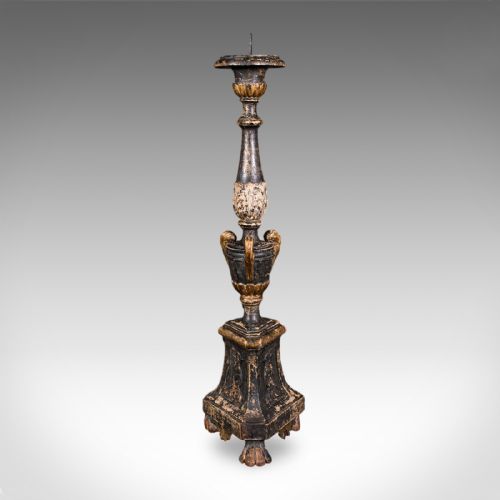


Antique Wood Candle Sticks
These antique wood candle sticks bring warmth to a room through turned mahogany, carved oak, and rich walnut.
Antique Wood Candle Sticks
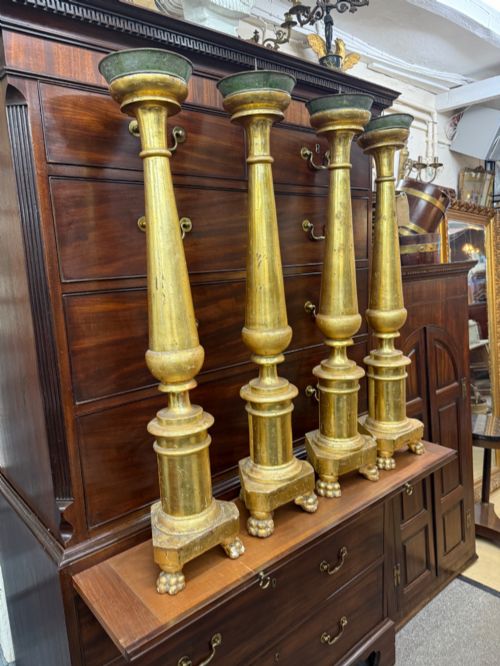
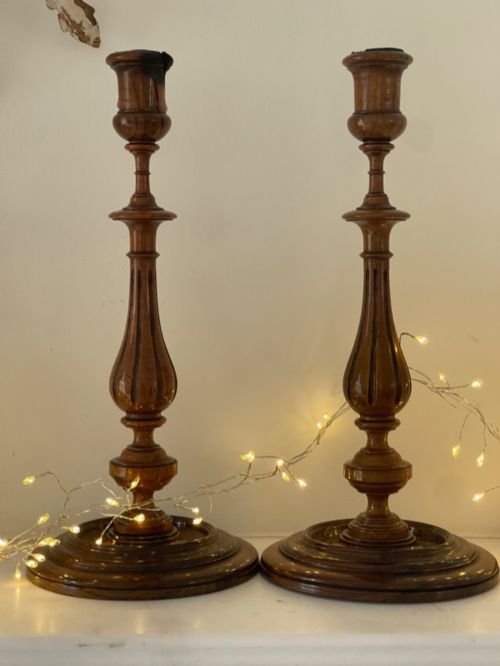
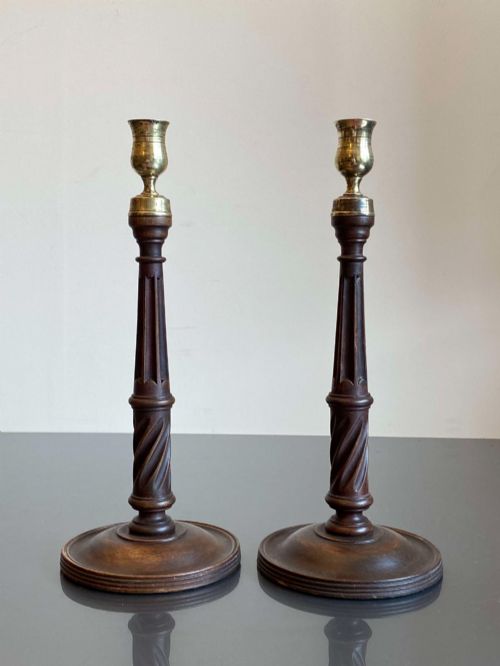
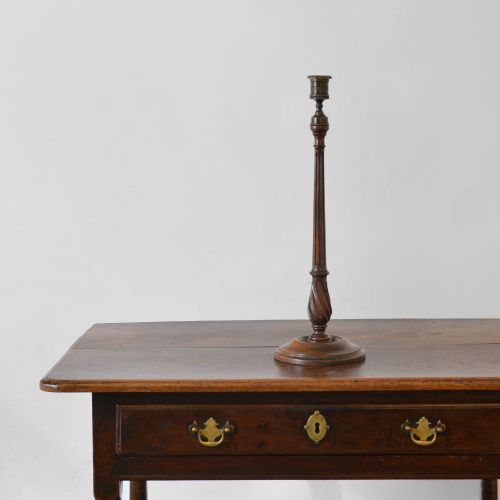
When you search for antique wood candle sticks, you encounter a varied selection of turned columns, prickets, and chamber sticks dating from the Georgian period through to the nineteen-twenties. The most common finds on this page are pairs of turned mahogany or oak candlesticks, often featuring brass sconces or barley twist stems.
The objects serve both decorative and functional purposes, ranging from small treen taper sticks to large altar-style prickets and converted candle-lamps. Stylistic influences span from Italian Neoclassical and French Chateau aesthetics to vernacular English folk art.
Makers utilised native and exotic timbers including walnut, lignum vitae, and ebonised woods, sometimes enhanced with giltwood, gesso, or gold leaf. The survival of these pieces demonstrates the enduring appeal of turned and carved timber in domestic lighting.
What varies in quality
The distinction between standard items and finer examples lies in the precision of the turning and the depth of the hand carving. Crisp detail in barley twist stems or figurative folk art carvings elevates a piece above simpler domestic turnery.
Proportion and material choice also define quality, with dense timbers like lignum vitae and well-matched pairs commanding greater interest than mismatched components or softwoods. The integrity of the original surface finish, whether polished mahogany or aged giltwood, influences the visual weight.
Antique Wood Candle Sticks Retail Price Guide 2026
Typical asking prices for wood candle sticks among the pieces listed under this phrase on Sellingantiques today, from the lower quarter to the upper quarter. They describe what is for sale here now, not the wider market.
The listings span the Georgian, Victorian, and Edwardian eras, featuring materials like mahogany, brass, lignum vitae, and gold leaf.
The Antique Wood Candle Sticks Glossary
- Pricket
- A candlestick featuring a central metal spike to secure the candle rather than a socket. This form is frequently seen on altar-style and continental pieces.
- Treen
- Small handmade wooden domestic objects turned or carved from a single piece of timber. Lignum vitae and walnut are common materials for these items.
- Sconce
- The metal cup or nozzle fitted to the top of a wooden candlestick to catch melting wax and hold the candle upright. Brass is the most frequent metal found alongside timber.
- Barley twist
- A helical carved or turned wooden column resembling a twisted rope. This decorative motif appears frequently on oak and mahogany stems from the early twentieth century.
- Chamber stick
- A low candlestick fitted with a flat pan and a handle for carrying through a house. These often include a small conical snuffer resting in the tray.
Antique Wood Candle Sticks: Frequently Asked Questions
How do I clean wooden candlesticks?
Dust gently with a dry, soft cloth to remove surface particles.
Avoid using water or modern chemical polishes that can damage aged timber and historic finishes.
How can I tell the period?
Examine the turning style, timber species, and construction methods used in the base.
Georgian pieces often display rich mahogany with fine turning, whereas later examples show oak twist stems or folk art carving.
Why do some candlesticks have spikes?
Spiked candlesticks are known as prickets and were originally designed to impale large church or altar candles.
Today, these architectural pieces serve as striking centrepieces on dining tables and sideboards.