
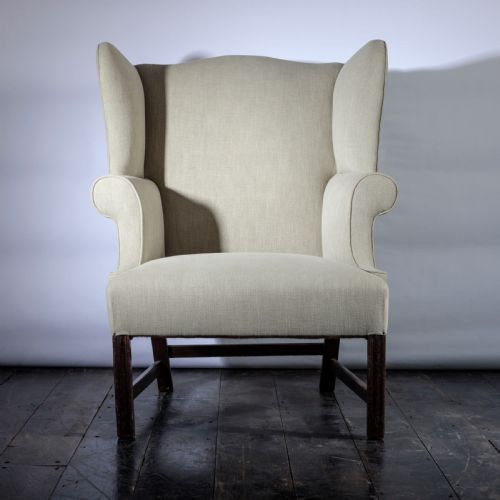
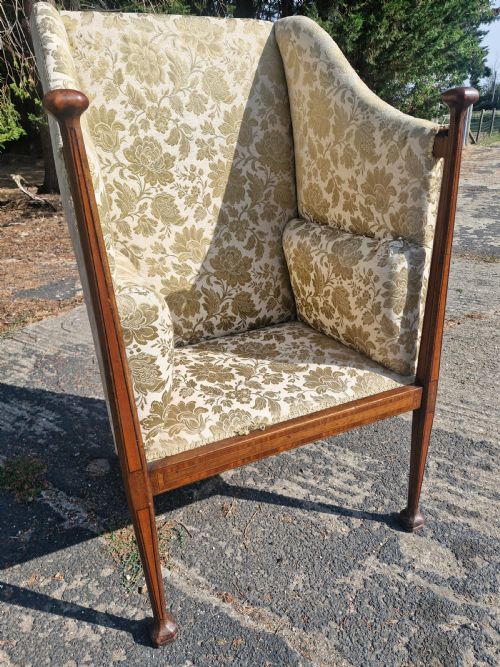
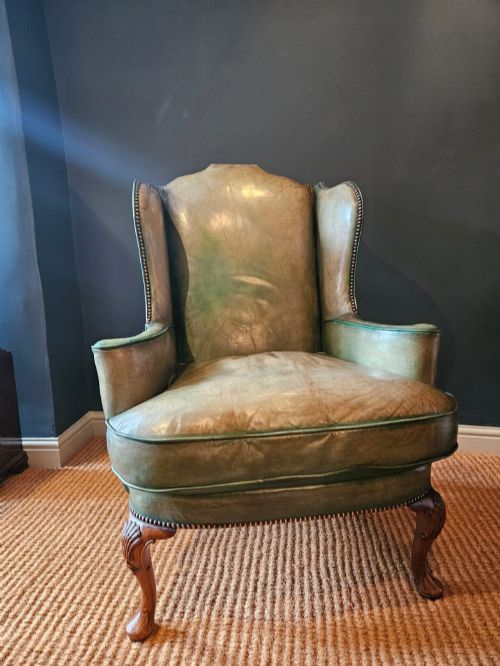
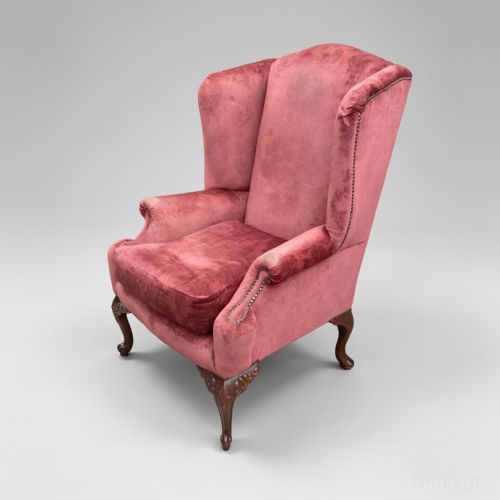
Antique Winged Easy Chair
An antique winged easy chair offers deep comfort and draught-excluding wings, appearing here in forms from the eighteenth century to the twentieth.
Antique Winged Easy Chair
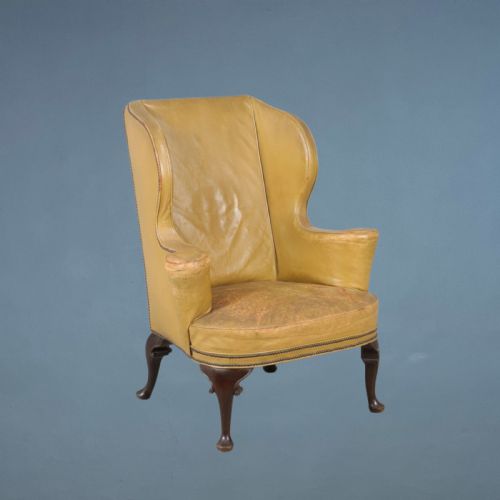
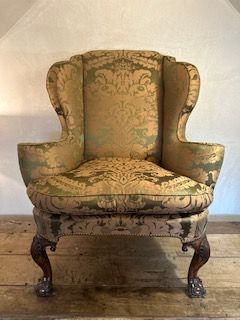
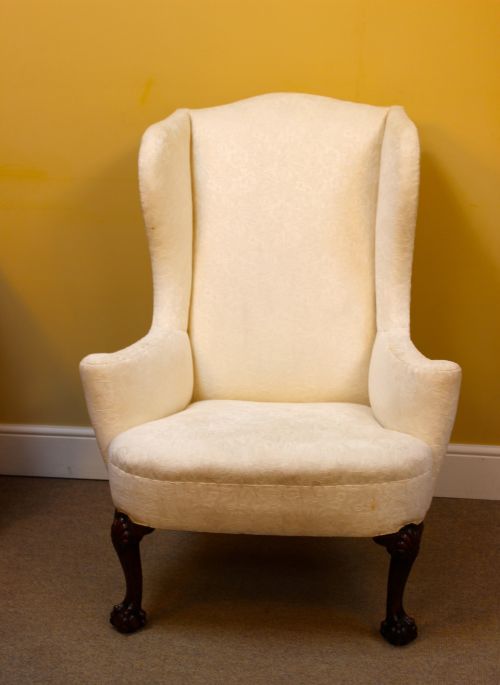
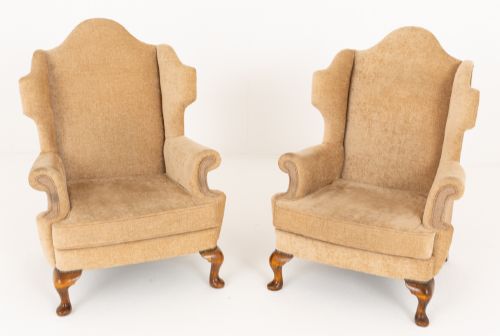
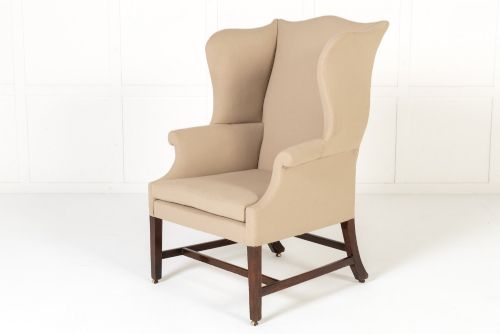
An antique winged easy chair is a high-backed seat designed to shield the sitter from draughts by the hearth, featuring characteristic side panels known as wings. When buyers search for an antique winged easy chair, they encounter substantial seating built for relaxation, spanning periods from the Georgian era through to the Edwardian and later revival styles.
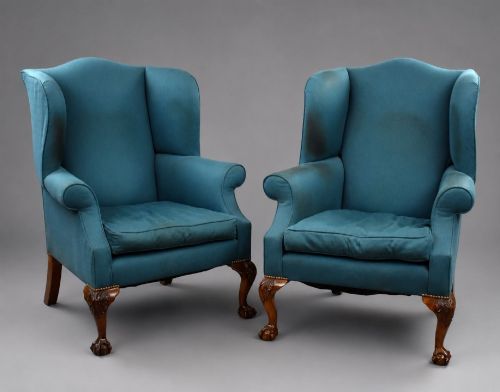
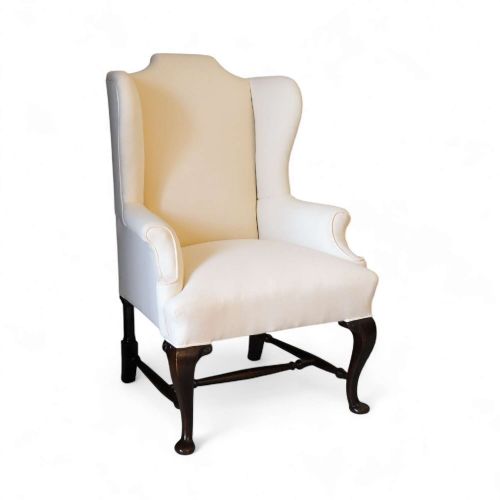
The most common examples on this page date from the nineteenth century, alongside eighteenth-century originals and early twentieth-century interpretations. These armchairs typically present wooden frames beneath upholstery, often in styles reflecting earlier Georgian, Queen Anne, or Chippendale designs.
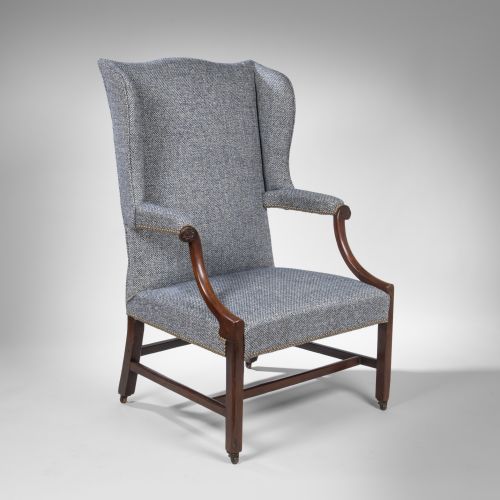
Formations range from standard domestic seating to large-scale library chairs and occasional child's variants. Makers built them for permanent placement in parlours, drawing rooms and studies, resulting in pieces designed for daily endurance.
How They Were Made
Makers constructed the structural frames of these armchairs using timber such as mahogany, walnut, oak, and general timber. These woods provided the necessary rigidity to support deep upholstery and heavy usage over centuries.
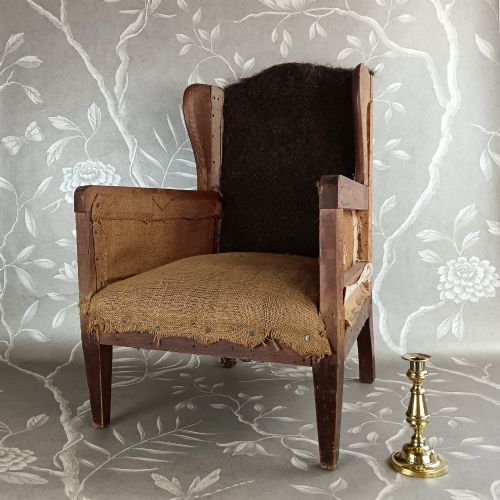
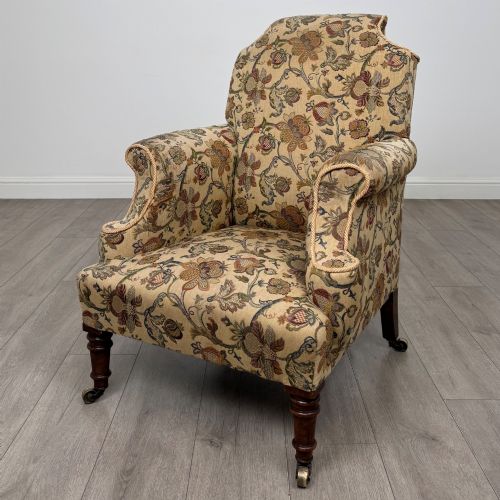
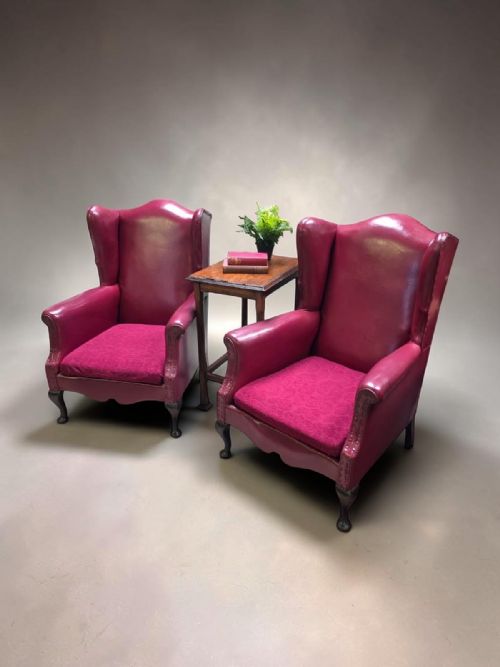
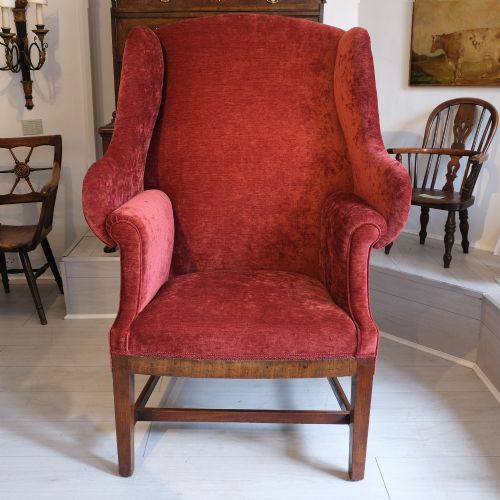
Upholstery techniques relied on traditional stuffing retained by hessian and finished with coverings of fabric, velvet, or leather. Brass nails often secured the hides and textiles to the wooden bases and arms.
Carving appeared on exposed wooden elements like cabriole legs, particularly in pieces influenced by Georgian or Irish design traditions. Joinery involved traditional methods to ensure stability across the upright back and extended wings.
The selection includes periods ranging from the eighteenth century through Victorian, Edwardian, and 1930s revivals.
What Varies in Quality
The degree of refinement in the woodwork dictates much of the distinction between standard and superior pieces. Finely carved cabriole legs and articulate joinery elevate a chair above plain, utilitarian frames.
Proportion and scale also separate examples, with generous proportions and balanced wing curves showing greater design consideration. The integrity of the underlying timber framework determines the structural longevity of the seat.
Upholstery materials range from simple calico to thick leather and patterned velvet, reflecting the original intended status of the furniture within a home. Original timber surfaces and patination carry more weight among collectors than heavily restored or altered frames.
Howard And Sons
The Antique Winged Easy Chair Glossary
- Wing
- The protective side panel attached to the back of an armchair. It was originally designed to trap heat from a fireplace and block cold air.
- Cabriole leg
- A furniture leg that curves out and then in, resembling the leg of an animal. This form appeared frequently on eighteenth-century seating.
- Calico
- A plain-woven cotton fabric used as an initial upholstery layer. Chairs are often sold in this state so buyers can apply their own outer covering.
- Hessian
- A coarse woven fabric utilised as foundational webbing and backing within traditional upholstery. It provides support beneath the stuffing.
- Revival
- A later style that copies the aesthetic of an earlier historical period. Examples include Queen Anne Revival and Chippendale Revival pieces.
Antique Winged Easy Chair: Frequently Asked Questions
What is an antique winged easy chair?
An antique winged easy chair is a high-backed seat featuring side panels designed to protect the sitter from draughts. They evolved from seventeenth and eighteenth-century domestic seating into enduring forms of household comfort.
Today, these chairs appear across various periods, retaining their high backs and enclosed sides whether built as original pieces or later revival models.
How were these chairs used?
These chairs served primarily as fireside seating, where the wings trapped heat and deflected cold air currents in draughty rooms. They were positioned in parlours, libraries, and studies for reading and resting.
Their substantial construction made them permanent fixtures in domestic interiors, intended for long hours of daily use.
How do I live with one?
Living with an antique winged easy chair involves placing it where its scale and high back will not overpower smaller rooms. They suit studies, drawing rooms, and reading corners as statement seating.
Regular care of the leather or fabric upholstery and occasional maintenance of the exposed wooden legs will keep the chair stable and sound.
How do I tell periods apart?
Distinguishing periods relies on examining leg styles, wood types, and overall proportions. Eighteenth-century examples often feature walnut or mahogany with carved cabriole legs, while Victorian and Edwardian pieces show heavier framing and later revival influences.
Construction methods and secondary woods inside the frame also provide clues to the true age of the armchair.