

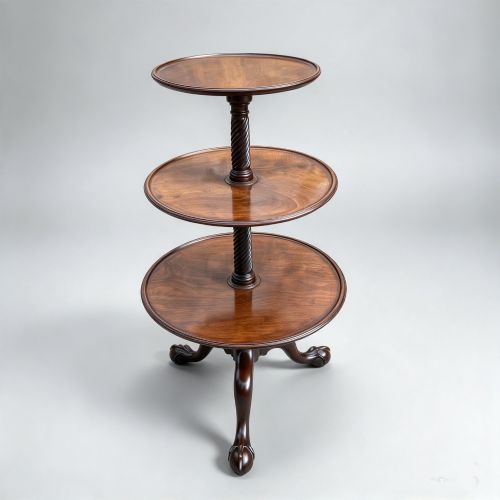


Antique Wine Waiter Stand
An antique wine waiter stand brings practical tiered service to a room, offering the stable mahogany or rosewood surfaces that collectors seek.
Antique Wine Waiter Stand
An antique wine waiter stand serves as a functional piece for holding bottles and glassware, appearing in various tiered and revolving formats across different eras. These items function as occasional tables, side tables, and tiered tables designed to hold refreshments within easy reach.
The assortment includes designs such as the George III mahogany two-tier tripod table and the Halls Patent brass and mahogany drinks table. Early Victorian rosewood decanter tables and late Victorian revolving tables also populate the offerings.
How these stands were made
Cabinet makers utilised dense timbers like mahogany and rosewood to construct the structural columns, tiers, and tripod bases of these stands. These resilient woods provided the necessary strength to support heavy decanters and glassware across multiple levels.
Metal components such as brass fittings and cast iron elements appear alongside timber to allow for mechanical adjustments and secure assembly. Patent mechanisms and revolving joints required precise engineering to function smoothly within the table design.
Antique Wine Waiter Stand Retail Price Guide 2026
Typical asking prices for wine waiter stand among the pieces listed under this phrase on Sellingantiques today, from the lower quarter to the upper quarter. They describe what is for sale here now, not the wider market.
Listings span from the 18th century to 1900, incorporating mahogany, rosewood, brass, and cast iron across occasional and tiered table formats.
What varies in quality
The refinement of the timber grain and the crispness of the turned columns distinguish finer examples from simpler workshop productions. Superior pieces exhibit well-figured mahogany or rich rosewood with patination that develops naturally over centuries.
Mechanical complexity also dictates distinction, separating standard fixed tiers from sophisticated items featuring adjustable heights or revolving actions. Patent designs and folding mechanisms demonstrate higher levels of ingenuity in period cabinet making.
Halls Patent
The Antique Wine Waiter Stand Glossary
- Dumb waiter
- A multi-tiered piece of furniture designed to hold food, wine, or glasses without the need for a servant. These stands feature stacked circular trays supported by a central pillar and tripod legs.
- Tripod table
- A small freestanding table supported by a central column resting on three feet. This construction prevents wobbling on uneven floors.
- Decanter table
- A specialised stand intended specifically for the presentation and serving of bottled wine and spirits. They often incorporate protective rims or dedicated bottle holders.
- Revolving table
- A piece featuring a top or tier that rotates around a central vertical axis. This mechanism allows users to access items from all sides without moving the stand.
- Tiered table
- Furniture built with multiple horizontal surfaces arranged vertically to maximise display and storage space. Each level steps down or mirrors the tier above it.
Antique Wine Waiter Stand: Frequently Asked Questions
What is a wine waiter stand used for?
These pieces served as convenient side surfaces during meals and gatherings to hold bottles, glasses, and serving dishes.
Their multi-tiered design allowed hosts to keep refreshments close at hand without crowding the main dining table.
How do I date a wine waiter stand?
Dating relies on identifying the prevailing timber choices, structural forms, and joinery techniques typical of specific periods.
Georgian examples often feature tripod bases and distinct mahogany turning, while Victorian pieces introduce rosewood and mechanical patents.
Are these stands stable enough for daily use?
Solid timber construction and sturdy tripod bases provide substantial weight and balance for holding heavy glassware and bottles.
Careful placement ensures they remain functional items in modern rooms as well as decorative focal points.
What is the difference between a dumb waiter and a decanter table?
A dumb waiter typically incorporates two or three stacked circular tiers designed for general serving and storage.
A decanter table focuses specifically on the display and retention of wine bottles, often featuring specialised tops.