




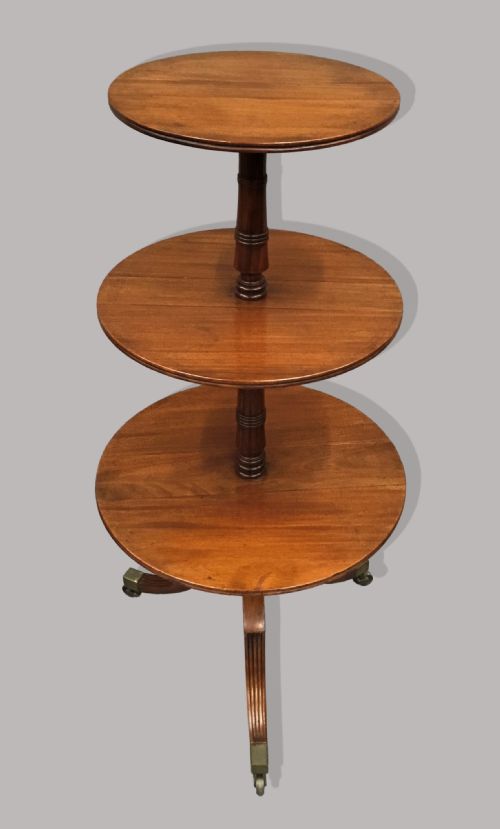


Graduated Three Tier Stand
A graduated three tier stand brings remarkable timber presence and clever tiered stacking to a dining room or parlour.
Graduated Three Tier Stand
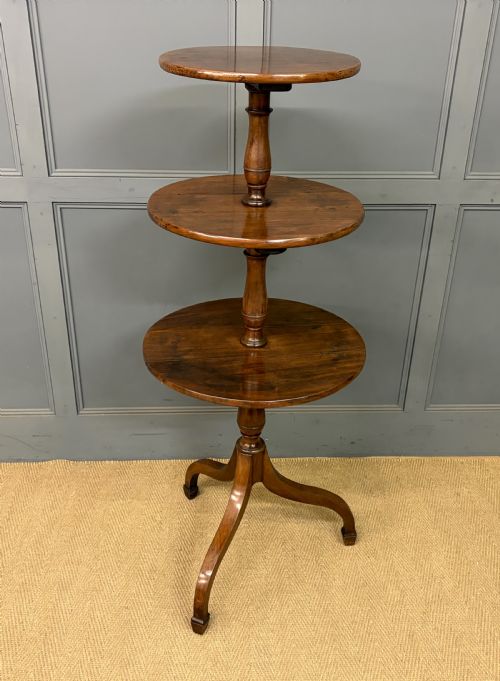
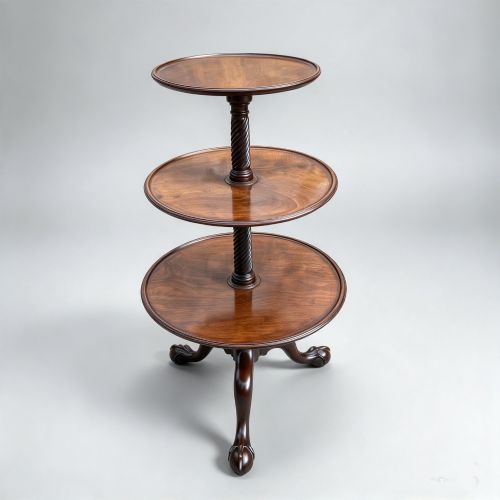
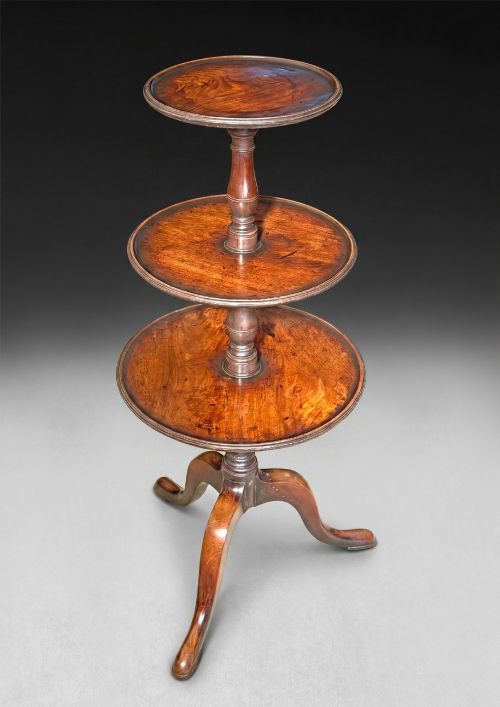
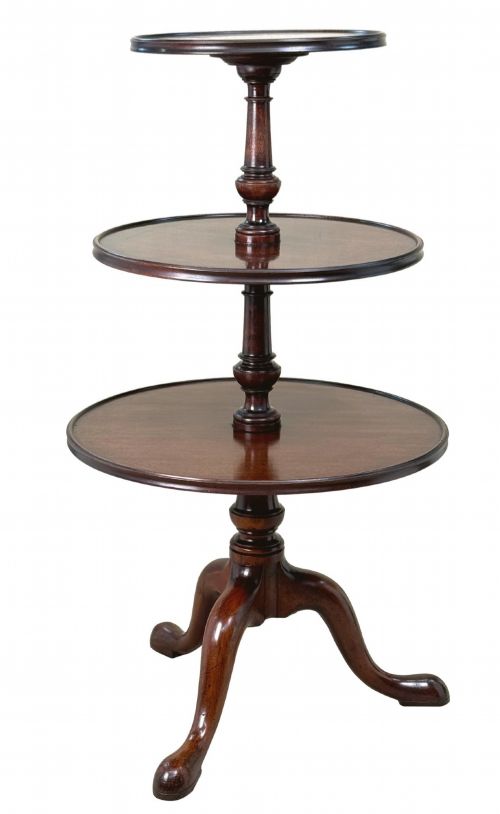
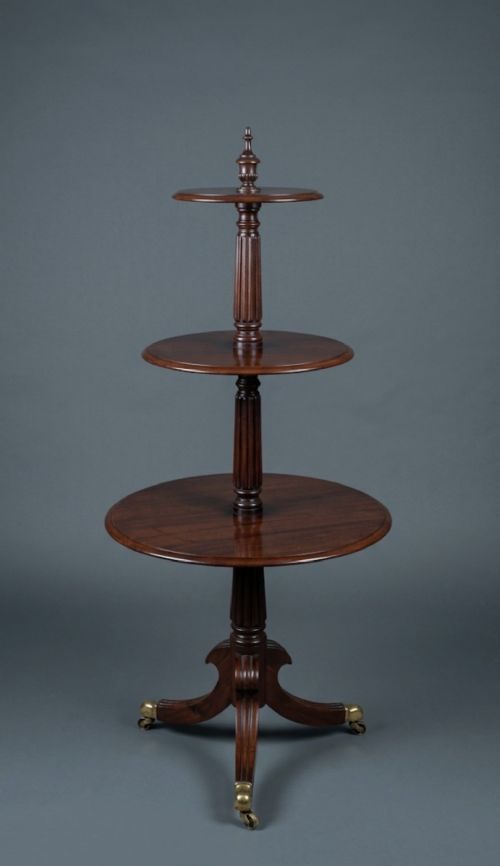
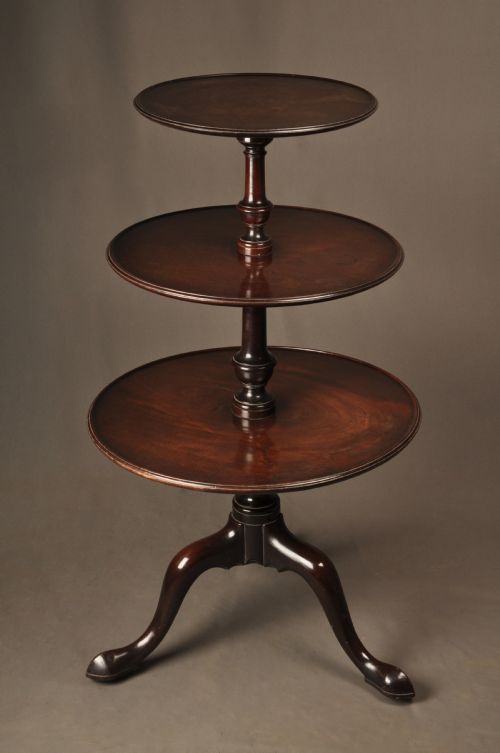
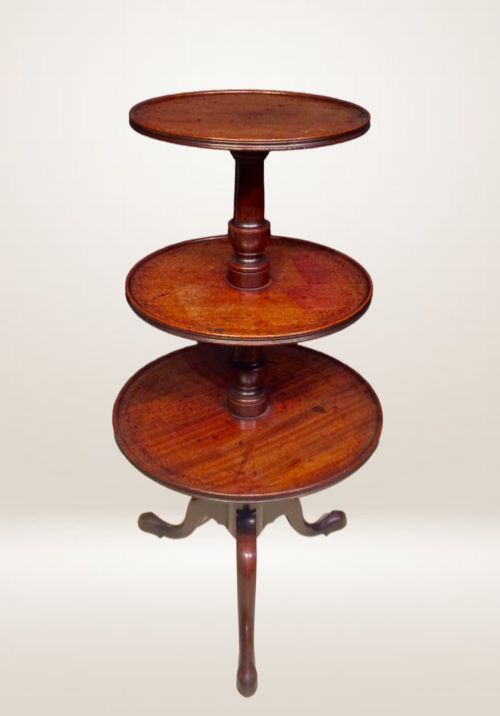
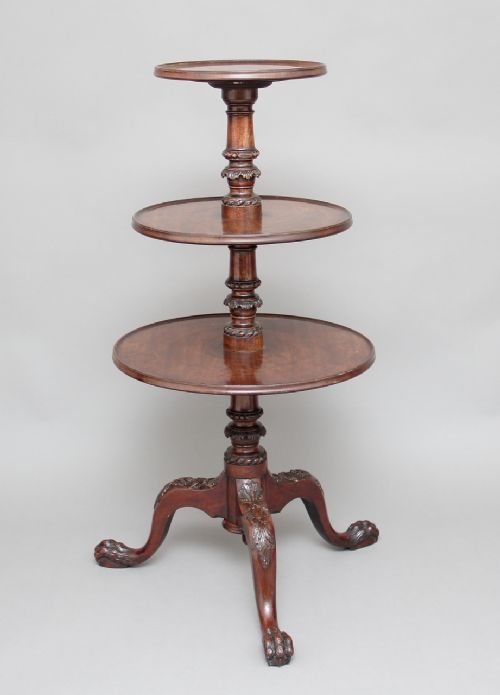
A graduated three tier stand, most frequently encountered as a mahogany dumb waiter from the Georgian, 18th century, and Regency periods, provides three diminishing circular shelves arranged vertically on a central column. These pieces function historically as serving adjuncts beside the dining table, though modern interiors utilise them as accent tables and occasional tables.
The form relies on graduated tiers that step inward toward the top, creating a distinct silhouette recorded across various styles including George III and early nineteenth century craftsmanship. Examples range from fixed tiered tables to folding variations designed to save space when not in service.
Materials and construction methods
Makers constructed these tiered pieces predominantly in solid mahogany, with certain notable examples specified as Cuban mahogany to achieve rich grain patterns and deep colour. Brass fittings, including castors and column mounts, appear regularly to support the movement and structure of the stand.
The joinery brings together turned wooden columns and circular trays, with some pieces incorporating folding mechanisms that allow the graduated shelves to drop flat. Cabinetmakers working in the manner of Gillows applied precise turning and jointing techniques visible in the early nineteenth century pieces.
Graduated Three Tier Stand Retail Price Guide 2026
Typical asking prices for graduated three tier stand among the pieces listed under this phrase on Sellingantiques today, from the lower quarter to the upper quarter. They describe what is for sale here now, not the wider market.
Early dining etiquette demanded a silent servant so guests could gossip freely, hence the heavy mahogany dumb waiter standing quietly in the corner.
Distinctions in quality and execution
The quality of a graduated three tier stand rests primarily on the selection of the timber and the depth of the mahogany figuring across each circular tray. Superior examples display dense, well-matched grain and precise turning on the central pillar rather than plain or heavily repaired timber.
Proportion and stability dictate the upper tier of craftsmanship, where the tapering between the large bottom tray and the smaller top tray maintains visual balance. The integration of original brass castors and the smoothness of any folding action further separate standard utilitarian pieces from finer workshop productions.
Gillows
The Graduated Three Tier Stand Glossary
- Dumb waiter
- A tiered freestanding piece of dining room furniture designed to hold dishes or glassware without the aid of a servant. These items feature multiple rotating or fixed trays on a single pillar.
- Cuban mahogany
- A dense, heavy timber harvested in the Caribbean, prized by Georgian cabinetmakers for its dark hue and fine grain. Pieces built from this material often exhibit exceptional weight and polish.
- Tiered table
- An occasional table featuring two or more stacked surfaces of decreasing diameter. This term encompasses both the serving stands of the eighteenth century and later display tables.
- George III
- The stylistic period spanning from seventeen sixty to eighteen twenty, characterised by classical proportions and refined mahogany use. Furniture from this era forms the core of these listings.
Graduated Three Tier Stand: Frequently Asked Questions
What was a dumb waiter used for?
These tiered stands held extra plates, cutlery, and bottles during formal meals, allowing diners to help themselves without servants present.
Over time, they moved from the dining room to the parlour, serving as convenient side tables or display surfaces for decorative objects.
How do I spot a Georgian tier stand?
Georgian pieces are typically constructed from solid mahogany, featuring hand-turned central columns and graduated circular trays with raised moulded rims.
Look for period construction details such as pegged joints, patinated timber surfaces, and occasionally brass castors beneath the tripod base.
Are all three tiers the same size?
No, the defining feature of these stands is graduation, meaning each circular shelf decreases in diameter from the bottom up.
This tapering creates a distinct pyramid silhouette that provides stability at the base while leaving the upper tray smaller for lighter items.
Can these stands fold away?
Certain nineteenth century examples incorporate folding mechanisms that allow the circular trays to tilt or drop down vertically.
This clever engineering enabled households to store the furniture flat against a wall when floor space was required for other activities.