


Antique Windmill Landscape Artwork
These antique windmill landscape artwork pieces capture traditional rural scenes in oil and watercolour across the nineteenth and twentieth centuries.
Antique Windmill Landscape Artwork
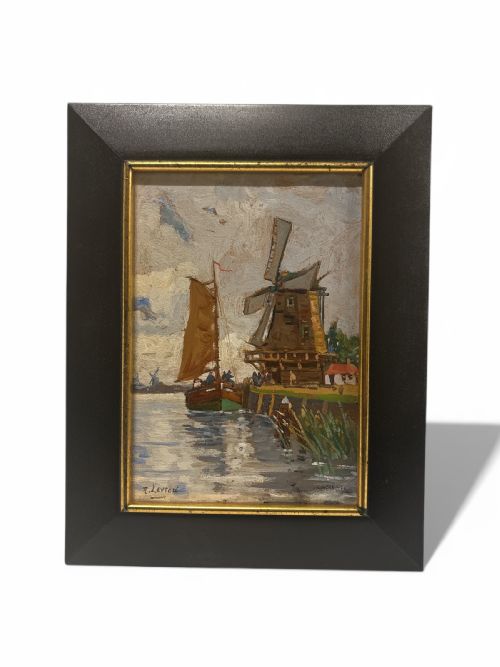
These works present regional vistas featuring mills, marshes, and riverbanks captured by British and continental painters. The search phrase antique windmill landscape artwork encompasses oil paintings on canvas and wood panel alongside delicate watercolours on paper.
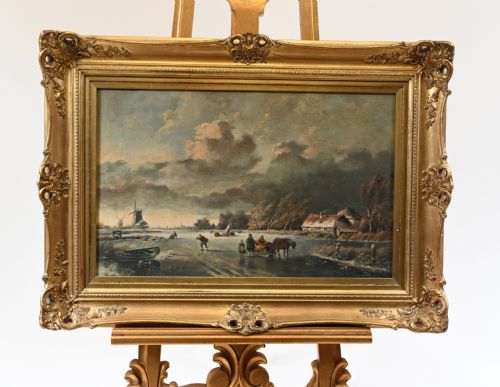
Most examples date from the nineteenth and early twentieth centuries, spanning Victorian, Edwardian, and Dutch School traditions. Common subjects include flatland landscapes, frozen canals, and coastal drainage structures.
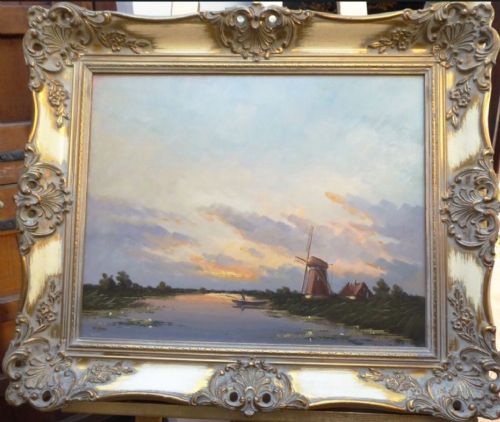
Buyers encounter framed pieces ranging from intimate topographical studies to larger oils depicting Dutch polders and English marshlands. These depictions reflect both observational realism and impressionistic atmospheric effects.
Materials and techniques
Painters utilised oil paint on stretched canvas, wood panels, or paper supports to build textured compositions. Watercolour pigments applied to paper create lighter, translucent atmospheric effects for river and coastal scenes.
Many works incorporate gilt or wood framing to protect the paper and canvas surfaces. Pigments are brushed or layered to render the flat horizons and skies characteristic of Dutch and British landscape traditions.
One coastal scene captures the mundane task of feeding the chickens beside a half-timbered home.
What determines quality
Superior works demonstrate confident brushwork and precise topographical draughtsmanship that evoke specific atmospheric conditions. The handling of light on water and sky separates master studies from standard decorative output.
Condition of the underlying paper or canvas, stability of the paint layers, and retention of original framing influence the integrity of each piece. Signed works by recognised painters carry distinct provenance and documentation.
R Leyton·T Bergman·Thomas Bush Hardy·James Orrock·Ernest Uden·Charles Harmony Harrison·Jan van Couver·John D Walker·William Tatton Winter·Frederick William Jackson·Edward Seago·John Holland Snr·Kershaw Schofield
The Antique Windmill Landscape Artwork Glossary
- Topographical painting
- An artwork depicting a specific real-world location with geographical accuracy. These pieces often serve as historical records of rural and coastal settlements.
- Polder
- A low-lying tract of land enclosed by dikes that forms an artificial hydrological system. Artists frequently painted these drained flatlands alongside traditional drainage mills.
- Watercolour
- A paint consisting of colour pigments suspended in a water-soluble binder applied to paper. This medium allows for fluid washes and luminous sky effects.
- Wood panel
- A rigid flat wooden support used as a base for oil painting before canvas became standard. Panels provide a stable, smooth surface for detailed brushwork.
- Impressionist
- A style of painting emphasising spontaneous brushstrokes and the shifting effects of light. Artists working in this manner prioritize overall atmosphere over meticulous detail.
Antique Windmill Landscape Artwork: Frequently Asked Questions
How do I identify Dutch school landscapes?
Dutch school paintings typically feature low horizons, expansive cloudy skies, and watercourses centred around windmills or polders. Artists focused heavily on atmospheric light and flat topography.
Signatures or stylistic similarities to nineteenth-century continental painters often help confirm the regional origin of these works.
Are watercolours framed differently than oils?
Watercolours require glass protection and paper mats to prevent moisture damage and direct contact with the surface. Oils on canvas or wood panel are exposed directly to the room environment within decorative frames.
Original framing elements sometimes accompany nineteenth-century works, adding context to the piece.
What subjects appear alongside windmills?
Common companion subjects include frozen rivers, coastal cottages, village taverns, and drainage marshes. Painters documented working agricultural landscapes rather than idealized vistas.
Figures working near boats or feeding animals frequently provide a sense of scale to the flatland scenery.
How do I care for antique paintings?
Keep works away from direct sunlight and steady humidity fluctuations to protect canvas, wood panels, and paper supports. Avoid using liquid cleaners on painted surfaces.
Consult a professional conservator if structural repairs to the frame or canvas become necessary.