




Vintage Continental Landscape Art
Vintage continental landscape art captures European scenery through the eyes of painters working across the nineteenth and twentieth centuries.
Vintage Continental Landscape Art
When you search for vintage continental landscape art, you are looking at framed paintings and works on paper depicting European towns, harbours, rivers and rural scenes. These pieces capture foreign topography through traditional painting methods from various historical periods.
The most common examples on this page are oil paintings on canvas or board alongside watercolours on paper. They range from nineteenth century romanticism and realism to mid-century impressionism, often housed in original wood or gilt wood frames.
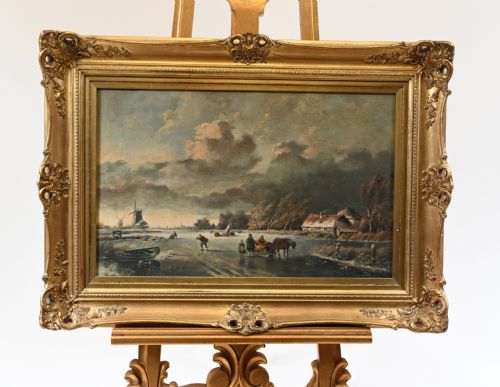
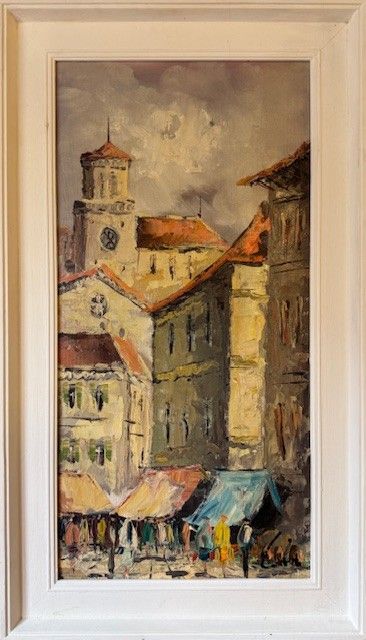
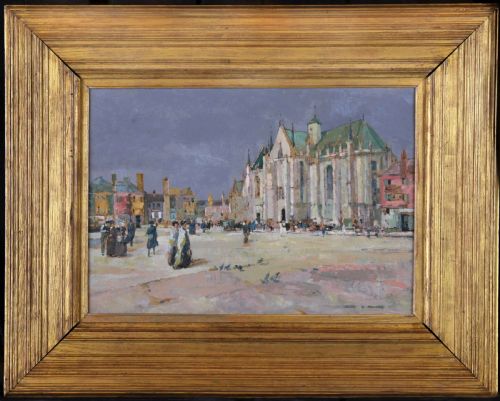
Subjects stretch across Dutch frozen canals, French market squares, Italian harbours and quiet farmhouses. Each piece offers a specific window into European scenery created by artists recording the landscape of their time.
How these works were made
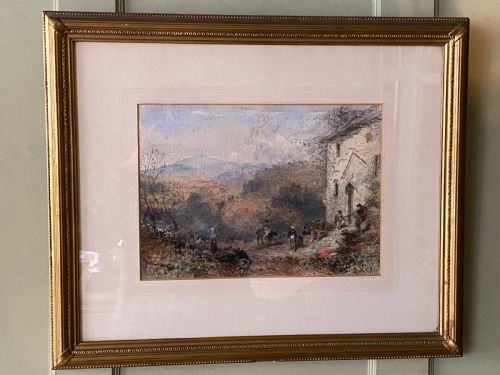
Artists painted primarily with oil paint on canvas or wooden boards, building up layers of pigment to capture light and atmosphere. Watercolours on paper provide a lighter, more immediate medium often used for architectural and townscape views.
Frames are constructed from wood, frequently finished with gesso and gilt wood detailing to complement the artwork. These materials reflect the standard workshop practices of European framing and painting across the nineteenth and twentieth centuries.
Listings feature works spanning the 1800s through the 1960s, executed in oil and watercolour on canvas, wood, paper and gesso.
What varies in quality
Quality rests in the handling of light, perspective and brushwork by the artist. A stronger piece demonstrates confident control over composition and atmospheric depth, whether rendering a bustling quayside or a quiet canal.
The integration of the artwork with its frame also influences the overall standard. Original gilt wood frames that suit the scale and period of the painting elevate the piece, whereas later or unsympathetic reframing changes the visual balance.
T Bergman·E A Minardo·J W Hogley·William Raymond Dommersen·Armand Guillaumin·Karel Frans Philippeau·Ludwig Hermann·Allan Douglass Mainds·Christiaan Pieter Snyders
The Vintage Continental Landscape Art Glossary
- Oil on canvas
- Pigment suspended in drying oil applied to a stretched woven fabric support. This combination allows for rich colour blending and textured brushwork.
- Gesso
- A plaster mixture applied to wood frames as a base for moulding and gilding. It provides a smooth surface for the application of gold leaf or metallic paint.
- Watercolour
- Pigments suspended in a water-based solution applied to paper. It creates transparent washes that rely on the white of the paper for luminosity.
- Impressionism
- A style focused on capturing the visual impression of a moment, particularly shifting light and colour. It prioritises open brushwork over precise academic detail.
Vintage Continental Landscape Art: Frequently Asked Questions
What periods do these landscapes cover?
The selection spans from the nineteenth century through to the mid-twentieth century. Works reflect stylistic shifts from romanticism and realism towards mid-century impressionism.
Dates are drawn from documented signatures, artist lifespans and framing evidence associated with each specific artwork.
How do I care for oil paintings?
Oil paintings benefit from stable indoor environments away from direct sunlight and sudden temperature swings. Keep the canvas surface free of dust using a soft, dry brush.
Avoid using moisture or cleaning solvents on the paint layer. Professional conservators should handle any structural repairs to the canvas or frame.
Are watercolours framed differently?
Watercolours on paper require framing behind glass to protect the delicate pigment and paper support from atmospheric pollutants and humidity. Acid-free mounts prevent discolouration over time.
Display these works away from direct sunlight to prevent the watercolour pigments from fading.
How do I distinguish regional styles?
Regional styles often reveal themselves through the specific palette and subject matter favoured by local schools of painting. Dutch works frequently feature frozen waterways, while French and Italian pieces lean towards market squares and coastal scenes.
Brushwork also varies, with realist painters prioritising detail and impressionist artists focusing on light.