






Antique Whatnot Table
An antique whatnot table is a tiered shelving piece designed to display ornaments, and these multi-tiered furnishings bring practical elegance to any room.
Antique Whatnot Table
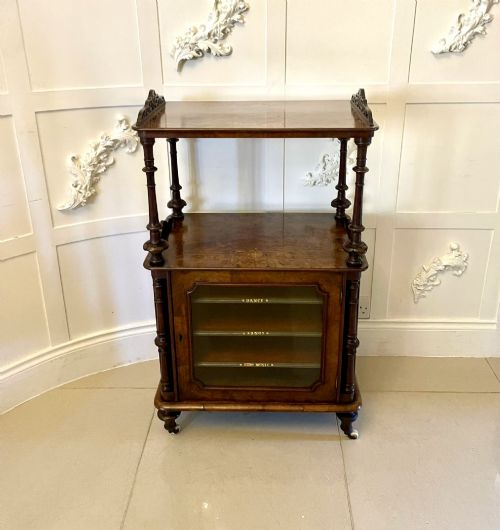
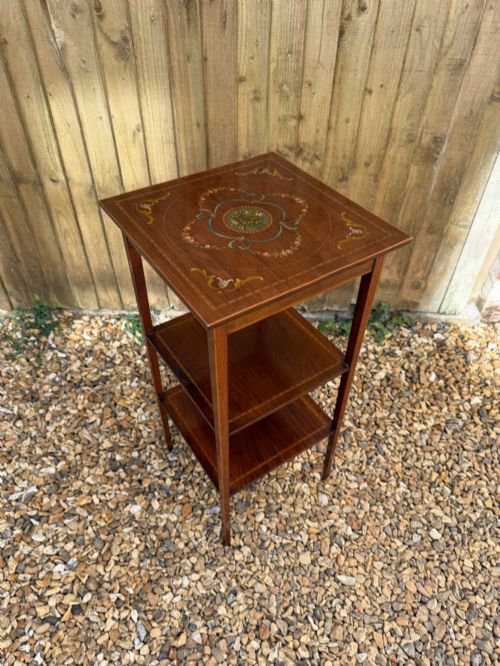
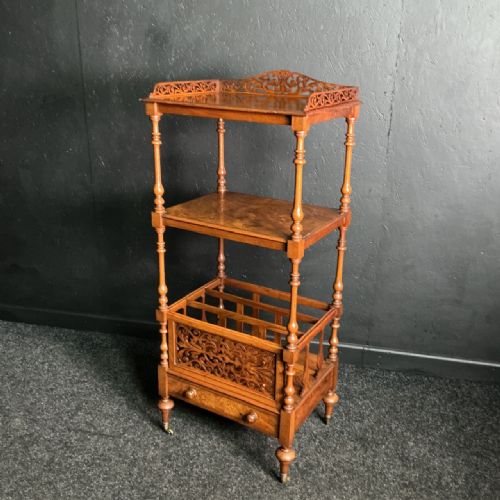
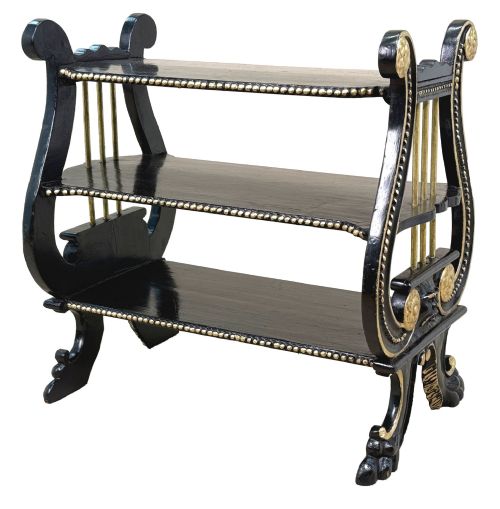
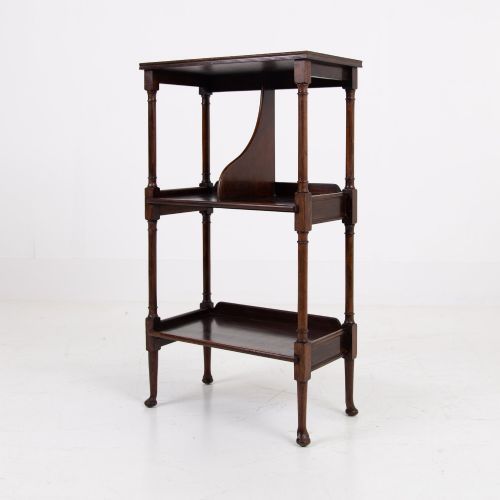
When searching for an antique whatnot table, buyers examine tiered pieces designed primarily for display and storage in nineteenth-century interiors. These items range from simple multi-shelf stands to complex combinations featuring integrated cabinets, work tops, or music storage.
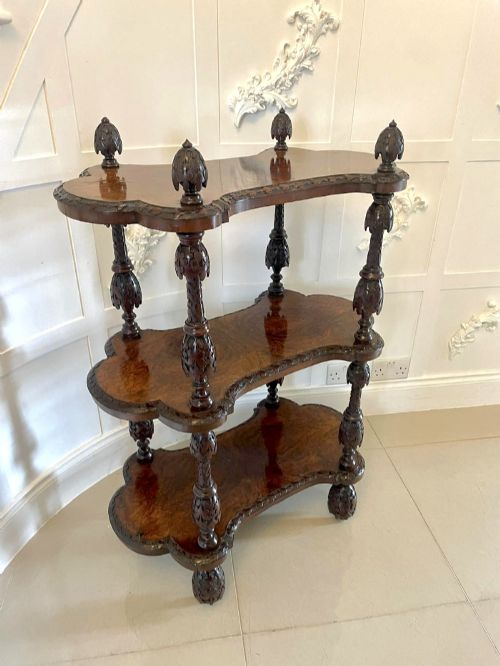
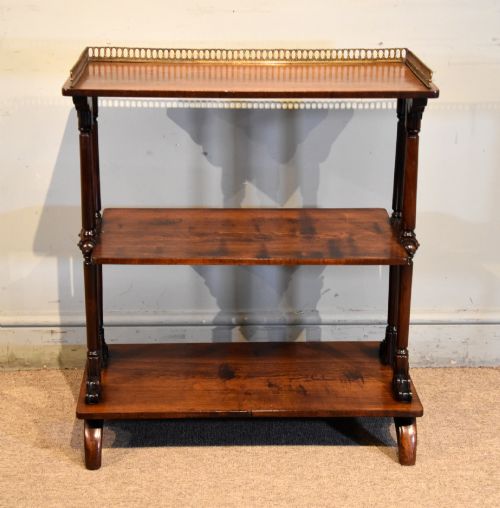
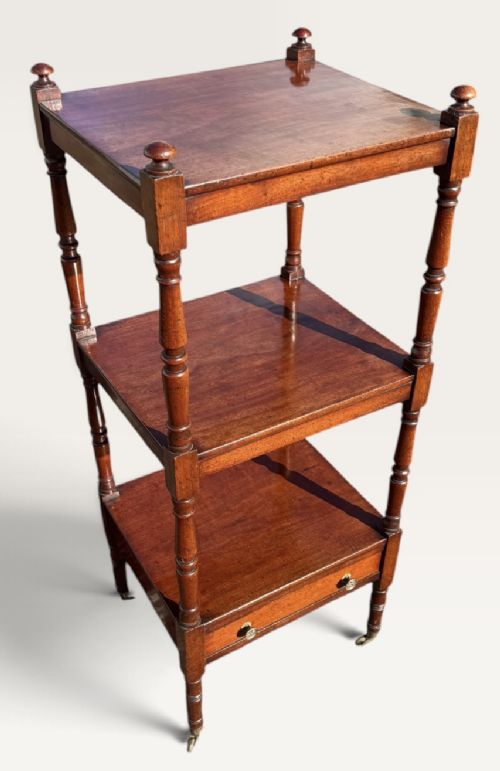
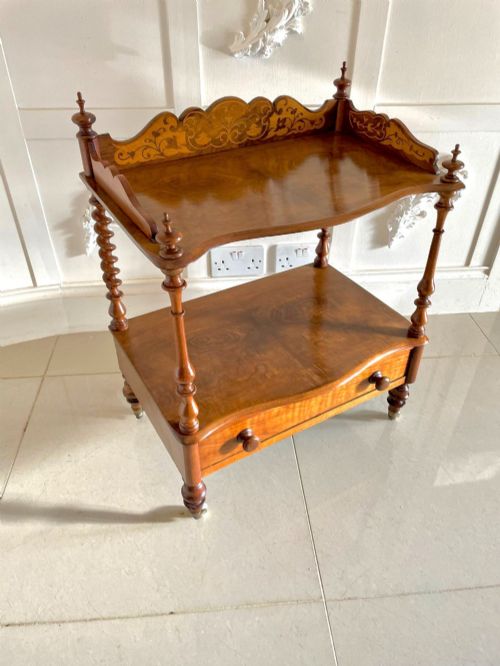
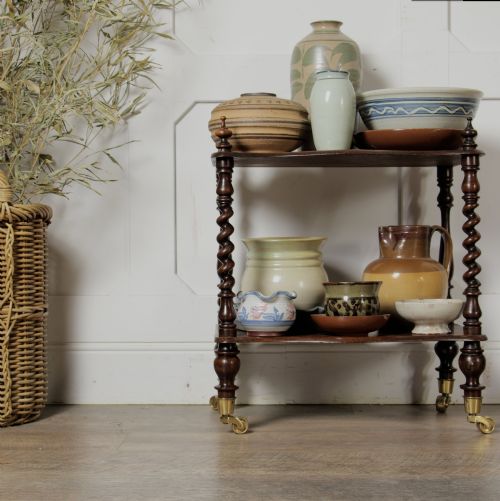
The versions met most frequently on this page date from the Victorian era and the nineteenth century, executed in rich woods with multiple tiers. They appear as freestanding display shelves, corner units, or low lamp tables equipped with barley twist supports or delicate uprights.
Many examples span related forms such as étagères, canterburys, and dumb waiters, reflecting the flexible domestic uses assigned to open shelving units during the Georgian, Regency, and Victorian periods.
How they were made
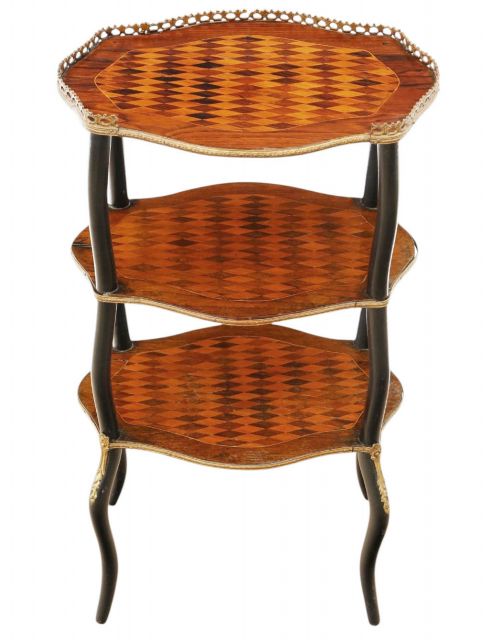
Cabinet makers utilised dense native and exotic timbers including mahogany, walnut, burr walnut, and rosewood, often enhancing the surfaces with marquetry inlay, parquetry, or ebonised finishes. Turnery techniques produced slender columns, barley twists, and supporting uprights that kept the multi-tiered structures stable yet visually light.
Higher grade constructions incorporated ornamental details such as brass fittings, ormolu mounts, ceramic elements, and japanning to accentuate the tiers. Timber selection determined whether the piece relied on the deep figuring of burr walnut or the smooth grain of polished mahogany.
Antique Whatnot Table Retail Price Guide 2026
Typical asking prices for whatnot table among the pieces listed under this phrase on Sellingantiques today, from the lower quarter to the upper quarter. They describe what is for sale here now, not the wider market.
Some Victorian examples doubled as music cabinets and liquor cellarettes, proving that nineteenth century hosts enjoyed entertainment accompanied by several tiers of shelving.
What varies in quality
The distinction between standard furniture and exhibition quality pieces rests on the choice of timber veneer and the precision of the marquetry. Burr walnut and rosewood selections with intense natural figuring elevate the visual weight of the shelving tiers.
The Antique Whatnot Table Glossary
- Whatnot
- A piece of furniture consisting of a set of open shelves for displaying small objects or books. They typically feature three or four tiers supported by slender uprights.
- Étagère
- A French term for a piece of furniture with a sequence of shelves for display. These items often feature decorative marquetry and ormolu mounts.
- Canterbury
- A low, tiered stand originally designed for holding sheet music or books, frequently combined with a whatnot top. They often incorporate sloped divisions in the lower section.
- Burr walnut
- A prized timber harvested from walnut tree growths, valued for its swirling grain patterns. Cabinet makers utilised its veneer to create highly decorative surfaces.
- Japanning
- A European imitation of East Asian lacquerwork used on furniture surfaces. This technique involved applying layered varnishes and decorative motifs on ebonised or painted wood.
Antique Whatnot Table: Frequently Asked Questions
What is an antique whatnot table used for?
These tiered items serve primarily as display surfaces for ornaments, small clocks, and collectibles within domestic spaces. Their multiple shelves allow for vertical storage without occupying significant floor space in a room.
They also function effectively beside seating as lamp tables or occasional surfaces. Some variations incorporate enclosed cabinets or music compartments for specialised storage.
How do I date an antique whatnot?
Dating relies on observing the timber choices, construction techniques, and stylistic markers present in the piece. Georgian and Regency examples typically feature clean mahogany lines, whereas Victorian pieces often display burr walnut veneers, ebonised finishes, or elaborate turning.
Secondary woods and fixing methods inside drawers or beneath shelves provide further clues regarding the manufacturing era. Revival styles from around nineteen hundred often reintroduce earlier Georgian or French motifs.
Where should I place a whatnot in my home?
Freestanding versions suit empty wall spaces or corners where vertical display height adds balance to a room. Corner units fit neatly into unused angles while providing multiple levels of display capacity.
Shorter variants operate well beside armchairs or sofas as lamp tables. Their open shelving keeps rooms feeling spacious while holding books or decorative objects.
What is the difference between a whatnot and an etagere?
The terms often overlap, but an étagère frequently references French influenced designs featuring ornamental ormolu mounts and marquetry. These pieces lean heavily towards decorative display rather than utility.
Whatnots encompass a broader range of English multi-tiered shelving units, including practical items like canterburys and butlers trolleys. Both types utilise stacked platforms supported by columns or uprights.