







French Lacquered Table
A French lacquered table brings deep gloss, gilt mounts and Eastern motifs straight into a drawing room.
French Lacquered Table
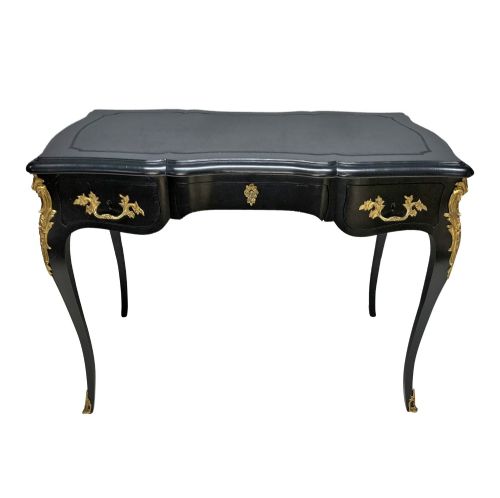
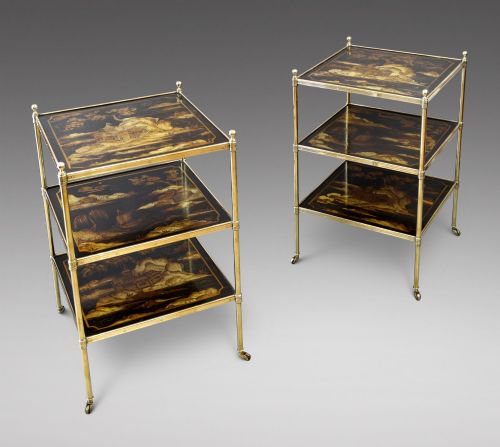
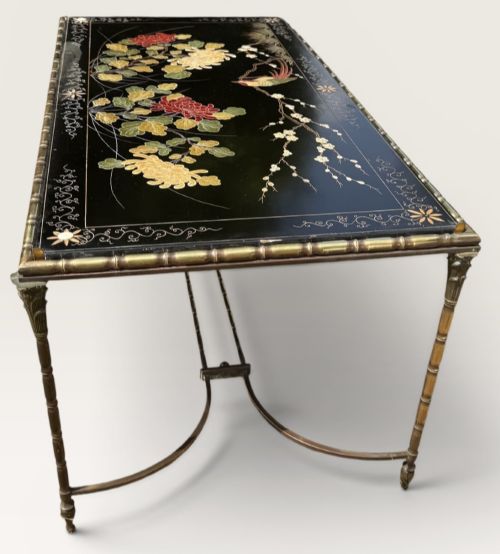
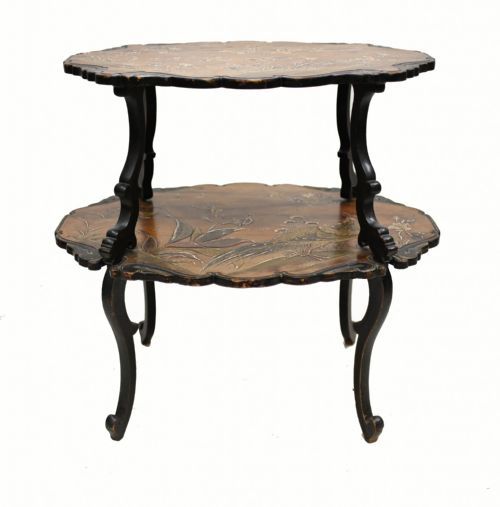
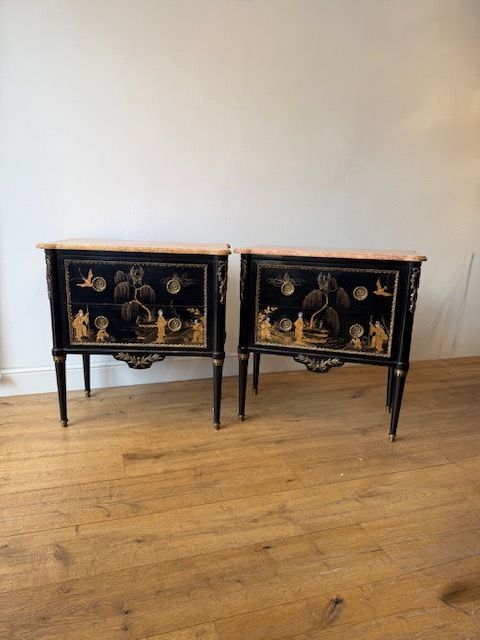
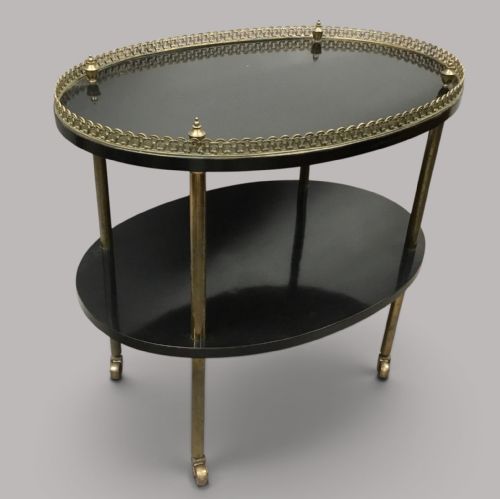
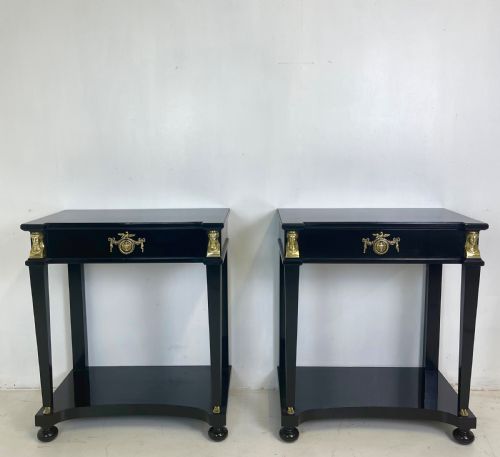
When you search for a french lacquered table, you enter a domain of glossy black, red and green surfaces adorned with Chinoiserie scenes and Japonisme motifs. These items range from diminutive occasional tables and side tables to expansive bureau plat desks and writing cabinets.
The version you are most likely to meet on this page is the black lacquered occasional table or writing desk executed in the Louis XV style, often bearing ormolu mounts and standing upon slender cabriole legs. These pieces combine French cabinet-making forms with decorative varnishing techniques inspired by Asian imports.
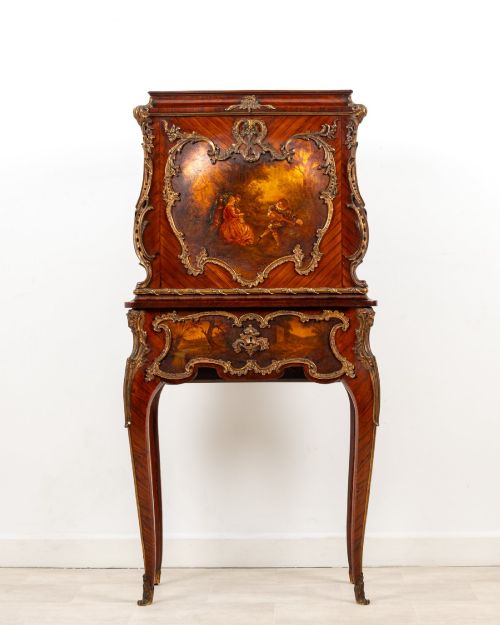
The record shows works spanning the nineteenth century up through the nineteen-thirties, incorporating earlier stylistic revivals such as Louis XV and seventeenth century Chinoiserie. Alongside actual tables, you encounter related forms like etageres, writing cabinets and commodes sharing identical lacquer and ormolu vocabularies.
Materials and construction methods
The foundation rests on timber carcasses, frequently employing kingwood, ebonised wood or general cabinet woods prepared to receive successive coats of lacquer and paint. Japanning and Vernis Martin techniques create the hard, lustrous finishes characteristic of these surfaces, often depicting figures, landscapes and flora in gilt.
Mounts and accents rely heavily on cast ormolu and polished brass, framing corners, drawer edges and legs to add structural definition and metallic contrast. Boulle-work incorporating tortoiseshell and brass appears on related pieces, displaying intricate inlay work executed by skilled metal and wood workers.
French Lacquered Table Retail Price Guide 2026
Typical asking prices for french lacquered table among the pieces listed under this phrase on Sellingantiques today, from the lower quarter to the upper quarter. They describe what is for sale here now, not the wider market.
Listings feature items spanning the 1800s to the 1930s, using materials including kingwood, ormolu, brass and ebonised wood.
Factors defining superior examples
The integrity and depth of the lacquer finish separate everyday items from exceptional works, with hand-painted pictorial detail showing clear brushwork and tonal layering rather than flat stencilling. Superior pieces retain smooth, uninterrupted surfaces where age-related craquelure remains stable and visually harmonious with the underlying wood.
The execution of the ormolu mounts dictates much of the visual weight, where crisply chased gilt bronze fittings fit the contours of the timber precisely rather than appearing loose or generic. Furthermore, the underlying joinery of the table carcass - whether a writing cabinet, occasional table or bureau plat - must remain rigid and true to its period construction.
Maison Bagues·Louis Majorelle
The French Lacquered Table Glossary
- Chinoiserie
- European interpretations of Chinese and East Asian artistic styles, popular in furniture decoration. Artisans applied these whimsical motifs to screens, cabinets and table tops using gilt paint on dark lacquer.
- Ormolu
- Gilded bronze used for decorative mounts, feet and handles on furniture. This material provides bright metallic highlights against dark wood and lacquer surfaces.
- Vernis Martin
- A type of carriage varnish adapted by French cabinet makers to imitate Asian lacquer. Named after the Martin brothers, it produced a durable and glossy translucent finish.
- Boulle-work
- A form of marquetry consisting of tortoiseshell and brass inlay developed in France. It creates elaborate patterns of contrasting dark shell and bright metal.
- Japanning
- A European imitation of Japanese and Chinese lacquerwork involving layers of varnish heat-cured and polished. The process often yields raised metallic designs on black or coloured grounds.
French Lacquered Table: Frequently Asked Questions
Can I use these tables daily?
Most occasional tables and desks tolerate normal placement for display or light writing tasks if treated with care.
Protect the surface from heat, moisture and direct sunlight to preserve the brittle lacquer and prevent wood movement underneath.
How do I spot a later revival piece?
Examine the timber shrinkage, screw types and the composition of the lacquer layers under magnification to determine age.
Nineteenth-century revivals often utilise machine-cut elements or distinct chemical varnishes that differ from eighteenth-century originals.
What is the difference between japanning and lacquer?
Japanning is a European varnishing technique simulating Asian lacquer using resin-based paints cured with heat.
True Asian lacquer derives from the sap of toxic trees native to East Asia, resulting in a different chemical composition.