





Scalloped Edge Tier Table
A scalloped edge tier table brings tiered display and curved mahogany or walnut surfaces to a room.
Scalloped Edge Tier Table
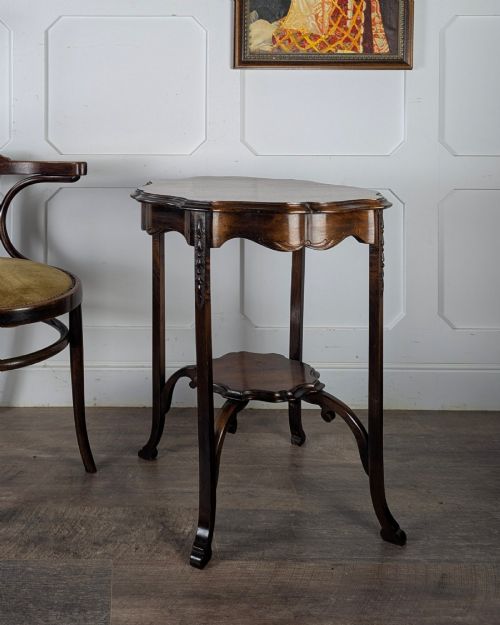
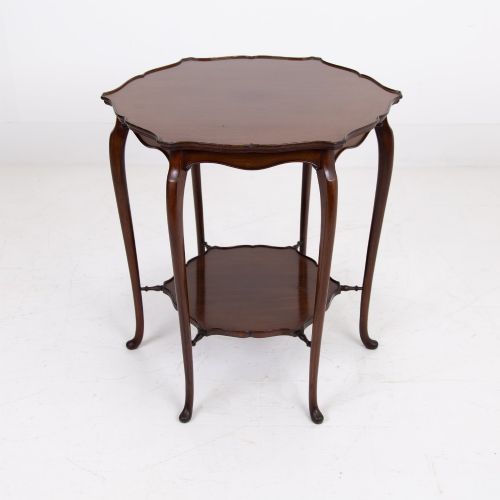
A scalloped edge tier table is a compact surface designed for display and occasional use, drawing on Victorian and Edwardian forms. You will most frequently encounter Edwardian and 1900 examples shaped from mahogany or walnut, often featuring multiple tiers or shaped tops.
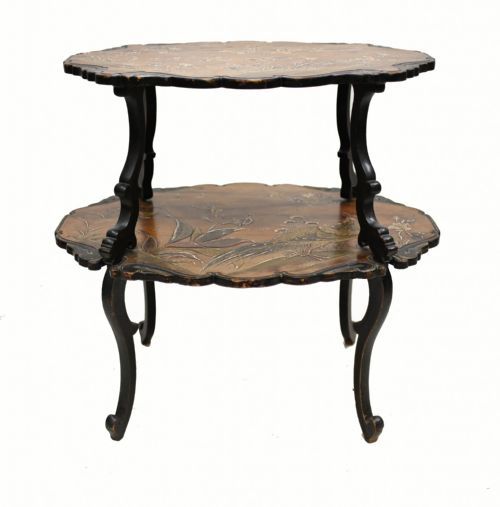
These pieces function as side tables, occasional tables, and étagères, offering practical multi-level surfaces within a modest footprint. The listings show a prevalence of 1900 pieces alongside Victorian and Edwardian items.
The defining characteristic is the shaped or scalloped edge of the top, which softens the silhouette compared to standard geometric tables. Makers applied this flourish to occasional tables, bird cage tables, and two-tier étagères alike.
How they were made
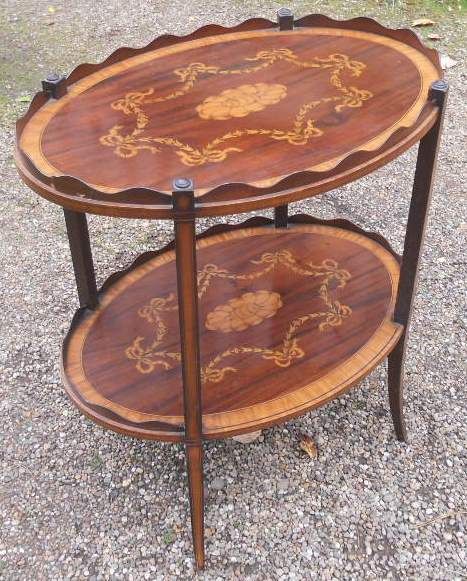
Construction relies heavily on traditional timber working using mahogany and walnut, frequently finished with wood veneer and marquetry inlay. Cabinetmakers shaped the edges of the timber manually to achieve the characteristic undulating outline.
Specialist techniques such as ebonising, japanning, and the application of lacquer or gilt appear on specific nineteenth-century and turn-of-the-century pieces. These decorative finishes enhanced the visual texture of occasional tables and French-influenced étagères.
Scalloped Edge Tier Table Retail Price Guide 2026
Typical asking prices for scalloped edge tier table among the pieces listed under this phrase on Sellingantiques today, from the lower quarter to the upper quarter. They describe what is for sale here now, not the wider market.
Some Edwardian tables feature six legs just to keep tea from spilling while you read the paper.
What varies in quality
Quality rests in the crispness of the shaped edge and the precision of any marquetry inlay or veneer work applied to the tiers. Finer examples display harmonious timber grain across multiple levels rather than mismatched patches of veneer.
Structural stability across multiple tiers distinguishes standard production from superior pieces, particularly in tall étagères and six-legged configurations. The integrity of the joints where the uprights meet the shelves determines how well the table holds its weight.
The Scalloped Edge Tier Table Glossary
- Tier table
- A multi-level freestanding table designed for displaying decorative objects or serving refreshments. These structures utilise vertical supports to separate each platform.
- Occasional table
- A small, movable table intended for specific, intermittent use rather than permanent placement. They appear frequently in Edwardian and Victorian interiors.
- Marquetry inlay
- Decorative patterns formed by fitting contrasting pieces of wood veneer into a prepared ground. This technique adds pictorial detail to tabletop surfaces.
- Japanning
- A European imitation of East Asian lacquerwork, popular during the nineteenth century. It involves applying layered varnishes to create a glossy, dark finish often decorated with gilt motifs.
Scalloped Edge Tier Table: Frequently Asked Questions
What is a tier table used for?
These tables provide multiple surfaces for holding books, decorative objects, or tea service items without occupying excessive floor space. Their stacked design makes efficient use of vertical room in drawing rooms and parlours.
Historically, variations such as dumb waiters and étagères served similar domestic functions for display and entertaining. Today they remain practical for lamps and ornaments in sitting areas.
How do I date an Edwardian table?
Edwardian tables generally date from the period between 1901 and 1910, showing lighter proportions than their Victorian predecessors. They frequently employ mahogany with subtle inlay work or shaped borders.
Look for construction methods and timber choices characteristic of the early twentieth century. Pieces from this era often carry simpler, refined outlines compared to heavily carved nineteenth-century furniture.
What is a bird cage table?
A bird cage table incorporates a rotating or tilting mechanism beneath the tabletop, historically constructed to allow the surface to be stowed flat. The frame resembles the wooden framework associated with bird cages.
In the context of turn-of-the-century occasional furniture, this term describes specific support mechanisms under the top. They combine mechanical ingenuity with standard display functions.
How do I care for walnut veneer?
Walnut veneer requires protection from direct sunlight and excessive moisture to prevent fading and lifting of the thin wood layer. Dust the surface regularly with a dry cloth and avoid harsh chemical polishes.
Maintaining stable room humidity helps preserve the integrity of the underlying timber and the glued veneer. Gentle waxing occasionally helps nourish the polished finish.