

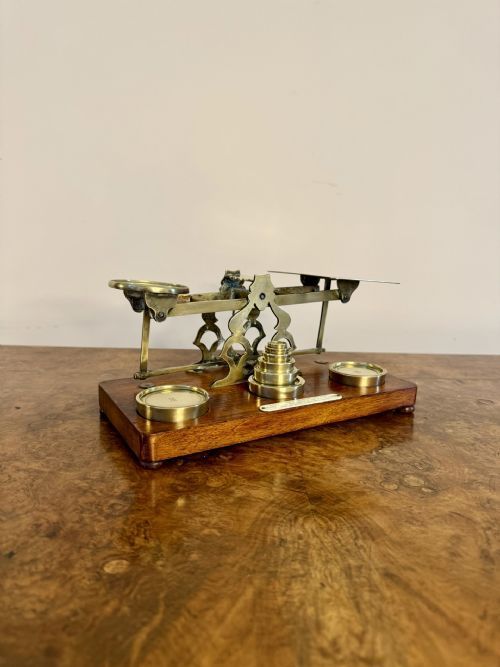


Antique Weight Set
When collectors hunt for an antique weight set, they uncover functional brass standards, apothecary increments, and postal collections built for precision.
Antique Weight Set
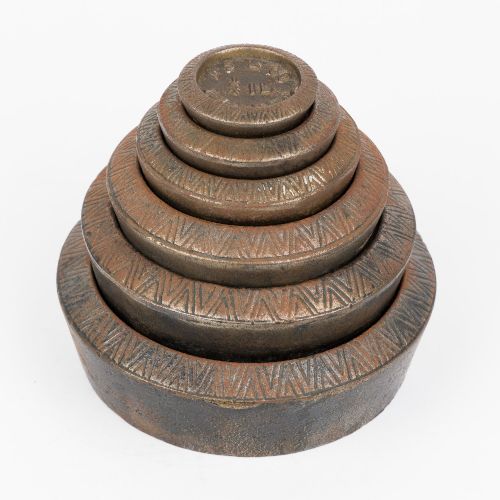
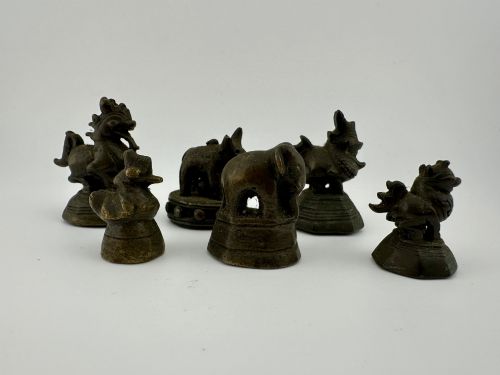
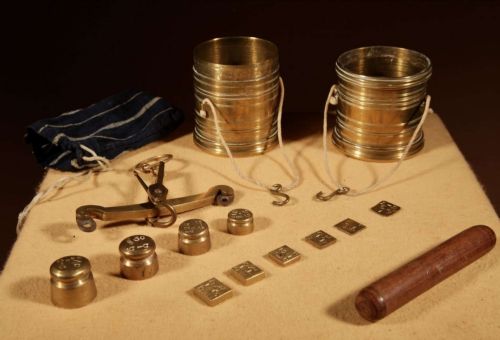
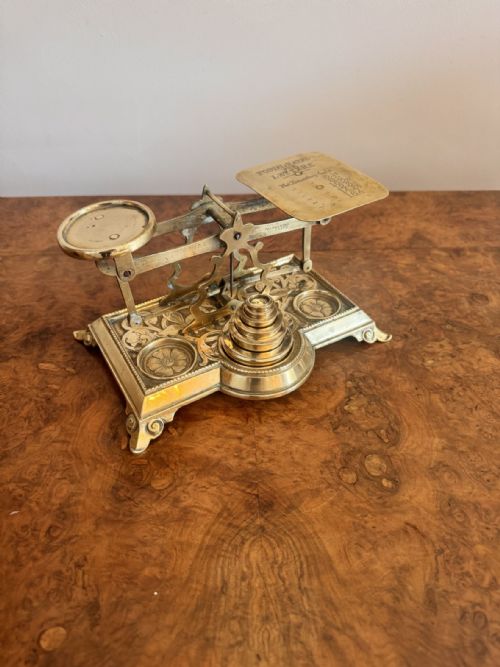
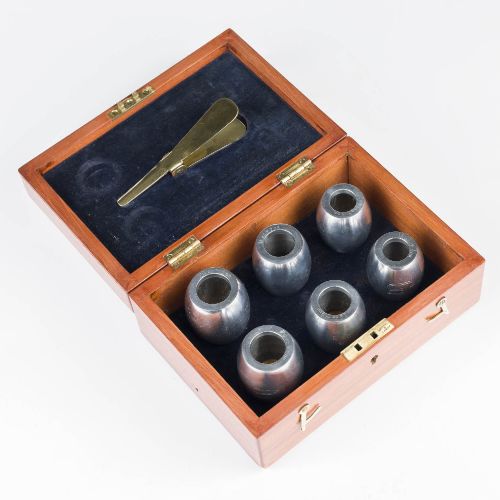
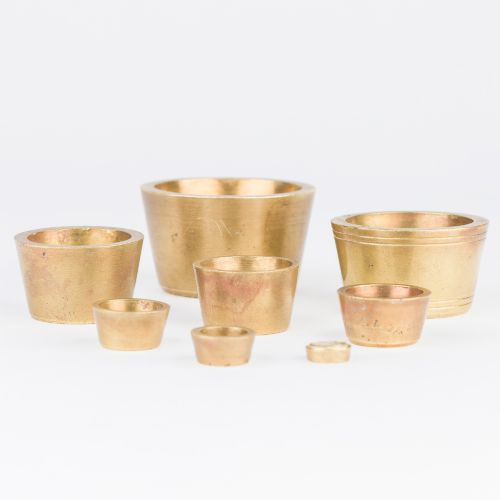
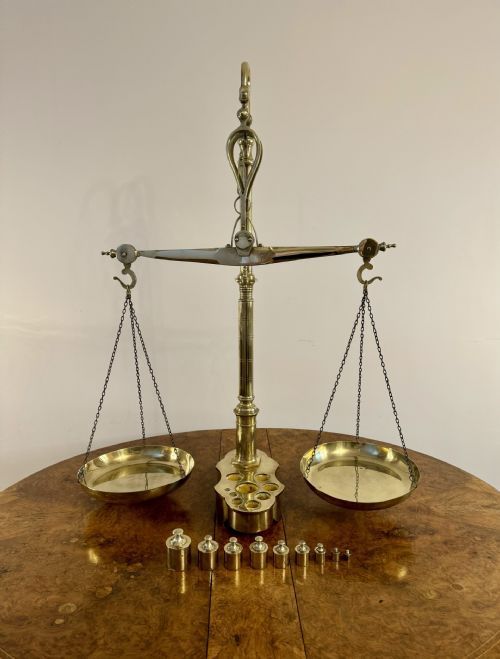
An antique weight set encompasses various utilitarian instruments designed for commerce, science, and domestic correspondence during the nineteenth and early twentieth centuries. A buyer is most likely to encounter nesting brass bell weights, postal scales with matched metric or imperial pieces, and cased apothecary sets from the Victorian and Edwardian eras.
Many survivors trace their origins to municipal authorities, trade houses, and county standards offices rather than private households. These official sets often bear engraved stamps, local government titles, and maker inscriptions from prominent scale manufacturers.
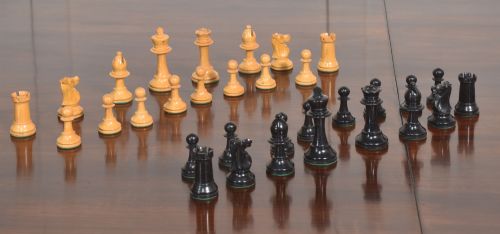
Beyond standard commercial groupings, the category frequently overlaps with heavily weighted gaming pieces, specifically turned boxwood and ebony chess sets designed for stability during play. Such sporting collections utilise internal lead weighting to achieve a balanced feel across the board.
Materials and construction
Metals dominate the manufacture of these functional objects, with cast brass, bronze, and iron providing the necessary density and durability for daily measuring tasks. Brass elements often display turned lathe marks, while iron components receive dark protective finishes or painted green surfaces.
Cabinetry and storage solutions rely on dense hardwoods such as mahogany, oak, walnut, and boxwood to house delicate increments securely. Fitted wooden blocks, hinged boxes, and velvet or felt linings protect individual pieces from friction and loss during transport or storage.
Some nineteenth-century postal scales arrived equipped with tiny resting ledges just large enough for a single love letter.
Evaluating craftsmanship and condition
Quality reveals itself in the crispness of maker stamps, government verification marks, and the precise tolerances of stacked or fitted components. Superior examples retain their complete original complements without replacement pieces, housed within dedicated wooden presentation boxes or fitted block stands.
The finish of the metal and wood tells a story of usage and care, distinguishing standard utility items from presentation pieces destined for official offices. Crisp turning on wooden chess pieces and clean, deep engraving on brass standards separate ordinary workshop output from exceptional fabrication.
De Grave Short And Co·W And T Avery·S Mordan·Young And Son·F H Ayres·Mappin And Webb·British Chess Company
The Antique Weight Set Glossary
- Avoirdupois
- A system of weights based on a pound of sixteen ounces, commonly utilised for general commerce and everyday household goods.
- Troy ounce
- A unit of mass traditionally employed for weighing precious metals, gemstones, and apothecary supplies.
- Bushel balance
- A specialised weighing device designed to measure dry agricultural commodities accurately by volume and mass.
- Staunton pattern
- The standard design for wooden chess pieces featuring distinctive architectural forms, widely adopted for competitive play since the mid-nineteenth century.
- Bell weight
- A traditional cast brass weight shaped like a small handbell with an upright loop handle for lifting.
Antique Weight Set: Frequently Asked Questions
How do I clean old brass weights?
Old brass benefits from gentle dusting and occasionally very mild soapy water to remove accumulated grime while preserving the aged surface. Avoid harsh chemical polishes that strip away historical character and dull the natural patina.
Allow the metal to dry completely before returning the pieces to their fitted wooden boxes or display stands to prevent moisture damage.
What are postal scales used for?
Postal scales served to calculate correct letter and parcel postage rates in homes and offices before the widespread use of digital technology. They typically feature a spring-loaded or beam mechanism paired with a matching set of brass increments.
Most surviving examples date from the Victorian and Edwardian periods, housed on mahogany or oak bases with decorative brass mountings.
Why do some chess sets count as weights?
Certain nineteenth-century chess sets incorporate lead weighting inside the base of each turned boxwood or ebony piece to improve stability during play. Dealers often catalogue these alongside utilitarian measuring sets due to the prominent role of internal weighting in their description.
Collectors appreciate these sporting sets for their craftsmanship and the tactile feel imparted by the hidden ballast.
Are incomplete sets worth collecting?
Incomplete sets remain popular among buyers who appreciate the industrial aesthetics, material quality, and historical associations of surviving pieces. Many examples lost individual increments over decades of active service in shops, post offices, or laboratories.
Displaying a partial collection on a wooden board or inside a glass cabinet offers an accessible entry point into collecting nineteenth-century scientific and commercial equipment.