





Antique Weighing Weights
Antique weighing weights come in various brass, iron and wood forms, offering both functional history and decorative presence for the collector.
Antique Weighing Weights
Antique weighing weights appear alongside various scales, including postal scales, beam scales, apothecary balances and personal weighing machines. These utilitarian objects served trade, domestic and scientific purposes across the nineteenth and early twentieth centuries.
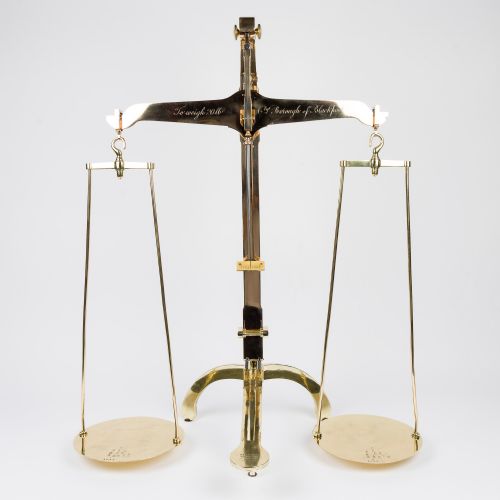
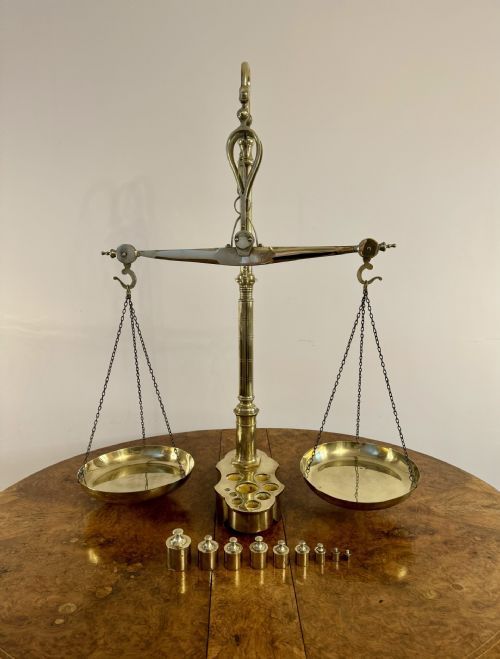
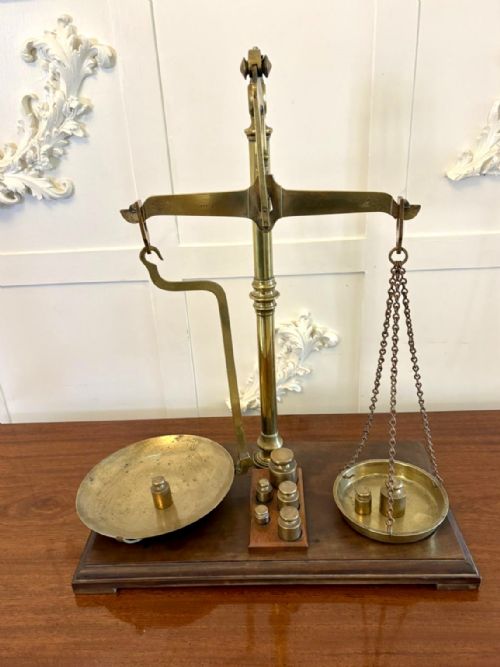
The versions most commonly met on this page belong to the Victorian and Edwardian periods, often constructed from brass or iron. They accompany complete sets of balance scales used by grocers, inspectors and shopkeepers.
Originating from commercial, official and domestic contexts, these pieces range from portable chondromers to heavy municipal beam scales. Each set records the rigorous standards of past measurement systems.
Materials and construction
Metalworking dominates the construction of these items, with brass and iron providing the necessary density and durability for accurate measurement. Makers cast iron for heavy bases and frames, while turning and polishing brass for beams and individual weight cylinders.
Antique Weighing Weights Retail Price Guide 2026
Typical asking prices for weighing weights among the pieces listed under this phrase on Sellingantiques today, from the lower quarter to the upper quarter. They describe what is for sale here now, not the wider market.
Recorded object types span postal scales, grocer's scales, apothecary balances and personal weighing machines.
Factors of quality
Quality separates standard utilitarian equipment from precision instruments through the finesse of the metalwork and the integrity of the maker's marks. Finer sets retain legible stamps, original adjustment screws and perfectly balanced brass beams.
The inclusion of original fitted boxes, complete sets of matching weights and specialised components elevates certain examples. Superior pieces display careful finishing on hidden internal parts and robust housing in selected hardwoods.
Robert Brettell Bate·Day & Millward·W & T Avery·DE Grave Short & Co·Young & Son
The Antique Weighing Weights Glossary
- Chondrometer
- A portable instrument used to determine the weight and quality of grain. This specialised device includes specific sliding weights and measures.
- Beam scale
- A weighing instrument consisting of a horizontal lever suspended from its centre. Equal weights on each side indicate precise mass.
- Apothecary balance
- A sensitive set of scales designed for weighing small quantities of medicinal ingredients. These typically feature compact brass pans and delicate beams.
- Postal scales
- Devices calibrated in ounces and grams for weighing letters and parcels. They frequently sit on mahogany or oak bases with brass pan fittings.
- Inspector scales
- Official measuring instruments utilised by local authorities to check commercial weights and measures. These often bear borough or municipal stamps.
Antique Weighing Weights: Frequently Asked Questions
What were antique weighing weights used for?
These objects served to measure goods accurately in trade, domestic and scientific settings. Merchants, apothecaries and postal workers relied on them daily.
Official inspectors also utilised them to verify commercial standards and ensure fair trade practices across various boroughs.
How do I display them at home?
Many collectors place complete scale and weight sets on sideboards, shelves or dedicated tables. Their polished brass and dark wood components contrast well against neutral walls.
Keeping them in stable environments protects the wood finishes and prevents tarnish on the exposed metal surfaces.
Are original weights usually included?
Some listings offer complete sets that retain their original matched weights and fitted wooden boxes. Others consist of the scale mechanism alone, requiring separate assembly.
Checking the item description confirms whether the corresponding weights are present with the balance.
How can I tell the period of a set?
Makers' stamps, regional inspection marks and material choices provide clear indications of age. Victorian and Edwardian examples often feature distinct brass casting styles and specific municipal inscriptions.
Stylistic cues in the woodwork, such as mahogany mounts versus later oak framing, also help date the piece accurately.