



Antique Weather Clock
An antique weather clock unites timekeeping and atmospheric measurement in a single housing, offering both functional utility and period charm.
Antique Weather Clock
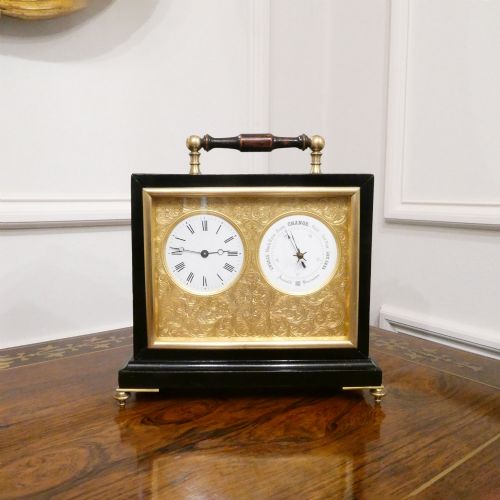
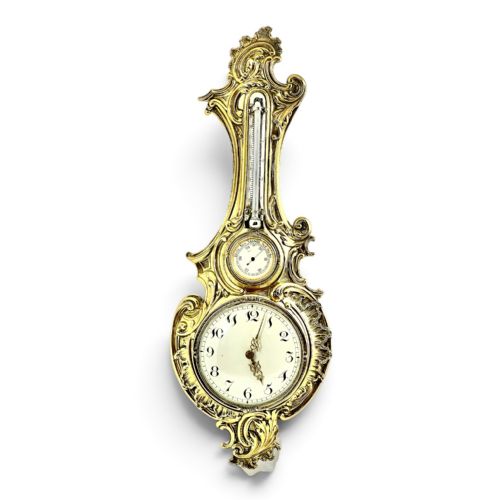
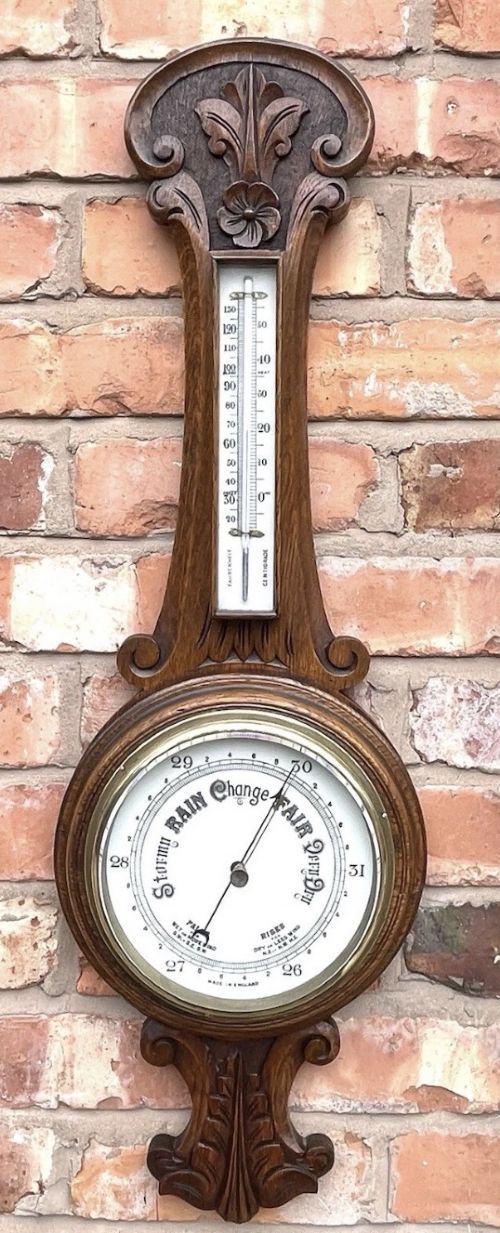
When you search for an antique weather clock, you encounter combined instruments that merge a clock face with barometers, thermometers, and sometimes hygrometers. The forms range from banjo wall barometers and architectural desk compendiums to mantel clock and barometer combinations.
The pieces on this page span the nineteenth century, the Victorian and Edwardian eras, up through the Art Deco period of the nineteen-thirties. Walnut, oak, and mahogany case work predominates, alongside brass, chrome, and carved wood details.
You are most likely to meet banjo barometers with integrated thermometers and dial clocks, or desk sets uniting time and weather instruments. Architectural oak cases and Black Forest carvings also appear frequently among these combined instruments.
How they were made
Casework relies on traditional cabinet timbers including oak, walnut, and mahogany, frequently shaped into architectural forms, banjo outlines, or Black Forest carvings. Glass protects delicate dials, while silvered bronze, copper, and enamel provide the surfaces for readings.
Movements and barometric mechanisms utilise brass, steel, and chrome components fitted into desk compendiums, bulkhead housings, and wall-mounted frames. Aneroid barometers and mechanical clockworks require precise calibration to function accurately alongside thermometers.
Antique Weather Clock Retail Price Guide 2026
Typical asking prices for weather clock among the pieces listed under this phrase on Sellingantiques today, from the lower quarter to the upper quarter. They describe what is for sale here now, not the wider market.
Listings feature oak, walnut, and mahogany cases alongside brass, chrome, and glass components across Victorian, Edwardian, and Art Deco periods.
What varies in quality
The refinement of the cabinet work and the crispness of the carved wood details distinguish finer examples from standard production pieces. Well-proportioned oak, walnut, or mahogany cases with harmonious dial layouts show greater maker attention.
The integration of multiple instruments - such as a clock, barometer, and thermometer within a single desk compendium or banjo frame - dictates the complexity and desirability of the piece. High-quality examples feature clear enamel or silvered dials and robust mechanical movements.
Ganthony of London·H Marks High Street Bloomsbury·Negretti & Zambra
The Antique Weather Clock Glossary
- Aneroid barometer
- A device that measures atmospheric pressure without liquids, using a small flexible metal box. This mechanism allows barometers to be housed compactly in clocks and desk compendiums.
- Banjo barometer
- A wall-mounted weather instrument shaped somewhat like a banjo, typically combining a dial thermometer, hygrometer, and barometer below a round clock or dial. Oak and walnut are common timbers for this form.
- Desk compendium
- A multi-instrument desk set housing a clock alongside weather instruments like barometers and thermometers. These portable pieces often feature brass or chrome fittings in architectural frames.
- Skeletonised barometer
- An instrument design where the internal mechanical movement is visible through glazed or open framing. This style highlights the brass gears and aneroid chambers.
- Bulkhead clock
- A marine-style timepiece housed in a heavy metal case, frequently paired with a matching weather instrument. Chrome and copper versions are typical of these ship-inspired sets.
Antique Weather Clock: Frequently Asked Questions
What instruments are inside a weather clock?
These pieces combine a mechanical clock with barometers for measuring atmospheric pressure and thermometers for temperature. Some examples also incorporate hygrometers or compasses.
Desk compendiums and banjo wall units group these dials together into a single housing for domestic monitoring.
How do I tell Victorian from Edwardian pieces?
Victorian examples often feature heavier carved walnut, ornate architectural details, or Black Forest woodwork. Edwardian pieces tend to present lighter oak cases and more restrained decoration.
Stylistic shifts reflect broader taste changes from nineteenth-century revivalism toward twentieth-century simplicity.
Where were these weather instruments placed?
Wall-mounted banjo barometers and combined clocks hung in hallways or reception rooms for easy daily consultation. Desk compendiums and mantel instruments sat upon libraries, studies, and drawing-room surfaces.
Their placement depended on whether they served as decorative mantel centerpieces or practical household barometers.
Are weather clocks difficult to maintain?
The clockwork and barometric mechanisms require periodic professional attention to remain accurate. Aneroid barometers need proper calibration against known atmospheric pressures.
Wood cases benefit from standard maintenance with appropriate furniture wax to preserve the finish.