



Antique Water Bearer
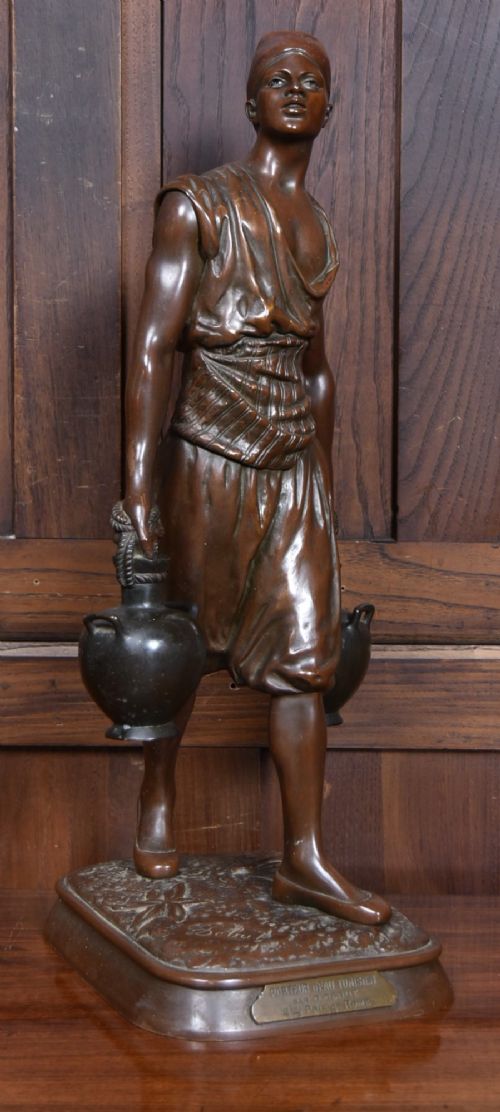
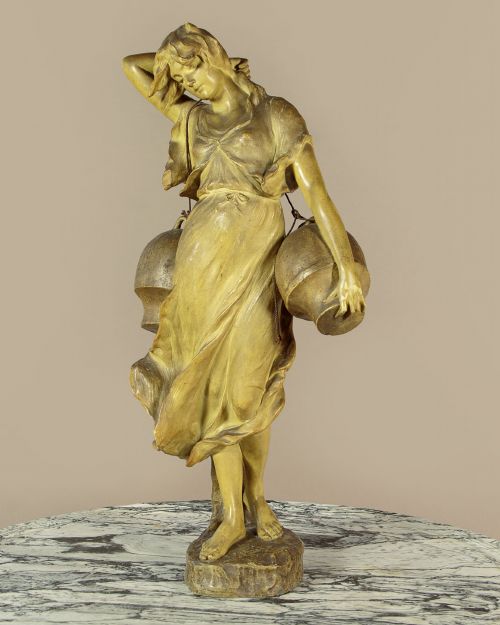
These antique water bearer figures capture classical and orientalist forms in bronze, terracotta and marble.
Antique Water Bearer
An antique water bearer represents figures carrying vessels, spanning the Victorian period through to the 1930s in various sculptural forms.
Makers produced these statues and figurines in styles ranging from Neoclassical and Orientalist to Art Nouveau and Art Deco.
The materials vary widely, encompassing bronze, terracotta, porcelain, alabaster, plaster and marble.
Materials and construction
Foundry-cast bronze pieces utilise patination and signatures, whilst ceramic works employ moulded terracotta and porcelain.
Alabaster and marble carvings shape fine sculptural details, complemented by occasional gold leaf highlights.
Antique Water Bearer Retail Price Guide 2026
Typical asking prices for water bearer among the pieces listed under this phrase on Sellingantiques today, from the lower quarter to the upper quarter. They describe what is for sale here now, not the wider market.
Bronze water carriers range from classical Roman themes to North African subjects.
Judging quality and execution
Sculptural definition and the crispness of casting separate refined figures from simpler commercial items.
The weight and presence of the material, alongside the quality of the finish and patination, dictate the character of the piece.
Goldscheider·Royal Dux·Hans Schork·Dalou
The Antique Water Bearer Glossary
- Patna
- The surface coloration and finish achieved on metal sculptures through chemical treatment or natural ageing. It adds depth and character to bronze figures.
- Grand Tour
- A traditional trip through Europe undertaken by upper-class young men in the 19th century to collect art and antiquities. It often yielded classical bronze reductions.
- Orientalist
- An artistic style depicting scenes and people from the Middle East and North Africa. It gained popularity during the 19th century.
- Terracotta
- Fired clay used for sculptural modeling and architectural decoration. It offers a warm earthy tone and detailed texture.
Antique Water Bearer: Frequently Asked Questions
What are antique water bearer figures made from?
These pieces appear in bronze, terracotta, porcelain, alabaster, plaster and marble.
Artists utilised these varied materials across the 19th century and early 20th century to create sculptures and decorative figurines.
Which periods do these sculptures date from?
The selections span the Victorian era, the 19th century, and the early decades of the 20th century.
Specific dates within the listings reach from the 1870s through to the 1930s.
What styles influence these water bearer statues?
The designs draw upon Neoclassical, Orientalist, Art Nouveau and Art Deco traditions.
Certain works also reflect Academic Realism and French Realism aesthetics.
Are signatures common on bronze water bearer figures?
Some bronze sculptures feature artist signatures or foundry marks inscribed into the base.
Founders and sculptors such as Hans Schork and Dalou signed selected works.