





Antique Watch London
An antique watch london selection brings together precision pocket timepieces, marine chronometers, and desk instruments spanning centuries of British craftsmanship.
Antique Watch London
Victorian examples dominate the selection, appearing frequently alongside Georgian movements and robust 1940s civilian models. Collectors also find specialised military issues, such as First World War RFC cockpit clocks and railway-issued pocket watches, reflecting the practical demands placed on London horology over generations.
The material palette of an antique watch london spans solid silver cases, 18-carat gold, nickel, steel, and gilt bronze, often featuring decorative elements like champleve enamel and floral engraving. Cabinets and desks also host desk clocks and novelty timepieces by noted London makers.
How they were made
Horologists utilised precious metals and durable alloys, casing movements in silver, 18-carat gold, brass, and steel. Glass protects delicate dials, while champleve enamel adds decorative coloured detail to specific faces and novelty desk clock bodies.
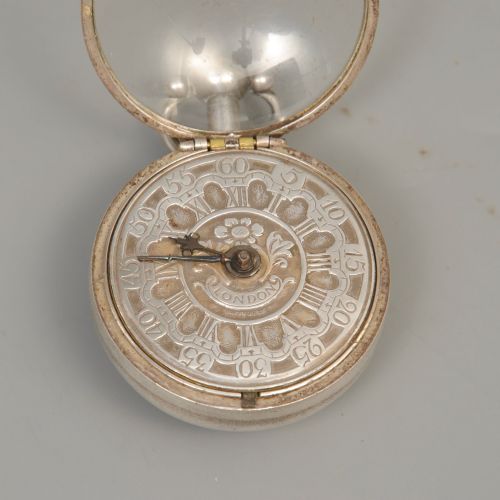
Movements rely on traditional mechanical techniques such as fusee and verge escapements, engineered by hand in London workshops. Cases often feature intricate hand-engraving, particularly on Victorian gold fob watches and silver pair cased designs.
Antique Watch London Retail Price Guide 2026
Typical asking prices for watch london among the pieces listed under this phrase on Sellingantiques today, from the lower quarter to the upper quarter. They describe what is for sale here now, not the wider market.
Railway workers relied on heavy-duty pocket watches to keep trains running on schedule across the network.
What varies in quality
The distinction between standard pocket watches and exceptional pieces rests upon the complexity of the movement and the reputation of the maker. Signed London dials by established houses command greater attention than unsigned or generic examples.
Material quality and decorative finish dictate the upper tier of the range, with solid 18-carat gold cases, champleve enamel dials, and detailed floral hand-engraving marking out superior craftsmanship.
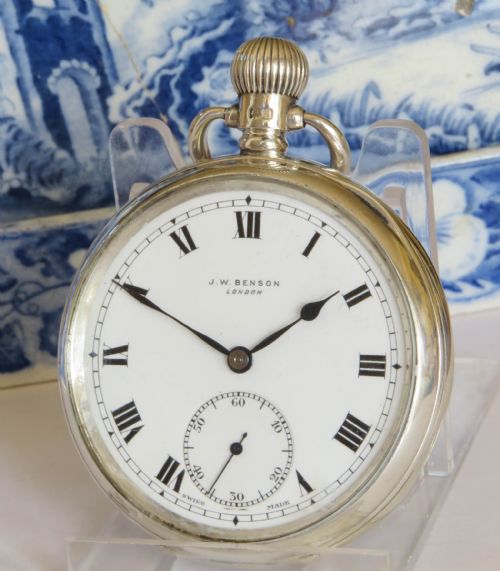
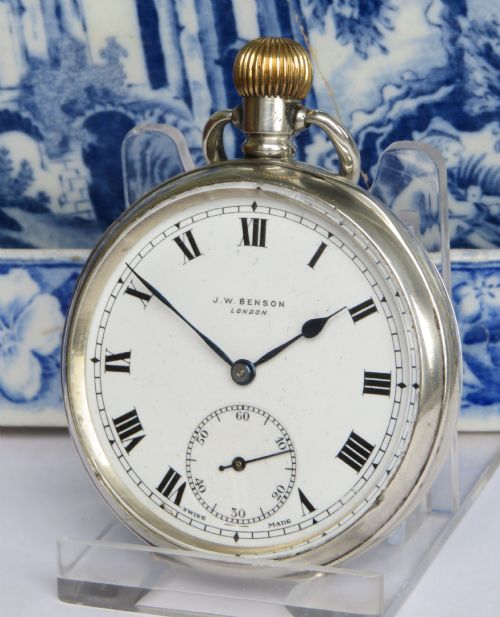
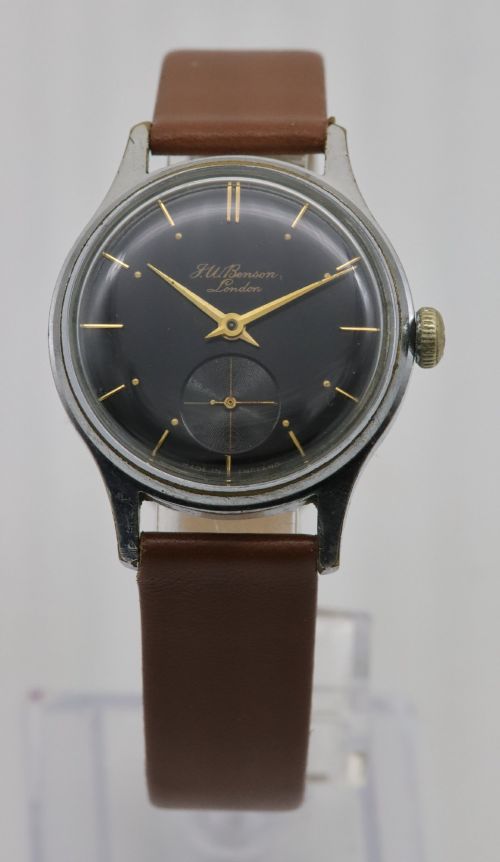
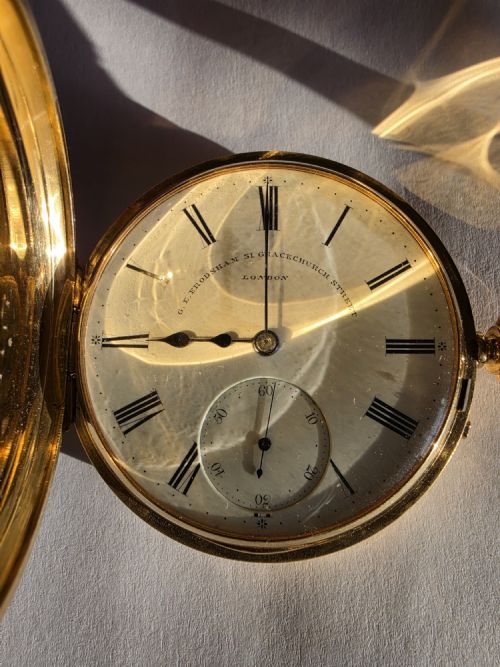
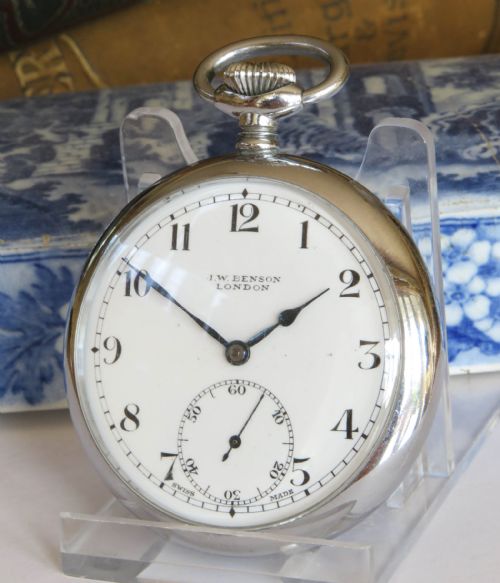
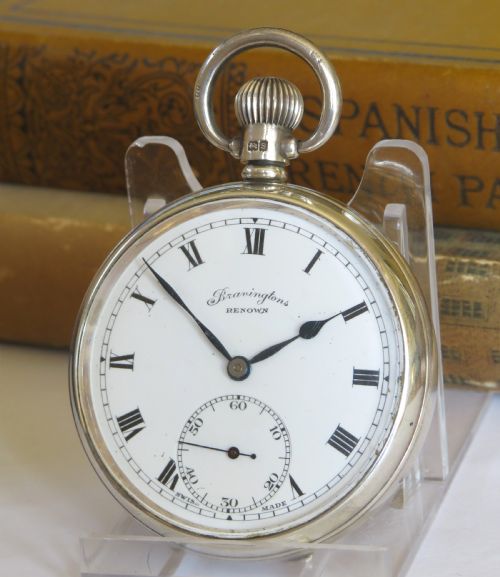
J W Benson·George Edward Frodsham·Mercer of London·Bravingtons Renown·H W Bedford·Ross of London·Elliott Brothers·Barwise London
The Antique Watch London Glossary
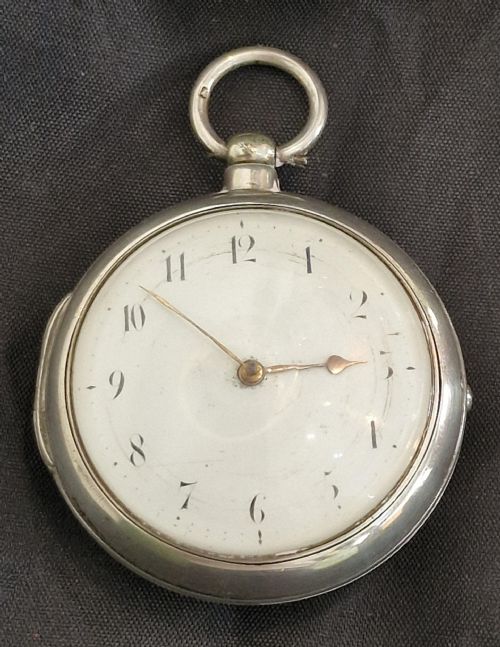
- Pair cased
- A pocket watch design featuring two separate fitted cases, providing extra protection for the inner movement against dust and damage.
- Fusee
- A conical pulley mechanism inside a watch or clock that ensures even tension on the gear train as the mainspring unwinds.
- Verge escapement
- An early mechanical escapement type utilising a crown wheel and a vertical rod with pallets to regulate the release of power.
- Half hunter
- A pocket watch case with a small glass or open circle in the front cover, allowing the time to be read without opening the case.
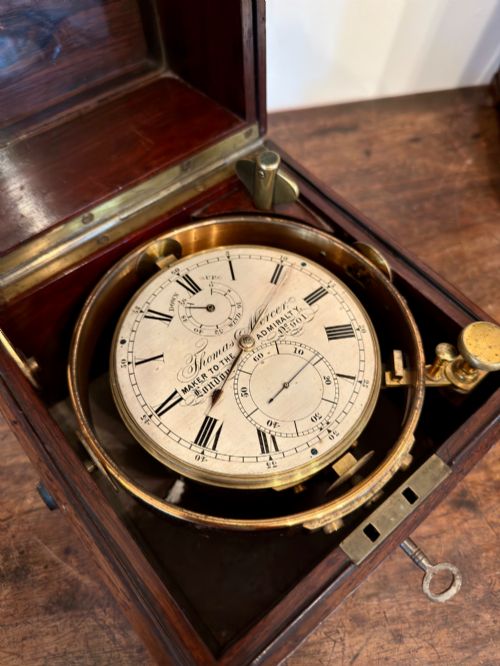
- Marine chronometer
- A highly accurate portable timekeeper used for navigation at sea, mounted in gimbals to keep the dial horizontal.
Antique Watch London: Frequently Asked Questions
What is a pair cased watch?
A pair cased watch uses an inner case to hold the delicate movement and dial, which then slides into a slightly larger outer protective case.
This double-shell construction was common in earlier centuries to guard against dust and debris entering the delicate mechanism.
How do fusee and verge movements differ?
A verge escapement relies on an early crown wheel and pallet mechanism, while a fusee incorporates a conical drum to equalize the mainspring's pulling power.
Both systems represent traditional mechanical approaches found in older timepieces.
Were these watches made for daily use?
Many of these timepieces served as everyday accessories for Victorian and Georgian gentlemen, while others fulfilled specialised roles in navigation, railways, and military aviation.
Their robust construction allowed them to withstand the rigours of active service and travel.
How can I identify the period of a pocket watch?
Stylistic details, case hallmarks, and the specific architecture of the internal movement help determine the era in which a watch was created.
Signatures on the dial often point directly to the maker and operational period.