



Antique Wardrobe and Dressing Table
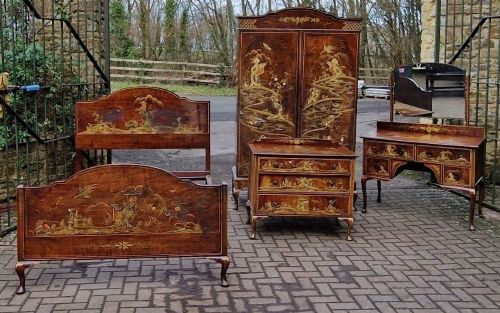
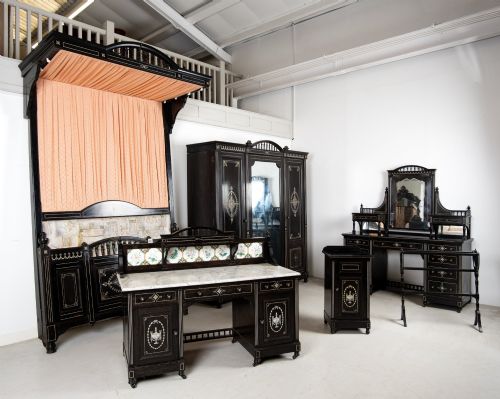
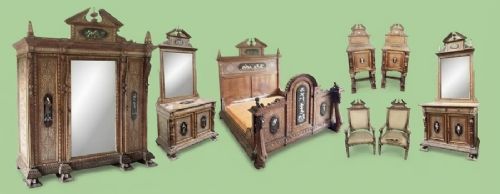
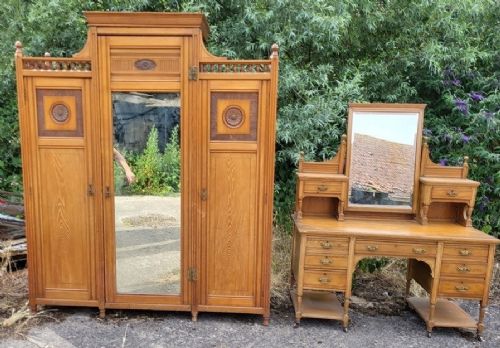
These antique wardrobe and dressing table sets are matched bedroom suites that bring period timber and fitted storage directly into a home.
Antique Wardrobe and Dressing Table
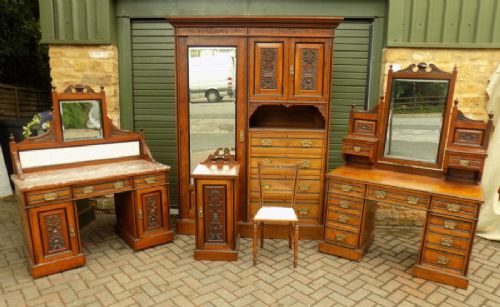
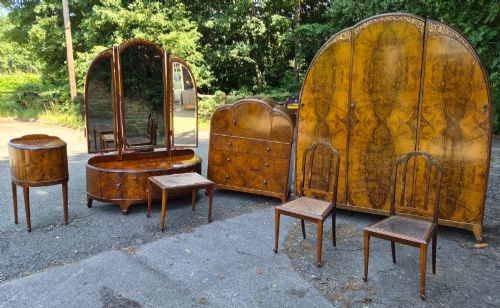
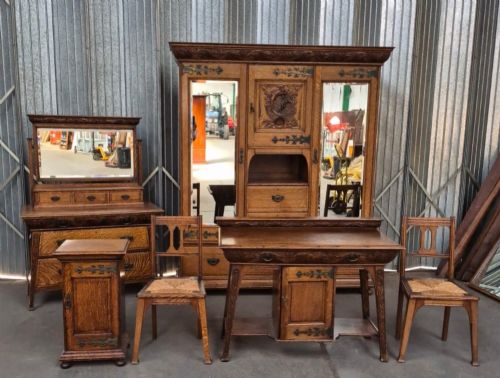
When you search for an antique wardrobe and dressing table, you encounter matched bedroom suites comprising large storage pieces alongside companion dressing chests. These ensembles surface in forms ranging from two-piece setups to extensive multi-piece bedroom furniture suites.
The pieces on this page span the late nineteenth century through to the art deco era, encompassing Victorian, Edwardian, and arts and crafts periods. Most examples link a substantial wardrobe with a matching pedestal dressing table, often joined by washstands or bed frames in larger suites.
Origin details reveal workshop outputs from Dublin, Manchester, and notable makers, alongside revival styles including French empire and chinoiserie. A buyer finds everything from ebonised timber to limed oak matching sets.
Materials and construction
Cabinet makers utilised solid oak, walnut, and burr walnut veneers over secondary timbers, often finishing surfaces with marquetry inlay or brass fittings. Glass and mirror glass panels feature heavily in wardrobe doors, while marble tops frequently top dressing tables and washstands.
Construction methods combine traditional joinery with decorative surface treatments, incorporating carved details into solid timber frames. Ebonised finishes and fabric elements appear alongside specialist techniques such as limed oak treatments and oriental-inspired chinoiserie painting.
Antique Wardrobe and Dressing Table Retail Price Guide 2026
Typical asking prices for wardrobe and dressing table among the pieces listed under this phrase on Sellingantiques today, from the lower quarter to the upper quarter. They describe what is for sale here now, not the wider market.
The listings show bedroom suites spanning the 1870s to the 1930s, utilising oak, walnut, burr walnut, ash, and marble across Victorian, Edwardian, and Art Deco styles.
Evaluating quality and proportion
Quality rests upon the selection of timber figure, such as highly figured burr walnut against plain grain, and the execution of intricate marquetry or carved details. Complete suites maintain a unified design language across every component piece, from the main wardrobe down to the smallest pedestal.
Maker attribution elevates certain suites above standard production pieces, particularly when workshop stamps or known cabinet maker signatures accompany the furniture. The retention of original bevelled mirror glass, brass hardware, and marble inserts further distinguishes superior examples.
Waring & Gillows·Shapland & Petter·Lamb of Manchester·Heals·B Cohen & Sons·Arnott & Co
The Antique Wardrobe and Dressing Table Glossary
- Compactum
- A large wardrobe featuring internal compartments, drawers, and hanging space combined within a single piece of furniture. It offers multi-functional storage designed for efficiency.
- Marquetry
- The art and craft of applying pieces of veneer to a structure to form decorative patterns and pictures. Makers use various coloured timbers to create contrast and detail.
- Pedestal dressing table
- A dressing chest supported by two banks of small drawers flanking a central kneehole space. It usually includes a tilting mirror fixed to the upper surface.
- Ebonised
- Timber treated with a finish to resemble ebony, typically achieved through staining and polishing. This dark surface creates a formal, high-contrast appearance.
- Limed oak
- Oak timber treated with a white-tinted paste or finish that highlights the open grain pattern. This technique gained popularity during the twentieth century for lighter interior aesthetics.
Antique Wardrobe and Dressing Table: Frequently Asked Questions
What pieces belong in a bedroom suite?
A bedroom suite typically includes a large wardrobe and a matching dressing table, often accompanied by washstands, bed frames, or pedestal cabinets. The pieces share identical timber, hardware, and decorative motifs to create a unified design.
Larger suites expand to six or eight pieces to furnish an entire chamber comprehensively, while smaller two-piece sets focus solely on wardrobe storage and dressing facilities.
How do I date an antique wardrobe?
Dating relies on stylistic markers, construction techniques, and materials characteristic of specific periods like the Victorian or Edwardian eras. Later art deco pieces show geometric lines and limed finishes, whereas nineteenth-century examples often feature heavy carvings or ebonised surfaces.
Drawer construction, timber choices, and the presence of maker stamps or paper labels further narrow down the decade of production.
How do I fit large wardrobes into a modern home?
Many antique wardrobes were constructed to dismantle into modular sections, including cornices, base plinths, and side panels, which eases transport and positioning. Checking the internal ceiling height of your room against the assembled wardrobe dimensions ensures a proper fit.
PEDESTAL dressing tables require adequate floor clearance around them to allow drawers to open fully without obstruction.
What is the difference between walnut and burr walnut?
Standard walnut displays a straight, rich grain pattern with regular colour variations across large surfaces. Burr walnut comes from tree growths that produce complex, swirling grain patterns filled with small knot clusters.
Furniture featuring burr walnut veneer was traditionally reserved for the most prominent surfaces of high-end wardrobes and dressing tables to create a striking visual impact.