



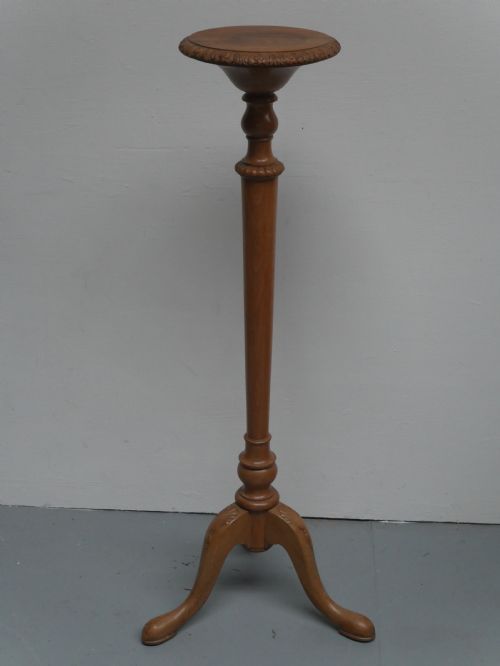


Antique Walnut Torchere
An antique walnut torchere stands ready to elevate a single lamp, plant or urn, bringing architectural height and warm grain to a quiet corner.
Antique Walnut Torchere
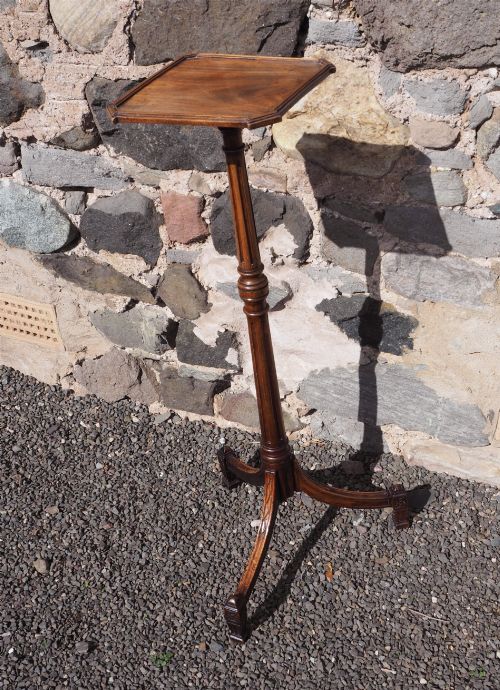
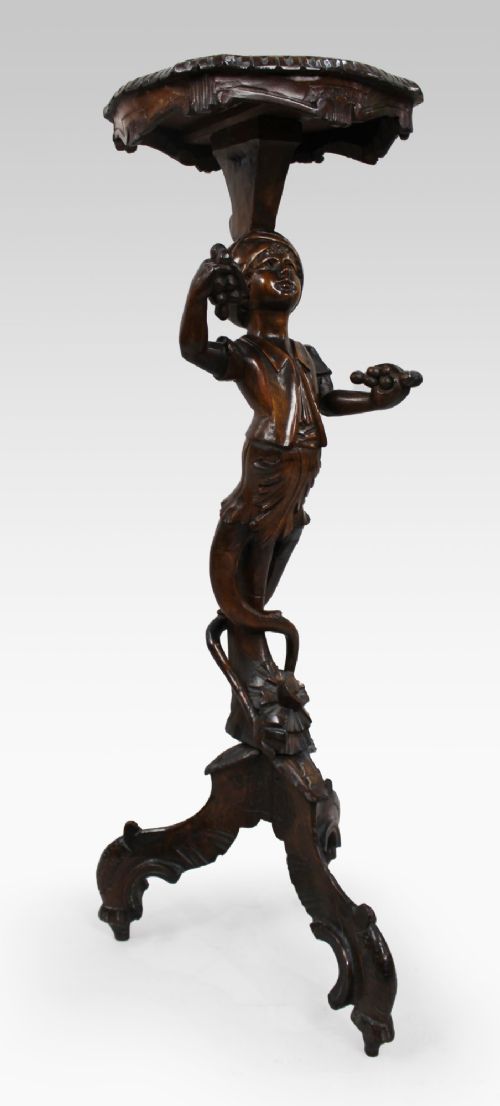
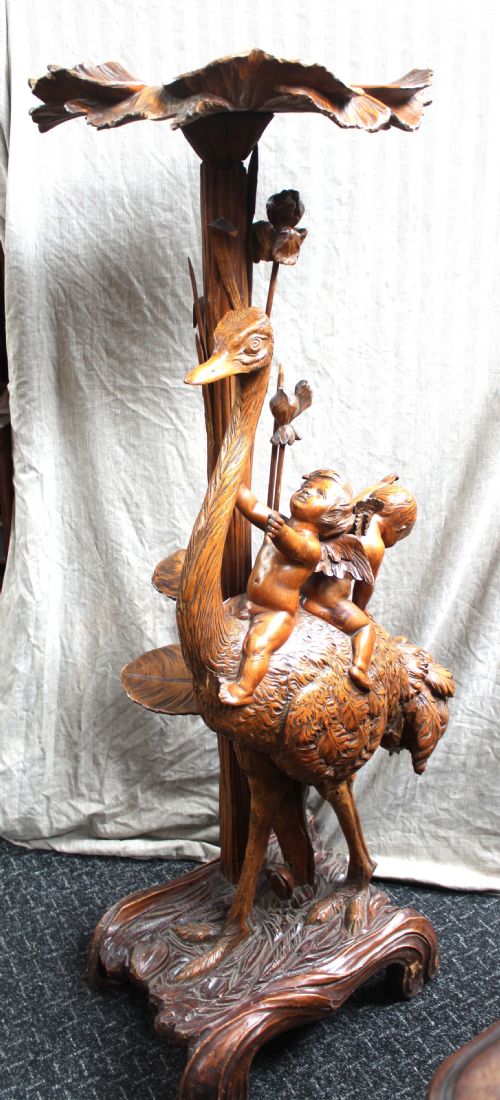
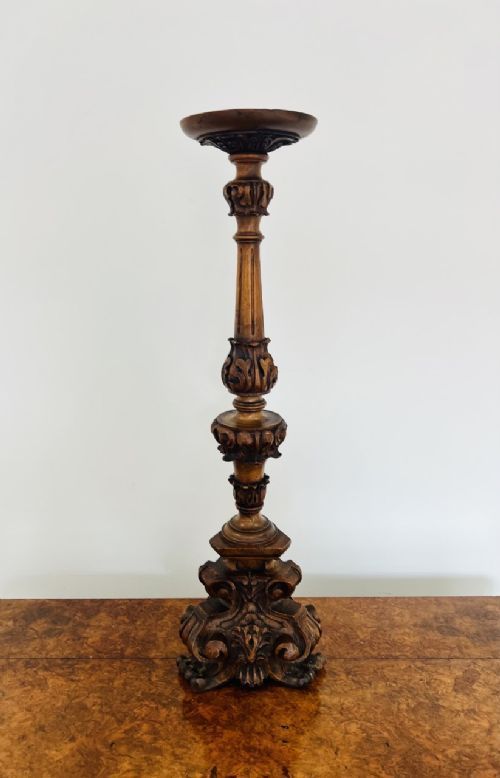
An antique walnut torchere is a tall, slender stand designed primarily to hold a candle, plant or small decorative object. The pieces collected here span the seventeenth century through to the early twentieth century, taking the form of candle stands, plant stands and figural pedestals.
Continental European workshops contribute heavily to the selection, particularly through Dutch marquetry and Italian carved figures. English examples also appear, rooted in the Georgian and Victorian eras, demonstrating varying heights and column designs.
Buyers will most frequently encounter nineteenth-century interpretations alongside eighteenth-century originals. These range from simple tripod bases to ornate stands featuring carved walnut, kingwood and marble tops.
Materials and Construction
Walnut serves as the primary timber, valued for its rich dark grain and ability to hold crisp, deep carving. Makers frequently combined walnut with fruitwood marquetry or kingwood veneers to create decorative patterned surfaces on the tops and shafts.
Carving and turning form the structural backbone of these pieces, utilising solid hardwood to shape fluted columns, tripod legs and figural supports. Selected examples incorporate inset marble tops to provide a stable, water-resistant surface for plants and jardinieres.
Assessing the Craft
Quality rests in the depth and precision of the carved detail, where skilled hands produce crisp acanthus leaves, smooth figural contours and balanced proportions. Lesser examples rely on shallow stamping or coarse execution that lacks sculptural definition.
The integrity of the timber and the stability of the tall shaft dictate long-term durability. Superior stands maintain tight joinery at the tripod or pedestal base, ensuring the tall frame remains upright and rigid without excessive wobble.
Shoolbred
The Antique Walnut Torchere Glossary
- Torchere
- A tall decorative stand originally built to carry a candle or light fixture. They now frequently serve as plant stands or display pedestals.
- Marquetry
- The art of applying small pieces of veneer to a structure to form decorative patterns. Craftsmen often utilised fruitwoods and contrasting timbers for floral motifs.
- Jardiniere
- An ornamental pot or stand for holding plants and flowers. These often feature protective marble tops to manage moisture.
- Kingwood
- A dense, heavily figured exotic timber used as a veneer in fine cabinetmaking. It provides rich contrast against darker walnut bases.
Antique Walnut Torchere: Frequently Asked Questions
What is the difference between a torchere and a plant stand?
A torchere traditionally held a light source or candle, resulting in a taller and more slender profile. Plant stands and jardiniere tables often possess broader or inset marble tops designed to hold weight and moisture.
Over time the terms merged as candle stands found new life supporting decorative urns and foliage. Both share the same fundamental purpose of elevating objects above floor level.
How do I date an antique walnut torchere?
Dating relies on examining the turning style of the central shaft, the assembly methods of the base, and the character of the walnut grain. Seventeenth and eighteenth-century pieces often display hand-cut joinery and simpler, heavier proportions.
Later nineteenth-century revivals draw inspiration from Baroque or Dutch styles but exhibit machine-assisted turning and different secondary timbers beneath the veneer.
Where should I place a torchere in a room?
These tall stands suit vacant corners, narrow wall spaces between windows, or flanking larger pieces of furniture. Their slender footprint adds vertical dimension without crowding the floor area.
Ensure the location remains clear of heavy foot traffic to protect the tall, balanced structure from accidental knocks.
Can these stands support heavy items?
Most torcheres and candle stands are engineered for modest weights such as a single lamp, a small bronze, or a potted plant. Tall tripod designs distribute weight well but remain top-heavy by nature.
Stands with marble tops offer superior stability for damp or heavy planters, provided the central column remains tightly fixed to the base.