




Antique Walnut Pistol
When you handle an antique walnut pistol, you hold a piece of history fashioned from dark, figured timber and forged steel.
Antique Walnut Pistol
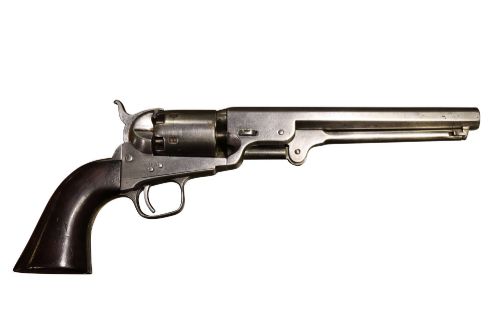
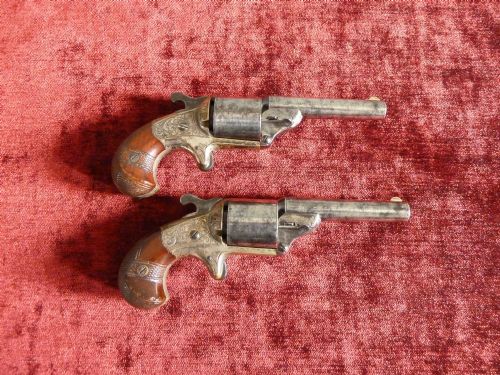
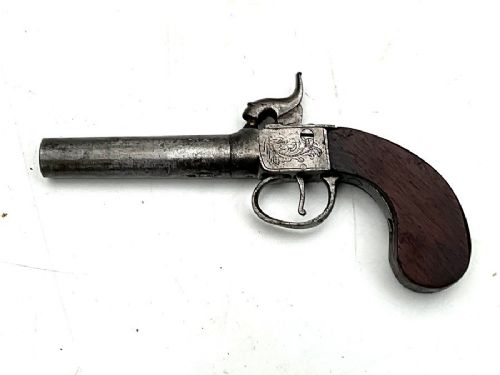
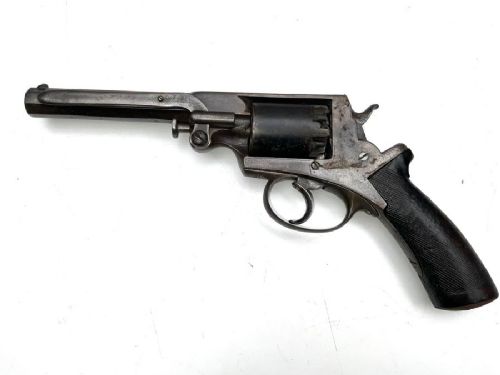
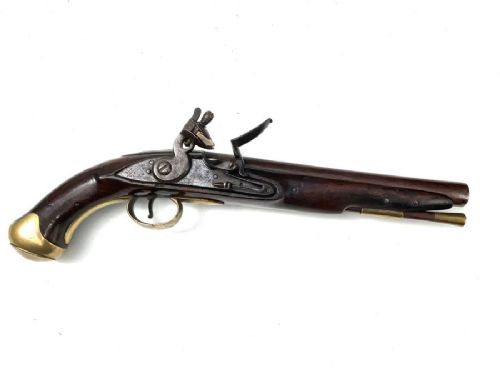
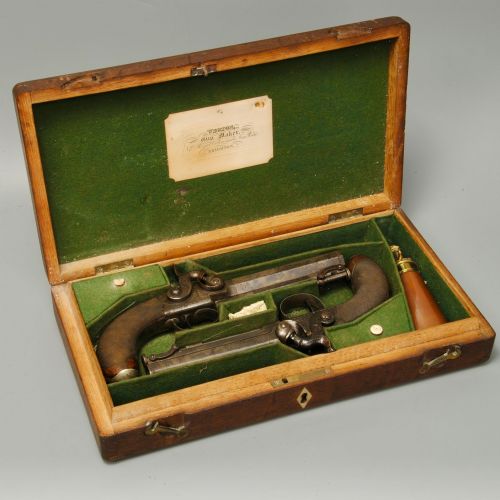
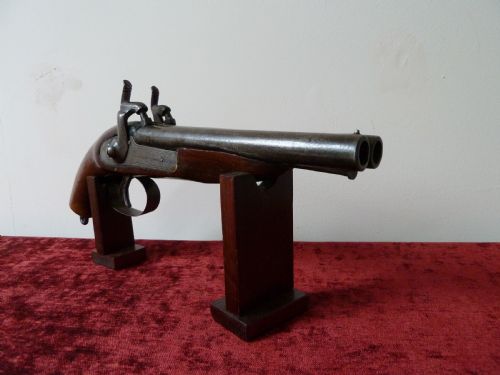
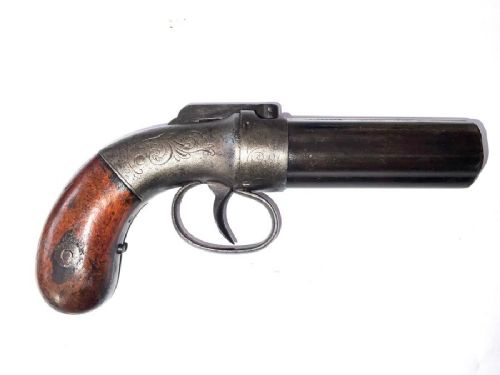
An antique walnut pistol covers firearms spanning from the seventeenth century through the Victorian era, encompassing flintlock, percussion, and early revolving mechanisms. You encounter pocket models, heavy cavalry arms, and duelling pieces shaped for civilian defence, military service, and target shooting.
The selections on this page draw predominantly from the eighteenth and nineteenth centuries, reflecting Georgian and Victorian periods. Makers such as London and provincial gunsmiths shaped these arms using walnut stocks paired with steel barrels and brass furniture.
Materials and construction
Gunsmiths shaped stocks from walnut wood, selected for its dense grain and resistance to splitting under the shock of discharge. Metal components utilised forged steel for barrels and actions, often complemented by brass trigger guards, butt caps, and silver wire inlay.
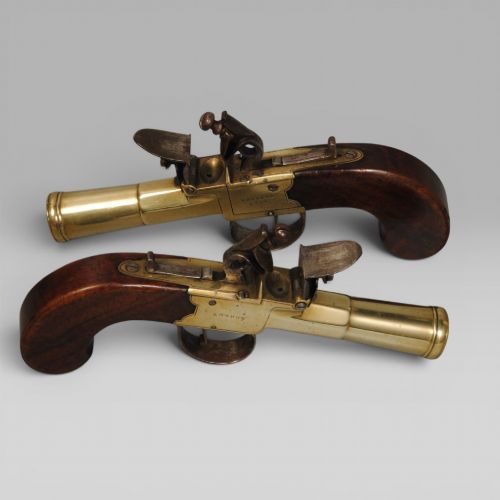
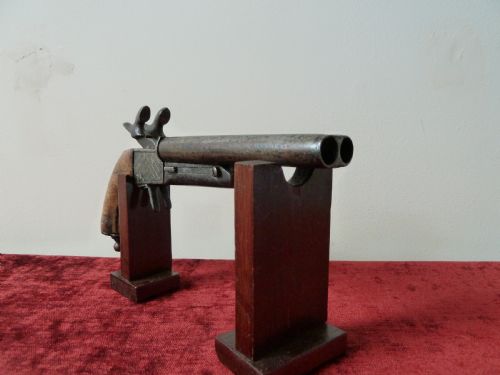
Lock mechanisms, whether flintlock or percussion, required precise filing and hardening of internal springs to ensure reliable ignition. Barrels were forged and bored, sometimes incorporating cannon shapes or boxlock designs integrated directly with the breech.
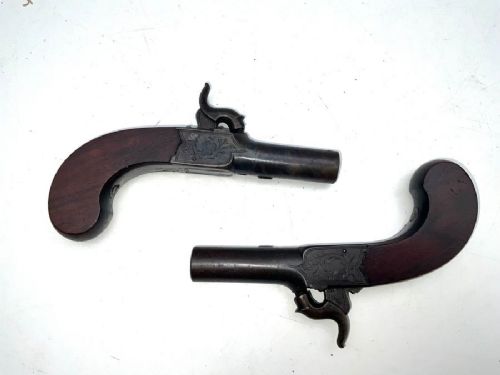
Regional styles include English, French, Belgian, and American pieces, ranging from heavy dragoon sidearms to delicate pocket muff pistols.
Judging execution and finish
Quality rests in the crispness of the metal engraving, the precision with which the walnut stock meets the steel furniture, and the balance of the piece in the hand. Superior examples display fine checkering or delicate silver wire inlay executed by skilled masters rather than basic mass-production methods.
The reputation of the maker dictates distinction, with signed locks from established workshops commanding greater interest than unmarked military or commercial arms. Preservation of original finishes on both the walnut and the metal surfaces defines the standing of individual pieces.
Harrison of London·Mortimer·J.R. Cooper·Henry Nock·La Motte·Deane, Adams and Deane·Colt·Thomas Henshaw·Timothy Hughes
The Antique Walnut Pistol Glossary
- Flintlock
- An ignition mechanism that uses a piece of flint held in a cock to strike a steel frizzen, creating sparks to ignite priming powder. This system dominated military and civilian sidearms through the seventeenth, eighteenth, and early nineteenth centuries.
- Percussion cap
- A small metal cup containing fulminate of mercury placed on a nipple, which explodes when struck by the hammer to ignite the main powder charge. This technology superseded the flintlock system during the nineteenth century.
- Boxlock
- A firearm action where the breech and lock mechanism are forged as a single unified housing, frequently seen on pocket pistols and blunderbuss variants. This design simplified construction and reduced overall length.
- Cannon barrel
- A tapered round barrel featuring a flared muzzle reminiscent of a ship's cannon, commonly found on eighteenth-century Queen Anne pattern pocket pistols. The barrel unscrewed for loading from the front of the breech.
- Chequering
- A diamond-pattern engraving cut into the walnut grip to improve the shooter's hold. Finer, cleanly cut lines indicate superior craftsmanship on officer and duelling pieces.
Antique Walnut Pistol: Frequently Asked Questions
What is the difference between flintlock and percussion pistols?
Flintlock pistols rely on a flint striking a steel frizzen to produce a spark for ignition. Percussion pistols utilise an external hammer striking a detonating cap placed on a nipple.
The percussion system emerged later, offering faster and more reliable ignition in damp weather compared to the older flintlock mechanism.
How do I identify a pocket pistol?
Pocket pistols feature short barrels and compact grips designed to be concealed easily in a coat or muff. Many examples omit protruding sights to prevent snagging when drawn quickly.
These pieces were carried by travellers and civilians for personal defence during the eighteenth and nineteenth centuries.
Were these pistols used in the military?
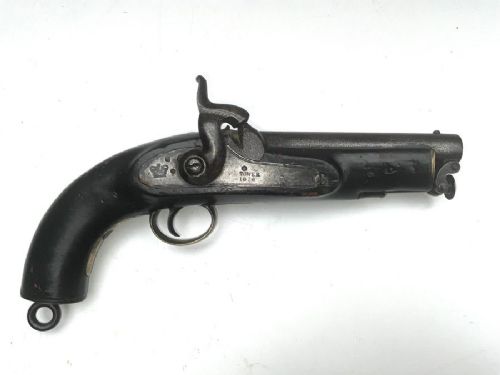
Military issue pieces, such as cavalry holster pistols and Tower-stamped arms, were standardised for distribution to troops. They typically feature robust steel and brass construction designed for harsh service conditions.
Private officers purchased their own sidearms separately, often opting for finer finishes and higher-grade walnut stocks than standard regulation issues.
Why is walnut preferred for these stocks?
Walnut offers an ideal balance of strength, shock absorption, and weight. Its tight grain prevents splitting under the heavy recoil of gunpowder discharge.
Gunsmiths also prized the timber for its rich natural colour and decorative figure, which could be polished to a high lustre.